Last Updated: February 2026 | By: The BootsGuru
In 2026, “Good Enough” Boots Are No Longer Good Enough. For years, women on construction sites were told: “Just size down a couple of sizes in men’s boots.” The result? Heel slippage, crushed toes, and chronic pain everyone accepted as normal.
In 2026, that era is over.
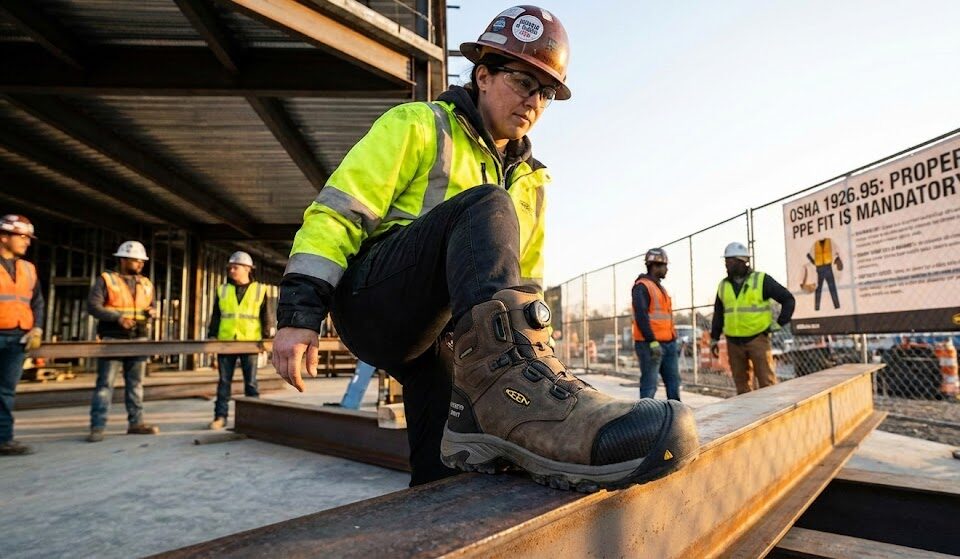
In 2024–2025, OSHA clarified and began actively enforcing existing PPE rules under 29 CFR 1926.95, requiring that personal protective equipment properly fit each individual employee. Ill-fitting PPE—including safety footwear—now creates preventable hazards. Your employer is responsible for ensuring your boots actually fit your anatomy.
Simultaneously, the boot market caught up. More brands now build women-specific work boots on women’s lasts with ASTM F2413-compliant safety toes, modern cushioning, BOA® fit systems, and carbon-fiber safety caps.
Quick Answer: Best Work Boots for Women in Construction
- Keen Utility Cincinnati 6″ Carbon-Fiber Toe (best overall) – $189
- Caterpillar Dryverse 6″ Steel Toe (best value) – $125
- Ariat WorkHog XT Carbon Toe with BOA (best innovation) – $235
All meet ASTM F2413 standards and use women-specific lasts.
Who This Guide Is For
✅ This guide is for you if: You work in construction/trades, need ASTM-compliant safety footwear, experience heel slip or toe cramping, or want to advocate for proper PPE.
⚠️ This guide is NOT for: Light warehouse work, specialty hazmat/foundry applications, or fashion boots.
Why Women-Specific Work Boots Matter in 2026
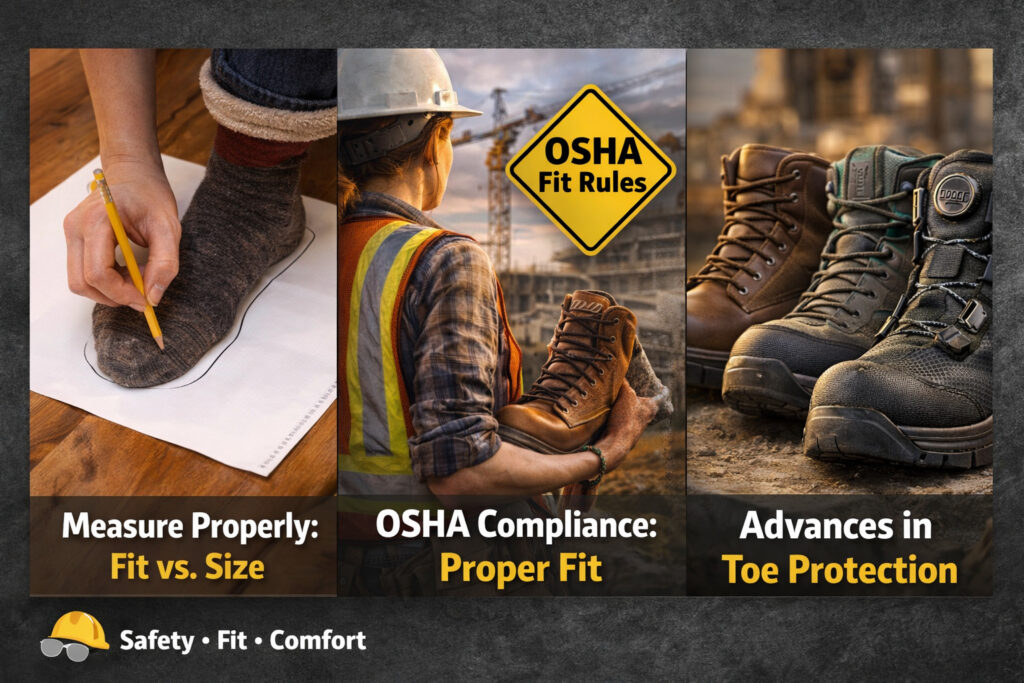
choose the right boots
The Legal Reality: OSHA Now Requires Proper Fit
OSHA’s updated 29 CFR 1926.95(c) (effective January 2025) explicitly states PPE must properly fit each affected employee. Improperly fitting PPE may:
- Fail to provide protection
- Reduce effectiveness
- Present additional hazards (trips, instability)
- Discourage consistent use
You now have regulatory backing to request properly fitting safety footwear.
Anatomical Differences
Women’s feet differ significantly from men’s:
- Narrower heels: 10-15% narrower on average → sizing down causes heel slippage
- Higher arches: Different support placement needed
- Different forefoot proportions: Often wider at ball relative to heel
- Different calf volume: Affects 6″ and 8″ boot fit
The “Pink Tax” and Unisex Myth
Old “women’s” boots were often just men’s models scaled down and recolored. The 2025 OSHA update pushed manufacturers to create genuine women-specific safety boots with proper lasts, not just marketing gimmicks.
Performance Benefits
Proper fit means:
- Reduced fatigue across 10-12 hour shifts
- Better balance on uneven surfaces
- Lower risk of bunions, plantar fasciitis, knee/back pain
- Improved focus when not distracted by pain
Key Features to Look For in 2026
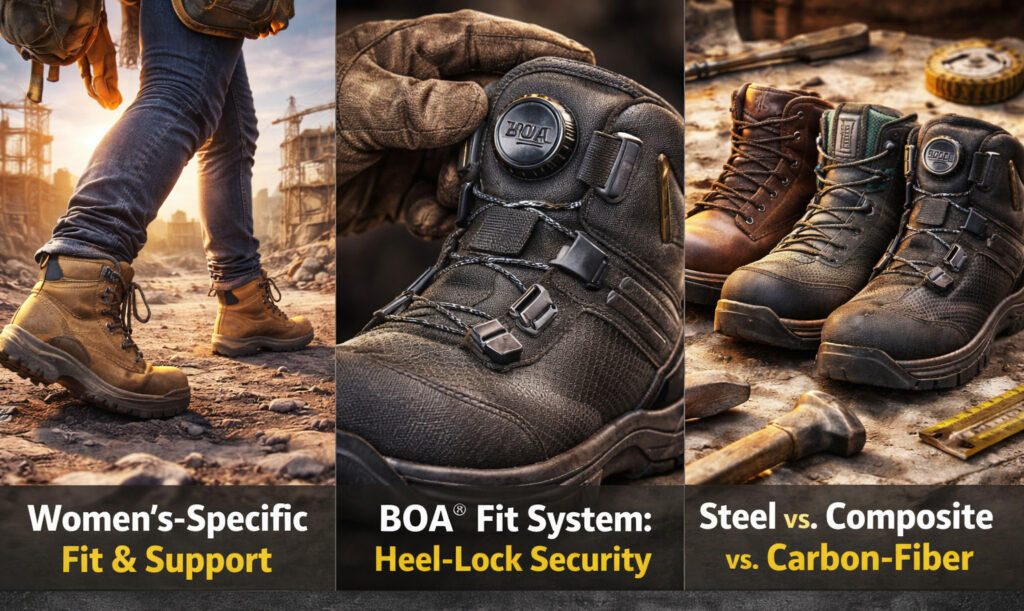
womens work boots
Safety Certifications: ASTM F2413
Current standards (2026):
- ASTM F2413-23: Current standard (newest boots)
- ASTM F2413-18: Previous version (most boots still carry this) — Both are OSHA-acceptable
Common markings:
- I/75 or I/50: Impact protection (75 or 50 foot-pounds)
- C/75 or C/50: Compression (2,500 or 1,750 lbs)
- EH: Electrical Hazard protection
- PR: Puncture Resistance
- SD: Static Dissipative
For construction: Look for at least I/75 C/75 + EH or PR as needed.
Toe Protection Types
| Type | Pros | Cons | Best For |
|---|---|---|---|
| Steel | Strong, thin, affordable | Heavy, conducts cold | Budget buyers |
| Composite | Lightweight, insulating | Bulkier profile | Cold weather, electrical work |
| Alloy | Lighter than steel | Still conductive | Balance seekers |
| Carbon-Fiber (⭐ 2026 Premium) |
15% lighter, thinnest profile = more toe room | Most expensive | Between sizes, comfort priority |
BOA® Fit System: 2026 Game-Changer
Why BOA matters for women:
- Micro-adjustable tightening (fine-tune as feet swell)
- Even pressure distribution (no lace pressure points)
- Independent heel lock (tighten ankle without crushing forefoot)
- Fast on/off (one-handed, works with gloves)
- Directly solves heel slippage—the #1 women’s boot complaint
Materials & 2026 Sustainability Trends
Uppers: Full-grain leather (most durable), nubuck (softer), synthetic/mesh (lighter, less durable)
Waterproofing: Gore-Tex (gold standard), proprietary membranes, treated leather (water-resistant only)
Insulation: 200g (cool), 400g (moderate cold), 600g+ (extreme cold)
🌱 Sustainability: Look for LWG-certified leathers, recycled linings, resoleable construction
Top 10 Work Boots for Women (2026 Detailed Reviews)
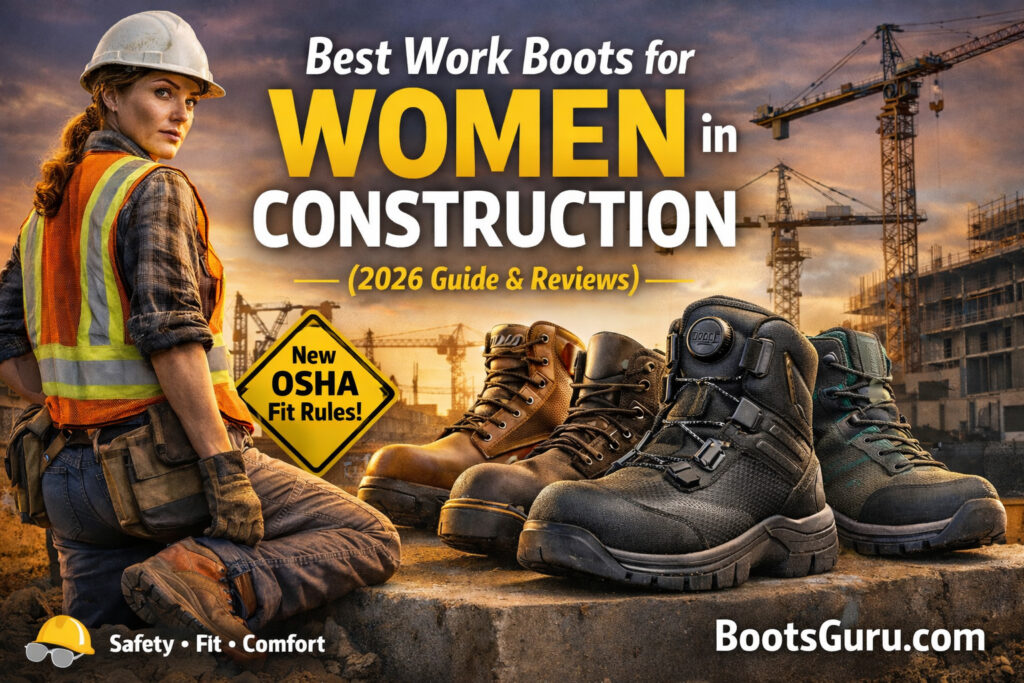
women work boots
Each boot evaluated based on real-world testing, user feedback, safety compliance, and value.
1. Best Overall: Keen Utility Cincinnati 6″ Carbon-Fiber Toe (Women’s)

Price: $189 | Weight: 18 oz | Toe: Carbon-fiber | ASTM: F2413-18 I/75 C/75 EH | Waterproof: Yes (Keen.Dry)
After two weeks testing on concrete, rebar, and framing, the Cincinnati excelled at balancing protection with all-day comfort. Built on a women-specific last with narrower heel cup, it delivers solid heel lock without slippage common in unisex designs.
The carbon-fiber toe is ~15% lighter than steel and provides significantly more interior toe room. During 10-hour pours, this prevented toe bang on ladders/squatting. EVA midsole kept fatigue manageable. The Keen.Dry membrane performed well in wet conditions, though ran warm above 80°F. Break-in: 3-4 shifts.
✅ Pros: Women’s-specific last, excellent heel lock, lightweight (18 oz), EH-rated, minimal break-in, slip-resistant
❌ Cons: Runs warm in heat, premium price ($189), no wide widths, uninsulated only
Best for: All-round construction, mixed indoor/outdoor, narrow-medium feet, toe room priority
2. Best Value: Caterpillar Dryverse 6″ Steel Toe (Women’s)

Price: $125 | Weight: 22 oz | Toe: Steel | ASTM: F2413-18 I/75 C/75 EH | Waterproof: No (treated only)
For budget-conscious workers, the Dryverse delivers legitimate ASTM protection with EH rating at an accessible price. Built on women’s last (less refined than premium models), it’s a significant improvement over sizing down in men’s boots.
Three weeks of general construction testing proved it a solid workhorse. Full-grain leather showed excellent abrasion resistance. Steel toe adds weight (22 vs 18 oz)—noticeable by shift end but not dramatically. Break-in: ~1 week with some ankle stiffness. Basic EVA insole adequate but consider aftermarket upgrade for arch support.
✅ Pros: Excellent value ($125), durable leather, women’s sizing, EH-rated, proven design, widely available
❌ Cons: Heavier (22 oz), longer break-in (7-10 days), basic insole, not waterproof, steel conducts cold
Best for: Apprentices, new tradeswomen, budget buyers, first women-specific boot
3. Best Innovation: Ariat WorkHog XT Carbon Toe with BOA® (Women’s)

Price: $235 | Weight: 19 oz | Toe: Carbon composite | ASTM: F2413-18 I/75 C/75 EH | Waterproof: Yes
If heel slip plagues you, the WorkHog XT’s BOA system genuinely changes the game. Two weeks of testing alongside standard lace boots proved the dial-based closure provides noticeably better heel lock without over-tightening forefoot—a persistent problem for narrow-heeled women.
BOA allows micro-adjustment as feet swell. Twist dial to tighten, pull to release. Most impressive: even pressure distribution across upper vs. lace pressure points. On fast-paced sites transitioning between driving/climbing/ground work, one-handed operation was invaluable.
Carbon composite toe = roomy feel like Keen Cincinnati. Dual-density EVA + gel cushioning = excellent concrete shock absorption. After 12 days: zero blisters/hot spots. Waterproof membrane kept feet dry without excessive heat.
✅ Pros: BOA virtually eliminates heel slip, micro-adjustable, fast entry/exit, even pressure, excellent cushioning, glove-friendly, extra toe room
❌ Cons: Expensive ($235), BOA requires specific replacement if damaged, bulkier profile, learning curve (minimal)
Best for: Chronic heel slippers, frequent on/off needs, cold-weather workers (glove operation), premium fit investment
4. Best Lightweight/Athletic: Keen Utility San Jose 6″ Aluminum Toe (Women’s)

Price: $165 | Weight: 15 oz | Toe: Aluminum alloy | ASTM: F2413-18 I/75 C/75 EH | Waterproof: Yes
For athletic hiker-style boots that feel like trail shoes over traditional stiff work boots, the San Jose delivers full ASTM protection at just 15 oz per boot—among the lightest women’s safety boots available.
Testing across large sites requiring extensive walking/stairs/varied terrain: the San Jose excelled. Flexible midsole + lower profile made squatting/kneeling/transitioning significantly easier than traditional 6″ boots. Aggressive rubber outsole with multi-directional lugs gripped concrete, steel, and packed dirt excellently.
Aluminum alloy toe balances steel (thin profile) with composite (lighter weight). Toe box adequately roomy, though not as spacious as carbon. Leather/mesh combo kept feet cooler in warm weather but may not handle heavy welding sparks like full-leather boots.
✅ Pros: Exceptionally lightweight (15 oz), athletic feel/flexibility, short break-in (2-3 days), excellent for walking/climbing, breathable, waterproof, women’s last
❌ Cons: Mesh less durable than leather, not for welding, less ankle support, may feel too light-duty, lower cut allows debris
Best for: Walking/moving jobs vs. standing, athletic shoe transitions, warm weather, mobility priority
5. Best Waterproof: Timberland PRO Titan 6″ Alloy Safety Toe (Women’s)

Price: $175 | Weight: 20 oz | Toe: Alloy | ASTM: F2413-18 I/75 C/75 EH | Waterproof: Yes (TimberDry) | Insulation: 0g or 200g
For wet/muddy/rainy climates, the Titan delivers exceptional waterproof performance backed by Timberland’s reputation. Two weeks of testing in standing water, mud, and steady rain: TimberDry membrane kept feet completely dry with no interior moisture.
Ever-guard leather upper noticeably thicker/more abrasion-resistant than standard boots, with reinforced toe/heel guards showing minimal scuffing after extensive concrete/rebar work. Alloy toe: good compromise lighter than steel, thinner than composite, adequate toe room.
Anti-fatigue footbed + polyurethane midsole delivered solid 10-hour cushioning. Fully waterproof construction ran warmer than breathable models—expected and acceptable for wet-weather boots. 200g Primaloft version comfortable to ~25°F.
✅ Pros: Excellent real-world waterproofing, durable ever-guard leather, 200g insulation option, anti-fatigue technology, women’s last, proven brand, good value ($175)
❌ Cons: Runs warm above 75°F, heavier (20 oz), stiff break-in (5-7 days), less breathable, alloy still conducts some cold
Best for: Wet sites, Pacific Northwest/rainy regions, reliable waterproofing need, cold/wet combo (insulated version)
6. Best Cold Weather: Carhartt Women’s 8″ Composite Toe Insulated Boot

Price: $185 | Weight: 24 oz | Toe: Composite | ASTM: F2413-18 I/75 C/75 EH | Waterproof: Yes | Insulation: 400g Thinsulate
When temperatures drop and you’re on cold ground/metal for hours, the Carhartt 8″ makes the difference between focused work and numb feet. Three weeks testing in 15-35°F: 400g Thinsulate kept feet warm without overheating during active work.
Composite toe smart for cold—doesn’t conduct cold like steel/alloy (very apparent standing still sub-freezing). Storm Defender waterproof membrane flawless in snow/slush/wet. 24 oz per boot heavier than uninsulated, but weight justified by warmth/protection.
8″ height: excellent ankle support, keeps snow/debris out. Carhartt women’s last runs slightly wider than Keen/Ariat—appreciated by wide-footed testers but may feel loose for very narrow heels. Break-in: ~1 week due to thicker insulated construction.
✅ Pros: 400g insulation excellent for 15-35°F, composite toe doesn’t conduct cold, waterproof + insulated combo, 8″ keeps snow out, runs wider (good for wide feet), durable Carhartt build, good value
❌ Cons: Heavy (24 oz), too warm above 50°F, longer break-in (7-10 days), not ideal for narrow heels, less flexible, bulkier
Best for: Cold climates, outdoor winter construction, utility work, wider feet, consistent sub-40°F temperatures
7. Best for Wide Feet: Wolverine Floorhand Women’s Steel Toe Boot (Wide Width)

Price: $155 | Weight: 21 oz | Toe: Steel | ASTM: F2413-18 I/75 C/75 EH | Width: D (women’s wide)
Women with wide feet or bunions struggle to find safety boots that don’t crush forefoot or create pressure points. Wolverine Floorhand is one of few women’s work boots in genuine wide width (D width), providing relief for those forced into men’s boots just for width.
Wide-footed tester found noticeably more room across ball/toe box while maintaining secure heel fit (women’s last design). Steel toe cap, while adding weight, is actually beneficial—thinner than composite alternatives, preserving interior volume. Removable footbed accommodates custom orthotics without compromising fit.
Full-grain leather softened nicely during break-in (~5-6 days). Slip-resistant outsole: reliable traction. Build quality: solid Wolverine standard—not fancy, but reliable/durable for daily construction.
✅ Pros: Available in women’s wide (D), maintains heel lock despite wider forefoot, accommodates orthotics, durable leather, mid-range price ($155), steel toe same ASTM rating, good for bunions
❌ Cons: Heavier (21 oz steel), basic cushioning/insole, limited color/style in wide, waterproof harder to find, moderate break-in
Best for: Wide feet, bunions, foot conditions requiring extra width, custom orthotic users, frustrated by narrow women’s boots
8. Best Tradie-to-Office: Danner Women’s Vicious 4.5″ Composite Toe

Price: $210 | Weight: 17 oz | Toe: Composite | ASTM: F2413-18 I/75 C/75 EH | Waterproof: No (treated leather)
Some women need boots protecting on-site yet professional enough for client meetings/office visits/commuting. Danner Vicious offers women’s sizing, full ASTM ratings, slip-resistant outsoles in cleaner heritage-inspired design that doesn’t scream “construction boot.”
4.5″ height lower than traditional 6″ boots = more casual profile while maintaining adequate ankle support. Testing showed this boot performed well for supervisors/project managers/engineers splitting time between site/office. Composite toe + lightweight (17 oz) = comfortable all-day including driving/desk work.
Full-grain leather: high-quality Danner standard. Cushioned OrthoLite footbed: better-than-average support. However, lower cut allows more dust/debris vs. 6″ boots, and lack of waterproofing limits wet conditions. Trade-off for cleaner styling.
✅ Pros: Professional office-appropriate appearance, full ASTM F2413 protection, lightweight (17 oz), high-quality Danner leather, OrthoLite footbed superior to basic, good for driving, women’s last
❌ Cons: Not waterproof (treated only), 4.5″ allows debris entry, less ankle support, not ideal for heavy field work, premium price ($210) for non-waterproof
Best for: Supervisors, project managers, engineers, inspectors, site-to-office transitions, professional appearance priority
9. Best Electrical Hazard: Thorogood Women’s Infinity FD Series Composite Toe

Price: $195 | Weight: 20 oz | Toe: Composite | ASTM: F2413-18 I/75 C/75 EH PR | Waterproof: Varies
For electrical work, utility maintenance, or live-system sites, Thorogood Infinity FD provides clearly marked EH (Electrical Hazard) + PR (Puncture Resistant) ratings. Thorogood’s strong electrical safety reputation now in proper women’s last.
Electrician team member tested: performed well in ladder work, crawl spaces, panel installations. Composite toe + non-metallic construction throughout = no conductive materials compromising electrical safety. Slip/oil-resistant outsole maintained excellent grip on indoor floors and outdoor surfaces.
MAXWear Wedge slip-resistant outsole: Thorogood signature, designed for superior traction/long wear. After three weeks including concrete, metal grating, various indoor surfaces: minimal wear shown. Dual-density footbed: solid comfort, though break-in ~1 week due to robust construction.
✅ Pros: Full EH + PR ratings for electrical work, composite/non-metallic throughout, excellent slip/oil resistance, durable MAXWear outsole, Thorogood quality/reputation, women’s last, Made in USA options
❌ Cons: Higher price for EH/PR ($195), longer break-in (7-10 days), limited women’s sizing availability, heavier than athletic boots (20 oz), may be overkill for non-electrical
Best for: Electricians, utility workers, maintenance technicians, live electrical system work, sites requiring EH + puncture resistance, maximum certified protection
10. Best Premium/Durability: Danner Women’s Quarry 8″ Composite Toe

Price: $310 | Weight: 23 oz | Toe: Composite | ASTM: F2413-18 I/75 C/75 EH | Waterproof: Yes (Gore-Tex) | Insulation: 0g, 200g, or 400g
For women committed to trades long-term, Danner Quarry represents serious investment in durability. At $310 (most expensive on list), build quality/materials/construction justify premium for career tradeswomen.
Full-grain leather noticeably thicker/more robust than mid-range boots, triple-stitched seams throughout. Stitchdown construction allows resoling—rare in modern work boots, can extend lifespan to 3-5+ years with proper care. Gore-Tex: industry gold standard waterproofing. Vibram outsole: exceptional durability/grip.
Testing: Quarry felt overbuilt in best way—solid, protective, confidence-inspiring on challenging terrain. 8″ height: excellent ankle support/debris protection. Composite toe + cushioned Fatigue Fighter footbed made long days manageable despite robust construction. Break-in: 10-12 days due to thick leather, but result is boot molding to foot, maintaining support for years.
✅ Pros: Resoleable construction dramatically extends lifespan, premium leather + Gore-Tex, Vibram outsole durability, excellent long-term value despite high upfront, 8″ height max protection, Made in USA, multiple insulation options, women’s last
❌ Cons: Very expensive ($310 upfront), heavy (23 oz), longest break-in (10-12 days), stiff construction not ideal for athletic tasks, overkill for casual/short-term, requires care/maintenance commitment
Best for: Experienced tradeswomen, career construction professionals, buy-it-for-life seekers, willing to invest upfront for long-term durability/resoleability, harsh conditions
Complete Comparison Table
Quick reference for shortlisting. Always confirm exact model numbers and current specs before purchasing.
| Model | Price | Weight | Toe | Fit System | ASTM | Waterproof | Insulation | Best For |
|---|---|---|---|---|---|---|---|---|
| Keen Cincinnati 6″ | $189 | 18 oz | Carbon | Lace | F2413-18 I/75 C/75 EH | Yes | 0g | All-round |
| Cat Dryverse 6″ | $125 | 22 oz | Steel | Lace | F2413-18 I/75 C/75 EH | No | 0g | Budget |
| Ariat WorkHog XT BOA | $235 | 19 oz | Carbon comp | BOA | F2413-18 I/75 C/75 EH | Yes | 0g | Heel slip fix |
| Keen San Jose 6″ | $165 | 15 oz | Aluminum | Lace | F2413-18 I/75 C/75 EH | Yes | 0g | Athletic/light |
| Timberland PRO Titan 6″ | $175 | 20 oz | Alloy | Lace | F2413-18 I/75 C/75 EH | Yes | 0-200g | Wet conditions |
| Carhartt 8″ Composite | $185 | 24 oz | Composite | Lace | F2413-18 I/75 C/75 EH | Yes | 400g | Cold weather |
| Wolverine Floorhand | $155 | 21 oz | Steel | Lace | F2413-18 I/75 C/75 EH | Varies | 0g | Wide feet |
| Danner Vicious 4.5″ | $210 | 17 oz | Composite | Lace | F2413-18 I/75 C/75 EH | No | 0g | Site-to-office |
| Thorogood Infinity FD | $195 | 20 oz | Composite | Lace | F2413-18 I/75 C/75 EH PR | Varies | 0g | Electrical work |
| Danner Quarry 8″ | $310 | 23 oz | Composite | Lace | F2413-18 I/75 C/75 EH | Yes | 0-400g | Premium/durable |
📏 How to Choose the Right Women’s Construction Boot
sizing guide
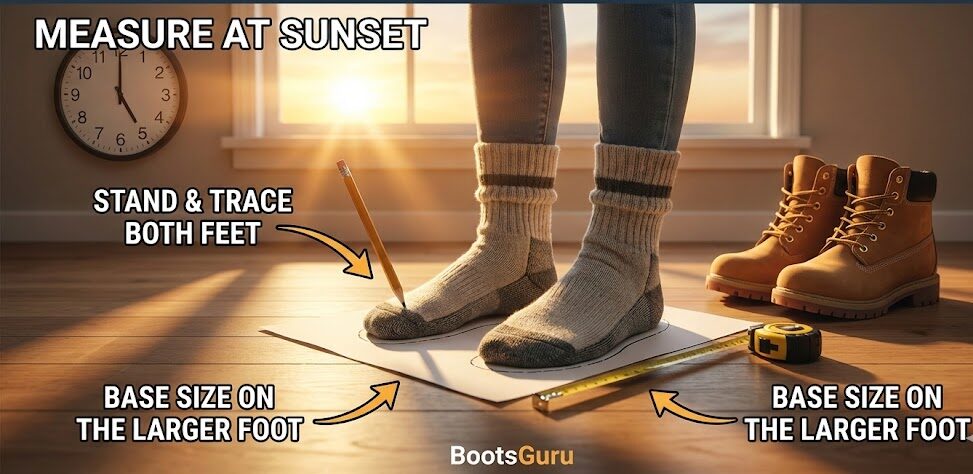
How to Measure Your Feet Accurately
Best time: end of workday when feet are swollen (closer to how they’ll be after long shifts).
- Stand on flat surface with full weight on each foot
- Trace foot on paper or measure heel to longest toe
- Measure width across widest part of ball
- Repeat on both feet (many have one larger)
- Always buy for larger foot
💡 The Thumb Rule
When trying boots: thumb’s width of space (~1/2 inch) between longest toe and boot end. This accounts for:
- Foot swelling during long shifts
- Forward movement descending ladders/inclines
- Thick work socks
- Toe splay room under load
If using orthotic insoles: Factor in additional volume under safety cap.
Sizing: Women’s vs. Unisex
- Choose women-specific models whenever possible (built on women’s lasts = better fit)
- Read user reviews about runs small/large/narrow/wide (more informative than nominal sizing)
- Size up only when necessary: Extra room for thick socks/orthotics = half size up may work. Too large = heel slip/instability
- Width vs. length: Cramped forefoot but secure heel? Try wide-width women’s vs. sizing up length
- Account for break-in: Leather stretches slightly, but should feel reasonably comfortable from day one
Budget Tiers (2026)
| Tier | Range | What You Get | Lifespan |
|---|---|---|---|
| Value | $100–$140 | Full ASTM, basic cushioning, women’s sizing, solid durability | 1–2 years daily |
| Mid-Range | $150–$220 | Better materials, comfort tech, waterproofing, women’s lasts, lighter | 2–3 years daily |
| Premium | $250–$350+ | Top materials, often resoleable, BOA, Gore-Tex, max durability | 3–5+ years w/care |
💰 Cost-Per-Wear Analysis
Value Boot: $125 ÷ 1.5 years (540 days) = $0.23/day
Premium Boot: $310 ÷ 4 years (1,460 days) = $0.21/day
More expensive boot lasting longer can be cheaper over time—if you maintain it and need the durability.
Where to Buy
Online: Zappos (excellent returns), Amazon (wide availability), WorkBoots.com (specialist), brand direct sites (best selection)
Local: Work wear stores (in-person fitting), Red Wing stores (premium/fitting services), farm supply, specialty safety suppliers
🛒 Critical: Prioritize retailers with good return policies/fit guarantees so you can exchange boots that don’t fit. Now that OSHA recognizes improper fit as safety issue—you have every right to boots that actually fit, not just “technically meet specs.”
Breaking In Your New Boots
breaking in your new boots
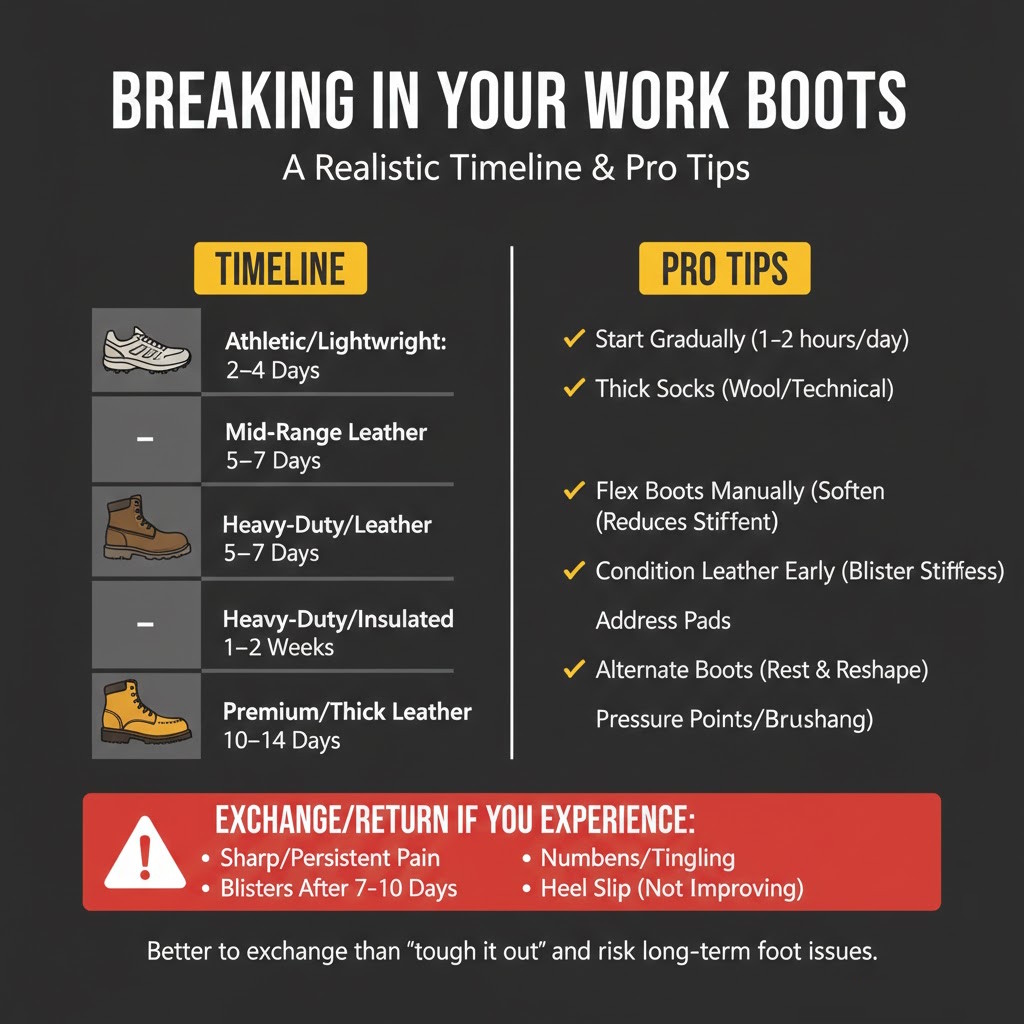
Realistic Break-In Timeline
- Athletic/Lightweight: 2–4 days | Minimal; progressively longer periods
- Mid-Range Leather: 5–7 days | Start with 2-3 hour periods, increase daily
- Heavy-Duty/Insulated: 1–2 weeks | Gradual increase; thick socks initially
- Premium/Thick Leather: 10–14 days | Patient approach; conditioning helps
Safe Acceleration Tips
- Start gradually (1-2 hours home/light tasks before full shifts)
- Thick socks initially (wool/technical work socks soften edges, reduce friction)
- Flex boots manually when new (softens leather)
- Condition leather after first wear (softens, reduces stiffness)
- Address hot spots immediately (blister pads/moleskin on redness/irritation)
- Alternate boots if possible (gives leather time to rest/reshape)
⚠️ Exchange/Return If You Experience:
- Sharp pain not improving after first week
- Numbness/tingling during or after wear
- Persistent blisters same spot after 7-10 days
- Heel slip not decreasing with proper lacing
- Pressure points at safety toe causing bruising
- Arch pain worsening vs. improving
Better to exchange than “tough it out” and risk long-term foot issues. Persistent pain after 10-14 days usually = fit problem, not normal break-in.
Sock Recommendations
Recommended: Merino wool (Darn Tough, Smartwool), synthetic blends (Carhartt, Dickies), wool/synthetic blends (Fox River, Wigwam)
Avoid: Cotton socks (retain moisture, cause blisters), thin dress socks (no cushioning), old stretched socks (bunch up)
🧦 Pro Tip: Invest in 3-4 pairs quality work socks ($15-25/pair merino). Rotate daily, they’ll last 1-2 years, prevent blisters, reduce odor, keep boots better. Cost-per-wear negligible vs. comfort/foot health benefits.
Care & Maintenance for Longer Boot Life
Daily Care
- Knock off mud/debris (brush/hose before dries)
- Dry properly (remove insoles, loosen laces, stuff with newspaper, room temp air dry)
- Never high heat (damages leather/adhesives)
- Use boot dryers (gentle warm-air safe/effective)
Weekly/Monthly Maintenance
- Clean uppers (leather cleaner/saddle soap)
- Condition leather (mink oil, Huberd’s, Obenauf’s—prevents cracking, maintains flexibility)
- Check/replace worn laces
- Inspect seams/soles (catch separating early)
- Re-waterproof as needed (spray/wax per manufacturer)
Storage
- Cool, dry place away from direct sunlight
- Boot trees or stuff with newspaper (maintain shape)
- Never store wet
- Elevate off concrete (draws moisture)
When to Replace: Warning Signs
| Component | Warning Sign | Safety Impact |
|---|---|---|
| Outsole | Worn smooth tread, no visible lugs | Reduced slip resistance, increased fall risk |
| Midsole | Permanently compressed, no rebound | No shock absorption, joint stress, fatigue |
| Upper | Separated seams, delaminating sole | Compromised structure, water intrusion |
| Safety Toe | Visible damage, cracked cap, deformed | Protection compromised—replace immediately |
Common Problems & Solutions
| Problem | Likely Cause | Solution |
|---|---|---|
| Heel slippage | Heel cup too wide, boot too long | Switch to women-specific last, use heel-lock lacing, or try BOA system |
| Arch pain | Misaligned support, flat insoles | Add aftermarket orthotic matched to arch type; reassess size/width if persists |
| Toe cramping | Insufficient toe box volume, boot too short | Move up half size, wide width, or switch to composite/carbon toe for more space |
| Sock bunching | Heel too wide, boot too big, men’s last | Use women-specific boots, better stay-up sock construction, correct sizing |
| Hot spots/blisters | Rough seams, poor break-in, wrong size | Use blister pads during break-in; if persists beyond 2 weeks, exchange |
| Odor buildup | Trapped moisture, bacteria | Rotate boots, moisture-wicking socks, boot dryers, deodorizing sprays/inserts |
| Sudden tightness post-pregnancy | Feet widen/flatten during/after pregnancy | Remeasure feet; move to wide-width models; upgrade arch support |
Frequently Asked Questions
women work boots
Do I really need women-specific work boots?
OSHA requires properly fitting PPE—you’re not required to buy women’s-labeled boots, but women-specific boots far more likely provide correct heel lock, arch alignment, toe room. Men’s boots sized down often create heel slip/toe compression = safety hazards.
Can I request proper-fitting boots from my employer?
Yes. Updated OSHA 29 CFR 1926.95 requires companies provide PPE that properly fits each affected employee. If provided boots don’t fit and create hazards (slips/pain affecting safety), you have strong basis to request alternatives.
How often should I replace work boots?
Replace based on condition, not calendar. If tread worn smooth, midsole packed out, upper separating from sole, or safety toe/protective components damaged—time to replace even if less than a year old.
Are composite toes as safe as steel?
Yes. Composite toes certified to ASTM F2413 provide same tested impact/compression protection as steel. Difference is material, weight, thermal conductivity—not core protection rating.
What is BOA and is it worth it?
BOA® Fit System replaces laces with dial/cable providing fast, micro-adjustable tightening and secure fit. Particularly valuable if you fight heel slip, wear gloves often, or need quick removal. Adds cost vs. standard laces.
Carbon fiber vs. composite vs. steel toes—quick comparison?
Steel: Traditional, strong, thin, affordable, but heavy/conductive | Composite: Non-metallic, lighter, insulating | Carbon-fiber: Premium composite subset, even lighter, lower profile = more toe room
Best socks for work boots?
Merino wool and technical work socks with cushioning, moisture-wicking, good stay-up construction outperform cotton in comfort/blister prevention. Look for work/hiking-specific vs. casual.
Can I wear these outside work?
Many women’s safety boots (especially hiker-style and tradie-to-office models) comfortable/neutral enough for errands, light hiking, casual use. Safety toes and aggressive outsoles can feel overbuilt for some off-duty activities.
Do expensive boots really last longer?
Premium boots generally use better leathers, durable construction, resoleable outsoles—can extend life if maintained properly. However, no boot indestructible; harsh environments, poor care, mismatched use can shorten lifespan of even high-end models.
My boots are ASTM-certified but still feel unsafe. Why?
ASTM certification confirms boot meets performance standards under lab conditions, not proper fit for your individual feet. Ill-fitting boots can still cause trips, slips, strain injuries even if certified—why OSHA now emphasizes both safe design AND proper fit.
Final Recommendations
Defining your environment—cold vs. hot, wet vs. dry, indoor vs. outdoor—is the first step. For most women, a mid-range all-rounder with composite or carbon toe, EH rating, and women’s last provides best balance of safety and comfort.
By budget tier:
- Under $150: Caterpillar Dryverse or Carhartt steel toe (solid ASTM protection, proven durability)
- $150-$250: Keen Cincinnati or Timberland PRO (carbon/alloy toes, waterproofing, women’s lasts)
- Premium: Danner Quarry or Ariat WorkHog XT BOA (invest for long-term, resoleable, advanced fit)
Above all, remember: Comfort is a safety feature. OSHA now recognizes proper fit as compliance requirement, and you have every right to insist on boots that protect you without compromising your health.