Last Updated: March 13, 2026 | Tested By: The BootsGuru
You spent good money on new boots—maybe $250 or more—but your feet are still cold, sweaty, and blistered by the time lunch rolls around. What gives?
Let me tell you an old job-site and trail secret: your expensive boots are only as good as the socks you put inside them.
If you’re working long shifts on concrete, trekking deep into the backcountry, or just trying to keep your feet dry at the office, good socks are essential. We’ve spent nearly a decade testing socks in the toughest conditions, and switching from cotton to high-performance wool is the single biggest, easiest upgrade you can make for all-day foot comfort.
Here is the honest advice, drawn from real-world testing, about the best wool socks for work and hiking in 2026.
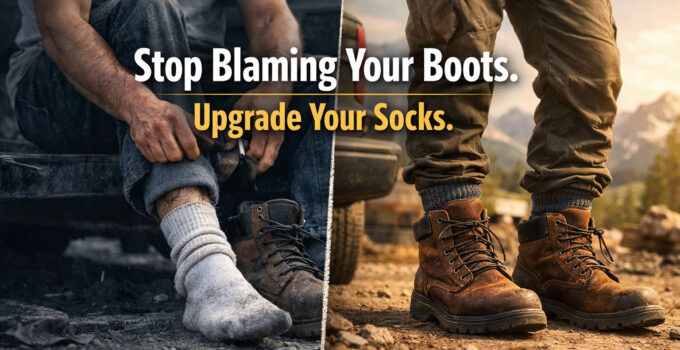
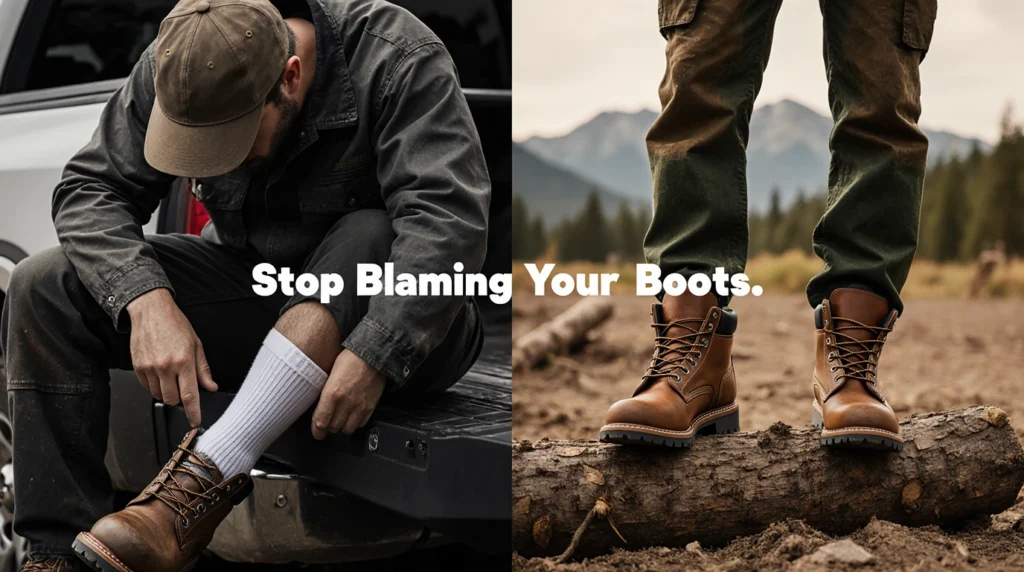
Stop Blaming Your Boots—It’s Your Cotton Socks
stop blaming your boots
Before we dive into the good stuff, let’s talk about the enemy: cotton.
The core problem with cotton is that it acts like a sponge. If your feet sweat (and they will, whether working or hiking), cotton soaks up the moisture, loses all its insulating properties, and just turns into a heavy, cold, wet sponge right next to your skin. This combo of wet fabric and friction is a guaranteed recipe for blisters and clammy, unhappy feet.
That’s why you often hear the practical advice: “Cotton is rotten,” especially inside a boot.
The Solution: Merino Wool (It’s Not the Itch You Remember)
Merino wool is the magic material that solves all those problems. It’s a natural fiber known for its comfort and technical performance.
- Temperature Regulation: Merino wool traps heat when it’s freezing, but its breathability allows heat and moisture vapor to escape when you’re heating up. It keeps your feet warm in winter and surprisingly cool in summer.
- Moisture Wicking: It pulls sweat away from your skin, often as a vapor, so your foot never feels damp or clammy.
- Odor Resistance: Merino naturally resists the bacteria that cause odor, meaning you can often wear the same pair for multiple days before they start to smell. (Yes, this has been tested on multi-day trips and it works).
- Sustainability: As we move deeper into 2026, the environmental benefits of Merino wool are increasingly important. It’s biodegradable, renewable, and many brands now use responsibly-sourced wool from ethical farms.
The reason it’s so comfortable and not itchy like old-school wool is that the fibers are incredibly fine and flexible.
Quick Picks: The Best Wool Socks for Work & Hiking
We covered everything from professional dress socks to heavy-duty work boot socks. Here are the top performers based on durability, comfort, and value:
| Award | Sock Model | Best For | Key Feature | Price Range |
|---|---|---|---|---|
| 🏆 Best Overall (Durability) | Darn Tough Hiker Micro Crew Cushion | Hiking & All-Around Use | Unconditional Lifetime Guarantee & Durability | $$$ |
| 💪 Best for Work Boots | Darn Tough Steely Midweight Boot Sock | Steel Toe Boots & Long Shifts | 360° Cushioning & Toe Box Reinforcement | $$$ |
| ☁️ Best Plush Comfort | Smartwool Classic Mountaineer | Extreme Cold, Sleeping & Max Comfort | Plush High Wool Content (74%) | $$$$ |
| 💰 Best Value (Bulk Pack) | Danish Endurance Unisex Merino 3-Pack | Budget Stock-Up & Versatility | Fantastic Price-to-Quality Ratio | $ |
| 🏔️ Best Durable Hiker | Farm to Feet Damascus | Long Backpacking Trips & Rugged Use | Targeted Cushioning & Lifetime Guarantee | $$$ |
Wool 101: What Actually Matters When Buying Socks
Choosing the right sock means looking beyond the brand name and understanding a few key specs.
Composition: Wool is Never 100%
If you see a sock marketed as “100% wool,” that’s usually a red flag. Pure Merino wool is delicate and cannot handle the strain of being constantly rubbed inside a shoe; you would get holes after just a few wears.
That’s why all quality socks use a blend:
- Wool Percentage: For best performance (wicking, odor resistance, temperature control), look for at least 35% to 70% Merino wool. The higher the percentage, the softer and more odor-resistant the sock usually is.
- The Other Stuff (Synthetics): You need Nylon and Polyester for durability and abrasion resistance. Socks with a lower wool percentage and higher synthetic blend are often more durable and dry quicker. In 2026, many brands are also incorporating recycled synthetic fibers to reduce environmental impact without sacrificing performance.
- Stretch/Fit: Spandex, Lycra, or Elastane is crucial. This material provides the stretch and shape retention that keeps your sock hugging your foot and prevents it from slouching or bunching up inside your boot.
Cushioning Levels: Comfort vs. Bulk
Padding, usually made from soft loops called terry loops, is added strategically for impact reduction. This is arguably the most important choice, as it dramatically affects warmth and fit:
- Light Cushion (or No Cushion): These are thin socks, best for hot weather, tightly fitting shoes, or if you prefer maximum “feel” inside your footwear.
- Medium Cushion (Mid-Weight): This is the ideal all-around choice. It gives you enough comfort and support for most work conditions or hiking trips without excessive bulk.
- Heavy/Full Cushion: This level offers maximum padding, cushioning the entire foot and leg. It’s excellent for high-impact days, breaking in new boots, or maximum warmth in freezing temperatures. Just know that this thickness can make a tight-fitting work boot uncomfortable.
Sock Height: Cover Your Boot
Your sock height must be taller than the collar of your boot to prevent rubbing and irritation.
- Crew / Micro Crew: This is the most popular and versatile height, sitting mid-calf, perfect for standard 6″ work or hiking boots.
- Boot Height / Over-the-Calf: These taller socks are necessary if you wear large 8″+ logger, hunting, or cowboy boots to provide coverage and keep debris out.
The Big Two Showdown: Darn Tough vs. Smartwool
When you ask people about premium wool socks, these two brands still dominate the conversation in 2026. You can’t go wrong with either, but the choice often comes down to personal preference: durability versus softness.
Darn Tough
Darn Tough built its reputation on making socks that are nearly indestructible, and after a decade of testing, that reputation holds true.
- Feel & Fit: Darn Tough socks feature a dense, tightly knit construction. This results in a “performance fit”—snug, supportive, and feels “locked-in” on your foot. You won’t have to worry about these slipping or bunching.
- Durability: Their high-density knitting is legendary. Our testers, who beat the hell out of their gear, have pairs that are over a decade old with minimal wear. Darn Tough socks have consistently outlasted the competition in long-term testing.
- The Kicker: Unconditional Lifetime Guarantee. This is the big win. If their socks ever wear out, rip, tear, or get a hole, they will replace them free of charge. You send the clean pair back, and they send you a credit for a new one. This guarantee remains one of the best in the industry as of 2026.
Smartwool
Smartwool is often considered the king of ski/snow socks, and they continue to excel at comfort.
- Feel & Fit: Smartwool focuses on ultimate “plush” comfort. They have a softer, slightly looser knit than Darn Tough. Their full-cushion socks feel like walking on clouds.
- Durability: They create high-quality socks. However, because of the softer, looser knit, Smartwool socks may show wear quicker. Some durability tests noted thinning in the heel area after consistent use.
- The Kicker: Standard Warranty. They offer a standard two-year warranty. While solid, it doesn’t match the lifetime guarantee offered by Darn Tough.
Detailed Look at Top Picks
💪 Best for Work Boots: Darn Tough Steely Mid-Weight Work Boot Sock
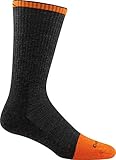
The Honest Take: This sock is built specifically for the abuse of a tough worker inside a safety toe boot. The “Steely” features full 360° cushioning throughout the sock, plus a specific reinforced toe box cushion designed to protect your feet from rubbing against steel-toed caps. The ribbed-knit cuff ensures a stay-put performance fit that reduces slippage during long 12-hour shifts. After years of field testing, this remains the definition of a “buy-it-for-life” tool for your feet.
Pros & Cons
| Pros | Cons |
|
|
Best For: Steel toe boot users, construction, trades, anyone standing on concrete all day.
☁️ Best Plush Comfort: Smartwool Classic Mountaineer Maximum Cushion

The Honest Take: If you need maximum warmth for extreme cold or just want the most cushioned, plush-feeling sock imaginable, this is it. It features a very high Merino wool content (74%) and heavyweight thickness. It’s a literal bed of clouds for your feet. Our testers found that even wearing them on a hot day in heavy boots, their feet were surprisingly dry due to the excellent wicking. It remains an ideal boot sock for breaking in stiff new boots or for maximum warmth when stationary in the cold.
Pros & Cons
| Pros | Cons |
|
|
Best For: Extreme cold, mountaineering, ice fishing, breaking in boots, prioritizing softness.
💰 Best Value (Bulk Pack): Danish Endurance Unisex Merino 3-Pack

The Honest Take: If you want to stock your sock drawer with quality merino without spending $30+ per pair, this 3-pack from Danish Endurance continues to be a fantastic value in 2026. They offer a great price-to-quality ratio, typically coming in under $12 per pair. The blend (38% Merino) provides good comfort and excellent breathability thanks to unique venting stitch panels. They perform well and feel comfortable, but honesty first: they won’t last as long as Darn Tough and the lower wool content means slightly less odor resistance and thermoregulation. A great budget entry point into performance socks.
Pros & Cons
| Pros | Cons |
|
|
Best For: Budget-conscious buyers, stocking up, daily wear, moderate hiking & work.
🏆 Best Overall (Durability): Darn Tough Hiker Micro Crew Cushion

The Honest Take: This is the sock we recommend to almost everyone. It’s the perfect balance of everything: comfortable mid-level cushioning, a “just right” micro-crew height that seals out debris, and that legendary Darn Tough durability that has been proven over a decade of field testing. The performance fit is snug, supportive, and absolutely will not bunch or slip, making blisters a thing of the past. It’s the ultimate “do-it-all” sock for hiking, work, or just daily life. And with the lifetime guarantee, it’s the last sock you’ll ever need to buy… unless you want more colors.
Pros & Cons
| Pros | Cons |
|
|
Best For: Hiking, backpacking, all-around daily work, anyone valuing durability and a performance fit.
🏔️ Best Durable Hiker: Farm to Feet Damascus

The Honest Take: Farm to Feet is another outstanding 100% USA-made brand that competes directly with Darn Tough, also offering a lifetime guarantee. The Damascus is their workhorse hiker, featuring targeted cushioning zones at the heel and toe, with less bulk over the top of the foot for better breathability and fit. They use high-quality US-sourced Merino wool and have built a strong reputation for incredible durability and comfort over the years. If you like the Darn Tough guarantee but want to try a slightly different fit or cushioning pattern, Farm to Feet remains an excellent choice in 2026.
Pros & Cons
| Pros | Cons |
|
|
Best For: Long backpacking trips, rugged hiking, users wanting a USA-made alternative with a lifetime guarantee.
Practical FAQs
Are wool socks really not itchy anymore?
Correct. The fine fibers of modern Merino wool are flexible and soft, so they don’t have the coarse, scratchy feel of old-fashioned wool. They feel comfortable and plush against the skin.
Can I wear wool socks in summer or hot weather?
Yes! This is the most common myth we encounter. A lightweight Merino wool sock is actually superior to a cotton sock in the heat. Because Merino wicks sweat away so efficiently and breathes so well, a lighter pair will keep your feet drier and cooler than cotton, which holds sweat and makes your feet hot and clammy.
How should I wash wool socks?
To make your investment last, you need to treat them right.
- Wash: Turn them inside out. Use a cool or lukewarm washing machine setting with gentle detergent.
- Dry: Avoid high heat! High heat is the enemy of wool and elastic and is likely to cause shrinking. Air dry them on a clothesline or flat surface (they dry surprisingly fast), or tumble dry on low or no heat only.
How long do Merino wool socks last?
A high-quality pair from a brand like Smartwool or Carhartt should easily last several years of consistent, heavy use. A pair from Darn Tough or Farm to Feet, however, is literally guaranteed for life. If they ever wear out, you get a new pair.
What about Alpaca wool?
Alpaca wool continues to gain traction in 2026 as an excellent, and arguably superior, alternative to Merino. Alpaca fibers have a semi-hollow structure, which makes them incredibly soft, warmer without adding bulk, and gives them exceptional durability and moisture-wicking properties. Because Alpaca wool is naturally lanolin-free, it is also hypoallergenic, which is great for sensitive skin. As sustainable and ethical sourcing becomes increasingly important, alpaca wool’s lower environmental impact compared to sheep farming makes it an appealing choice for environmentally-conscious consumers.
Are recycled synthetic blends as good as virgin materials?
This is a question we’re hearing more in 2026 as sustainability becomes a priority. The short answer: yes, quality recycled nylon and polyester perform just as well as virgin materials in sock construction. Many premium brands now use recycled synthetics without compromising durability or moisture-wicking. Look for socks that specify “recycled” content if environmental impact matters to you—you won’t sacrifice performance.
Conclusion: Upgrade Your Feet
Stop and think about it: your socks are the only thing that’s in direct contact with your feet all day. Your boots are just the protective shell.
Switching from a cotton sponge to a quality Merino wool blend is the most impactful upgrade you can make for foot health, whether you’re logging miles on the trail or working a double shift. No more sweat, no more cold, and dramatically fewer blisters.
If you want a sock that is guaranteed to last a lifetime, buy the Darn Tough Hiker Micro Crew. If you prioritize a soft, plush, cloud-like feel (especially for cold weather), grab the Smartwool Classic Mountaineer. Your feet are your most important tool—treat them like it.