I’ll never forget it: mile six of a brutal climb, and my heel felt like it was on fire. I had cheaped out and worn cotton gym socks. That massive blister cost me two days of hiking and taught me the most important lesson on the trail: your expensive boots are useless without the right socks.
Most people spend hundreds of dollars on hiking shoes or boots but treat socks as an afterthought. That’s a recipe for disaster. Regular socks get saturated with sweat, bunch up, and cause friction, and that means blisters—every single time.
This guide is built from my years of trail wisdom and thousands of miles of real-world testing. We aren’t going to look at fancy marketing tags. We’re going to talk about what actually works, what doesn’t, and I’ll give you my top picks for the best hiking socks that will keep your feet happy from the first step to the last.
Why Your Cotton Socks Are Killing Your Hike
Let me be direct, like your honest hiking buddy: Cotton is Rotten.
Cotton is basically a sponge. It absorbs moisture—and you sweat a lot on your feet—and holds it right against your skin. Wet skin gets soft and weak, creating the perfect environment for a blister.
This problem gets worse in cold weather, too. When cotton gets wet, it loses all its insulating properties, meaning cold, wet, miserable feet. Friction plus moisture equals blisters, guaranteed. You need wool or synthetics.

The Guru’s Checklist: What to Look for in a Hiking Sock
If cotton is out, what should you be looking for? The best hiking socks are built using specific materials, precise cushioning, and the right height for your gear.
The Right Material (Merino Wool is King)
Merino Wool: This is the gold standard for hiking socks, and for good reason. It’s not your grandma’s itchy wool; it’s incredibly soft and lightweight. Merino transports moisture away as a vapor, which is far more effective than synthetics that wick moisture as a liquid. It keeps you warm even when the material is damp, and it is naturally odor-resistant. Many of the best options are a blend of merino and synthetics. The global merino wool sock market reached $419 million in 2025 and is projected to grow at 5.7% annually through 2033, reflecting sustained demand for premium performance fibers.
Synthetics (Nylon, Polyester, Spandex/Lycra): Synthetic materials are all about durability and speeding up drying time. Nylon adds superior strength to the weave, while polyester (like Coolmax) helps with wicking and breathability. Blending merino with materials like nylon and Lycra gives you the comfort and odor control of wool combined with the durability and resilience of synthetics. In 2026, manufacturers are increasingly using recycled nylon—Smartwool’s updated Performance Hike models now incorporate 34% recycled nylon—to reduce environmental impact without sacrificing performance.
Cushioning (Light, Medium, or Heavy?)
Cushioning isn’t just about plushness; it affects warmth, volume, and impact absorption.
- Ultralight/Light Cushion: This is for hot weather and fast, light adventures. It’s thin, very breathable, and takes up minimal space in your shoe. Less bulk is good in the heat because feet swell, and thin socks leave more room to prevent friction.
- Medium Cushion: This is the all-around workhorse and the sweet spot for most 3-season backpacking and day hikes. It offers sufficient comfort for long days without making your feet too hot or sweaty. The Darn Tough Hiker Cushion is a perfect example of this density.
- Heavy Cushion: You need this for extremely cold conditions, mountaineering, or if you need a very thick sock to fill extra volume in your boots. These maximize insulation but can be too bulky and warm for mild weather, leading to sweaty feet and blisters.
Sock Height (Don’t Get Rubbed the Wrong Way)
Here is the one non-negotiable rule: Your sock must be taller than your boot cuff. Otherwise, the cuff will rub your ankle or lower leg raw.
- Crew (Lower Calf): This is the most versatile height. It extends 6 to 8 inches above the heel and is perfect for standard hiking boots, offering protection from boot tops, brush, and debris.
- Quarter (Ankle): This sits just above the ankle bone. It’s best for low-cut hiking shoes or trail runners. Just know that this height means less protection, and debris (like gravel or dirt) is more likely to sneak into your shoe.
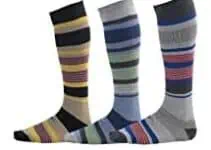
- Knee/Compression: These rise up to the knee and are often used for dedicated compression, providing warmth, protection, or recovery benefits.
Buying Considerations: Which Sock Should You Choose?
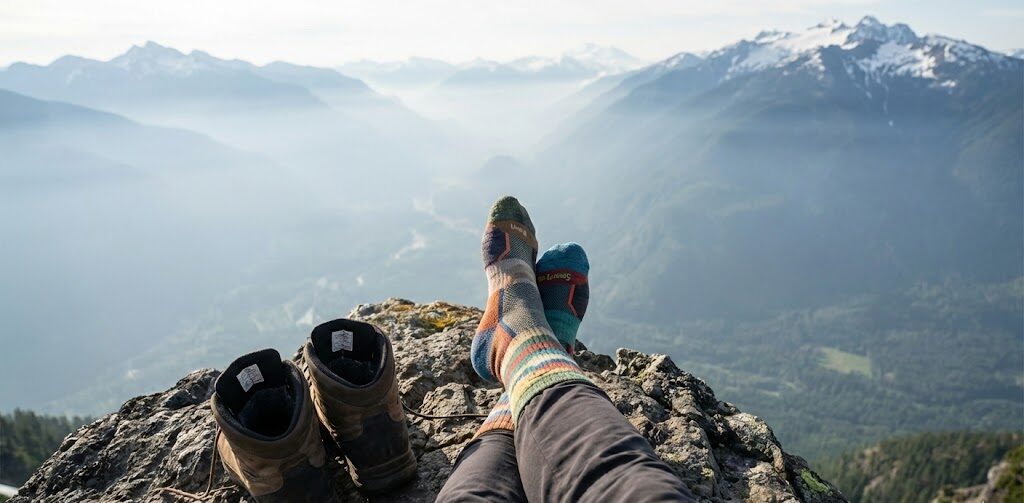
premium hiking socks
Before you see the list, here’s my quick-and-dirty guide to finding your perfect pair based on your activity:
| Condition | Sock Recommendation | Why |
|---|---|---|
| Hot Climates/Summer | Go with an Ultralight or Light Cushion in a high-wicking synthetic or merino blend. | Lightweight socks leave room for swelling feet, and better breathability keeps sweat away. Try the Darn Tough Light Hiker or Smartwool Run Zero Cushion. |
| Cold Weather/Winter | You need Heavy Cushion and a high percentage of Merino wool (70%+) for maximum warmth. | Thicker material traps more heat, and wool insulates even when damp. Look at the Helly Hansen Hiking Sock Warm Crew or Smartwool Mountaineer. |
| Prone to Blisters | Try a double-layer sock (Wrightsock) or a performance anatomical toe sock (Injinji). | These designs eliminate friction between the sock layers or between your toes, which is where blisters start. |
| On a Budget | Look at the REI Co-op brand, especially their newly redesigned Lightweight Hiking Crew or Coolmax options. | They offer fantastic merino performance for less cash than premium brands. New 2026 reinforcement improvements add durability. |
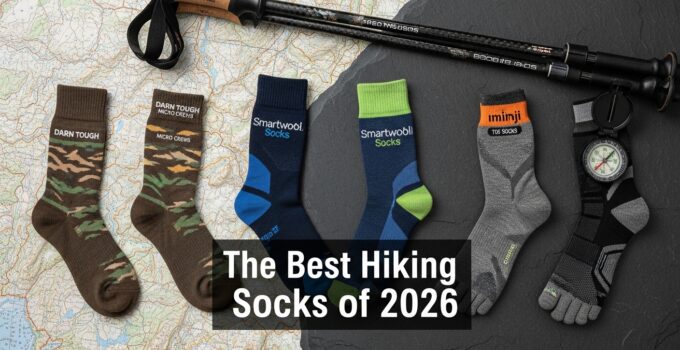
Quick Comparison: The Best Hiking Socks of 2026
| Product Name | Best For | Key Features | Price Range |
|---|---|---|---|
| Darn Tough Hiker Micro Crew Cushion | Overall Durability & Reliability | Merino Blend, Mid-Cushion, Unconditional Lifetime Guarantee | $$ ($23-27) |
| Smartwool Performance Hike Light Cushion | Comfort & Performance Fit | Merino Blend, Light Cushion, Targeted Mesh Ventilation, 34% Recycled Nylon | $$ ($25) |
| Farm to Feet Damascus Light Targeted Cushion | Lightweight Hiking (Hot Weather) | 100% US-Sourced Merino, Targeted Cushion, Lifetime Guarantee | $$ ($22) |
| REI Co-op Merino Wool Lightweight Hiking Crew NEW 2026 | Summer Hiking & Value | 79% Merino Wool, Reinforced Heels/Toes/Achilles, New Color Options | $ ($18.95) |
| Helly Hansen Hiking Sock Warm Crew NEW 2026 | Cold Weather & Technical Performance | Merino-Synthetic Blend, Full Terry Sole, Polypropylene Integration | $$ ($27-30) |
| Wrightsock Coolmesh II Crew | Blister Prevention | Double-Layer System, Synthetic, Fast-Drying (100 min dry time) | $$ ($27) |
The Guru’s Top Picks: The Best Hiking Socks in 2026
1. Best Overall: Darn Tough Hiker Micro Crew Cushion

- Midweight with Cushion - A warm and extremely comfortable choice when conditions demand it, this fine gauge knitted sock provides mid-level cushion density under your foot. True Seamless technology allows for an undetectable seam fusion for an ultra-smooth, invisible feel.
- Micro Crew Height - A shorter, more concise take on the traditional crew height. Peeks just above the top of a standard hiking boot.
- Composition - Knit with 63% Merino Wool 35% Nylon 2% Lycra Spandex. The fast action wicking pulls moisture away from skin, so no more sweaty, stinky socks. The soft, breathable merino wool has fast drying, all weather performance that keeps you cool in the summer and warm in the winter.
- Guaranteed for Life - If these socks wear, tear, or develop holes, Darn Tough will replace them. No strings. No conditions.
- Made in the USA - Every pair of socks is knit in Northfield, Vermont - the perfect testing ground for the finest premium all weather performance socks.
Best For: Literally everything. This is the one sock to rule them all.
I have personally hiked thousands of miles in this specific model. The consensus among experts and users is clear: Darn Tough makes the best socks, and this is the best for hiking. It wins because it hits that Goldilocks sweet spot of medium cushioning—it’s not too thin, and not so thick you need new boots.
The tight weave gives a perfect fit; they never slip, sag, or bunch up, even at the end of a long day. The durability is unmatched; I can usually squeeze 600 miles out of a pair before I see signs of wear, which is honestly incredible. If you manage to put a hole in them, their unconditional lifetime guarantee is the most generous in the entire outdoor industry—they simply send you a code for a replacement pair.
| Pros | Cons |
|---|---|
| Insanely durable (600+ miles lifespan). | Higher initial cost. |
| Perfect fit, retains shape, never bunches. | Not as plush/soft as some competitors. |
| Backed by a lifetime warranty. | The medium cushioning might run slightly warm in extreme summer heat. |
| Excellent thermo-regulating capabilities—warm when wet, cool in the desert. |
2. Best for Comfort & Performance Fit: Smartwool Performance Hike Light Cushion

- VERSATILE HIKING SOCKS. Perfect fit. Powerful durability. Formerly known as PhD Outdoor, these socks feature our 4 Degree Elite Fit System for a dialed-in, performance-oriented fit — and recycled nylon offers a more sustainable sock construction.
- LIGHT CUSHION. Made with light cushioning on the entire bottom of the foot, these merino wool hiking socks for women provide just enough comfort for long treks without crowding your boot.
- ANKLE SOCKS. Featuring an over the ankle, low cut fit that prevents chafing, these versatile socks are the perfect pair for athletic shoes, trainers, sneakers and low to mid top hiking boots.
- MERINO WOOL. Soft and eco-conscious, wool is a sustainable wonder fiber that wicks moisture away and helps regulate body temperature from cold-weather camping to summer hiking.
- FUNCTIONAL FEATURES. Go far, feel good with thoughtful tech to keep you trekking comfortably — a Virtually Seamless Toe with a flat knit seam offers added comfort while Indestructawool tech provides enhanced durability.
Best For: Hikers who prioritize a high-performance, snug fit with great breathability.
Smartwool absolutely nails the “performance fit”. These socks offer an anatomical fit with reinforced padding where you need it. They feel soft and comfortable right out of the package.
They use targeted mesh zones for ventilation, which keeps your feet dry and cool. The updated version uses Indestructawool technology in the heel and toe, which has substantially improved their durability compared to older models. For 2026, Smartwool has increased the use of recycled nylon to 34%, making these a more sustainable choice without sacrificing performance. If you prefer a sock that is a little lighter and more breathable than the Darn Tough Micro Crew, this is a great alternative.
| Pros | Cons |
|---|---|
| Excellent comfort, softer feel, and snug fit. | Historically less durable than Darn Tough. |
| Great at managing sweat thanks to targeted mesh zones. | The warranty (two years) is much shorter than Darn Tough’s lifetime guarantee. |
| Made with sustainable materials like recycled nylon. | Can run warm on sweltering hot days. |
| Durable heel and toe reinforcements extend lifespan. |
3. Best Lightweight Sock: Farm to Feet Damascus Light Targeted Cushion
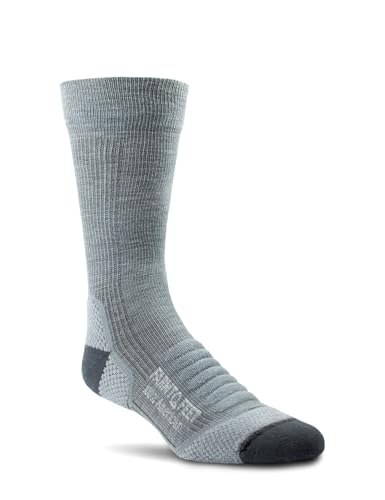
- U.S. Merino Wool: We source our 100% U.S. grown merino wool exclusively from sheep raised by American farmers on American farms. Merino wool keeps you cool in the summer and warm in winter.
- Targeted Light Cushion: High-density cushion targeting critical performance areas throughout the sock.
- Crew: Traditional sock height that fits firmly on the lower calf, also known as the daily.
- Seamless Toe Closure: Advanced knitting techniques create a totally flat connection in the toe box, reducing bulk and eliminating blister-generating friction.
- Durability Assured: Reinforced construction and low-stress seam placement reduce wear and tear, increasing the life of the sock.
Best For: Hot summer hikes or fast-and-light adventures where ventilation is key.
This is my pick for the best lightweight hiking sock. Farm to Feet keeps the weight down by using targeted cushioning—squish where you need it (heel and forefoot), and none where you don’t. This prevents overheating due to unnecessary cushion. The price has dropped to $22 in 2026, making it an even better value.
This merino blend sock is exceptional at moisture-wicking and breathability. It also features compression through the arch, which gives a nice, snug fit that won’t sag or bunch, even over hundreds of miles. Plus, if supporting American manufacturing is important to you, Farm to Feet uses 100% US-sourced materials and is made in the USA.
| Pros | Cons |
|---|---|
| Very breathable and great at moisture-wicking. | The fit isn’t quite as “refined” as Darn Tough’s options. |
| Lifetime guarantee backs their durability. | The targeted cushion panels on top of the foot caused rubbing for some testers when worn with stiff boots. |
| Made using 100% US-sourced materials. | Not warm enough for shoulder seasons or cold weather. |
| Competitive 2026 pricing ($22). |
4. Best New for Summer & Value: REI Co-op Merino Wool Lightweight Hiking Crew (2026 Update)

- QUALITY MERINO WOOL SOCKS: 75% Merino Wool. Super soft and comfortable. Machine washable and dryable. Great for everyday wear, hiking, walking, and camping.
- CRAFTED TO FIT: Size S - XL Full plush wool cushioning throughout arch. Impact areas reinforced with durable nylon. Seamless toe creates a more comfortable fit on the foot, and prevents blisters from forming where the seam would be.
- EXPERIENCED BRAND: Although there are many copy-cats on the market today, Minus33 has been a trusted brand since 2004.
- IMPORTED: As the legacy of a 100+ year old USA based woolen company, Minus33 knows quality and comfort in Merino Wool. We are committed to bringing you the best Merino Wool products at a reasonable price.
- TECHNICAL DETAILS: Knit sock 75% Merino Wool, 23% Stretch Nylon, 2% Spandex. Garment weight size large = 3.2 oz. (91 grams)
Best For: Summer hiking, day hikes, and budget-conscious hikers.
REI completely redesigned their Lightweight Hiking Crew for 2026, and it’s now a serious contender. At $18.95, these are one of the most affordable premium merino options on the market, yet the improvements are significant.
The new version features reinforcement at the heels, toes, footbeds, and the critical Achilles arch area—all places where socks are most likely to fail. The addition of stretch arch bands provides effective support that keeps the sock in place throughout long hikes. With 79% merino wool content (actually higher than some competitors), they deliver excellent temperature regulation and moisture-wicking. REI also introduced new color options for 2026, moving beyond the traditional gray.
| Pros | Cons |
|---|---|
| Exceptional value at $18.95. | Not quite as fine-gauge as premium brands like Darn Tough. |
| 79% merino wool provides strong performance for the price. | May not last as long as more expensive options. |
| Reinforced high-wear zones improve durability. | Light cushioning might feel thin for very rough terrain. |
| New color options and improved arch support in 2026. | |
| Made in USA with imported and domestic yarns. |
5. Best for Cold Weather & Technical Performance: Helly Hansen Hiking Sock Warm Crew (NEW 2026)
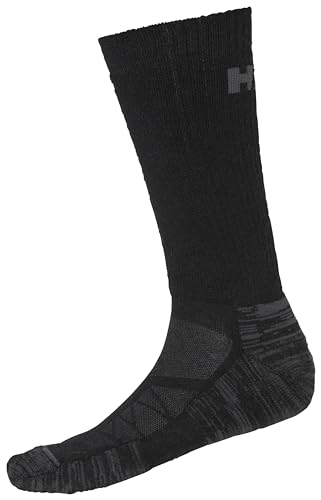
- Full terry leg to keep warmth
- Polyamide fiber in heel & toe for added durability
- Ankle flex
Best For: Winter hiking, mountaineering, and unpredictable mountain weather.
Helly Hansen entered the hiking sock market strongly in 2026 with a technically sophisticated lineup. The Hiking Sock Warm Crew is purpose-built for cold, demanding conditions with a merino-synthetic blend that doesn’t overheat, even under layering.
The full terry sole provides substantial cushioning and warmth, while the integration of polypropylene yarn helps maintain stable body temperature in fluctuating conditions. This sock is designed for serious mountaineers and winter hikers who need reliable performance in extreme conditions. The technical construction includes reinforced heel and toe areas and anatomical shaping.
| Pros | Cons |
|---|---|
| Specifically engineered for cold weather and mountain conditions. | Higher price point ($27-30). |
| Merino-synthetic blend avoids excessive heat buildup. | Overkill for three-season hiking. |
| Full terry sole for maximum cushioning and insulation. | Longer drying time than lighter models. |
| Polypropylene integration for temperature stability. | New brand in hiking category (limited long-term durability data). |
6. Best for Blister Prevention: Wrightsock Coolmesh II Crew
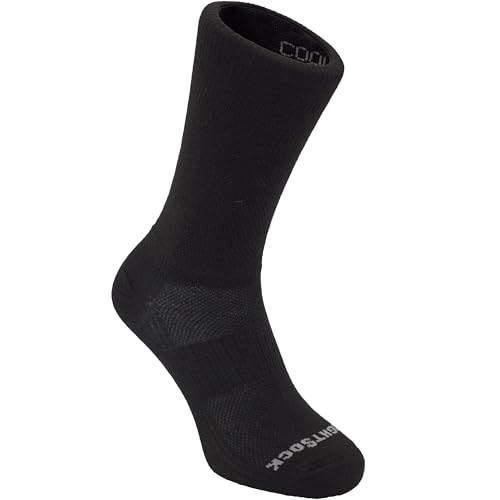
- Blister-Free Guarantee: Wrightsock's Double Layer design in these men's and women's running socks eliminates friction, preventing painful blisters even on long-distance runs. These blister prevention socks are engineered for those seeking the ultimate blister protection, mile after mile
- Breathable Lightweight Double Layer Construction: The most breathable lightweight Double Layer sock designed for a minimal feel. Suitable as running socks, walking socks, or light hiking socks. Our Double Layer socks offer all day comfort and protection. Travel socks that dry quickly and are ready for use the next morning
- Moisture-Wicking & Breathable: Made from sustainable recycled polyester, nylon and lycra, our blister prevention socks wick moisture away from your skin, keeping your feet dry and comfortable, whether in summer or winter
- Sustainably Made in the USA: Proudly produced in the USA with sustainable materials, including recycled polyester. Our sports socks are both durable and environmentally responsible
- Versatile Performance: From road running to trail adventures, our trail running socks provide support and durability for any adventure or activity
Best For: Hikers who are extremely prone to hot spots and blisters.
The Wrightsock Coolmesh II takes a completely different approach to blister prevention: a double-layer construction. It acts like a sock within a sock. The inner synthetic layer stays snugly against your foot, wicking moisture away, while the outer layer moves with your boot. This eliminates the friction that causes blisters.
They are so confident in this system that they offer a “blister-free guarantee”. This model is synthetic, which means it is extremely breathable and dries very quickly (around 100 minutes in testing).
| Pros | Cons |
|---|---|
| Proven double-layer system virtually eliminates blisters. | Fully synthetic construction means poor odor control—they get smelly fast. |
| Synthetic material dries very quickly, great for wet conditions. | Requires more effort to put on correctly (must smooth the inner layer). |
| Affordable price point at $27 for a performance sock. | Less durable than merino options. |
| Blister-free guarantee backs the design. |
FAQ: Your Top Hiking Sock Questions Answered
hiking socks 2
Are thicker hiking socks better?
A: Not always. “Thicker” generally means more cushion, which traps more heat. If you are hiking in cold weather (40°F and below), thicker socks are better for warmth. However, in warm weather, a thick sock will cause your foot to sweat profusely, and that moisture is the direct path to blisters. You need to match the cushion to the temperature and the fit of your boots.
Should hiking socks be tight or loose?
A: They should fit snugly. You want them to feel like a second skin, with no bunching, wrinkles, or sagging. If a sock is too loose, it slides around and bunches up in your toes, creating friction and causing blisters. However, if they are too tight, they can restrict blood flow and movement, which is also uncomfortable.
Darn Tough vs. Smartwool: What’s the real difference in 2026?
A: Both brands make fantastic merino wool socks. In my experience, Darn Tough has the clear edge on durability and their lifetime warranty is easier to use—it’s truly unconditional. Smartwool often feels a bit softer right out of the package and excels at a performance fit, often incorporating more complex ventilation zones. For 2026, Smartwool’s increased use of recycled nylon makes it the more sustainable choice, while Darn Tough remains the durability champion. You can’t go wrong with either, but I give the nod to Darn Tough for long-term value and ruggedness, and Smartwool for those who prioritize comfort and eco-conscious manufacturing.
How many pairs of socks do I need for a backpacking trip?
A: My rule is three pairs. You need one pair to wear during the day, one absolutely clean/dry pair to sleep in (this is non-negotiable for morale and foot health), and one extra pair in case the pair you are wearing gets soaked in a river crossing or heavy rain. At the end of a hiking day, you can rinse the dirty pair and strap them to the outside of your pack to dry while you hike the next day.
Bonus: Make Your Socks Last Longer
Your Merino socks are a high-performance investment. Don’t treat them like your old gym socks if you want to get your money’s worth. Here’s how I make mine last for years:
- Wash Inside Out: This cleans the sweatiest part of the sock (the inside) and prevents the outside from pilling prematurely.
- Cold Water, Gentle Cycle: Heat and harsh agitation are the enemy of wool and elastic. Use a gentle detergent on a cool or lukewarm setting.
- Skip the Dryer: This is the big one. The high heat of a dryer will shrink the wool and kill the elastic, shortening the sock’s lifespan. Air-dry them on a rack whenever possible.
- No Bleach or Softeners: Fabric softeners clog the natural fibers, which ruins their ability to wick moisture and breathe effectively.
Conclusion
Stop thinking of socks as an afterthought. They are the single most important piece of gear for preventing misery on the trail. By ditching cotton and investing in a high-quality pair of merino wool-blend socks from proven brands like Darn Tough, Smartwool, or the newly redesigned REI Co-op line, you’re not just buying comfort—you’re buying blister-free miles and happy feet.
Your feet are your most valuable asset on a hike. Treat them right. Grab a pair from this list, and I promise you’ll feel the difference on your very next climb.