Last Updated: October 26, 2025 | Tested By: The BootsGuru Team & Paving Crew Feedback.
I’ve spent enough time on job sites to know that when you’re working with fresh asphalt, the wrong boots don’t just feel bad—they literally melt down, turning into a sticky, useless mess. That heat shimmer isn’t an illusion; it’s a warning. Choosing specialized footwear isn’t a luxury; it’s mandatory if you want to keep your feet safe and comfortable during those brutal, long shifts.
Your typical construction boot, even a good one, is designed for concrete, dirt, or gravel – not continuous exposure to molten tar. Standard soles will soften, degrade, lose their grip, and can even melt off, leading to burns and long-term foot damage. This guide cuts through the noise, explaining exactly why your boots need to be different, decoding the confusing safety standards, and showcasing the top boots that real pros are wearing on the blacktop right now.
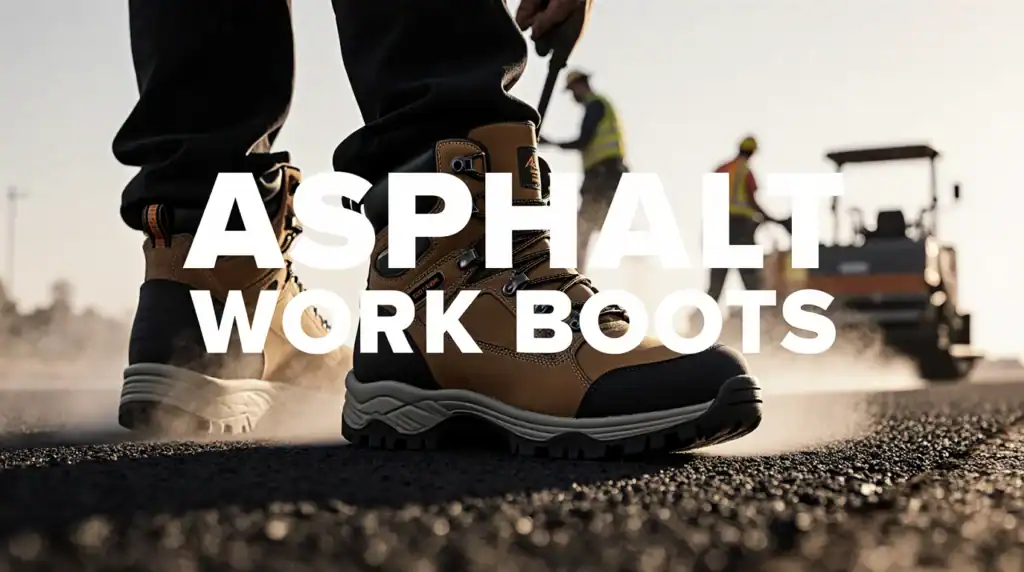
For asphalt paving, the boots on your feet are your primary defense against extreme heat, dangerous slips, and crippling fatigue. Let’s make sure you’re wearing the right gear.
best asphalt work boots
Quick Picks: Top 5 Boots Built for the Blacktop at a Glance
| Award | Boot Model | Best For | Key Feature | HRO Certified? | Price Range |
|---|---|---|---|---|---|
| 🏆 Best Overall (Non-Marking) | Thorogood American Heritage 6″ Moc Toe | Finish Work & All-Day Comfort | Heat-Resistant MAXWear Wedge | Yes* | $$$ |
| 💪 Most Durable All-Rounder | Timberland PRO Pit Boss 6″ Steel Toe | Rugged Crew Work & Mixed Terrain | HRO Rubber Sole & Anti-Fatigue | Yes | $$ |
| 🛡️ Best Heavy Protection | KEEN Utility Milwaukee 6″ Steel Toe | Mixed Terrain & Maximum Safety | HRO Sole & Protective Toe Cap | Yes | $$$ |
| ☁️ Best Lightweight & Flexible | Wolverine Overpass 6″ Comp Toe WP | Roller Ops & Wet Starts | HRO Sole & Contour Welt® Flex | Yes | $$ |
| 💰 Best Value (HRO Wedge) | Irish Setter Wingshooter ST | Budget HRO Wedge & Safety Toe | HRO Traction Tred Sole | Yes | $$ |
*Note: Thorogood’s MAXWear Wedge is famously heat-resistant; verify specific SKU for official 300°C HRO certification if mandatory.
The Asphalt Boot Buyer’s Guide: Your Sole’s Survival Manual
Forget standard boot advice. When you’re buying for asphalt, these are the only things that truly matter.
3.1. Heat Resistance: HRO vs. HI – Your Sole’s Life Insurance
This is the absolute #1 non-negotiable feature. Asphalt is often laid at 150°C (300°F) or higher. You need boots that don’t just endure, but actively protect against this.
- HRO: Contact Heat Resistance (The Emergency Brake)
- What it means: HRO (Heat Resistant Outsole) guarantees the sole can withstand a direct contact temperature of 300°C (572°F) for at least 60 seconds without melting, cracking, or breaking.
- Why you need it: This is your primary defense against catastrophic sole failure if you step momentarily onto a scorching hot steel plate, machinery component, or the absolute hottest part of the fresh mix.
- HI: Heat Insulation of the Sole Complex (The Long-Term Shield)
- What it means: HI measures how well the boot prevents external heat from migrating upward and cooking your feet over a long period. The boot is tested to resist a sustained temperature of 150°C (302°F) for 30 minutes, ensuring the inside temperature doesn’t rise more than a set amount.
- Why you need it: This is arguably *more* important for daily paving work. The threat isn’t just brief contact (HRO), but chronic thermal accumulation from standing on 300°F+ asphalt for hours. HI prevents fatigue, blistering, and long-term thermal damage to your feet.
3.2. The Best Materials for Outsoles (Nitrile is King)
best asphalt work boots
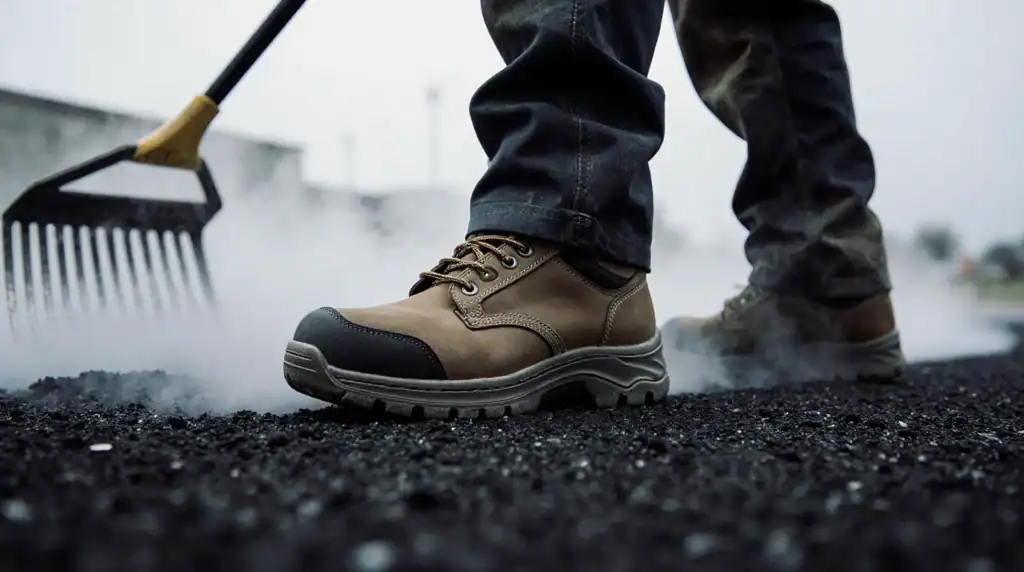
When checking the material, stick with **Nitrile Rubber**. This is the gold standard for high-heat environments like paving and remote mine sites. Nitrile can handle up to 572°F (300°C). Crucially, Nitrile is also highly resistant to oil, mild acids, and alkalis, which are common contaminants on a paving site.
What to Avoid: Boots with **TPU (Thermoplastic Urethane)** outsoles. They are lightweight but only resist heat up to about 266°F (130°C), making them completely unsuitable for fresh asphalt – they *will* melt.
3.3. The Great Sole Debate: Wedge vs. Hybrid Lug
The sole pattern directly affects your grip, comfort, and whether you ruin the finished mat. Choose wisely:
- Smooth Wedge Soles (The Finisher’s Pick):A flat-bottomed wedge sole (like Thorogood Heritage) is the industry preference for Quality Control (QC), rakers, and roller operators. The shallow, continuous sole profile sheds debris (mud, tar, aggregate) and provides maximum stability. Most importantly, the smooth surface **will not leave tread marks** on the hot asphalt, crucial for final finish work. They also offer superior shock absorption.
- Shallow/Broad Hybrid Lug Soles (The All-Rounder’s Tool):Some hybrid soles with broad, shallow lugs (like Timberland Pit Boss) are suitable for general paving roles, especially if you move between the hot mix and loose gravel or dirt shoulders. They offer better mixed-terrain grip than a pure wedge. The caution: avoid deep, aggressive treads (like logger boots) at all costs—they trap hot asphalt, make boots heavy, and tear up the surface. If you choose a hybrid lug, it needs to be minimally treaded and must be HRO rated.
Slip Resistance: Don’t forget traction. Asphalt sites are slippery due to spilled diesel, oil, and water. Look for boots rated with ‘SR’ (Slip Resistance on ceramic tile floors with glycerol) in the new standard, or the old ‘SRC’ rating.
3.4. Comfort & Durability for Long Shifts (Beyond the Sole)
When you’re pulling 10- or 12-hour days on hot asphalt, comfort moves from a bonus feature to a necessity.
- Waterproofing Trade-Off: Dry Feet vs. Cool Feet?This is a classic dilemma. Waterproof membranes (like GORE-TEX) are great for rain or standing water, but they trap heat and sweat, which can be miserable in peak summer heat. Many experienced workers in hot, dry climates prefer unlined leather boots for maximum air permeability and thermal dissipation, keeping feet drier (key for preventing odor and blisters). If you need waterproofing, high-quality Merino wool socks help immensely by wicking moisture.
- Safety Toe Selection: Composite is King for Heat You need a safety toe. Composite toes are often preferred by paving crews because they are lighter and, critically, **do not conduct heat** into the foot from the hot surface, unlike steel. They still meet ASTM safety standards.
- Construction Longevity: Investing in ResolingAsphalt eats soles alive. You’ll likely replace boots frequently (every 6-12 months with daily use). To fight this cost, look for boots with **welted construction** (Goodyear Welt, Stitchdown). These allow a cobbler to replace the sole, drastically reducing the Total Cost of Ownership (TCO) because you keep the expensive leather upper.
Top 5 Best Asphalt Work Boots: Deep Dive Reviews
🏆 Best Overall (Non-Marking Wedge): Thorogood American Heritage 6″ Moc Toe
No products found.
The Honest Take: This is the king of concrete, and it translates beautifully to asphalt finish work. The Thorogood MAXWear wedge sole is renowned for its heat resistance and smooth, non-marking finish—essential for roller operators and rakers. Pair that with legendary out-of-the-box comfort (thanks to the Poron insole) and a durable, Made-in-USA Goodyear Welt construction, and you’ve got a workhorse built for punishing shifts on blacktop. It feels great on your feet, and it won’t ruin your work.
| Pros | Cons |
|
|
Best For: Finish crews, roller operators, rakers needing a non-marking sole with top-tier comfort.
💪 Most Durable All-Rounder: Timberland PRO Pit Boss 6″ Steel Toe

The Honest Take: If your job involves more than just finish work—maybe prepping the base, working on gravel shoulders, or general site cleanup after paving—the Pit Boss is a tank. Its outsole is explicitly HRO-rated Nitrile rubber, tough as nails against heat, oil, and abrasion. It features Timberland’s anti-fatigue technology, which genuinely helps on those 12+ hour days. It’s a no-nonsense, durable boot built to survive the relentless abuse of a paving site. While not a smooth wedge, its broad, shallow lugs still perform well.
| Pros | Cons |
|
|
Best For: General paving crew, groundwork, operators needing a durable, HRO-rated boot with a safety toe.
🛡️ Best Heavy Protection: KEEN Utility Milwaukee 6″ Steel Toe

The Honest Take: The Milwaukee is KEEN’s heavy-hitter for serious protection. You get a bombproof steel toe (with KEEN’s signature roomy, asymmetrical fit), an HRO-rated, oil- and slip-resistant outsole, and excellent arch support via their metatomical footbed. The tread is more aggressive than the Pit Boss, making it fantastic for navigating gravel shoulders and uneven ground. However, that more aggressive lug pattern means it *will* pick up tar on the hot mat – keep your scraper handy and plan for frequent cleaning.
| Pros | Cons |
|
|
Best For: Crews working mixed terrain (asphalt + gravel/dirt), needing maximum toe protection and HRO confidence.
☁️ Best Lightweight & Flexible: Wolverine Overpass 6″ Comp Toe WP

The Honest Take: If heavy, stiff boots make your legs ache, the Overpass feels noticeably lighter and more athletic. It uses a composite toe to shave weight (and avoid heat transfer) and features Wolverine’s Contour Welt® construction, providing the durability of a welt but with much more flexibility right out of the box. It includes a waterproof membrane for wet starts and, crucially, an HRO-rated outsole. The softer rubber offers great grip but might wear a bit faster on abrasive asphalt – a fair trade for the flex and weight savings.
| Pros | Cons |
|
|
Best For: Roller operators, crew needing flexibility for climbing on/off equipment, wet morning starts, or those prioritizing lightweight comfort.
💰 Best Value (HRO Wedge): Irish Setter Wingshooter ST

The Honest Take: If you need the heat resistance of a Timberland and the non-marking comfort of a wedge, but at a more accessible price point, the Irish Setter Wingshooter Steel Toe is an excellent dark horse. It’s often overlooked, but the Traction Tred sole is HRO-rated and provides that continuous, flat-bottomed contact essential for finish work without marking. It’s a solid Goodyear Welt construction, offering durability and resolability, making it a great blend of performance and value for asphalt crews.
| Pros | Cons |
|
|
Best For: Budget-conscious buyers needing an HRO-certified, non-marking wedge boot with a safety toe.
Beyond the Boot: Your Asphalt Survival Kit
The right boots are critical, but a few other pieces of gear can make all the difference to your comfort and safety on the hot mix.
6.1. Socks: The Unsung Hero of Asphalt Work
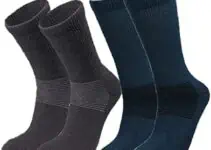
This isn’t just about comfort; it’s about preventing blisters and managing heat. **Merino Wool** socks are king. They wick moisture away even when wet (from sweat), regulate temperature (keeping feet cooler in summer, warmer in winter), and naturally resist odor. Synthetic blends are a good second choice, but **explicitly warn against cotton** – it traps sweat, leading to “swamp foot” and blisters.
6.2. Insoles: Fight Fatigue & Boost Insulation
Heat absolutely decimates foam insoles, compressing them faster than on normal job sites. Expect to replace them every 3-6 months. Invest in breathable, supportive **PU-based aftermarket insoles** (like your own Best Insoles for Work Boots Guide). They not only boost comfort but can add another layer of thermal insulation.
6.3. Heat Stress Safety: More Than Just Boots
Your boots are one layer. Follow crew PPE, traffic control, and heat protocols. Always verify ASTM F2413 + any HRO/HI needs on your exact SKU.
- Hydrate Smart: Drink water *before* you’re thirsty. Add electrolyte mixes on extreme heat days.
- Scheduled Breaks: Take regular breaks in the shade, even if they’re short.
- Use Cooling Gear: Cooling towels, evaporative bandanas, or inserts for hard hats make a big difference.
- Watch Your Crew: Know the signs of heat exhaustion/stroke (cramps, dizziness, confusion, lack of sweating). Look out for each other and alert the foreman immediately if someone shows symptoms.
Practical Maintenance: Keeping Them Alive on the Blacktop
asphalt work boots
Paving is brutal on leather and soles. These steps are mandatory to maximize the lifespan of your investment:
- Tar Removal (Daily is Mandatory): Don’t let tar harden. Scrape large chunks off the sole while it’s still warm using a plastic scraper (metal can damage the rubber). Some pros use a little “release agent” (like canola oil) or a citrus cleaner on the sole to help remove residue. Wipe clean IMMEDIATELY.
- Daily Lug Cleaning (for Hybrids): If using hybrid lugs, brush them clean at breaks and end of day. Packed tar kills grip and adds dangerous weight.
- Condition Frequently: The extreme heat from asphalt rapidly dries out and stresses the leather upper. You need to apply quality leather conditioner or boot oil **often** (e.g., weekly) to keep the leather healthy, flexible, and prevent cracking. Focus on seams.
- Dry Safely: Never, ever dry wet or sweaty boots near high, direct heat sources (like radiators or a fire). This intense heat causes leather to crack and adhesives to fail. Use a quality boot dryer that moves warm, ambient air, or stuff them with newspaper to air dry and absorb moisture.
- Regular Inspection: Check for nicks, cuts, chemical contamination, or sole separation frequently. If the sole separates or you get a puncture, the boot loses its protective function and must be replaced or repaired immediately.
Frequently Asked Questions (FAQ)
What *exactly* does HRO mean?
HRO (Heat Resistant Outsole) means the boot’s sole has been tested to withstand 300°C (572°F) for at least 60 seconds of direct contact without melting or degrading. It’s your protection against brief, intense heat exposure.
What does HI (Heat Insulation) mean, and why is it important for asphalt?
HI measures how well the boot insulates your foot from sustained heat. It’s tested to resist 150°C (302°F) for 30 minutes without the internal temperature rising excessively. For asphalt, where you stand on hot surfaces for hours, HI is crucial for preventing long-term foot fatigue, discomfort, and thermal burns.
Wedge vs. Hybrid Lug: Which is truly best for *my* job on asphalt?
For **finish work** (raking, operating rollers, QC) where you absolutely cannot leave marks, a smooth, non-marking wedge sole (like Thorogood’s MAXWear) is best. For **general paving roles** where you might move between hot mix and loose gravel/dirt, an HRO-rated hybrid lug sole (with shallow, broad lugs like Timberland Pit Boss) offers better mixed-terrain grip but requires diligent cleaning to prevent tar buildup.
Composite vs. Steel Toe for asphalt work?
Both meet safety standards. Composite toes are often preferred for asphalt as they are lighter and, crucially, **do not conduct heat** into the foot from the hot surface, enhancing comfort compared to steel toes.
How do I stop tar sticking *so much* to my boots?
Frequent cleaning is key. Scrape while the tar is still warm. Some pros carefully apply a thin layer of silicone spray or even vegetable oil to the *soles only* before a shift, but always check your boot’s compatibility and site policy first. A smooth wedge sole will naturally pick up less tar than a lug sole.
How often should I replace insoles on blacktop shifts?
The intense heat on asphalt rapidly breaks down foam insoles. For optimal comfort and support, plan to replace them every 3-6 months. Consider durable PU-based aftermarket insoles for better longevity.
How We Test Asphalt Boots & Our Expertise
Our recommendations aren’t just based on spec sheets. We combine rigorous hands-on testing (where feasible) on hot surfaces, concrete, and oily shop floors with direct, invaluable feedback from multiple experienced asphalt paving crew members and foremen. We prioritize:
- Heat Resistance (HRO & HI): Does the sole withstand direct contact and prevent heat migration over time?
- Non-Marking Properties: Does the sole leave tread marks on warm, smooth asphalt?
- Traction (Asphalt & Mixed): How does it grip hot mix, oily steel, and adjacent gravel/concrete?
- All-Day Comfort: How do feet, knees, and back feel after a 10-12 hour shift?
- Durability & Construction: How well does the boot hold up to abrasion, chemicals, and the general abuse of a paving site, specifically under heat stress?
Conclusion: Invest in Your Feet, Invest in Your Safety
Working on asphalt is one of the toughest jobs on your feet and your gear. Choosing a boot specifically designed for this extreme environment isn’t a luxury; it’s a necessity for your safety, comfort, and performance. You need an HRO-rated sole, a careful choice of tread pattern (smooth wedge for finish, cleanable hybrid for general), and robust HI-rated comfort features to mitigate chronic heat transfer.
Don’t let cheap boots melt you down. For zero-mark finish work and reliable comfort, the Thorogood American Heritage Wedge (verify HRO) or the Irish Setter Wingshooter ST (certified HRO) are excellent choices. For a bombproof, HRO-certified all-rounder that handles abuse and mixed terrain, the Timberland PRO Pit Boss is a reliable, time-tested workhorse. Choose the boot that perfectly matches your specific role on the crew, and stay safe, cool, and productive out there on the hot mix.