A farm isn’t just a job site; it’s a 12-hour-a-day, all-weather battlefield. You’re up before the sun, walking on unholy terrain—thick mud, slick concrete, chemical spillover, and worse. The wrong boot doesn’t just give you a blister. It gets you stuck, makes you slip, or completely falls apart in six months.
Trust me, a cheap boot is the most expensive mistake you can make on a farm.
I’ve spent years abusing footwear. This is my no-BS guide to the best farm boots for men in 2025. We’ll skip the marketing fluff and focus on what actually works, from the milking parlor to the back forty.
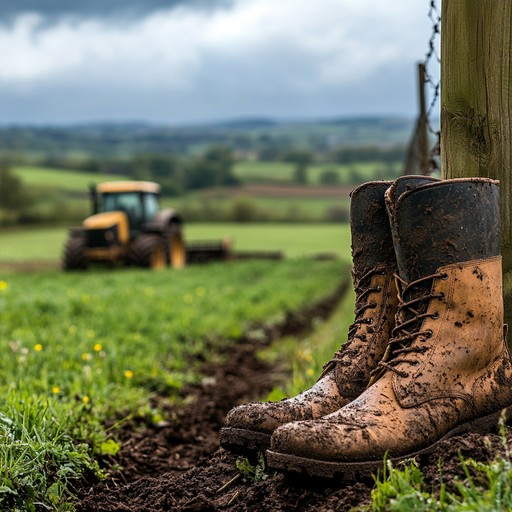
muddy farm boots
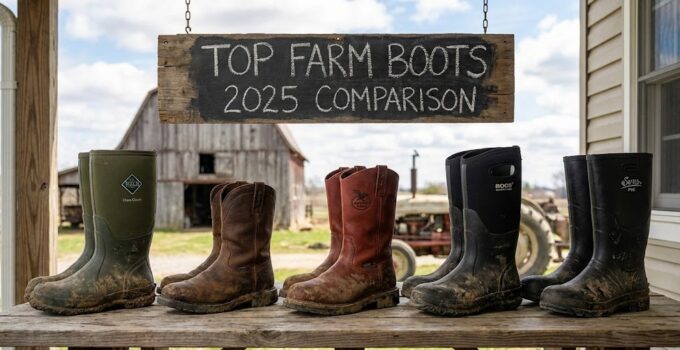
Quick Comparison: Top Rated Farm Boots
| Boot Model | Best For… | Waterproof? | Guru Rating |
|---|---|---|---|
| Muck Boot Chore Classic | Wet Work / Dairy / Mud | 100% | 9.5/10 |
| Ariat Groundbreaker | Dry Work / Field / Shop | Resistant | 9/10 |
| Georgia Giant Wellington | Heavy Durability | No (Oil treated) | 8.5/10 |
| Bogs Classic High | Winter / Cold Weather | 100% | 9/10 |
| Servus Comfort PVC | Budget / Chemicals | 100% | 7/10 |
The Guru’s Checklist: What Actually Matters in a Farm Boot
Forget the fancy tags. When I’m testing agricultural footwear, I only care about four things.
1. Durability: Will It Survive Manure and Machinery?
This is non-negotiable. Farm life is a boot-killer. You need full-grain leather or, for “wet work,” chemical-resistant rubber.
Many brands (like Muck) have “barnyard-proof” or “acid-resistant” soles, which is critical. Manure and urea are highly acidic and will literally eat the glue and rubber of a normal boot. I also look for a molded rubber toe cap. It’s saved my toes from a kicked gate or a rolling feed barrel more times than I can count.
2. Waterproofing: ‘Resistant’ vs. ‘Submersible’
Let’s be clear: you need 100% waterproof, not “water-resistant.” When you’re hosing down a stall or trekking through a flooded pasture, “resistant” means “wet feet in 10 minutes.”
- Rubber boots (like Mucks) are inherently waterproof.
- Leather boots (like Ariats or Georgias) must have an internal waterproof bootie or membrane.
3. Traction: The ‘Stays Upright in Slop’ Test
Slippery surfaces are a guarantee. I look for “self-cleaning” lugs. This means the tread pattern is spaced wide enough to kick out mud and gunk as you walk. If the tread is too tight, it just packs up, and you’re left with a heavy, flat-bottomed boot with zero grip. A deep, aggressive tread is key for mud, but a slightly softer rubber compound is better for gripping wet concrete.
4. Comfort & Support: The 16-Hour Day Test
Comfort isn’t just a soft insole. It’s about support. A good farm boot needs a steel or composite shank. This is a rigid plate inside the sole that stops your foot from flexing over uneven ground or the rung of a ladder. Without a shank, your arches will be screaming by noon.
Top Picks for Farm Boots for Men (2025 Updated)
I’ve sorted through the hype. These are the boots I recommend to any farmer, based on the job you’re actually doing.
1. Muck Boot Chore Classic Men’s Rubber Work Boot
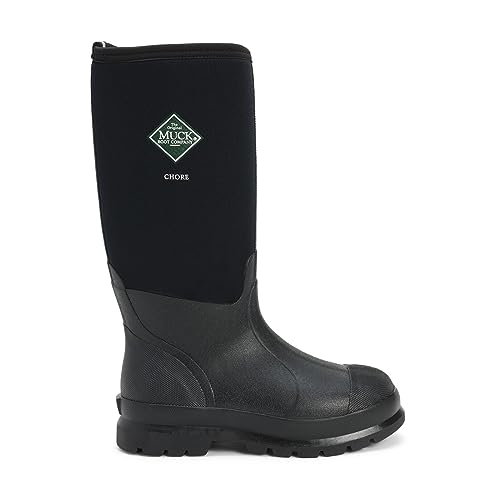
- Breathable mesh lining wicks away humidity and perspiration, allowing air to travel throughout the boot
- Quick cleaning rubber outsole offers durability and traction on slick surfaces
- Quadruple rubber heel reinforcement
- Steel shank
Best For: Wet, Muddy, and Messy Work (Dairy, Livestock)
This is the king for a reason. It’s the standard-issue uniform for dairy farmers and anyone dealing with “wet work” all day. It’s basically a flexible, comfortable, knee-high rubber tank for your foot. The neoprene upper is 100% waterproof, and the entire boot is “barnyard-proof,” so it won’t degrade from urea or acid. Just spray it clean at the end of the day.
- ✅ Pros: 100% waterproof, chemical/manure-proof, easy to spray clean, surprisingly comfortable.
- ❌ Cons: Can be hot and sweaty in the summer, zero ankle support (it’s a rubber boot).
2. Ariat Men’s Groundbreaker Wide Square Toe Work Boot

- Full-Grain Leather
- Pull tabs
- Wide square steel toe
- Leather upper with square toe

Best For: All-Around Farm Work & Field Repairs (Dry Conditions)
If you’re doing more ‘dry’ work, fieldwork, or just want a classic leather boot that can handle a beating, the Groundbreaker is a fantastic workhorse. It feels broken-in right out of the box. The 4LR insole is genuinely comfortable for all-day wear, and the wide square toe gives your toes room to spread. It’s the boot you can wear from the field, to the feed store, to the shop.
- ✅ Pros: Great out-of-the-box comfort, durable leather, good all-arounder, affordable.
- ❌ Cons: Only water-resistant, not fully waterproof for standing in puddles.
3. Georgia Boot Men’s Georgia Giant Wellington Work Boot

- Shaft height and circumference may vary by size
- Unlined Quarters
- Internal padded collar
- High-performance lining
- ¾ heel
Best For: Heavy-Duty Work & Maximum Durability
This is your classic, no-nonsense, tough-as-nails pull-on. The “Georgia Giant” line is legendary for a reason. It’s built with a bulletproof full-grain leather upper, an oil-resistant outsole, and a proper steel shank for awesome arch support. This is the boot for you if you’re climbing on and off equipment, kicking heavy objects, and need something that will last for years.
- ✅ Pros: Extremely durable construction, great arch support (shank), easy on/off.
- ❌ Cons: Heavy. This is a lot of boot. Requires a real break-in period.
4. Bogs Men’s Classic High Waterproof Boot

- You'll wear this tough rubber boot for a multitude of uses
- Handlasted 7mm NeoTech rubber upper is guaranteed 100% waterproof
- Approx. 13" shaft height
- Comfort-rated to -40ºF
- Stretchable inner bootie for a comfortable fit
Best For: Winter Farming & Extreme Cold
Farm work doesn’t stop when the temperature drops below zero. While Mucks are great, Bogs are generally warmer. This boot features 7mm Neo-Tech waterproof insulation rated to -40°F. The handle cutouts make them incredibly easy to pull on with gloved hands.
- ✅ Pros: Extremely warm, handles make entry easy, 100% waterproof.
- ❌ Cons: Too hot for summer use; traction on pure ice is average (consider adding cleats).
5. Servus Comfort Technology 14″ PVC Steel Toe Men’s Work Boots
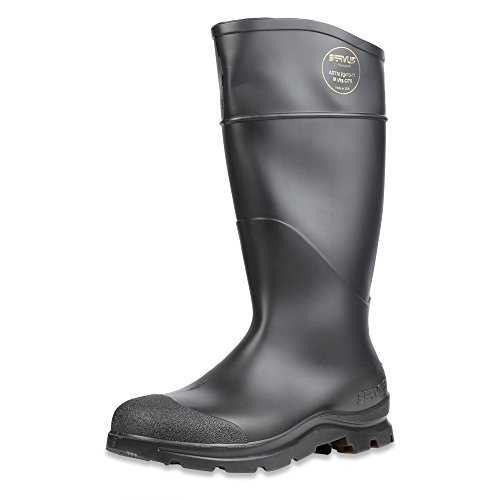
- PVC polyblend injection molded construction is seamless and 100% waterproof but flexible for greater comfort; resistant to degradation from agricultural chemicals, fertilizers and animal waste
- CT (Comfort Technology) offers a unique scalloped top-line for easy flexing; guide along shaft allows for customized height; reinforced at critical stress points for longer wear
- Lightweight FOOT FORM contour cushion insole provides arch and heel support, and is removable, washable and replaceable
- Deep angle cleated outsole prevents slips and falls on slippery surfaces; contoured heel cup reduces heel slippage; steel toe impact protection; ASTM F2413-11 M I/75 C/90
- Recommended use: food processing, custodial, farm, general purpose
Best For: The Budget/Backup “Dirty Job” Boot
Let’s be honest. Sometimes you just need a cheap, indestructible boot you can absolutely destroy and not feel bad about. This Servus PVC boot is it. It’s the boot you keep by the back door for a quick, messy job or when you’re working with harsh chemicals. It’s 100% waterproof, and the steel toe is a critical safety bonus for this price.
- ✅ Pros: Super cheap, 100% waterproof, chemical-resistant, includes a safety toe.
- ❌ Cons: Zero breathability (a total sweat-fest), clunky, not for all-day walking.
The Great Debate: Pull-On vs. Lace-Up Farm Boots
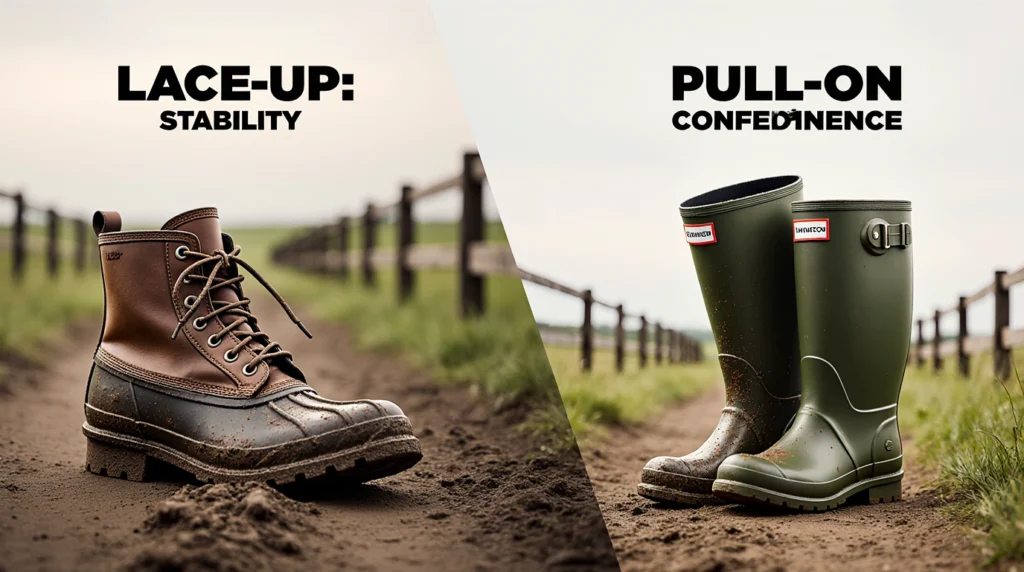
pull on vs. lace up farm boots
I get asked this every week. Which style is actually better for the farm?
Choose Pull-On (Wellington/Rubber) If:
- You are in and out of the house constantly (easy on/off).
- You work with liquids, mud, or concrete pouring.
- You worry about catching laces on machinery (PTO shafts, augers).
Choose Lace-Up Boots If:
- You work on uneven terrain, hills, or rocky pastures. Pull-on boots have “heel slip,” which leads to rolled ankles on hills.
- You have specific foot issues (plantar fasciitis, flat feet) and need a tight, custom fit.
- You do a lot of climbing (ladders, silos) where a snug fit is safer.
The Silent Killer: Why Manure Ruins Boots
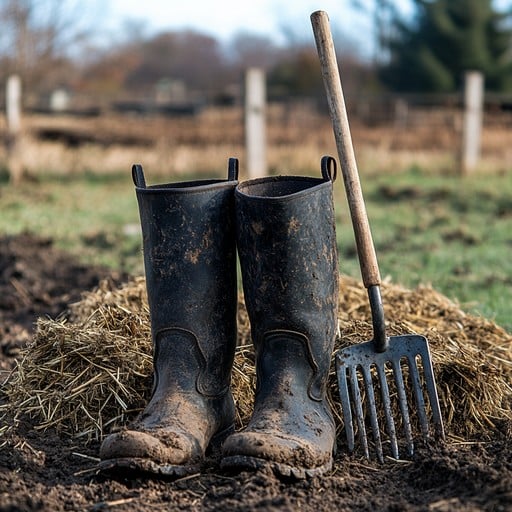
muddy boots outdoors
If you’ve ever had a leather boot crack and split across the toes after six months, manure is likely the culprit.
Animal waste contains uric acid. This acid draws the natural oils out of leather, causing it to dry rot and crack prematurely. It also eats through standard rubber glues.
The Fix: If you work in leather boots, you must rinse them off every evening. Once a month, apply a heavy-duty conditioner (like Mink Oil or Obenauf’s) to create a barrier against the acid.
FAQ: Common Questions from the Field
Q: Should I get Steel Toe or Soft Toe for farming?
A: If you work with large animals (cattle/horses) or heavy machinery, a safety toe is mandatory. Composite toe is often better than steel for farmers because it doesn’t conduct cold in the winter.
Q: How do I stop my rubber boots from smelling?
A: Rubber doesn’t breathe. Use a Peet Boot Dryer every night to dry out the sweat. If they stink, spray the inside with a 50/50 mix of vinegar and water.
Q: Are Muck boots worth the money?
A: For chore work? Absolutely. Cheap rubber boots crack in 3 months. A well-maintained pair of Mucks can last 2-3 years of heavy use.
My Final Word: Don’t Cheap Out on Your Feet
Your feet are your most important tool on the farm. Period. Investing in a high-quality pair of boots from a brand like Muck, Ariat, or Georgia isn’t a luxury; it’s a non-negotiable piece of equipment.
It’s the difference between ending your day tired and ending your day in pain. Choose the boot that matches your worst day on the job—if that’s six inches of mud, get the Mucks. If it’s 14 hours on hard ground and machinery, get the Georgias or Ariats. Your feet (and your back) will thank you.