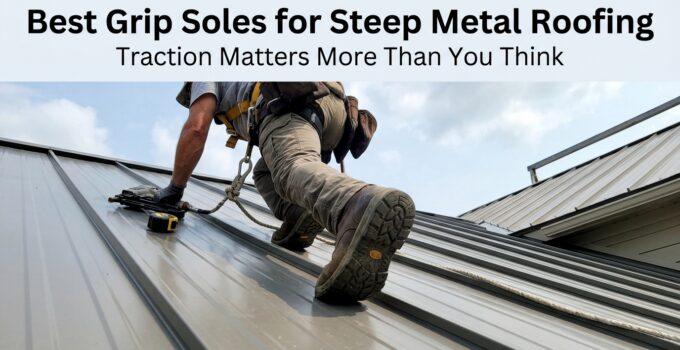
Most “best roofing boot” articles are written for asphalt shingle roofing, with metal roofs mentioned as an afterthought. That’s a problem, because the physics of staying on your feet on a 9/12 standing-seam panel are genuinely different from the physics of staying on your feet on architectural shingles — and the boot that wins on one surface can quietly underperform on the other.
Here’s the part almost nobody explains clearly: the most famous roofing boot brand in the industry, Cougar Paws, built its reputation on a replaceable foam traction pad that grips by compressing into shingle granule texture. That mechanism works brilliantly on shingles. It has nothing to key into on a smooth, painted standing-seam steel panel — which is exactly why Cougar Paws makes a completely separate boot, the SteelWalker, that uses embedded magnets instead of friction-pad technology for ferrous metal. If you’ve ever bought “the best roofing boot” and felt less confident on a metal job than you expected, this is probably why.
This guide breaks metal roofing into its own category with its own rules: the foam-pad-vs-magnetic-sole distinction, why corrugated and standing-seam panels are not the same traction problem, the documented wet/dry slip-failure jump, a pitch-based framework for when specialty footwear stops being optional, and twelve specific picks — from purpose-built roofing boots to high-grip hiking-style crossovers — organized by exactly which metal roofing situation each one solves.
⚡ Quick Picks — Best Grip Soles for Steep Metal Roofing
| Best For | Boot | Mechanism | ASTM/EH | Price |
|---|---|---|---|---|
| Best budget metal-specific | Cougar Paws Steel & Leather | Foam pad | — | ~$110 |
| Best for mixed shingle + metal crews | Cougar Paws Performer | Foam pad | — | ~$140 |
| Best ankle support + breathability | MBS RoofWalker | Foam pad | — | ~$160 |
| Best waterproof general work boot | Thorogood Crosstrex 6″ | Soft rubber | CT / EH | ~$165 |
| Best lightweight hiking-style | KEEN Utility Flint II Low | Soft rubber | ST / EH | ~$140 |
| Best premium hiking crossover | Salomon X Ultra 4 Mid GTX | Contagrip | None | ~$190 |
| Best budget hiking crossover | Merrell Moab 3 Mid WP | Vibram-style | None | ~$140 |
| Best resoleable / long-term value | Red Wing Heritage 6″ | Traction Tred | Soft toe | ~$260 |
| Best wedge sole + safety toe | Carhartt WP 6″ Wedge CT | Wedge sole | CT | ~$135 |
| Best EH-rated for solar/electrical | Timberland PRO 8″ MaxTrax | MaxTrax | ST / EH | ~$185 |
| Best non-metallic toe | Danner Crafter 6″ | Vibram | CT / EH | ~$210 |
| Best for inspectors / light access | Estimator Roofing Boot | Wedge sole | Soft toe | ~$95 |
Table of Contents
- Foam Pad vs. Magnetic Sole vs. Soft Rubber Compound
- Standing Seam vs. Corrugated: The 60% Traction Gap
- The Wet/Dry Reality: A Documented 24% Jump in Risk
- Pitch-Based Decision Framework
- Why a Normal Work Boot Heel Works Against You on a Roof
- The Internal Half of Traction: Heat, Sweat, and Socks
- EH Rating and ASTM F2413 on Metal Roofs
- Best Budget Metal-Specific: Cougar Paws Steel & Leather
- Best Mixed Shingle + Metal: Cougar Paws Performer
- Best Ankle Support: MBS RoofWalker
- Best Waterproof Work Boot: Thorogood Crosstrex 6″
- Best Lightweight Hiking-Style: KEEN Utility Flint II Low
- Best Premium Crossover: Salomon X Ultra 4 Mid GTX
- Best Budget Crossover: Merrell Moab 3 Mid WP
- Best Resoleable: Red Wing Heritage 6″
- Best Wedge + Safety Toe: Carhartt WP 6″ Wedge CT
- Best EH-Rated: Timberland PRO 8″ MaxTrax
- Best Non-Metallic Toe: Danner Crafter 6″
- Best for Inspectors: Estimator Roofing Boot
- When Hiking Shoes Beat Purpose-Built Roofing Boots
- Sole Wear Signals Specific to Metal Roofing
- FAQ — 8 Questions Answered
- Final Verdict by Roof Type and Crew
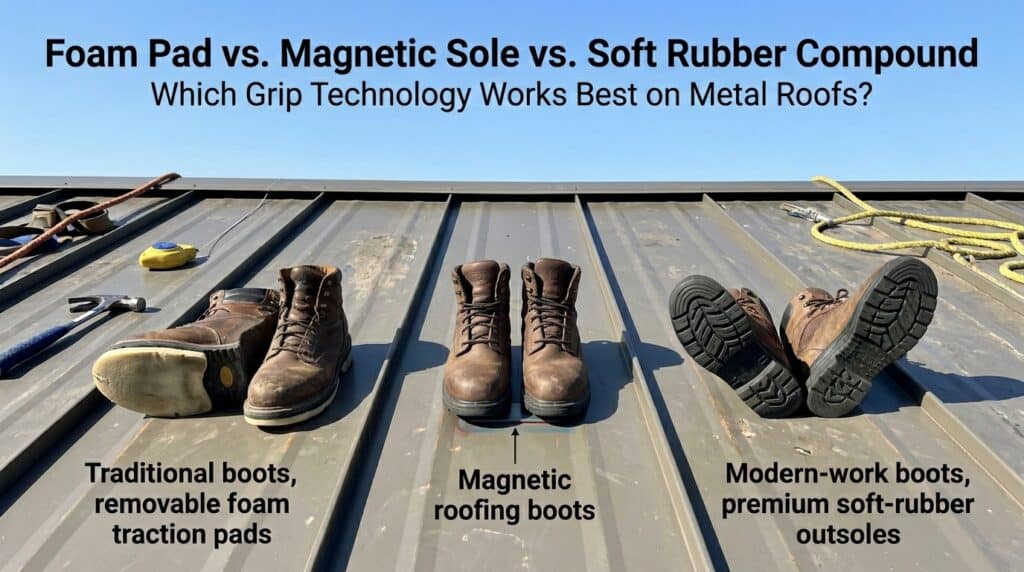
Foam Pad vs. Magnetic Sole vs. Soft Rubber Compound: Three Mechanisms, Not Three Tread Patterns
foam pad vs. magnetic sole 202606242155
The single most important thing to understand before buying a metal roofing boot is that “traction” isn’t one technology with different grades — it’s at least three genuinely different physical mechanisms, and they are not interchangeable. Buying the wrong mechanism for your surface is the most common and least understood mistake in this category.
| Mechanism | How It Works | Best Surface | Fails On |
|---|---|---|---|
| Foam traction pad | Soft, replaceable foam compresses into surface texture — works like Velcro on a fuzzy surface, gripping the granule structure itself | Asphalt shingle, plywood, wood shake, felt, slate | Smooth painted or galvanized metal — there’s no texture to key into; wears fast on hard abrasive surfaces it wasn’t designed for; “useless on mud or wet grass” per multiple field sources |
| Embedded sole magnets | Magnets create a positive lock onto ferrous steel panels — independent of friction or surface texture entirely</td style=”padding:9px 12px;border-bottom:1px solid #e5e5e5;”> | Standing-seam steel, corrugated steel (on the flat pan between ribs), any ferrous metal panel | Non-ferrous metal (aluminum panels) — no magnetic attraction at all; must be removed before walking on the ground |
| Soft rubber compound | High-friction rubber chemistry built for wet rock and technical terrain grips via molecular surface contact, not texture-keying — the same chemistry that grips wet granite translates to wet painted steel | Wet and dry painted metal, wet rock, mixed terrain — genuinely versatile across surfaces | Extreme steep pitch (8/12+), where flat-sole contact area and ankle stability start to matter as much as compound friction alone |
Here’s the practical consequence: Cougar Paws is the brand every “best roofing boot” article recommends as the top steep-pitch pick — and on shingle, that recommendation is correct. But the company’s own engineering response to metal roofing wasn’t a different tread pattern on the same boot. It was an entirely separate product line, the SteelWalker, using embedded magnets instead of foam friction. That tells you everything about how different the metal-roofing traction problem actually is. If your work is genuinely metal-first — not shingle-with-occasional-metal-flashing — a magnetic-sole boot is a different category of tool, not an upgrade within the same category.
For most crews who split time between shingle, plywood, and occasional metal valleys or flashing, a quality foam-pad boot (Picks 1–3 below) remains the right general-purpose choice. For crews doing dedicated standing-seam or corrugated steel installation as their primary daily work, soft-rubber-compound boots (Picks 4–7) or a dedicated magnetic-sole boot sourced direct from the manufacturer are the correct specification — and we’ll be explicit about which is which in every review below.
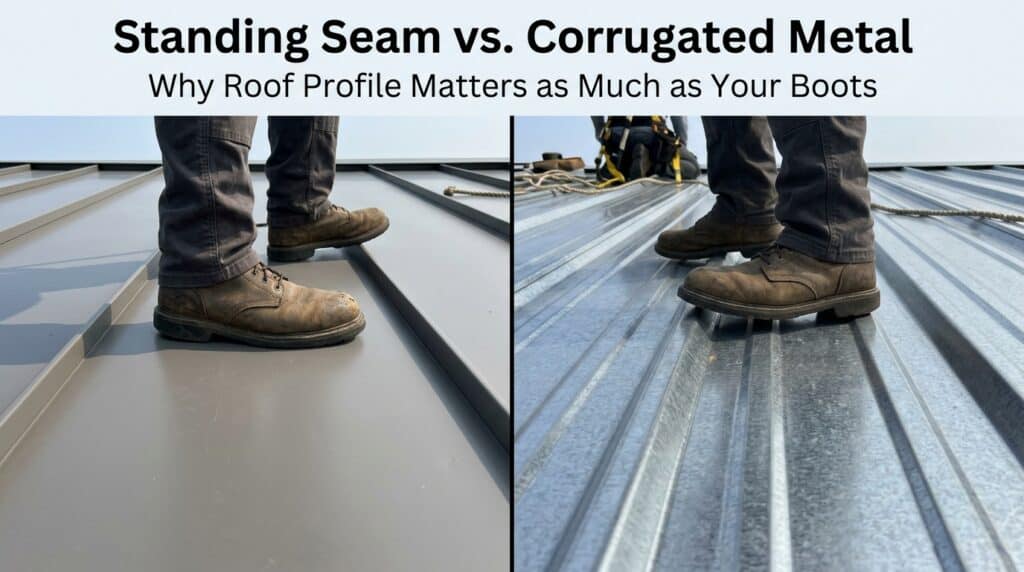
Standing Seam vs. Corrugated Metal: The 60% Traction Gap Nobody Mentions
standing seam vs corrugated metal 202606242156
“Metal roof” is treated as a single category in almost every footwear guide. It isn’t. Field-documented testing by an experienced roofer evaluating magnetic-sole boots across nine months found roughly a 60 percent reduction in traction on corrugated, ribbed galvanized panels compared to flat-profile standing seam — even using the same boots.
The mechanism is straightforward once you see it: standing seam panels present a continuous flat plane. Any sole — foam, magnetic, or rubber — can achieve full, even contact anywhere on the panel. Corrugated panels have raised ribs separated by valleys, so the usable flat contact area depends entirely on exactly where your foot lands relative to that rib pattern. Manufacturer guidance for magnetic-sole boots is explicit on this point: on corrugated profiles, you have to deliberately plant your foot on the flat pan between ribs to get full magnetic contact — step across the ribs instead, and you’ve lost most of the benefit the boot was supposed to provide.
The Practical Buying Implication
If you work primarily standing seam, you can rely more heavily on sole technology alone — any of the picks in this guide will perform close to their rated capability. If you work primarily corrugated or ribbed metal, no boot fully compensates for poor foot placement. The best sole in the world only helps if you’re deliberately planting it on the flat pan between ribs. Footwork technique is part of the safety equation on corrugated metal in a way it simply isn’t on standing seam — this is worth building into crew training, not just gear selection.
The Wet/Dry Reality: A Documented 24% Jump in Slip-Failure Risk
Most guides say something like “even light moisture turns metal into a hazard” and move on. That undersells what’s actually happening. The same nine-month field evaluation referenced above found that across the boot samples tested, there was an average of 24 percent more failures during wet conditions at steeper pitches compared to dry conditions at the same pitch.
This reframes the conversation. Wet metal isn’t marginally more dangerous than dry metal — it represents roughly a quarter-step jump in slip-failure probability at the exact same slope. Three practical consequences follow directly from this number:
- Wet-condition traction is a primary purchase criterion, not a secondary one — if your work happens in any climate with rain, dew, or condensation, a boot’s dry-surface grip rating tells you less than its wet-surface performance.
- Morning dew and overnight condensation on metal function identically to rain for traction purposes — and crews frequently underestimate this risk specifically because “it isn’t raining.” A standing-seam panel that sat overnight under clear skies can carry a thin condensation film that behaves exactly like light rain underfoot.
- Waterproof uppers are a safety feature here, not just a comfort feature — wet socks inside the boot reduce your ability to feel subtle changes in footing through the sole, which matters more on a 9/12 pitch than it does on flat ground. This connects directly to the internal-grip discussion below.
Pitch-Based Decision Framework: When Does Sole Type Stop Being a Preference?
| Pitch | Risk Level | Sole Requirement | Recommended Picks |
|---|---|---|---|
| Under 4/12 | Low | Standard high-traction work boot or hiking-style shoe adequate; specialty footwear optional | Salomon X Ultra 4, Merrell Moab 3, Thorogood Crosstrex |
| 4/12–7/12 | Moderate | Soft rubber compound becomes important rather than optional; ankle support increasingly relevant | KEEN Flint II, Carhartt Wedge CT, Danner Crafter |
| 8/12–10/12 | High | Specialty footwear is the professional standard rather than a nice-to-have; standard soles begin to “skate” | Cougar Paws Performer/Steel & Leather, MBS RoofWalker |
| 11/12+ (~45°+) | Severe | Magnetic sole (for ferrous metal) or equivalent specialty solution is no longer optional; footwear is a secondary control — fall arrest PPE is mandatory regardless of boot choice | Magnetic-sole boot + mandatory fall protection harness/anchor system |
A note on that last row: at this pitch range, no boot — however good — should be treated as your primary fall protection. Footwear is a secondary control. Fall arrest systems are the primary one. Treat this table as gear guidance within a broader safety program, not a substitute for one.
Why a Normal Work Boot Heel Works Against You on a Pitched Roof
Here’s a detail almost nobody explains, and it’s one of the most useful things to understand before you buy: most work boots are built with a 90-degree heel — the heel sits at a right angle to the ground. That’s genuinely good geometry for climbing ladder rungs and walking on flat ground. It’s close to the opposite of what you want on an angled metal panel.
On a pitch, a standard 90-degree heel reduces your boot’s usable contact area with the surface, because the heel itself becomes the first point of contact and concentrates your weight onto a small heel pad — exactly when you need the most surface area spread across the widest possible footprint. Purpose-built roofing footwear instead uses a sole that’s flat from toe to heel, maximizing contact area across the entire foot rather than concentrating load at one point.
This is the answer to a question a lot of roofers ask without quite framing it this way: “why does my regular work boot, which grips fine on the ground, feel unstable the second I’m on a pitch?” It’s not necessarily the rubber compound. It’s the heel geometry. This is also exactly why the wedge-sole boots in this guide (Carhartt, Estimator) and the flat-platform specialty roofing boots consistently outperform otherwise comparable lace-up work boots with a traditional heel — even when the tread compound itself is similar.
The Internal Half of Traction: Heat, Sweat, and Why Merino Wool Is a Safety Choice on Metal
Traction is a two-part system. External sole grip on the roof surface is half of it. Internal grip — your foot’s friction against the inside of the boot — is the other half, and it’s the half almost every buying guide ignores.
Cotton socks absorb sweat and hold it against your skin, creating a slippery, sweat-soaked layer between your foot and the boot. That loss of internal friction forces your toes to “claw” for grip inside the boot itself — a mechanism that produces severe foot fatigue well before lunch, completely independent of how good your outsole is. Cheap polyester socks have the opposite problem: they trap heat and turn your boot into a sauna without solving the moisture issue.
Metal roofing has its own version of the heat dynamic that’s worth understanding specifically. Dark asphalt shingle absorbs and radiates heat upward through the sole — the U.S. Department of Energy notes dark shingle surfaces can reach 150°F in direct sun. Bare or light-colored metal panels reflect more solar heat than dark shingle, but conduct ambient and contact heat extremely efficiently through thin-gauge material — meaning standing on sun-exposed metal produces a different but comparably severe heat-into-boot problem. The flip side: metal roofs in shade, or worked pre-dawn, can run noticeably cooler underfoot than shingle at the same hour, which changes your sweat and moisture management needs across a single workday more dramatically than shingle work typically does.
🔑 The Practical Fix
Merino wool work socks vent heat and pull moisture away from the skin before it becomes liquid sweat — unlike cotton, which holds it, and unlike cheap polyester, which traps heat. High-density terry-loop merino socks also act as a heat shield, creating an air barrier that insulates your sole from conductive heat coming up through the boot. Pair any boot in this guide with quality merino wool socks; treat this as a genuine safety upgrade to internal grip, not just a comfort nicety.
EH Rating and ASTM F2413 on Metal Roofs: Why This Matters More Here Than on Shingle
General roofing guides correctly tell you to verify EH (Electrical Hazard) rating and ASTM F2413 certification on the exact boot variant you’re buying — but they rarely explain why this connects specifically to metal roofing.
Metal roofing panels are themselves conductive. The roof may sit in proximity to overhead electrical lines — a documented, independent cause of roofing fatalities apart from fall risk. And solar installation crews, a major and fast-growing user base for metal-roof footwear specifically, are routinely working with live or soon-to-be-live electrical systems directly on the same surface their boots are gripping. That combination — a conductive work surface, live electrical components nearby, and workers specifically shopping for “grippy metal roof boots” — makes EH-rating verification more directly relevant to metal roofing crews than to a shingle crew working asphalt and felt.
If you’re buying for solar installation, metal panel work near service entrances, or any job with electrical proximity, confirm EH rating on the specific listing — not just the brand name. Several picks below carry EH certification explicitly; we flag it clearly in each review.
Best Budget Metal-Specific: Cougar Paws Steel & Leather Roofing Boot

This is Cougar Paws’ accessible-tier steel-and-leather construction boot, and it earns its place specifically as the budget entry point into the brand’s reputation for steep-pitch traction — including a meaningfully enhanced sole grip designed for slick metal panels, not just shingle. Independent field testing across low-to-moderate pitch metal roofs found the thick rubber outsole maintains consistent contact even across corrugated profiles, which is a genuinely useful result given the corrugated traction penalty discussed earlier in this guide. The “anti-smash” protective construction and wear-resistant build target the falling-tool and impact hazards that come with general construction and roofing work alongside the traction question.

The fit runs true across the 36–46 size range the listing covers, though wider-footed users may notice slight compression — size carefully if you’re between sizes or have a wide forefoot. The honest trade-off at this price point: there’s less ankle support than the higher-cut RoofWalker or premium Cougar Paws models, which makes this boot better suited to shorter shifts or lighter-duty metal access rather than all-day standing-seam installation. The boot also absorbs heat under prolonged sun exposure — pair it with the merino wool sock recommendation above if you’re working sun-exposed metal panels for a full shift.

Where this boot sits in the foam-pad-vs-magnetic framework from earlier: it’s a foam/rubber traction system, not a magnetic sole. That means it’s genuinely versatile — it works across shingle, plywood, and metal — but on dedicated daily standing-seam steel work, a true magnetic-sole boot will still outperform it on pure holding power. For crews who move between surfaces during a single job (tear-off shingle in the morning, metal valley flashing in the afternoon), that versatility is the actual selling point, not a compromise.

Metal Roofing Specs
Mechanism: Foam/rubber traction pad | Best pitch range: Low to moderate (under 8/12)
Standing seam: ✅ Good | Corrugated: ⚠️ Reduced — plant foot on flat pan
ASTM/EH: Not specified — verify before electrical-proximity work | Sizing: 36–46, true to size, narrow forefoot fit
✅ Best for: Budget-conscious crews mixing shingle and light metal access · Shorter shifts
Pros: Most affordable Cougar Paws entry point; enhanced grip tested on low-to-moderate metal pitches; anti-smash protective build; versatile across multiple roof surfaces.
Cons: Less ankle support than higher-cut alternatives; absorbs heat in direct sun; narrower forefoot fit may compress wider feet; not a magnetic-sole solution for dedicated steep standing seam.
Best for Mixed Shingle + Metal Crews: Cougar Paws Performer Roof Boot

The Performer is the boot that built Cougar Paws’ industry reputation, and it remains the right call for roofers, insurance adjusters, and estimators who spend most of their time on shingle, plywood, felt, and slate — with metal as an occasional surface rather than the daily job. The replaceable Peak Series foam pad attaches via a hook-and-loop system directly to the boot’s sole: when the pad wears down, you peel it off and replace it rather than buying a new pair of boots, which is a genuine long-term cost advantage over boots with a fixed outsole.
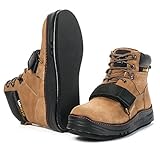
We need to be explicit about the limitation, because most articles aren’t: this is a texture-gripping mechanism. It works through the same principle as Velcro gripping a fuzzy surface — the foam compresses into shingle granule texture. Smooth painted or galvanized standing-seam steel has no equivalent texture for the pad to key into. The Performer will still function on metal — it’s not unsafe — but it will not deliver the same confidence-inspiring lock you get on shingle, and the pads themselves wear faster on hard, smooth metal than they do on the granule surfaces they were designed for. Cougar Paws’ own product literature is explicit that their magnetic SteelWalker line exists specifically because the Peak pad system isn’t the right tool for ferrous metal work.
Sizing note from field reviewers: Cougar Paws boots tend to run large — order a size down. They’ll feel snug initially but mold to your foot over time, similar to other heavy-duty leather work boots. American-made (Thorogood manufactures the boot itself for Cougar Paws), with a stylish black leather upper and minimal break-in time reported by most wearers.
Metal Roofing Specs
Mechanism: Replaceable foam traction pad | Best surface: Shingle, plywood, felt, slate — metal is secondary
Standing seam: ⚠️ Functional but not optimal | Corrugated: ⚠️ Reduced — not the right tool
Construction: American-made, Thorogood-built | Sizing: Runs large — size down
✅ Best for: Roofers, adjusters, estimators whose work is primarily shingle with occasional metal flashing/valley access
Pros: Industry-standard, decades-proven design; replaceable pad extends boot life significantly; minimal break-in; American-made construction; excellent on shingle, plywood, felt, slate.
Cons: Foam-pad mechanism underperforms on smooth painted/galvanized metal — not the right primary tool for dedicated metal roofing; pads wear faster on hard metal surfaces than on granule textures.
Best Ankle Support + Breathability: MBS RoofWalker Roofing Boot
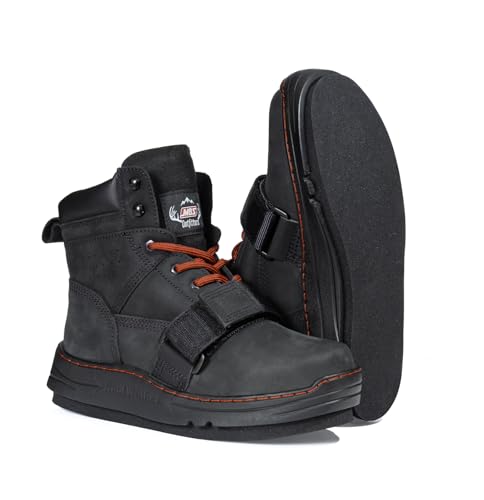
The RoofWalker is the newer specialty-roofing-boot entrant that distinguishes itself from the Cougar Paws line on two specific points: higher ankle support and built-in cooling vents with a breathable lining. Independent testing cited by the manufacturer claims the RoofWalker, paired with its own replacement pads, outperforms competing brands on both friction and durability — including on steep pitches — and the boot uses the same general principle as Cougar Paws (a replaceable pad system) bonded across plywood, wood shakes, felt, slate, and shingle surfaces.

The higher-ankle design and adjustable bridge strap are the genuine differentiators here. For roofers who’ve found Cougar Paws’ lower-cut profile lacking in lateral ankle stability on a steep pitch — especially when carrying material or working a long shift — the RoofWalker’s added ankle wrap is a meaningful upgrade. The cooling vents and breathable liner directly address the heat-management half of the traction equation discussed earlier: a boot that keeps your foot drier maintains better internal grip across a long, hot day on sun-exposed metal or shingle.

One important manufacturer caution worth repeating clearly: RoofWalker boots are designed for use specifically when on a roof or ascending/descending one — they are explicitly not intended for everyday wear, and using them off-roof will accelerate pad wear and void the practical performance you’re paying for. Treat the pads the way you’d treat climbing spikes: put them on when you reach the work surface, not before. Like the Cougar Paws Performer, this is a foam/pad mechanism — excellent on textured surfaces, reduced (not eliminated) on smooth metal, and not a substitute for a magnetic sole on dedicated daily standing-seam work.

Metal Roofing Specs
Mechanism: Replaceable foam traction pad | Ankle support: High-cut, adjustable bridge strap
Breathability: ✅ Cooling vents + breathable liner | Weight: ~5 lbs
Usage note: ⚠️ Roof-use only — not for everyday wear, off-roof use accelerates pad wear
✅ Best for: Roofers prioritizing ankle stability and heat management on long, steep shifts
Pros: Best ankle support of the specialty-pad boots in this guide; genuine cooling/breathability advantage for hot days; pull loop for easy donning; independently claimed to outperform competitors in friction and durability testing.
Cons: Foam-pad mechanism shares the same metal-specific limitation as Cougar Paws; not for everyday/ground wear; premium price relative to Cougar Paws Steel & Leather.
Best Waterproof General Work Boot: Thorogood Crosstrex 6″ Waterproof Composite Toe
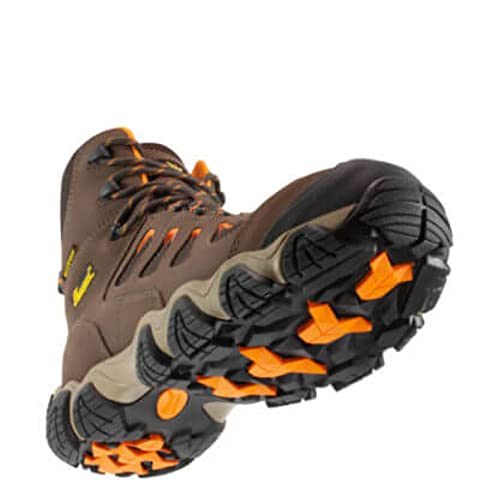
For crews who need a single boot that handles wet mornings, unpredictable weather, and genuine ASTM safety certification alongside metal-roof-appropriate traction, the Crosstrex is the strongest general-purpose pick in this guide. Its Crosstrex 360 outsole is specifically engineered for traction in wet and unpredictable conditions — directly addressing the documented 24% wet/dry failure jump covered earlier. BBP waterproofing keeps the boot’s interior dry through dew, light rain, and hose-downs, which protects the internal-grip half of the traction equation as much as it protects comfort.

This boot carries a composite safety toe and EH rating per official specs — genuinely useful for solar installation crews and any job with electrical proximity on a metal roof. The composite shank and flexible sole profile lean toward the flat-contact advantage discussed in the heel-geometry section, without sacrificing the ankle protection of a traditional 6″ work boot. Field notes from roofing-specific testers describe feet staying dry through dew and hose-downs, with the trade-off that the boot “runs warm by noon on sunny tear-offs” — consistent with the heat-management discussion above; pair with merino wool socks for full-day sun-exposed metal work.

Honest limitation: this is a strong general work boot with a genuinely good wet-traction outsole, not a specialty roofing-pad system. On pitches above roughly 8/12, it won’t match a dedicated foam-pad or magnetic-sole boot for pure holding power. Sizing runs true to length with a roomy forefoot — good for wide feet or thick merino socks, but watch your footing on steep, dusty shingle or metal since the outsole, while excellent, isn’t roofing-specialty.

Metal Roofing Specs
Mechanism: Crosstrex 360 soft rubber outsole | ASTM: Composite toe | EH: ✅ Yes
Waterproof: ✅ BBP sealed construction | Best pitch range: Under 8/12
Sizing: True to length, roomy forefoot | Weight: Moderate
✅ Best for: Solar installers, mixed-condition crews needing certified PPE plus genuine wet-metal grip
Pros: Excellent wet-condition traction directly addressing the documented slip-failure data; composite toe + EH rating for electrical-proximity work; fully waterproof; roomy fit for thick socks.
Cons: Not a specialty roofing-pad system — underperforms dedicated foam/magnetic boots above 8/12 pitch; runs warm in direct sun by midday.
Best Lightweight Hiking-Style: KEEN Utility Flint II Low Steel Toe
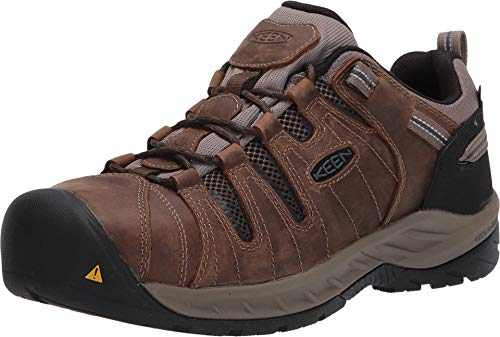
The Flint II Low is built closer to a hiking shoe than a traditional work boot, and on metal roofing specifically, that’s the point. Less weight and more flex translate directly to better ground feel and balance correction on an angled panel — qualities that matter more on a pitched roof than raw outsole grip alone. The highly slip-resistant rubber outsole and asymmetrical steel-toe design (KEEN’s signature left/right-specific toe shape rather than a generic centered cap) provide genuine impact protection without the bulk of a traditional safety boot.

EH-rated per official specs, and the low-cut profile keeps weight down for crews doing repeated ladder runs throughout the day — a genuine fatigue advantage on jobs that involve constant up-and-down access rather than sustained time fixed in one spot. The grip is reported as strong if soles stay clean on dusty metal; debris and dust on a smooth panel reduce friction at exactly the worst moment, so this is a boot that rewards keeping your soles clear between climbs.

The honest trade-off versus a traditional 6″ or 8″ boot: lower ankle structure means less lateral support on very steep or uneven footing, and the lighter build has a shorter lifespan under daily abuse compared to heavier leather alternatives. This is the right call for solar techs and lighter-duty metal-roof access where mobility and all-day comfort outweigh maximum durability — less so for full-time installation crews handling raw sheet metal and fasteners all day.

Metal Roofing Specs
Mechanism: Soft rubber compound, low-profile flex sole | ASTM: Steel toe (asymmetrical) | EH: ✅ Yes
Weight: Lightest in this guide | Best pitch range: Under 7/12
Sizing: True to length, slightly narrow midfoot — consider wide or half size up
✅ Best for: Solar techs, ladder-heavy jobs, fast-moving crews prioritizing mobility over maximum ankle support
Pros: Best-in-guide weight and ground feel; genuine steel-toe protection without bulk; EH rated; excellent for repeated ladder access.
Cons: Lower ankle structure limits lateral support on steeper or uneven footing; grip degrades if soles aren’t kept clear of dust on metal; shorter lifespan than heavier boots under daily heavy use.
Best Premium Hiking Crossover: Salomon X Ultra 4 Mid GTX

This is the boot that proves a genuine technical hiking design can outperform some purpose-built work boots on smooth, wet metal — and it’s the clearest real-world example of why the soft-rubber-compound mechanism matters as much as it does. Salomon’s Contagrip outsole was engineered for wet rock scrambling and technical alpine terrain; that same sticky-rubber chemistry translates directly to wet painted steel panel grip, because both surfaces reward the same molecular-level adhesion rather than texture-keying or magnetic attraction. The advanced ankle chassis reduces foot twisting on angled or uneven footing — a genuinely useful feature on a sloped panel — and the Gore-Tex membrane handles the wet-condition scenario this guide treats as a primary safety factor, not an afterthought.

The trade-off is one this guide addresses honestly rather than glossing over: there is no ASTM safety toe certification on this shoe, and no EH rating. For roofing inspectors, adjusters, solar techs doing light panel access, or anyone whose job doesn’t carry a strict safety-toe PPE requirement, that’s a fair exchange for genuinely superior wet-metal grip, low weight, and all-day comfort. For installation crews handling raw sheet metal edges, exposed fasteners, and falling-tool risk all day, it is the wrong primary boot — pair it as a second pair for inspection days, not as your daily installation footwear.

Mid-cut height provides meaningfully more ankle coverage than a low-cut hiking shoe while staying far lighter than a traditional work boot. This is consistently the pick recommended by sources covering metal-roof-specific footwear for exactly this reason — it solves the smooth-metal traction problem at a structural, compound level rather than relying on a roofing-specific pad system.

Metal Roofing Specs
Mechanism: Contagrip soft rubber compound | ASTM/EH: ❌ None — disclose before use on safety-toe-required sites
Waterproof: ✅ Gore-Tex | Ankle support: Advanced chassis, mid-cut
Best pitch range: Under 8/12, excellent wet performance | Weight: Very light
✅ Best for: Inspectors, adjusters, solar techs on light access — not full installation crews
Pros: Best-in-class wet-metal grip via genuine wet-rock-engineered rubber compound; Gore-Tex waterproofing; excellent ankle stability for the weight; outstanding all-day comfort.
Cons: No ASTM safety toe or EH rating — not appropriate where those are required; less puncture/abrasion resistance than a true work boot for raw metal installation work.
Best Budget Hiking Crossover: Merrell Moab 3 Mid Waterproof
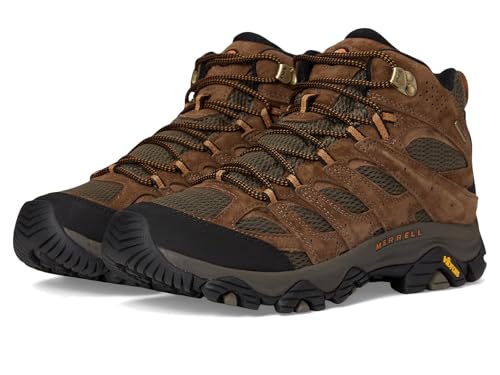
The Moab 3 Mid is the accessible-price answer to the same question the Salomon X Ultra 4 answers at a premium: can a hiking boot’s sole compound genuinely outperform a generic work boot on metal? Its durable, grippy Vibram-style sole doesn’t compress under sustained standing load the way some softer foam midsoles can over a long shift, and the cushioned midsole adds genuine all-day comfort that matters on jobs involving hours of standing on a hard metal deck.

Waterproof construction handles the dew and condensation scenario this guide treats as a real safety factor rather than a comfort nicety, and the mid-cut height provides reasonable ankle coverage without the weight of a full work boot. Like the Salomon, this is genuinely well-suited to inspectors, gutter installers, window cleaners, and anyone doing lighter-duty metal roof access where the documented wet-traction advantage of a sticky rubber compound matters more than maximum impact protection.

Same honest disclosure applies here as with the Salomon: no ASTM safety toe certification, no EH rating. This is the right secondary or inspection-day boot, not the right daily boot for a crew installing raw metal panels and handling fasteners all day where puncture and toe-impact protection are non-negotiable requirements.

Metal Roofing Specs
Mechanism: Vibram-style soft rubber compound | ASTM/EH: ❌ None
Waterproof: ✅ Yes | Best pitch range: Under 7/12
Price advantage: Most affordable hiking-style crossover in this guide
✅ Best for: Inspectors, gutter installers, light-access metal roof work on a budget
Pros: Genuinely sticky, durable outsole at an accessible price; waterproof; comfortable cushioned midsole for long standing periods; reasonable mid-cut ankle coverage.
Cons: No safety toe or EH rating; less suited to raw sheet metal installation work where puncture/impact protection is required.
Best Resoleable / Long-Term Value: Red Wing Heritage 6″ Classic Moc Toe
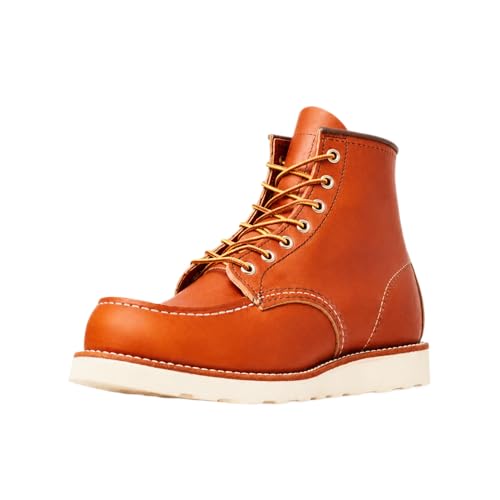
The Red Wing Heritage 6″ is the long-game pick in this guide. Its proprietary Traction Tred outsole is specifically engineered to provide sticky grip on slippery surfaces, including metal — and unlike every cemented-sole boot in this list, it’s Goodyear-welted and genuinely resoleable through Red Wing’s own repair program. For a roofer or contractor who wears boots daily across mixed job types, that resole capability is a real cost-per-year advantage: when the outsole eventually wears down from abrasive metal panel contact, you replace the sole rather than the entire boot.

Inside the boot is a leather insole over a cork midsole — a construction that, after a genuinely demanding break-in period, molds to the individual wearer’s foot for a custom fit that resists flattening over years of use, unlike foam midsoles that compress permanently. Premium oil-tanned leather provides real abrasion resistance against sharp metal edges and fastener heads, addressing the puncture/laceration concern raised earlier about lightweight hiking-style crossovers.

This is a soft-toe boot, not a safety-toe model — confirm your job’s PPE requirements before choosing it as a primary installation boot if a certified toe cap is mandated. The break-in period is also a genuine commitment, not a minor inconvenience; budget several weeks of regular wear before the boot reaches its famous custom-molded comfort. For crews who value long-term investment over immediate out-of-box comfort, and who work a genuine mix of metal and general job-site surfaces, this is one of the strongest value propositions in the entire guide measured over a multi-year ownership period.

Metal Roofing Specs
Mechanism: Traction Tred proprietary outsole | ASTM: Soft toe — confirm site PPE requirements
Construction: Goodyear welt, fully resoleable | Break-in: Significant — several weeks
Best pitch range: Under 7/12 | Long-term value: Highest in this guide
✅ Best for: Daily-wear contractors wanting one resoleable, multi-year boot for mixed metal and general job-site work
Pros: Resoleable Goodyear welt construction — genuine multi-year cost advantage; Traction Tred outsole rated for slippery surfaces including metal; premium leather resists abrasion from sharp metal edges; custom-molding cork midsole over time.
Cons: No safety toe; demanding break-in period; outsole is not roofing-pad-specialty — watch footing carefully on steep, dusty metal or shingle.
Best Wedge Sole + Safety Toe: Carhartt Waterproof 6″ Moc Toe Wedge Composite Toe

This is the boot that puts the heel-geometry lesson from earlier into practice at an accessible price. The wedge sole runs flat from toe to heel rather than using a traditional 90-degree heel block — directly maximizing surface contact area on an angled metal panel rather than concentrating weight at a single heel point. Combined with a composite safety toe, this gives crews a genuine ASTM-certified option that doesn’t fight the geometry problem that undermines so many standard lace-up work boots on a pitch.

Premium waterproof leather construction directly addresses the wet-condition safety factor covered earlier — keeping feet dry through morning dew and unpredictable weather protects both comfort and the internal-grip half of the traction equation. The moc-toe design offers a roomy, comfortable fit that accommodates thicker merino wool socks without crowding, which matters for the heat-management strategy discussed throughout this guide.

This is a genuinely solid all-around pick for crews needing certified PPE on moderate metal pitches, but it’s a general waterproof wedge-sole work boot, not a specialty roofing-pad or magnetic system — treat it as the right tool for 4/12–7/12 work, and step up to a dedicated specialty boot (Picks 1–3) for anything steeper or for daily standing-seam installation specifically.

Metal Roofing Specs
Mechanism: Flat wedge sole — maximized contact area | ASTM: Composite toe
Waterproof: ✅ Premium leather, sealed | Fit: Roomy moc-toe — good for thick socks
Best pitch range: 4/12–7/12 | Price: Accessible
✅ Best for: Crews needing certified PPE on moderate metal pitches without specialty-boot pricing
Pros: Flat wedge sole directly applies the contact-area principle that beats standard heel geometry; composite safety toe; fully waterproof; roomy fit accommodates thick socks.
Cons: Not a specialty roofing or magnetic system — limited on steeper pitches (8/12+) or daily standing-seam work; general-purpose outsole, not metal-specific compound.
Best EH-Rated for Solar / Electrical Proximity: Timberland PRO 8″ Steel Toe EH MaxTrax Waterproof
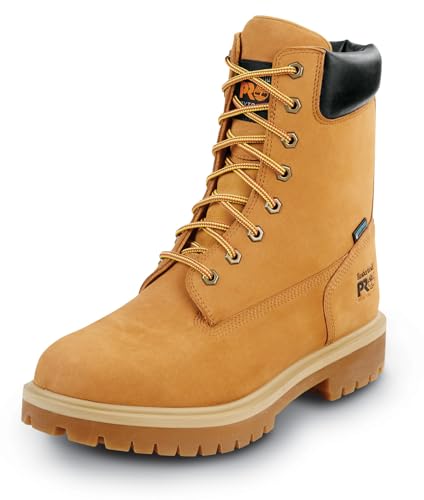
For metal roofing work with genuine electrical hazard exposure — solar panel installation, work near service entrances, any job where the EH-rating discussion from earlier in this guide is a live concern rather than boilerplate — the Timberland PRO 8″ is built specifically to answer that need. EH-rated steel toe construction provides certified electrical hazard protection alongside standard ASTM impact and compression protection, and the taller 8″ shaft gives more ankle coverage than the 6″ boots elsewhere in this guide, useful on uneven or debris-strewn metal decking during installation.

The MaxTrax slip-resistant outsole is engineered specifically for wet and unpredictable traction conditions, putting it in the same useful category as the Thorogood Crosstrex in directly addressing the documented wet/dry slip-failure data covered earlier. Fully waterproof construction keeps the boot’s interior dry through dew, rain, and the morning-condensation scenario that behaves like rain on metal panels even when it isn’t technically raining.

The steel toe here is a meaningful trade-off to flag: it provides excellent impact protection but is heavier and thermally conductive compared to composite alternatives — relevant on sun-heated metal panels where a steel toe can transmit more ambient heat. If your work is primarily hot-climate, sun-exposed metal installation without a strict steel-specific requirement, the Danner Crafter’s non-metallic toe (Pick 11) may be the more comfortable everyday choice; if EH certification and maximum impact protection are the priority, this boot delivers both clearly.

Metal Roofing Specs
Mechanism: MaxTrax slip-resistant outsole | ASTM: Steel toe | EH: ✅ Certified
Waterproof: ✅ Yes | Shaft height: 8″ — more coverage than 6″ alternatives
Best pitch range: Under 8/12 | Heat note: Steel toe conducts ambient heat
✅ Best for: Solar installers and crews with genuine electrical hazard exposure on metal panels
Pros: Certified EH rating directly relevant to solar/electrical work; MaxTrax outsole built for wet traction; taller 8″ shaft for more ankle and debris coverage; fully waterproof.
Cons: Steel toe is heavier and more thermally conductive than composite alternatives — less ideal in extreme sun-heat conditions; general-purpose outsole, not a specialty roofing-pad system.
Best Non-Metallic Toe: Danner Crafter 6″ Non-Metallic Toe Work Boot
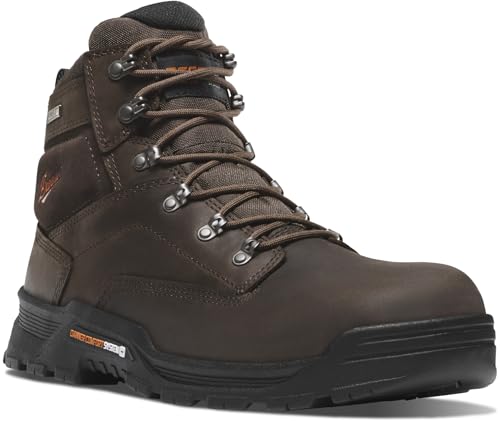
The Crafter brings Danner’s outdoor-footwear pedigree into a work boot context, and the non-metallic composite toe is the specific feature that matters most for metal roofing work: unlike steel, it won’t conduct ambient heat from sun-baked panels into the toe box, and it won’t trigger metal detectors at facilities with security screening — relevant for solar and utility-adjacent installation sites. EH-rated for electrical proximity work, with a Vibram outsole bringing the same sticky-rubber-compound logic discussed with the Salomon and Merrell picks into a genuine ASTM-certified work boot package.

The 6″ height keeps weight and break-in time more manageable than the taller Timberland PRO, while still providing real ankle coverage beyond a low-cut hiking shoe. Danner’s reputation for quality leather and genuine outdoor durability translates well to abrasion resistance against sharp metal panel edges and exposed fasteners — a real consideration the lightweight hiking-style crossovers in this guide can’t fully match.

This is the boot to reach for if you want the Salomon/Merrell sticky-rubber traction logic combined with full ASTM safety certification and better edge/fastener abrasion resistance than a hiking shoe provides — effectively splitting the difference between the crossover picks and the heavier EH-rated Timberland. Premium pricing reflects Danner’s build quality and the Vibram outsole specifically.

Metal Roofing Specs
Mechanism: Vibram soft rubber compound | ASTM: Composite (non-metallic) toe | EH: ✅ Yes
Heat advantage: Non-conductive toe — no ambient heat transfer like steel | Shaft: 6″
Best pitch range: Under 8/12 | Build quality: Premium leather, genuine outdoor durability
✅ Best for: Installation crews wanting Vibram-grade traction plus full ASTM certification and metal-detector-friendly toe
Pros: Vibram outsole brings sticky-compound traction into a fully ASTM-certified, EH-rated package; non-metallic toe avoids heat conduction and metal-detector issues; quality leather resists abrasion from sharp panel edges; manageable 6″ weight and break-in.
Cons: Premium price; general-purpose Vibram outsole, not a dedicated roofing-pad or magnetic system for the steepest pitches.
Best for Inspectors / Light Access: Estimator Roofing Boot
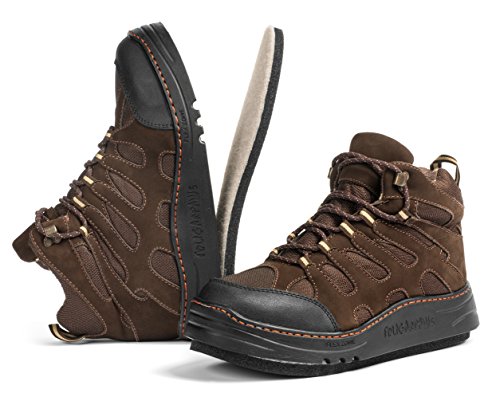
The Estimator name tells you exactly who this boot is for: insurance adjusters, sales estimators, and inspectors who need to access a metal roof briefly and confidently — not crews installing panels for an entire shift. It uses a flat wedge sole applying the same contact-area principle discussed in the heel-geometry section, giving meaningfully better footing on a pitched metal panel than a standard dress-casual or generic work shoe, at a price point well below the dedicated specialty roofing-pad boots.

This is a soft-toe design — appropriate for the role it’s built for, since estimators and inspectors typically aren’t handling heavy materials or facing the same falling-object risk as an installation crew. The brown leather upper and lower profile also serves a practical secondary purpose noted across multiple roofing-footwear sources: a boot that looks presentable enough to wear into a client meeting or a lunch stop without looking like a full work boot, while still being genuinely capable of a short, confident roof walk for measurement or damage assessment.
Don’t mistake this for a steep-pitch specialty solution — it’s a flat wedge sole, not a foam pad or magnetic system, and it’s not built for sustained installation work or the heaviest pitches. For its actual intended use case — brief, confident metal roof access for assessment purposes — it’s a smart, affordable, purpose-fit choice.
Metal Roofing Specs
Mechanism: Flat wedge sole | ASTM: Soft toe | Best use: Brief access, not sustained installation
Best pitch range: Under 6/12, confident footing for assessment access
Appearance: Presentable for client-facing roles
✅ Best for: Adjusters, estimators, inspectors needing confident, brief metal roof access at a low price point
Pros: Flat wedge sole improves footing on pitched metal at a budget price; presentable appearance for client-facing work; lightweight and comfortable for brief access rather than all-day wear.
Cons: Not a specialty steep-pitch solution — not built for sustained installation work or the steepest pitches; soft toe, no safety certification for installation-level hazard exposure.
When Hiking Shoes Beat Purpose-Built Roofing Boots — and When They Don’t
The Salomon and Merrell picks in this guide raise a question worth answering directly: why would a hiking boot ever outperform a boot specifically designed for roofing? The answer is the rubber compound itself. Sticky-rubber chemistry engineered for wet rock scrambling and technical alpine terrain is mechanically similar to what’s needed for wet painted steel — both reward molecular-level surface adhesion rather than texture-keying (the foam-pad mechanism) or magnetic attraction.
That makes hiking-shoe crossovers genuinely excellent for inspectors, adjusters, solar techs doing light panel access, and anyone whose job doesn’t carry a strict ASTM safety-toe requirement. It does not make them the right choice for new-installation crews handling raw sheet metal edges and exposed fasteners all day, where puncture resistance, toe-impact protection, and general abrasion resistance against sharp metal matter as much as slip resistance — and where most hiking footwear simply isn’t built to the same standard. Match the crossover picks to the access-and-assessment use case; match the certified work boots (Picks 4, 9, 10, 11) to the installation use case.
Sole Wear Signals Specific to Metal Roofing
Generic advice says “replace your roofing footwear every 6-12 months.” Metal roofing wears soles differently than shingle does, and the visual cue you’re trained to look for on shingle won’t necessarily show up the same way on metal.
Shingle granules tear and gouge a foam pad or rubber outsole — the damage is visually obvious as chunks, tears, and rough patches. Painted metal panels and exposed fastener heads instead create fine, even abrasive wear on soft rubber and foam compounds that is much less visually dramatic. A sole can lose significant micro-texture and grip on metal without showing the dramatic gouging that signals shingle-sole failure.
The Metal-Specific Replacement Signal
Watch for a smooth, glossy sheen developing on a rubber or foam sole surface that was originally matte or textured. That gloss is the early warning sign of grip loss on metal-roofing-specific use — distinct from the visible chunking and tearing that signals shingle-sole failure. If your sole looks shinier than it used to but doesn’t show obvious damage, don’t assume it still has full life left — check it against a new pair before your next steep job.
FAQ — 8 Questions Answered
Are Cougar Paws good for metal roofs?
The standard Cougar Paws foam-pad boots (Performer, Steel & Leather) work on metal but aren’t optimized for it — the foam pad mechanism grips by compressing into surface texture, and smooth painted or galvanized metal has little texture to key into. Cougar Paws’ own response was to build a separate magnetic-sole product line specifically for ferrous steel. For occasional metal access alongside primarily shingle work, the standard foam-pad boots are fine. For dedicated daily standing-seam or corrugated metal installation, a magnetic-sole boot is the better-matched tool.
What is the difference between roofing boots for shingle and roofing boots for metal?
Shingle-roofing boots typically use replaceable foam traction pads that grip granule texture through compression — essentially a Velcro-on-fuzzy-surface mechanism. Metal-roofing-specific traction instead relies on either embedded sole magnets (for ferrous steel, working independent of friction entirely) or soft sticky-rubber compounds (like Vibram or Contagrip, engineered for wet rock grip that translates to smooth wet metal). These are different physical mechanisms, not different tread patterns on the same underlying technology.
Do magnetic roofing boots actually work?
Yes, on ferrous (steel) panels — magnets create a positive lock independent of surface texture or moisture, which is why they outperform friction-based systems on smooth, wet metal. They do not work on non-ferrous metal like aluminum panels, since there’s no magnetic attraction. Performance also varies by panel profile: full magnetic contact is achieved easily on flat standing-seam panels, but on corrugated/ribbed profiles you must deliberately plant your foot on the flat pan between ribs to get the full benefit.
Is a standing seam roof harder or easier to walk on than corrugated metal?
Standing seam is easier. It presents a continuous flat plane that any sole type can fully contact anywhere on the panel. Corrugated/ribbed panels have raised ribs separated by valleys, and field-documented testing found roughly a 60% traction reduction on corrugated profiles compared to standing seam at the same pitch — even using identical footwear. Foot placement technique (planting on the flat pan between ribs) becomes a meaningful part of staying safe on corrugated metal.
How much more dangerous is a wet metal roof than a dry one?
Field-documented testing across nine months found an average 24% increase in slip-failure rate during wet conditions compared to dry conditions at the same pitch. This isn’t a marginal difference — it’s a quantified, significant jump in risk at an identical slope. Morning dew and overnight condensation behave the same way as rain for traction purposes, even when it technically isn’t raining, and crews frequently underestimate this specific risk.
At what roof pitch do I need specialty footwear?
Under 4/12, standard high-traction work boots or hiking-style shoes are generally adequate. From 4/12 to 7/12, soft rubber compound becomes important rather than optional. At 8/12 to 10/12, specialty footwear (foam pad for shingle-adjacent work, magnetic sole for dedicated ferrous metal) becomes the professional standard rather than a nice-to-have, as standard soles begin to lose reliable grip. Above roughly 11/12 (near 45°), specialty soles are essential and footwear should be treated as a secondary safety control — fall arrest PPE becomes mandatory regardless of boot choice at this range.
Can I wear hiking boots on a metal roof?
Yes, and in some cases they genuinely outperform purpose-built roofing boots on smooth wet metal, because sticky-rubber compounds engineered for wet rock scrambling (Vibram, Contagrip) translate well to wet painted steel. This is a good fit for inspectors, adjusters, and light-access roles. It’s the wrong primary choice for installation crews, since most hiking footwear lacks ASTM safety toe certification and the puncture/abrasion resistance needed when handling raw sheet metal edges and exposed fasteners all day.
Do I need EH-rated boots for metal roofing?
If your work involves any electrical hazard exposure — solar panel installation, work near service entrances or overhead lines, or any job where live electrical components are present on or near the metal surface — yes, verify EH rating on the specific boot variant, not just the brand. Metal roofing panels are themselves conductive, which makes this more directly relevant to metal-roofing crews (especially solar installers) than to general shingle work. Always confirm the exact listing carries EH certification rather than assuming it based on the model line.
Final Verdict: Best Grip Sole by Roof Type and Crew Profile
Crew Profile → Best Pick
Dedicated metal roofing installer, mixed standing seam/corrugated, daily use: Cougar Paws Steel & Leather for budget-conscious crews, or step up to a dedicated magnetic-sole boot sourced direct from the manufacturer for daily standing-seam-first work
Mixed shingle + occasional metal access: Cougar Paws Performer or MBS RoofWalker (choose RoofWalker for added ankle support and breathability)
Solar installation, electrical-proximity work: Timberland PRO 8″ MaxTrax (steel toe, maximum coverage) or Danner Crafter 6″ (non-metallic toe, lighter, no heat conduction)
Moderate pitch (4/12–7/12), need certified safety toe at accessible price: Carhartt WP 6″ Wedge CT
All-conditions wet/unpredictable weather, general work boot with metal-relevant traction: Thorogood Crosstrex 6″
Fast-moving crew, ladder-heavy day, mobility over bulk: KEEN Utility Flint II Low
Inspector, adjuster, or solar tech doing light access only (no safety toe required): Salomon X Ultra 4 Mid GTX (premium wet-metal grip) or Merrell Moab 3 Mid WP (budget alternative)
Estimator/adjuster needing brief, confident, presentable roof access: Estimator Roofing Boot
Multi-year daily-wear investment across mixed metal and general job sites: Red Wing Heritage 6″ — resoleable, long-term value leader
The single idea worth carrying away from this guide: metal roofing is not “steep roofing with a different surface.” It’s a distinct traction problem that rewards either a fundamentally different mechanism (magnets on ferrous steel) or a fundamentally different rubber chemistry (sticky wet-rock compounds) — not just a more aggressive version of whatever worked on shingle. Match the mechanism to your actual roof profile and pitch, not just the brand reputation, and the rest of this guide’s picks will serve you well.