Here is trail running’s dirty secret: almost every beginner buys the wrong shoes first. Not because they made a careless choice — but because every guide they read was written by experienced ultrarunners for experienced ultrarunners. You end up with a shoe that has 5mm deep chevron lugs designed for Scottish mountain mud, a zero-drop platform that tears apart your Achilles tendon, and so little cushioning that your feet are bruised from road crossings by mile three. Then you decide trail running isn’t for you. You were just wearing the wrong shoes.
This guide starts from a different place: what does a complete beginner actually need? Not what an experienced runner prefers. Not what won the Hardrock 100. What does someone who currently runs in road shoes, wants to explore trails for the first time, and has never thought about lug depth or heel drop in their life — what do they need from their first trail shoe?
The answer involves less aggression, more cushion, more road compatibility, and a specific heel drop range that keeps your Achilles happy while you build the trail-specific strength that comes with experience. We’ve picked ten shoes that deliver exactly that, organised them by the runner type they suit best, and built the road-to-trail translation table that no other guide has written: if you already run in a specific road shoe, here’s the trail shoe that will feel most familiar.
⚡ Quick Picks — Best Trail Running Shoes for Beginners
| Best For | Shoe | Drop | Road OK? | Price |
|---|---|---|---|---|
| Best overall beginner | Brooks Cascadia 19 | 6mm | ⭐⭐⭐⭐ | ~$130 |
| Best road-to-trail transition | Hoka Challenger 8 | 5mm | ⭐⭐⭐⭐⭐ | ~$140 |
| Best premium beginner | Hoka Speedgoat 7 | 4mm | ⭐⭐⭐ | ~$155 |
| Best budget under $90 | ASICS Gel-Venture 10 | 10mm | ⭐⭐⭐ | ~$70 |
| Best for Ghost road runners | Brooks Ghost Trail 17 | 12mm | ⭐⭐⭐⭐⭐ | ~$130 |
| Best all-rounder | Saucony Peregrine 16 | 5mm | ⭐⭐⭐ | ~$140 |
| Best wide toe box | Altra Lone Peak 9 | 0mm | ⭐⭐⭐ | ~$150 |
| Best max cushion / stability | NB Fresh Foam X Hierro v9 | 4mm | ⭐⭐⭐⭐ | ~$155 |
| Best value mid-tier | Hoka Torrent 4 | 5mm | ⭐⭐⭐ | ~$120 |
| Best women’s beginner | Salomon Genesis | 8mm | ⭐⭐⭐ | ~$135 |
Table of Contents
- Trail vs. Road Running Shoes: What Actually Changes
- Road-to-Trail Translation Table
- The 6 Beginner Mistakes Shoes Can Prevent
- Heel Drop Decoded for Beginners
- Lug Depth: Beginners Need Less Than They Think
- Best Overall: Brooks Cascadia 19
- Best Road-to-Trail: Hoka Challenger 8
- Best Premium: Hoka Speedgoat 7
- Best Budget: ASICS Gel-Venture 10
- Best for Ghost Runners: Brooks Ghost Trail 17
- Best All-Rounder: Saucony Peregrine 16
- Best Wide Toe Box: Altra Lone Peak 9
- Best Max Cushion: NB Fresh Foam X Hierro v9
- Best Value Mid-Tier: Hoka Torrent 4
- Best Women’s Beginner: Salomon Genesis
- Road-to-Trail Versatility Ranking
- Budget Tier Breakdown
- Women’s Beginner Trail Shoe Guide
- The Progressive Training Framework
- Your First 5 Trail Runs: Beginner Checklist
- FAQ — 10 Questions Answered
- Final Verdict by Runner Type
Trail Running Shoes vs. Road Running Shoes: What Actually Changes
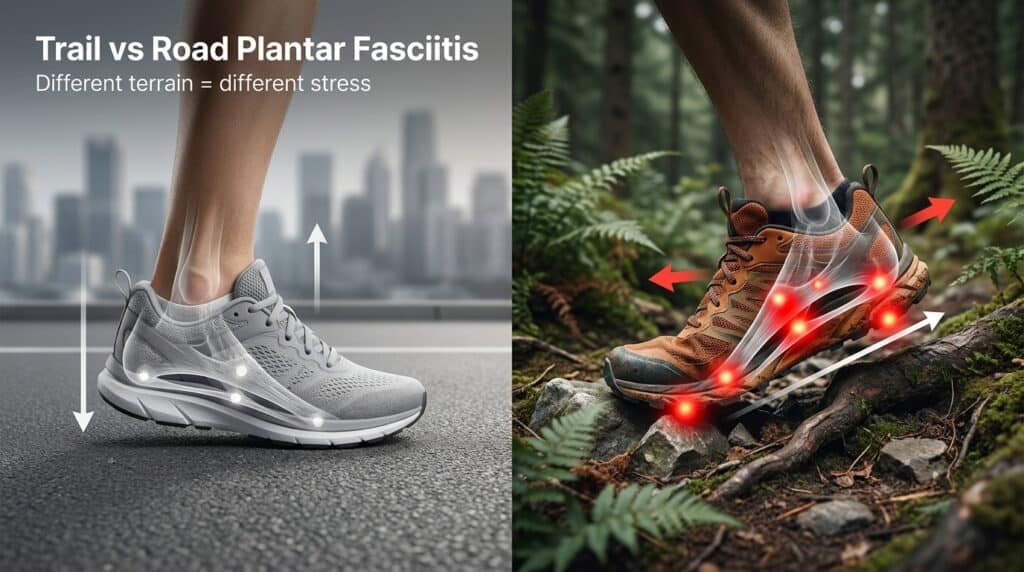
Side-by-side comparison of trail and road running shoes demonstrating how different terrains impact plantar fasciitis stress and support.
Before spending money on a trail shoe, it helps to understand exactly what is different from the road shoe already in your cupboard — and what stays the same. The answer is more nuanced than “trails are rougher, so trail shoes are tougher.”
What changes: The outsole. Trail shoes have rubber lugs — raised projections that grip dirt, rock, and root surfaces the way a road shoe’s flat rubber cannot. The lug depth, spacing, and rubber compound determine where the shoe performs well. Trail shoes also typically have more torsional rigidity (resistance to the shoe twisting under your foot as you land on uneven surfaces), a rock plate in many models (a hard insert between the midsole and outsole that prevents sharp rocks from bruising the forefoot), and a more protective upper that resists debris and abrasion better than road mesh.
What stays the same: The basic geometry of heel-to-toe drop, stack height, and last shape that determines whether a shoe fits your foot. A brand that makes a road shoe you love typically makes a trail shoe on a similar last — and that trail shoe will fit you in a familiar way. This is the foundation of the road-to-trail translation table below.
The beginner trap: The trail shoes that look most impressive in photos — deep aggressive lugs, low-to-the-ground minimal stack, zero heel drop — are designed for experienced mountain runners on the most demanding terrain. For 90% of beginner trail running, which happens on established maintained trails under moderate conditions, these characteristics are wrong. A beginner needs cushion, moderate lug, and a familiar heel drop. Not what you see on ultrarunners in race photos.
The Road-to-Trail Translation Table: “I Run in X — Buy Y”
This is the table that every other beginner trail shoe guide has failed to write. If you already run in a specific road shoe, here is the trail shoe that will feel most familiar to you — same brand logic, same heel drop character, same foam feel where possible.
| Your Current Road Shoe | Most Familiar Trail Equivalent | Why It Works |
|---|---|---|
| Brooks Ghost / Glycerin | Brooks Ghost Trail 17 or Cascadia 19 | Ghost Trail uses identical DNA Loft V3 foam and same upper mesh as road Ghost — the most direct translation available. Cascadia 19 for more trail capability. |
| Hoka Clifton / Bondi / Mach | Hoka Challenger 8 or Speedgoat 7 | Challenger 8 maintains Hoka’s maximal-cushion character with trail outsole. Speedgoat 7 for Vibram grip on more technical terrain. |
| Saucony Ride / Kinvara / Triumph | Saucony Peregrine 16 | Same brand ergonomics. Maintained cushioning character. PwrTrac rubber for proven trail traction. Familiar fit geometry from day one. |
| ASICS Gel-Nimbus / Kayano / Cumulus | NB Fresh Foam X Hierro v9 | Maximum cushion preserved. 4mm drop close to ASICS standard. Solid trail outsole. Smooth road-to-trail cushioning transition. |
| New Balance Fresh Foam 1080 / 880 | NB Fresh Foam X Hierro v9 | Same Fresh Foam DNA on trails — the most direct NB road-to-trail translation available. |
| Nike Pegasus / Vomero | Brooks Cascadia 19 or Saucony Peregrine 16 | Similar drop and cushion profile. Both are beginner-appropriate all-rounders that handle road and trail comfortably. |
| Minimalist / low-drop road shoe (<4mm) | Altra Lone Peak 9 | Zero-drop trail shoe preserves low-drop biomechanics. Most natural transition for low-drop road runners. Include zero-drop warning for conventional shoe users. |
The 6 Beginner Mistakes — and How Shoe Choice Prevents or Causes Them
These are the specific errors that turn a beginner’s first trail run into a painful experience. Every one of them is preventable with the right shoe choice.
Mistake 1: Buying Too-Technical Shoes
Deep lugs (5mm+), ultra-low stack height, and carbon plates are designed for elite mountain terrain. 80% of beginner trail running happens on established maintained singletrack, gravel paths, and light dirt where 3–4mm versatile lugs provide all needed grip. Deep-lug technical shoes feel heavy, uncomfortable on road crossings, and provide no additional benefit on the smooth trails where beginners spend most of their time. Fix: choose a versatile 3–4mm multi-directional outsole for your first shoe.
Mistake 2: Starting Zero-Drop Without Adaptation
Achilles tendinopathy is the documented consequence of conventional-shoe runners switching cold to zero-drop footwear. The calf-Achilles chain has been operating in a shortened position in 8–12mm road shoes; zero-drop immediately demands full-length loading under running load. Fix: start at 6–8mm drop. Zero-drop is achievable after months of graduated Achilles conditioning — it is not a beginner starting point unless you are already in low-drop road shoes.
Mistake 3: Ordering in Road Shoe Size
On descents, your foot slides forward inside the shoe. Trail running shoes require a half-size of extra toe room — called “thumbnail space” — that road shoe sizing does not account for. Ordering your standard size in a trail shoe produces black toenails and forefoot blisters on the first long downhill. Fix: size 0.5 up from your road shoe size for most trail models.
Mistake 4: Using Maximum-Cushion Shoes on Technical Terrain
40mm+ stack heights reduce ground feel — excellent for road-to-trail transitions on maintained paths, but less appropriate for technical terrain where proprioception helps you navigate rocks and roots precisely. Fix: match stack height to trail type. Maximal cushion for established trails and road crossings; moderate stack when trails get technical.
Mistake 5: First Run Too Long in New Trail Shoes
New trail shoes need the laces adjusted differently than road shoes for downhill running, and the trail-specific midsole and outsole feel unfamiliar at first. A first run on a steep 10-mile descent in brand-new trail shoes produces blisters and discomfort that a short flat route would avoid. Fix: first trail run in new shoes = 3 miles or under, flat terrain, check heel lockdown before attempting a hill.
Mistake 6: Saving Money on the Outsole
Budget trail shoe rubber wears in 150–200 miles and loses wet-surface grip significantly. For wet trail environments, the step up to Vibram Megagrip (Speedgoat 7) or PwrTrac rubber (Peregrine 16) is a genuine safety improvement. Fix: if your trails are wet, spend on the outsole. Save elsewhere.
Heel Drop Decoded: The Right Range for Beginners and Why Zero-Drop Is Risky First
Heel-to-toe drop is the height difference between the heel and forefoot. A 0mm (zero-drop) shoe means both are at equal height. A 12mm drop shoe feels like a conventional running shoe — raised heel, familiar Achilles loading. For beginners transitioning from conventional road shoes, the recommended starting drop range is 5–8mm.
| Drop Range | Beginner Safe? | Notes | Models in This Guide |
|---|---|---|---|
| 0mm (zero-drop) | ⚠️ Risk | Achilles tendinopathy risk for conventional shoe users. Only safe if already using low-drop road shoes (<4mm). | Altra Lone Peak 9 |
| 4–5mm | ✅ Good | Small Achilles adjustment; most road runners adapt within 1–2 weeks of gradual use. | Speedgoat 7 (4mm), Peregrine 16 (5mm), Challenger 8 (5mm), Hierro v9 (4mm), Torrent 4 (5mm) |
| 6–8mm | ✅ Best for most | Maintains familiar road shoe Achilles loading. Zero adaptation required. The most beginner-safe range for conventional shoe users. | Cascadia 19 (6mm), Salomon Genesis (8mm) |
| 10–12mm | ✅ Easiest transition | Road shoe drop preserved. Unusual in trail shoes but found in some entry-level and road-to-trail hybrids. Fine biomechanically. | ASICS Gel-Venture 10 (10mm), Ghost Trail 17 (12mm) |
Lug Depth Guide: Beginners Need Far Less Than They Think
If you have seen trail running shoe marketing, you have seen aggressive chevron lugs that look like they belong on a mountain bike tyre. Those 5–6mm deep lugs are genuine mud specialists — they are designed for saturated Scottish hillside terrain, cross-country races on loose muddy courses, and technical mountain running where the surface is actively soft and unstable. Most beginners will never run in conditions where that lug depth is an advantage.
The majority of beginner trail running takes place on established maintained trails — hard-packed dirt, gravel, moderate rocky singletrack. On these surfaces, 3–4mm multi-directional lugs provide all needed grip with less weight, more road-running comfort, and a far less abrasive feel on the pavement sections you will inevitably cross to get to the trailhead.
The Lug Recommendation by Trail Type
Established maintained trail (hard pack, gravel, light dirt): 3–4mm lug — Brooks Cascadia 19, Hoka Challenger 8, Ghost Trail 17. Mixed terrain with some technical sections: 4–5mm lug — Saucony Peregrine 16, Hoka Speedgoat 7 (Vibram Megagrip). Muddy / wet / loose soft terrain: 5mm+ lug — Salomon Speedcross 6. Save the deep-lug shoe for when you actually need it — which as a beginner will likely be months away, if ever.
Best Overall Beginner Trail Shoe: Brooks Cascadia 19
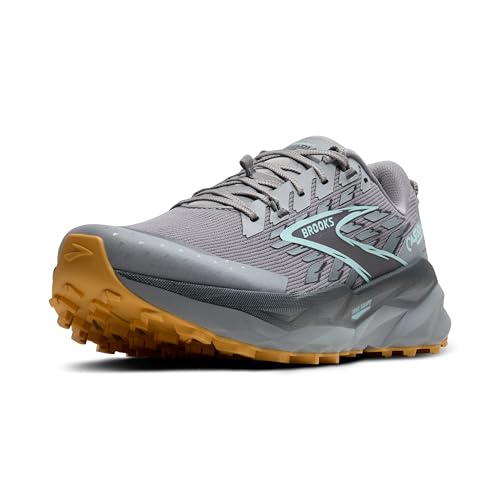
iRunFar’s trail running team said it plainly: “If I had to recommend a pair of trail shoes to a new trail runner about whom I had no additional details, I’d point them toward the Brooks Cascadia 19.” That sentence, buried in 40,000 words of expert trail running content, is the single most useful beginner recommendation in the current trail shoe landscape — and the Cascadia 19 earns it. The 6mm heel drop is the ideal beginner range: far enough from zero-drop to avoid Achilles adaptation demands, identical enough to most road shoes that the transition feels immediately natural. The Ballistic Rock Shield plate protects against the sharp trail debris that bruises road-conditioned feet. The v19 foam update makes it noticeably more road-compatible than previous editions, so the pavement sections between you and the trailhead are no longer a chore.

What makes the Cascadia 19 correct for beginners specifically — rather than just a good trail shoe generally — is its stability profile. RunRepeat lab testing consistently rates the Cascadia line at 4–5 out of 5 on torsional rigidity, meaning the shoe resists the twisting motion when your foot lands on an angled rock surface. This is the mechanism that prevents ankle rolls — the most common beginner trail running injury after black toenails. A stiffer platform under lateral load gives a beginner the margin of error they need while building the trail-specific proprioception that experienced runners develop over hundreds of miles. The outsole tread is moderate rather than extreme — appropriate for the established trail running that 90% of beginners actually do.

Sizing: Brooks Cascadia runs true to size in length. Order 0.5 up from your standard road shoe size to ensure thumbnail-width toe clearance on downhills. Wide sizing is available. The Cascadia 19’s only meaningful limitation for beginners is that its moderate tread depth makes it less effective in sustained deep mud — but that is correctly not a beginner concern on established trails. Break-in is minimal; expect comfortable full runs within the first 2–3 outings.

Beginner Specs
Drop: 6mm — ideal beginner range | Lug depth: Moderate — established trail versatile
Rock plate: ✅ Ballistic Rock Shield | Road-to-trail compatible: ⭐⭐⭐⭐ Very Good
Wide available: ✅ Yes | Break-in: Minimal | Sizing: 0.5 up from road size
✅ Best for: Any beginner with no specific preference — the safe, correct first trail shoe choice
Pros: Expert-endorsed specifically for beginners; 6mm drop requires zero adaptation for most road runners; Ballistic Rock Shield protection; stable torsional rigidity for uneven terrain; road-compatible for mixed commutes.
Cons: Moderate tread limits mud performance; not the most exciting shoe aesthetically; not as light as Hoka alternatives.
Best Road-to-Trail Transition: Hoka Challenger 8
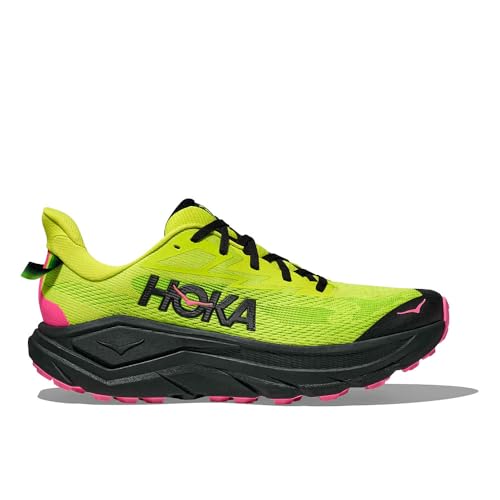
The Hoka Challenger 8 is the trail shoe designed explicitly for the runner who spends most of their time on roads but wants to venture onto trails without changing their footwear. Adventure Alan tested it on a 300-mile section hike out of the box and reported zero blisters — a testament to the immediate, undemanding comfort that makes it exceptional for beginners who cannot be bothered with break-in. The 42mm stack height means every surface feels cushioned — road, gravel, maintained trail, hardpack — and the broad outsole traction handles the mixed-surface reality of most beginner trail runs, where you run pavement to the trailhead, spend an hour on dirt, cross gravel, and run pavement home. No single terrain type in that profile requires specialist footwear. The Challenger 8 handles all of it.

At 5mm drop, the Challenger 8 is well within the beginner-safe range for most road runners. The maximal stack does something specific for beginners that moderate-stack shoes cannot fully replicate: it creates a very forgiving landing on unfamiliar terrain. When a beginner misjudges a rock placement, the thick foam absorbs the consequence rather than transmitting it directly to the foot. This protective margin is genuinely valuable in the first months of trail running when foot placement is still imprecise. The highly breathable mesh upper and quick-dry properties make it comfortable in warm conditions and recover rapidly from stream crossings.

One honest limitation to disclose: some users have reported outsole lug separation at the adhesive bond after 100+ miles of heavy use. Adventure Alan noted this in their 300-mile test — minor peeling at the lug edges that continued without structural failure to 300 miles. For most beginner runners covering 150–250 miles in their first year, this is unlikely to manifest. Available in wide for broader feet. Sizing runs true to Hoka’s standard — consider 0.5 up for downhill trail use if between sizes.

Beginner Specs
Drop: 5mm — beginner-safe | Stack: 42mm — maximal cushion, most forgiving for trail beginners
Road-to-trail: ⭐⭐⭐⭐⭐ Excellent — designed explicitly for road/trail mix | Wide available: ✅ Yes
Break-in: None | Sizing: True to Hoka sizing; 0.5 up if between sizes
✅ Best for: Hoka road shoe owners; runners who run trail + road on same outing; cushion-first beginners
Pros: Zero break-in; maximal cushioning forgives beginner foot placement errors; excellent road-to-trail dual use; zero blisters reported on 300-mile test.
Cons: Potential lug adhesive separation at 100+ miles under heavy use; high stack reduces technical terrain feel; not a mud specialist.
Best Premium Beginner: Hoka Speedgoat 7
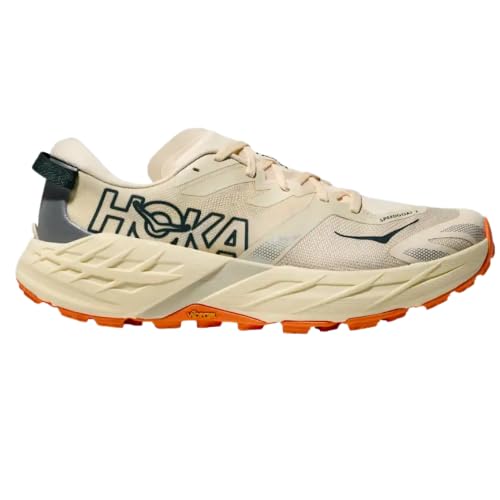
If your budget stretches to $155 and you want the best outsole traction available in a beginner-appropriate trail shoe, the Hoka Speedgoat 7 is the correct choice. Outdoor Gear Lab tested over 20 trail shoes with a 50-person testing team in 2025 and named the Speedgoat 7 as the shoe for “a wide range of runners, from beginners exploring local trails to experienced athletes tackling technical terrain.” The women’s version was the single highest-rated shoe in their entire test. The Vibram Megagrip outsole is the reason: it is simply a better rubber compound than most alternatives, providing grip on both dry and damp rock that budget and mid-tier outsoles cannot replicate. When you eventually run your first trail in wet conditions — which will happen — the Speedgoat gives you confidence that lesser outsoles deny.

The 4mm drop is at the lower end of beginner-safe territory. Most road runners transitioning from 8–12mm road shoes will feel a slight calf tightness in the first 1–2 weeks of Speedgoat use — this is normal and resolves as the lower-leg musculature adapts. The cushioning is genuine Hoka character — well-cushioned without the extreme softness of the Clifton; the Speedgoat feels more grounded and purposeful underfoot, appropriate for trail surfaces where some ground-feel aids foot placement. The balanced blend of cushion, traction, and stability makes it one of the few trail shoes that delivers on all three simultaneously at its price point.

Sizing note: Hoka trail shoes typically run slightly short compared to road equivalents. Size 0.5 up from your Hoka road shoe size, and one full size up from your standard non-Hoka road shoe size, for comfortable downhill toe clearance. Vibram Megagrip’s durability extends outsole life to 400+ miles — making the higher upfront cost more economical over time than budget alternatives replaced at 200 miles.

Beginner Specs
Drop: 4mm — slight calf adaptation (1–2 weeks for road runners) | Outsole: Vibram Megagrip — best traction in guide
Road-to-trail: ⭐⭐⭐ Good (Vibram works fine on roads, not designed for it) | Wide available: ✅ Yes
Break-in: Minimal | Sizing: 0.5–1 up from road shoe size
✅ Best for: Budget-permitting beginners; wet trail environments; Hoka fans; women beginners (women’s won OGL top honours)
Pros: Vibram Megagrip — best beginner outsole for varied and wet terrain; balanced cushion/traction/stability; women’s version specific to women’s last; proven long-term durability.
Cons: 4mm drop needs 1–2 week Achilles adaptation for conventional shoe users; premium price; Vibram feels aggressive on sustained pavement.
Best Budget Under $90: ASICS Gel-Venture 10
No products found.The ASICS Gel-Venture 10 is RunRepeat’s “best budget trail running shoe” and the correct answer to a specific question: “I’m not sure if I’ll like trail running — what should I spend to find out?” At under $70, it allows you to test trail running on local established trails without the financial commitment of a $150 premium shoe. It is a legitimate trail shoe with rubber outsole tread, Gel cushioning in the heel, and the ASICS last that millions of runners already know. For light established-trail running in dry conditions, it performs its role adequately. The 10mm drop makes it the safest heel-drop transition in this guide for runners coming from conventional high-drop road shoes.
No products found.The honest limitations: budget rubber outsoles wear in 150–200 miles under regular use, significantly faster than Vibram and PwrTrac alternatives. The outsole compound provides adequate grip on dry established trails but performs noticeably worse than premium alternatives on wet rock, roots, or any surface with significant moisture. The midsole foam is basic EVA that packs out more quickly than advanced foam technologies. For a beginner who runs 30–50 miles per month on dry local trails, this limitation matters less — the shoe will see 12+ months of service. For a beginner who runs 80+ miles per month in varied conditions, the investment in a mid-tier shoe pays back in durability and wet-weather confidence.
No products found.The upgrade path is the most important planning point for a Gel-Venture buyer: decide before you buy at what mileage or experience level you will step up to a proper mid-tier shoe. If you run 20 trail runs and enjoy it, the Cascadia 19 or Peregrine 16 is a natural next purchase. The Venture gets you to that decision point without an expensive commitment. Runs approximately true to ASICS road sizing.
No products found.Beginner Specs
Drop: 10mm — easiest drop transition in guide | Price: ~$70 — lowest in guide
Road-to-trail: ⭐⭐⭐ Good (light lug works on road) | Service life: 150–200 miles (budget outsole)
Break-in: None | Sizing: True to ASICS road sizing
✅ Best for: Testing trail running before committing to premium spend; occasional trail use on dry established trails
Pros: Lowest price in guide; easiest drop transition (10mm); familiar ASICS fit; adequate for light dry-trail use; smart test-purchase before premium commitment.
Cons: Budget rubber wears at 150–200 miles; poor wet-surface grip vs. premium alternatives; basic foam technology; step up to mid-tier when you commit to regular trail running.
Best for Brooks Ghost Runners: Brooks Ghost Trail 17
No products found.The Brooks Ghost is one of the best-selling road running shoes of all time, with millions of loyal wearers who know exactly how it fits and feels. The Ghost Trail 17 is the most straightforward trail shoe recommendation in this guide: if you run in the road Ghost, this is your trail shoe. Adventure Alan describes it as “a trail runner that fits and feels like a road runner with traction” — and that is precisely accurate. The DNA Loft V3 foam midsole is identical to the road Ghost’s, the mesh upper uses the same construction, the 12mm drop is the highest in this guide and preserves the exact Achilles loading pattern Ghost runners are accustomed to. You are putting on something that feels like your road shoe on day one, except it has 3mm trail lugs and a more robust upper.
No products found.The “Light Trail” outsole with 3mm lugs is specifically designed for the road-to-trail reality — lugs shallow enough that road sections feel natural, grippy enough that moderate trail surfaces feel confident. Adventure Alan tested it in mountains and desert canyons with no significant grip complaints on the terrain where most beginners run. The double-layered upper adds structure and durability beyond a pure road mesh, though this does reduce breathability somewhat — it is less ventilated than the road Ghost’s single-layer upper. For beginners who care most about immediate familiarity and zero fit adjustment, this limitation is a minor trade-off worth accepting.
No products found.The 12mm drop is the least challenging in this guide for Achilles adaptation — conventional shoe users will feel no difference from their road shoe ergonomics. This makes the Ghost Trail 17 the single most conservative beginner option for runners with Achilles sensitivity, a history of calf strain, or any concern about the drop transition. Sizing: true to Brooks road sizing; size 0.5 up for trail use as per standard guidance.
No products found.Beginner Specs
Drop: 12mm — zero Achilles adaptation required | Foam: Identical to road Ghost DNA Loft V3
Road-to-trail: ⭐⭐⭐⭐⭐ Best in guide — designed explicitly as road/trail hybrid
Break-in: None | Sizing: True to Brooks road; 0.5 up for trail
✅ Best for: Brooks Ghost road runners; Achilles-sensitive runners; anyone who wants zero transition shock
Pros: Identical foam and fit to road Ghost — most seamless road-to-trail transition available; 12mm drop suits Achilles-sensitive runners; road-compatible for mixed training.
Cons: Reduced breathability from double-layer upper vs. road Ghost; 3mm lug limits performance in technical wet terrain; high drop is not ideal for runners moving toward lower-drop running long-term.
Best All-Rounder: Saucony Peregrine 16
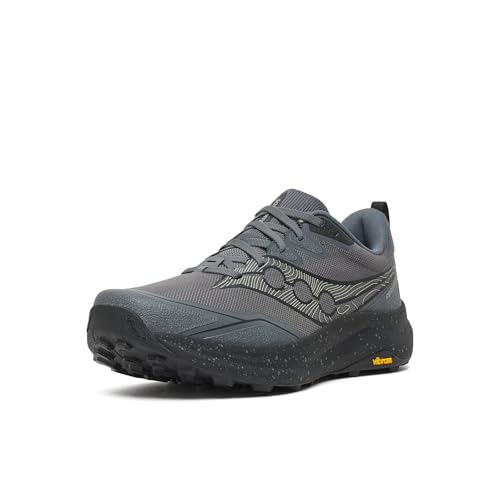
Outdoor Gear Lab’s trail running team put it directly: the Saucony Peregrine is “the shoe we hand to runners who ask, ‘What one pair should I buy?'” That recommendation carries weight because it comes from experienced testers who have worn dozens of trail shoes — and their answer for the broadest possible audience is the Peregrine. The v16 update brings a softer foam blend to the midsole that makes longer efforts more comfortable without sacrificing the precise, technical feel the Peregrine line is known for. The 5mm drop sits squarely in the beginner-safe range. Runner’s Tribe called the Peregrine 15 “the gold standard trail all-rounder” — and the v16 is better.

The PwrTrac rubber outsole with 5mm lugs is where the Peregrine earns its reputation. Those lugs are aggressive enough to handle real trail conditions — loose dirt, moderate rock, wet roots — while remaining manageable on road sections. PwrTrac rubber compound has proven its durability over hundreds of miles across multiple test cycles. Available in wide and in a waterproof GTX version for wet-climate beginners who need waterproofing. The gusseted tongue and protective upper construction round out a package that genuinely handles everything from smooth dirt paths to technical ridgelines. A high-strength upper adds protection against trail debris, rocks, and scrub that less robust beginners’ picks cannot match.

The trade-off: the 5mm lugs feel slightly aggressive on sustained pavement — not uncomfortable, but noticeable. Runners who spend more than 40% of their training on roads will find the Ghost Trail 17 or Hoka Challenger 8 more seamless for mixed-surface use. For runners whose training is predominantly trail with occasional road crossings, the Peregrine 16 is the most versatile capable trail shoe at its price, and the pick that will serve a beginner into their intermediate phase without needing replacement.

Beginner Specs
Drop: 5mm — beginner-safe | Outsole: PwrTrac 5mm — proven durable trail rubber
Road-to-trail: ⭐⭐⭐ Good (5mm lugs slightly noticeable on road) | Wide available: ✅ Yes | GTX version: ✅ Available
Break-in: Minimal | Sizing: 0.5 up from road size
✅ Best for: “What one shoe should I buy?” — the expert’s answer for any beginner
Pros: Expert-endorsed all-rounder; 5mm PwrTrac rubber handles real trail conditions; wide and GTX versions available; softer v16 foam improves long-run comfort; serves beginner through intermediate level.
Cons: 5mm lugs slightly aggressive on road; not the lightest option; slightly less road-compatible than road-to-trail hybrids.
Best Wide Toe Box: Altra Lone Peak 9

The Altra Lone Peak 9 earns its place in a beginners’ guide for one specific reason: it solves a problem that no other shoe in this list addresses as completely. If you have ever experienced black toenails, forefoot blisters, or cramped toes in trail shoes — or if previous road shoes have consistently felt too narrow across the forefoot — the LP9’s FootShape toe box changes your relationship with trail footwear. The toe box at its widest point is among the widest in trail footwear, allowing the foot to splay naturally. Runners who have “struck out with more traditional shoes” consistently find the Lone Peak to be their first trail shoe that fits without compromising. REI named it their top pick in January 2026 for this reason.

The critical zero-drop warning for beginners: The Altra Lone Peak 9 is a zero-drop shoe. If you currently run in conventional road shoes with 8–12mm of heel elevation, do not wear the LP9 for your full training runs immediately. The Achilles tendon and calf complex are conditioned to a shortened loading position; zero-drop suddenly demands full-length loading under running force. The correct transition: start with 30–45 minutes per day in the LP9, increase by 15–20 minutes per session over 4–6 weeks. Rushing this transition produces Achilles tendinopathy. If you are already running in low-drop shoes (4mm or less), this warning is less critical — your tissues are already partially adapted.

The LP9 (and LP9+) update: Altra upgraded to a built-in gaiter hook, improved MaxTrac outsole, and added more cushioning versus the LP8. The LP9+ version adds a Vibram outsole for $15 more — the Vibram upgrade is worth it if your trails include any wet rock surfaces, as MaxTrac’s wet-rock performance is the standard LP9’s main limitation. Sizing: true to size in length; wide version adds midfoot volume. Consider the LP9 review article linked below for a deep-dive if this shoe appeals.

⚠️ Zero-Drop Beginner Warning
The LP9 is correct ONLY for beginners who: (a) already run in low-drop shoes (<4mm), or (b) are willing to follow a 4–6 week gradual transition protocol starting at 30–45 min/day. For all other conventional-shoe runners, start with a 5–8mm drop shoe and revisit the Lone Peak after 3–6 months of trail running.
Beginner Specs
Drop: 0mm — requires gradual adaptation for conventional shoe users | Toe box: FootShape wide — widest in guide
Rock plate: ✅ StoneGuard | Road-to-trail: ⭐⭐⭐ Good
Break-in: Gradual zero-drop adaptation required | Sizing: True to size
✅ Best for: Wide forefoot runners, bunion sufferers, black toenail history, low-drop road shoe runners
Pros: Widest toe box in guide — solves black toenail and forefoot blister problems; StoneGuard rock plate; gaiter attachment; excellent for thru-hiking and long trail days.
Cons: Zero-drop requires careful adaptation for conventional shoe users — Achilles injury risk if rushed; MaxTrac outsole limited on wet rock (upgrade to LP9+ with Vibram for $15 more).
Best Max Cushion / Stability: New Balance Fresh Foam X Hierro v9

REI’s 50-person multi-tester evaluation of trail shoes in 2025 produced a clear winner: the New Balance Fresh Foam X Hierro v9 received the highest overall score across comfort, fit, traction, durability, and support. For beginners with joint sensitivity, runners transitioning from high-cushion road shoes like the ASICS Gel-Nimbus or NB 1080, or anyone who discovers after their first trail run that their feet need more cushion than they expected, the Hierro v9 is the right answer. The 42mm heel / 38mm forefoot stack is maximum territory — the highest cushion rating of any shoe in this guide — and the Fresh Foam compound preserves energy return that purely soft maximalist foams sacrifice. One tester specifically noted the impressive energy return despite the large stack height.

The 4mm drop sits at the lower end of beginner-safe territory — a 1–2 week mild Achilles adjustment for runners coming from high-drop road shoes, but nothing like the commitment that zero-drop requires. The wide base and high stack combine to create an inherently stable platform that reduces ankle roll probability on uneven terrain — the stability profile is strong enough that it benefits beginners who are still developing trail-specific balance and proprioception. A 3mm trail outsole provides trail traction while maintaining road compatibility — the Hierro v9 is among the most road-tolerant maximalist trail shoes available.

The Fresh Foam DNA, already beloved by millions of road runners in the NB Fresh Foam lineup, translates directly to the trail without significant character change. For NB road runners specifically, this is the most familiar possible trail transition — the same foam under the foot, the same NB last geometry, with trail tread added. Sizing typically runs true to NB road sizing; 0.5 up from standard road size for trail toe clearance on descents.

Beginner Specs
Drop: 4mm — mild 1–2 week adaptation | Stack: 42mm heel / 38mm forefoot — highest in guide
Road-to-trail: ⭐⭐⭐⭐ Very Good (road foam DNA preserved) | Score: REI highest overall 2025
Break-in: Minimal | Sizing: True to NB; 0.5 up for trail
✅ Best for: ASICS / NB road runners; joint-sensitive beginners; runners needing maximum cushion and stability
Pros: REI’s highest-scoring trail shoe in 2025 multi-tester evaluation; maximum cushion for joint protection; excellent energy return despite large stack; road-to-trail versatile; stable platform for beginners.
Cons: 4mm drop needs mild Achilles adjustment; maximal stack reduces ground feel on technical terrain; premium price.
Best Value Mid-Tier: Hoka Torrent 4
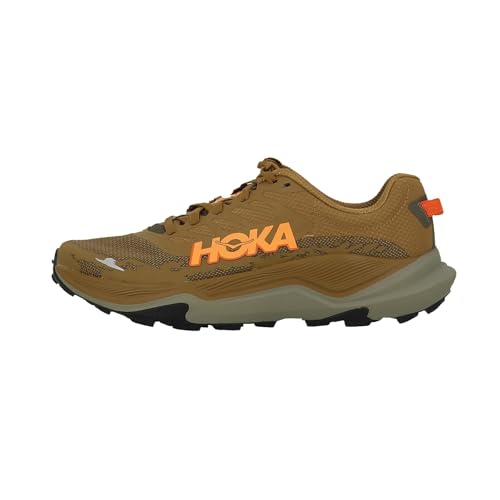
The Hoka Torrent 4 is the honest value answer in the Hoka trail lineup — it delivers the brand’s core trail running experience at a price below the flagship Speedgoat, making it accessible for beginners who want Hoka’s proven comfort platform without the premium outlay. Outdoor Gear Lab recommends it for “anyone looking to run just a few miles or quite a bit more,” which is the most beginner-inclusive framing in their entire guide. The lead tester noted: “The Torrent has great stability features for such a light model. Its width aids in support without increasing the weight.” For a beginner, that combination — light, stable, accessible price — is difficult to argue against.

At 5mm drop, the Torrent 4 sits in the beginner-safe zone. The cushioning is described as “not plush, like many Hoka shoes, but still cushioned, stable, and comfortable” — which makes it more ground-connected than the Challenger 8 while remaining protective enough for beginner use on established trails. This slightly firmer character gives better feedback on technical terrain than the maximalist alternatives, helping a beginner develop trail proprioception more quickly than a ultra-soft midsole would. The snug, neutral fit suits standard-width feet — the Torrent 4 is not available in wide, making it the wrong choice for wide-forefoot runners who should look at the Challenger 8, Cascadia 19, or Hierro v9 instead.

The Torrent 4 hits the $110–$120 price point that represents the sweet spot for committed beginner trail runners — above budget (where outsole quality is compromised) and below premium (where the cost exceeds first-year need). It is the correct purchase for a beginner who has decided they will trail run regularly, wants genuine Hoka quality, but doesn’t want to spend $155 until they know their preferences better.

Beginner Specs
Drop: 5mm — beginner-safe | Price: ~$120 — best value Hoka trail shoe
Fit: Snug neutral — not available in wide | Road-to-trail: ⭐⭐⭐ Good
Break-in: Minimal | Stability: Strong for its weight
✅ Best for: Standard-width beginners wanting Hoka quality without flagship price
Pros: Best value Hoka trail shoe; strong stability for its weight; beginner-safe 5mm drop; Hoka brand quality at mid-tier price; slightly firmer for better trail feedback than maximalist alternatives.
Cons: No wide sizing — wrong choice for wide forefoot runners; not as plush as Challenger 8 or Speedgoat; narrower fit limits who it suits.
Best Women’s Beginner: Salomon Genesis
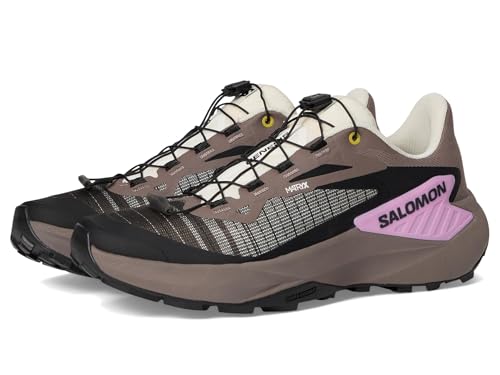
The Salomon Genesis earns its women’s beginner recommendation from an unusually credible source: REI tested it with a runner who had clearance from both a surgeon and a podiatrist for competitive use. Their assessment — “ample support and stability during races” — carries clinical validation that most trail shoe reviews cannot claim. For women beginners who are concerned about stability, ankle support, or running after a foot or ankle injury, the Genesis’s combination of cushioning and structural support is specifically appropriate. The 8mm drop is the most generous in the beginner-safe range, making it the easiest possible Achilles transition for women coming from conventional high-drop road shoes.

The Quicklace closure is a beginner-specific practical advantage: laces that cannot come undone mid-run. One of the most common first-trail experiences is stopping to retie a shoe on a technical section — the Quicklace system eliminates this entirely with a single-pull tightening mechanism and a small pouch at the tongue to store the excess lace. It is a small thing that makes a noticeable difference in the confidence and flow of a beginner’s first trail runs. The cushioning is described as “cushy and comfortable, requiring a minimal break-in period” — correct positioning for a beginner shoe that needs to work on the first wear.

Salomon’s women’s trail shoes are built on women’s-specific lasts — not scaled-down men’s designs — which matters for the heel lockdown that women runners frequently identify as the critical fit concern. Narrow-heel/wide-forefoot profiles that cause slippage in men’s-last women’s shoes often find their solution in Salomon’s women’s geometry. The outsole provides confident trail traction for established trail conditions. Note: the Quicklace can be slightly tricky to dial in initially — worth spending 5 minutes at home adjusting the tension before the first run. Sizing: Salomon typically runs slightly long — try your standard size first.

Beginner Specs
Drop: 8mm — most accessible beginner drop in guide | Closure: Quicklace (no untied laces on trail)
Last: Women’s-specific | Road-to-trail: ⭐⭐⭐ Good
Break-in: Minimal | Clinical endorsement: ✅ Surgeon/podiatrist approved in REI test
✅ Best for: Women beginners; stability-concerned runners; post-injury first trail shoe; Quicklace preference
Pros: 8mm drop — easiest Achilles transition in guide outside Ghost Trail; Quicklace eliminates mid-run untying; women’s-specific last for proper heel lockdown; clinically validated support level; minimal break-in.
Cons: Quicklace takes brief adjustment to set correctly; Salomon sizing slightly long — confirm size before ordering; less road-compatible than Ghost Trail or Challenger 8.
Road-to-Trail Versatility Ranking: Which Shoes Double as Road Runners
Beginners rarely run exclusively on trails in their first year — most alternate between road and trail as they build confidence and find accessible routes. Here is how the ten picks rank for road-pavement compatibility.
| Shoe | Road Rating | Reason |
|---|---|---|
| Brooks Ghost Trail 17 | ⭐⭐⭐⭐⭐ | 3mm lugs barely felt on pavement; road DNA Loft foam; designed as road/trail hybrid |
| Hoka Challenger 8 | ⭐⭐⭐⭐⭐ | 42mm maximal stack handles any surface; Adventure Alan’s top road-to-trail recommendation |
| NB Fresh Foam X Hierro v9 | ⭐⭐⭐⭐ | Road Fresh Foam DNA; 3mm lugs road-compatible; max cushion platform handles any surface |
| Brooks Cascadia 19 | ⭐⭐⭐⭐ | iRunFar: “smooth ride on pavement” with v19 foam update; works well as occasional road shoe |
| ASICS Gel-Venture 10 | ⭐⭐⭐ | Light lug is road-compatible; familiar ASICS feel; fine for road/trail mix |
| Altra Lone Peak 9 | ⭐⭐⭐ | MaxTrac outsole works on roads; flat midsole road-compatible; acceptable for mixed training |
| Saucony Peregrine 16 | ⭐⭐⭐ | 5mm PwrTrac acceptable on road for short stretches; not ideal for sustained pavement |
| Hoka Speedgoat 7 | ⭐⭐⭐ | Vibram Megagrip durable on roads; works acceptably but trail-first design |
| Hoka Torrent 4 | ⭐⭐⭐ | Moderate trail lug; Hoka comfort works on roads; not specifically road-designed |
| Salomon Genesis | ⭐⭐ | Trail-specific outsole; Quicklace system; not designed for road use |
Budget Tier Breakdown: What You Get at Each Level — and Where Not to Save
Under $90 — Testing Phase
ASICS Gel-Venture 10 (~$70). Legitimate trail shoe for light established trails in dry conditions. Budget rubber outsole wears at 150–200 miles. Use this tier to discover whether you enjoy trail running before committing to a premium shoe. Upgrade trigger: after 20 trail runs, if you’re still running regularly, step up to the mid tier.
$110–$140 — The Committed Beginner Sweet Spot
Brooks Cascadia 19, Hoka Challenger 8, Saucony Peregrine 16, Hoka Torrent 4, Brooks Ghost Trail 17. The correct tier for most beginners committing to regular trail running. Genuine trail technology, appropriate midsole stacks, proven outsole durability for 300–400 miles. This is where the value proposition peaks for beginners.
$140–$160 — Premium (Worth It if Budget Allows)
Hoka Speedgoat 7, New Balance Fresh Foam X Hierro v9, Altra Lone Peak 9. Vibram outsoles (Speedgoat), max-cushion platforms (Hierro v9), proven ultra and thru-hiking credentials (Lone Peak). Durability measurably better than mid-tier — 400–500 miles vs. 300–400. Worth the price if budget is not the primary constraint.
🔑 The One Thing Beginners Should Not Cheap Out On
If your trails are wet — damp roots, wet rocks, morning dew — the $20–$30 step up to Vibram Megagrip (Hoka Speedgoat 7) or established PwrTrac rubber (Peregrine 16) is a genuine safety and confidence improvement. Budget outsole rubber becomes slippery on wet rock in a way that Vibram does not. Save money on brand aesthetics, not outsole compound.
Women’s Beginner Trail Shoe Guide
Women represent approximately 50% of new trail runners and deserve more than a footnote. Here are the specific considerations that differ for women in the beginner trail shoe purchase.
The Heel Lockdown Issue
The most common women’s trail shoe fit complaint — more prevalent than in men’s — is heel slippage on uneven terrain. Women frequently have narrower heels relative to forefoot width, and many trail shoes built on men’s lasts do not accommodate this geometry properly. The consequence: the heel slides within the cup, causing Achilles friction blisters and reducing ankle stability. What to check: with the shoe laced and foot pressed forward, can you fit more than a thumb’s width between your heel and the back of the shoe? If yes, the heel cup is too wide for your anatomy — try a different model or a half-size down.
Women’s-Specific Lasts vs. Scaled Men’s Designs
The best trail shoe brands build women’s versions on genuinely different lasts — narrower heel cup, different arch positioning, proportionally wider forefoot for the typical female foot geometry. Hoka (women’s Speedgoat 7 won Outdoor Gear Lab top honours on a women’s specific last), Salomon (Genesis women’s built on women’s last), and Brooks (Cascadia and Ghost Trail women’s versions on women’s lasts) all do this correctly. Verify “women’s last” or “women’s specific” in the product description when possible.
Women’s Beginner Picks Summary
- Best overall women’s beginner: Hoka Speedgoat 7 Women’s — won Outdoor Gear Lab’s highest women’s honour in 2025 testing; women’s-specific last; Vibram Megagrip traction; 4mm drop.
- Best stability / post-injury: Salomon Genesis Women’s — 8mm drop (easiest Achilles transition), Quicklace, clinically validated support, women’s-specific construction.
- Best for wide forefoot: Altra Lone Peak 9 Women’s — FootShape wide toe box solves black toenail and forefoot compression; women’s version available. Remember zero-drop adaptation protocol.
- Best road-to-trail for women Ghost runners: Brooks Ghost Trail 17 Women’s — identical to road Ghost, seamless transition, 12mm drop, women’s last.
The Progressive Training Framework: How Your Shoe Needs Change Over 12 Months
A beginner’s first trail shoe is rarely their second trail shoe — and understanding how preferences and requirements change over time helps you make a smarter first purchase and sets up a better second one.
Months 1–2 (Foundation): Run flat, established trails under 5 miles. The Hoka Challenger 8’s “any surface” versatility or the Ghost Trail 17’s road-to-trail profile is correct here. Trail proprioception develops quickly in this phase; your ankles will feel tired after trails in a way road running doesn’t cause — this is normal and strengthens with every trail outing.
Months 3–4 (Development): As ankle strength and trail confidence develop, moderate terrain becomes comfortable. The Cascadia 19’s reliable traction and protective platform shines in this phase — you are ready for more varied trail surfaces and the shoe delivers reliable feedback on them. You will start noticing what you like and don’t like: more cushion, more ground feel, wider toe box, lighter weight.
Months 5–8 (Refinement): You now have enough trail miles to know your preferences. You know whether you liked the Cascadia’s stability or wished for the Speedgoat’s Vibram grip. You know whether your feet wanted more cushion or less. You know whether you run wet trails or dry. This is the moment to make a second, much more targeted purchase using our main trail running shoe guide.
Months 9–12 (Specialisation): Many trail runners develop two-shoe systems at this stage — a lighter shoe for short fast efforts and a more protective shoe for long days. Some discover they prefer technical terrain and want the Speedgoat’s wet-rock grip. Others discover they love long easy trails and want the Lone Peak’s hiking-to-running dual identity. The first shoe got you here; the second shoe gets you where you specifically want to go.
Your First 5 Trail Runs: The Beginner Checklist
Buying the right shoe is the first step. Having a positive first trail running experience is what makes you come back for more. This checklist addresses the things that catch new trail runners off-guard.
Run 1 — Flat and short: Choose a maintained trail under 3 miles, minimal elevation change. Ignore any urge toward impressive-looking terrain. The goal is to experience trail running on forgiving ground and verify your shoe’s heel lockdown before committing to a technical descent. Check: does the heel feel secure? Any hot spots forming? Adjust lacing if needed.
Run 2 — Lacing for descents: Trail running descents push your foot forward in the shoe — the toe bumper is there to catch it, but adequate clearance requires slightly firmer lacing around the heel and midfoot than road running. Before your first descent, try the “heel-lock” lacing technique: thread the lace through the top two eyelets in a loop that cradles the ankle bone rather than just crossing over it. It sounds technical but takes 30 seconds and prevents the heel slippage that causes blisters on hills.
Run 3 — Pace adjustment: Trail pace is 60–90 seconds per mile slower than road pace at equivalent effort — on technical terrain, it can be 2+ minutes slower. Do not try to match your road pace on trails; judge effort by heart rate or breathing, not minutes per mile. Walking uphills is normal practice even among experienced trail runners — it is more efficient than running them at moderate grades.
Run 4 — Vision and stride: Look 6–10 feet ahead on the trail, not at your feet. Your brain needs advance notice to process upcoming obstacles. Shorten your stride on technical sections — the “trail shuffle” (shorter, quicker steps) is inherently more stable on uneven terrain than the long stride of road running. Lower centre of gravity = more stable.
Run 5 — Post-run check: After your first 5 trail runs, your shoes should feel broken in and your ankles should feel noticeably stronger. Check the outsole for unusual wear patterns. If any area of your foot has developed persistent hot spots, note the location and consult our lacing guide or consider a different last geometry. The first five runs reveal 80% of what you need to know about whether the shoe is right for your foot.
FAQ — 10 Beginner Trail Running Shoe Questions Answered
What makes trail running shoes different from regular running shoes?
Three things: outsole lugs (rubber projections that grip dirt, rock, and roots — absent from road shoes), torsional rigidity (resistance to the shoe twisting under your foot on uneven surfaces — more than road shoes), and often a rock plate (a hard insert that prevents sharp rocks from bruising the forefoot). The basic fit geometry — heel drop, stack height, last width — is largely the same as road shoes, which is why road-to-trail translation is possible using familiar brands and models.
Can I use my regular running shoes on trails?
For smooth groomed trails in dry conditions — yes, temporarily. Road shoes lack the grip for anything wet, loose, or technical, and the flat outsole provides no resistance to the lateral twisting that uneven terrain causes. If you plan to run trails more than occasionally, a trail-specific outsole is a safety improvement worth the cost. The Ghost Trail 17 and Hoka Challenger 8 are both designed specifically for the runner who runs both road and trail and wants one shoe that handles both.
What heel drop should a beginner trail runner look for?
The safest beginner range is 5–8mm for road runners transitioning from conventional (8–12mm) road shoes. This maintains a familiar Achilles loading pattern with minimal adaptation. The Ghost Trail 17 (12mm) and ASICS Gel-Venture 10 (10mm) are the safest transitions of all. Zero-drop (Altra Lone Peak 9) requires a 4–6 week gradual adaptation protocol for runners who have been in conventional shoes — do not start zero-drop without following the transition protocol.
Should a beginner start with zero-drop trail running shoes?
Only if you are already running in low-drop (4mm or less) road shoes and are familiar with the loading pattern. For runners coming from conventional 8–12mm road shoes, zero-drop requires a gradual transition over 4–6 weeks starting at 30–45 minutes per day. The Achilles tendinopathy risk of rushing this transition is real and well-documented. Start at 5–8mm and move toward lower drop progressively over months of trail running.
How many miles do beginner trail running shoes last?
Budget tier (ASICS Gel-Venture 10): 150–200 miles before significant outsole wear. Mid-tier (Cascadia 19, Peregrine 16, Challenger 8): 300–400 miles. Premium with Vibram (Speedgoat 7): 400–500 miles. Midsole compression typically begins before outsole wear in all categories — replace when the shoe feels noticeably less cushioned underfoot, even if the outsole looks fine.
What trail shoe is best if I run in Brooks / Nike / ASICS?
Brooks Ghost runners → Brooks Ghost Trail 17 (identical foam and upper, trail outsole added). Hoka road runners → Hoka Challenger 8 (maximal cushion maintained) or Speedgoat 7 (Vibram grip). Saucony road runners → Saucony Peregrine 16 (same brand geometry). ASICS road runners → NB Fresh Foam X Hierro v9 (maximum cushion equivalent). NB road runners → NB Fresh Foam X Hierro v9 (same Fresh Foam DNA). Nike Pegasus runners → Cascadia 19 or Peregrine 16 (comparable drop and cushion). See the road-to-trail translation table above for the full guide.
Do I need to size up for trail running shoes?
Yes — 0.5 size up from your road shoe size is the standard guidance for most trail shoes. The reason: on downhills your foot slides forward, and without thumbnail clearance between your longest toe and the toe cap, you get black toenails and forefoot blisters. Some brands (Brooks) are true to road sizing but still benefit from 0.5 up for trail use. Salomon runs slightly long — check reviews for specific sizing notes per model.
What is the best trail running shoe for beginners under $100?
The ASICS Gel-Venture 10 at approximately $70 is the best option under $100 that delivers legitimate trail shoe characteristics. It handles dry established trails adequately for a test-purchase phase. If you can stretch to $110–$120, the Hoka Torrent 4 or Brooks Cascadia 18 represent a meaningful step up in outsole durability and trail capability that pays back over 300+ miles of use.
What trail running shoes are best for women beginners?
The Hoka Speedgoat 7 Women’s (won Outdoor Gear Lab’s top women’s honours in 2025 testing, women’s-specific last, Vibram Megagrip), the Salomon Genesis Women’s (8mm drop, Quicklace, women’s last, clinically validated support), and the Brooks Cascadia 19 Women’s (women’s last, expert-endorsed for new trail runners, 6mm drop). For wide-forefoot women with black toenail or blister history: the Altra Lone Peak 9 Women’s — but follow the zero-drop adaptation protocol carefully.
How long should I run before buying a second, more advanced trail shoe?
After 5–8 months and approximately 200–300 trail miles, you will have developed clear preferences: more cushion vs. more ground feel, wet trail grip priority, wide toe box preference, or lightweight priority. That is the moment to step up to a more specialised second shoe using our full trail running shoes roundup. Your first shoe gets you the experience to make a precise second choice — do not skip straight to a technical specialist without the trail miles to know whether you need it.
Final Verdict: Best Beginner Trail Running Shoe by Runner Type
Runner Type → Best First Trail Shoe
Complete beginner / no specific preference: Brooks Cascadia 19 — expert-endorsed as the go-to for new trail runners; 6mm drop; zero adaptation required; versatile all-terrain
Hoka road runners / maximal cushion priority: Hoka Challenger 8 — maintains maximal cushion; best road-to-trail dual use; zero break-in
Premium budget / wet trail environments: Hoka Speedgoat 7 — Vibram Megagrip; best traction in guide; Outdoor Gear Lab top-rated
Testing if you’ll like trail running (budget): ASICS Gel-Venture 10 — ~$70; adequate for light dry trails; smart test-purchase
Brooks Ghost road runners: Brooks Ghost Trail 17 — identical foam/upper; zero transition shock; best road/trail dual use
“What one shoe should I buy?” / all-rounder: Saucony Peregrine 16 — expert’s answer for the broadest possible audience
Wide forefoot / black toenail history: Altra Lone Peak 9 — widest toe box in guide ⚠️ zero-drop adaptation required
ASICS / NB runners / max cushion + stability: NB Fresh Foam X Hierro v9 — REI highest overall score 2025; Fresh Foam DNA on trails
Value Hoka entry / standard width: Hoka Torrent 4 — best value Hoka trail; strong stability; ~$120
Women’s beginners / stability priority: Salomon Genesis Women’s — 8mm drop; Quicklace; women’s-specific last; clinically validated
The best trail shoe for a beginner is the one that feels familiar enough to get you out the door on your first ten trail runs. Every shoe in this guide does that. The details — drop, lug, width, cushion — determine which shoe feels familiar to your specific feet and running background. Use the road-to-trail translation table at the top of this article to find your starting point, size 0.5 up from your road shoe, and run somewhere with trees. Everything else follows from there.