Hey BootsGuru readers, as the air turns crisp and the sidewalks start to sparkle, I’m reminded of one of the sneakiest hazards of winter: ice. Snow is annoying, sure, but ice is the real danger. I’ll never forget a job in Chicago where we were framing a house in January. What looked like wet pavement was actually a perfect sheet of black ice. My crew chief—tough as nails—slipped, broke his wrist, and was out for two months. That day taught me a hard lesson: most standard winter boots are practically useless on smooth, slick ice.
In this guide, you’ll learn what makes boots fail on ice, which technologies actually grip, and the best picks for work, hiking, and everyday life.
Your Ice Safety Cheat Sheet
| Solution Type | The Bottom Line |
|---|---|
| High-Tech Rubber Soles | A convenient upgrade over normal boots. Improves grip but isn’t foolproof on pure ice. |
| Built-in Metal Spikes | A dedicated solution for frequent ice. Excellent grip but not for indoor use. |
| Add-On Traction Aids | The safest and most effective choice. Offers unbeatable, life-saving grip on serious ice. |
| Standard Winter Boots | Designed for snow and cold, but unreliable on smooth, wet ice. |
Why Regular Winter Boots Slip on Ice
Ever wonder why your pricey snow boots feel like slick dress shoes on an icy patch? It’s basic physics. When temperatures drop, the rubber compound in a normal sole hardens. That stiff rubber can’t flex and bite into the ice, so friction disappears — and you slip.
All the solutions below are designed to fix that exact problem.
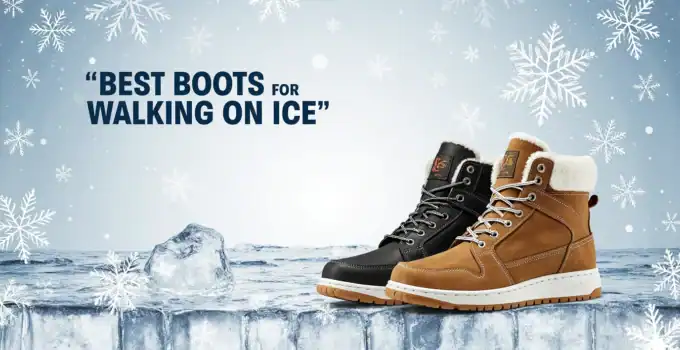
boots for walking on ice
Good Option: Boots with High-Tech Rubber Soles
Manufacturers have developed advanced rubber compounds that stay soft in freezing temps. The best-known is Vibram® Arctic Grip — a game-changer for traction.
It uses a flexible cold-weather rubber with wide, textured lugs that stick better to wet ice. Some versions even turn blue near freezing to warn you it’s slippery.
My Take: These boots are excellent on wet pavement or slush, but for pure black ice, they’re not perfect. You’ll still need something that physically digs in.
Recommended Boots with High-Tech Rubber Grip:
- For Work & Chores: Muck Boot Arctic Ice Tall AGAT — 100% waterproof with Vibram Arctic Grip outsole for solid traction on wet ice.
- For Hiking & Daily Use: Danner Arctic 600 Side-Zip — stylish hiker with Arctic Grip sole and 200g PrimaLoft insulation for city and trail use.
Best For: Mild winters, wet sidewalks, and slushy days when you need extra grip but not spikes.
Better Option: Boots with Built-In Metal Spikes
When you’re walking on hard, frozen ice, only metal can bite in. These boots use carbide-tipped studs anchored into the outsole to create real traction. They’re unbeatable for serious conditions.
Safety Rule: Take them off indoors — metal cleats can destroy floors and cause slips on tile.
Recommended Boots with Built-In Spikes:
- For Active Use: Salomon Winter Cross Spike — with 11 carbide spikes, perfect for running or fast hiking on frozen trails.
- For All-Day Wear: Icebug Adak Wool BUGrip — features 17 dynamic steel spikes and great warmth for long outdoor days.
Best For: Outdoor work, icy rural roads, or any environment where you need total traction.
Best Option: Add-On Traction Aids (Microspikes & Coils)
If you want the safest, most flexible solution, nothing beats traction aids. These slip over any boot and instantly transform it into an ice-gripping machine. I keep a pair in my truck every winter.
For Extreme Ice & Trails: Microspikes
Microspikes are small stainless steel spikes linked with chains, giving you aggressive, multi-directional grip that bites into ice and packed snow.
- Best For: Icy hiking trails, frozen lakes, and extreme cold-weather adventures.
- Top Pick: Kahtoola MICROspikes — industry standard, durable, and stay secure even on tough terrain.
For City Sidewalks & Daily Use: Coils
These use steel coils or beads instead of spikes, offering better traction than bare soles but more comfort for walking on pavement.
- Best For: Shoveling driveways, dog walks, and icy commutes.
- Top Pick: Yaktrax Diamond Grip — uses steel alloy “beads” for strong everyday traction and longer wear.
Best For: People who want easy, removable traction without committing to new boots.
Smart Tips to Stay Upright This Winter
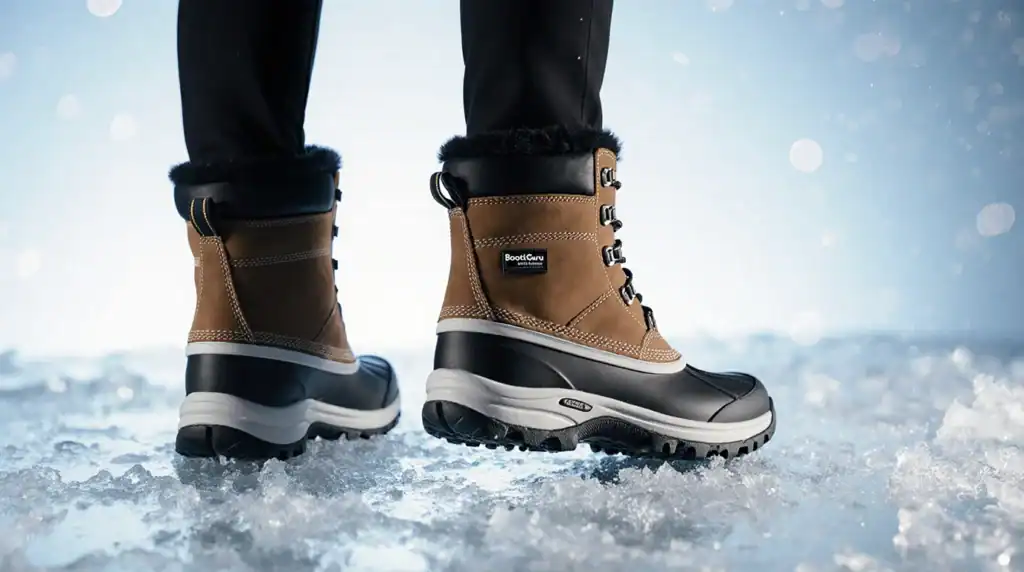
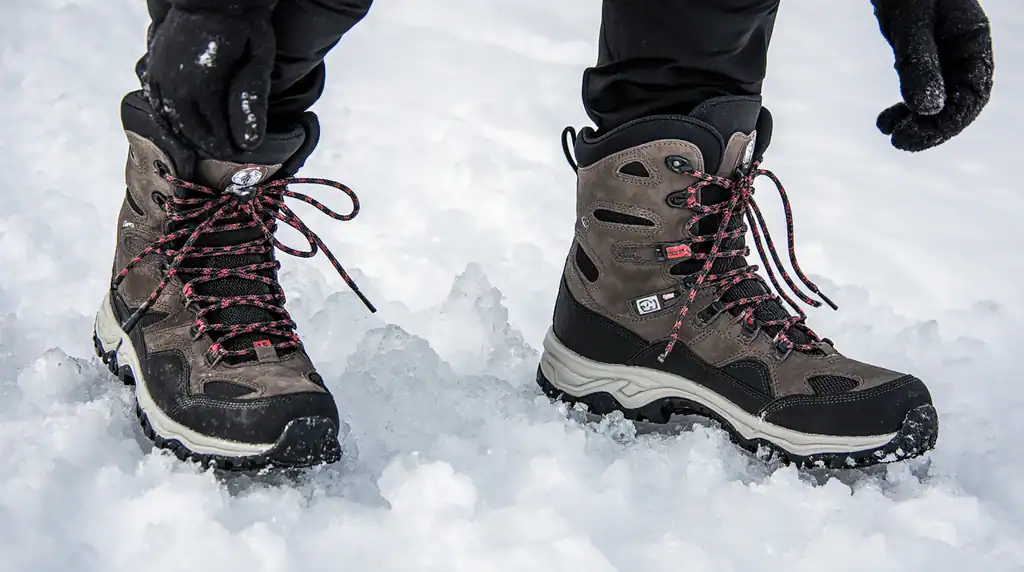
boots for walking on ice
1. Walk Like a Penguin
Spread your feet slightly, bend your knees, take small steps, and keep your hands out for balance. Lean forward to stay stable — it works!
2. Don’t Skimp on Socks and Fit
Cold toes come from tight boots and bad socks. Use thick wool socks, leave space at the toes, and skip cotton altogether — it traps moisture.
3. Check Your Sole Pattern
Avoid flat soles. Look for deep, aggressive lugs that can bite into snow and ice for better traction.
Final Verdict: What’s the Right Ice Boot for You?
- For everyday convenience: Danner Arctic 600 — reliable, ready-to-go grip.
- For ultimate safety: Kahtoola MICROspikes — unbeatable traction for serious conditions.
- For affordable peace of mind: Yaktrax Diamond Grip — simple, effective, and easy to keep in your car or pack.
Don’t gamble on the ice. One bad fall can cost you a lot more than a good pair of boots or traction aids. Choose smart, stay upright, and walk with confidence this winter.
FAQ: Boots for Ice and Winter Safety
What are the best boots for walking on ice?
Boots with Vibram Arctic Grip or metal spikes like Icebug Adak Wool BUGrip are excellent. For ultimate safety, use traction aids like Kahtoola MICROspikes.
Are hiking boots good on ice?
Only if they use cold-weather rubber or spikes. Regular hiking boots can be slippery and dangerous on black ice.
What can I put on my boots to walk on ice?
Slip-on traction aids like Yaktrax or MICROspikes are easy, affordable ways to get better grip instantly.