Last Updated: May 2026 | Tested By: BootsGuru
Let’s be honest: finding the “best” work boot is a tough job. But finding the most comfortable work boot? That’s even harder. Every trade has unique demands, every pair of feet is different, and the sheer number of options from top brands can be overwhelming. For laborers, construction workers, and tradesmen who spend 10+ hours a day in harsh conditions, the right boot isn’t just gear — it’s a critical tool for preventing fatigue and staying safe.
Sore feet, aching arches, and a throbbing lower back aren’t just “part of the job” — they’re a sign your boots are failing you. A good boot provides the stability to stay upright, the protection to guard against impacts, and the cushioning and support to prevent fatigue, day after day.
Investing in a truly comfortable pair of work boots is one of the smartest decisions you can make. To help you choose, we’ve tested, analyzed, and compiled a list of the 10 most comfortable work boots for men, blending rugged performance with all-day wearability.
Quick Picks: Top 10 Most Comfortable Work Boots for Men (2026)
| Boot Model | Best For | Key Comfort Feature | Safety Toe |
|---|---|---|---|
| 1. Thorogood American Heritage 6″ Moc Toe | Standing on Concrete (Wedge Sole) | Poron® Insole & MAXWear Wedge | Steel / Soft |
| 2. Timberland PRO Titan EV 6″ | Lightweight All-Around Use | Anti-Fatigue Technology Geometric Insert | Composite |
| 3. Irish Setter 83608 6″ Steel Toe | Heat & Heavy Duty | Heat-Resistant HRO Sole, PU Footbed | Steel |
| 4. Carhartt CMF6366 Composite Toe | Flexibility & Agility | Rugged Flex® Technology | Composite |
| 5. Irish Setter Ashby 83605 (Soft Toe) | Light-Duty & Value (Wedge Sole) | Minimal Break-in, Lightweight Welt | Soft Toe |
| 6. Wolverine Overpass 6″ Composite Toe WP | Lightweight Composite / EH | Contour Welt Flex, PU Midsole | Composite |
| 7. Carhartt Rugged Flex 6″ Steel Toe WP | Heavy-Duty Flexibility | Rugged Flex® + Waterproof Cement Build | Steel |
| 8. Timberland PRO Direct Attach 6″ Soft Toe | All-Day Comfort, Cold-Weather Work | Direct-Attach PU Midsole, 200g Insulation | Soft Toe |
| 9. Ariat Treadfast 6″ Steel Toe | Concrete & Hard Floor Standing | ATS Dual-Density Midsole + Fiberglass Shank | Steel |
| 10. KEEN Utility Flint II Steel Toe | Wide Feet & Best Value Safety Toe | Asymmetric Wide Toe Box, KEEN.DRY WP | Steel |
The Anatomy of Comfort: A Boot Guru’s Buying Guide
bootsguru.comwork boots
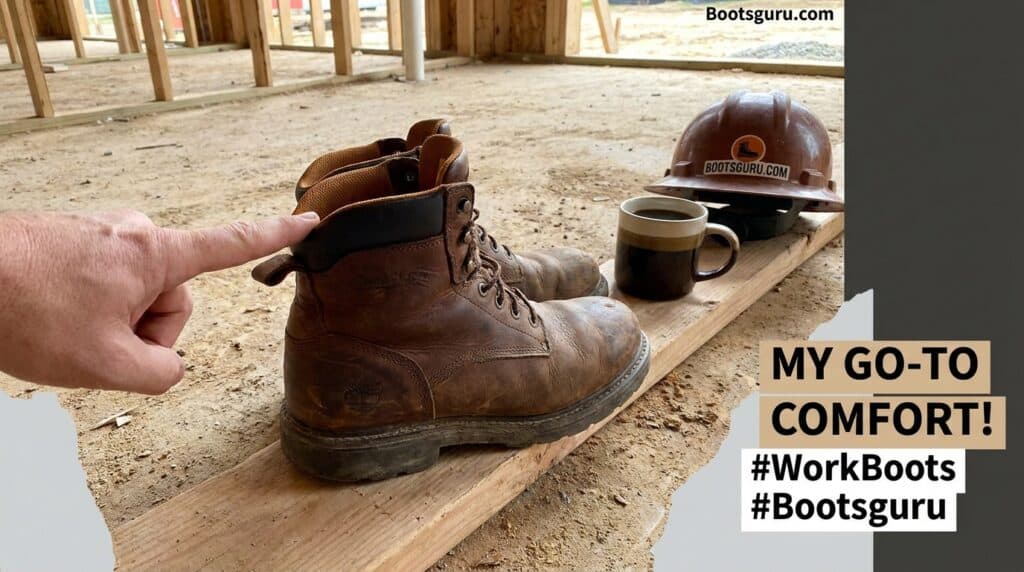
What makes a boot comfortable? It’s not just “softness.” True, all-day comfort is an engineering system. Here’s what our experts look for before recommending any boot.
1. The Midsole: The Engine of Comfort
This is the most important layer. It sits between the rubber outsole and the insole and handles all shock absorption. Two materials dominate the market:
PU (Polyurethane) is the gold standard for durable comfort. PU is a dense, responsive foam that resists compression. It might feel slightly firmer at first, but it provides consistent support all day and maintains its cushioning at 18 months where EVA has already flattened out. Ideal for heavy workers or long hours on concrete.
EVA (Ethylene-vinyl acetate) is the sneaker foam — very lightweight with a soft, cushioned, athletic feel right out of the box. The trade-off: EVA compresses and breaks down faster than PU, typically losing meaningful cushioning at 6–12 months of hard daily use. When your comfortable boots start hurting again without obvious wear, check the insole first — press it firmly with your thumb. If it leaves a permanent indent, the insole is dead. A $20–$40 replacement insole often restores a structurally sound boot to near-new comfort.
2. The Insole: Your First Layer of Cushion
This is the removable pad your foot directly rests on. Most stock insoles are basic foam placeholders. A good boot comes with a high-quality insole — like the Poron® in the Thorogood or the Anti-Fatigue geometric insert in the Timberland PRO Titan EV — that provides immediate cushioning and arch support. The easiest and most cost-effective comfort upgrade for any boot is replacing the stock insole with an aftermarket option like Superfeet Green (for arch support and flat feet) or an OrthoLite replacement (for general cushion). Always remove the stock insole first — never stack.
3. Construction: Goodyear Welt vs. Cement
How the sole is attached dramatically affects comfort, durability, and repairability.
Goodyear Welt (Thorogood, Irish Setter 83608, Carhartt Rugged Flex Welt): The upper is stitched to the sole. Incredibly durable and resolable — when the sole wears out, a cobbler can replace it for $75–$90 rather than replacing the entire boot. The trade-off: heavier and requires a break-in period as the leather and cork layers mould to your foot.
Cement construction (Timberland PRO Titan EV, Carhartt CMF6366, Ariat): The sole is bonded to the upper, like a sneaker. Lighter, more flexible from day one, and no break-in. The trade-off: not resolable — the boot’s life ends when the sole wears out.
4. ASTM Certification: Verify Before You Buy
Every safety-toe boot on this list carries ASTM F2413 certification — the standard that verifies the toe cap has passed both impact (I/75) and compression (C/75) testing. Look for the physical ASTM label sewn inside the tongue or boot lining. A label stating “ASTM F2413” with protection codes is the only legitimate proof of safety certification. Product listing claims alone are not sufficient — always verify the physical label on receipt.
5. The Fit: Roomy Toes, Locked-in Heel
Comfort is impossible without the right fit. Your toes need space to splay after 8 hours on your feet — look for wide toe box options (KEEN’s asymmetric design, Moc Toe styles) that don’t compress the forefoot. Your heel should feel securely locked in with minimal slip. Too much heel movement causes the blisters that end shifts early. If buying work boots for the first time, try them on with the work socks you plan to wear — heavyweight wool work socks take up meaningfully more volume than thin dress socks, and a boot sized for thin socks will cramp with thick ones.
The 10 Most Comfortable Work Boots for Men: Full Reviews
construction worker unlacing work boots
1. Thorogood American Heritage 6″ Moc Toe — Best for Standing on Concrete

At a Glance: Comfort ★★★★★ | Durability ★★★★★ | Break-in: Minimal (1–3 days) | Best For: Standing on concrete all day
A legend in the trades. The Thorogood American Heritage is renowned for its near-zero break-in period — remarkable for a Goodyear Storm Welt construction. The full-grain oil-tanned leather is surprisingly supple from day one, and the removable Poron® comfort cushion insole provides genuine arch support and shock absorption from the first wear. The MAXWear Wedge outsole is the real star for comfort on hard surfaces: its large, flat surface area distributes body weight evenly across the entire footprint, eliminating the concentrated heel and ball pressure that causes the back and knee pain that defined-heel boots create during extended standing on concrete. This is why carpenters, ironworkers, and factory workers who stand on concrete all day swear by the wedge sole — it is the single best outsole design available for that specific work environment.

USA-made at the Weinbrenner Shoe Company in Wisconsin by union workers. The Goodyear Storm Welt construction means this boot can be resoled when the sole eventually wears — send it to Thorogood’s restoration programme for $90–$125 and receive it rebuilt to like-new condition. A pair of American Heritage boots with one restoration provides approximately 7 years of daily work boot service, making the $255 upfront price one of the best cost-per-year values in this guide. Available in soft toe and steel toe configurations. Oil from the leather immediately on receipt and wear around the house for 3–5 days before a full shift — this is the entire break-in protocol.

Pros: Minimal to zero break-in period for a welted boot, USA-made with premium oil-tanned leather, MAXWear Wedge is best-in-class for concrete and hard floor standing, Goodyear Storm Welt is resoleable, Poron® insole provides genuine long-lasting cushioning, restoration programme makes it the best cost-per-year boot in this guide.
Cons: Wedge sole is NOT safe for frequent ladder climbing — if you climb ladders regularly, choose a heeled boot. Leather requires occasional conditioning. Moc toe version runs narrow — order wide if wide-footed.
Best For: Carpenters, ironworkers, factory workers, warehouse staff, anyone standing on concrete or asphalt for extended periods.
2. Timberland PRO Titan EV 6″ — Best Lightweight All-Around Work Boot
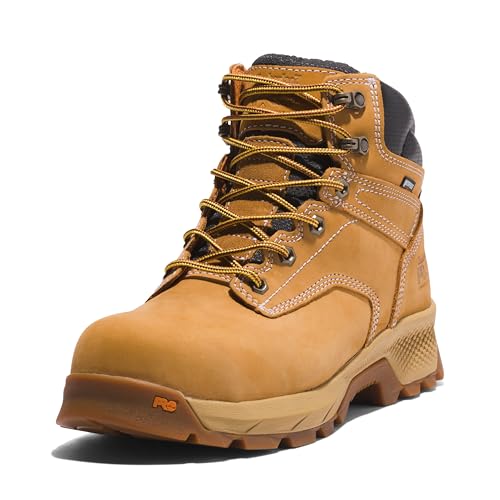
At a Glance: Comfort ★★★★★ | Durability ★★★★☆ | Break-in: None | Best For: Lightweight all-day use with anti-fatigue technology
The Timberland PRO Titan EV is the current flagship of Timberland’s most trusted work boot platform, and it represents a meaningful upgrade over the classic Titan that preceded it. The headline feature is the Anti-Fatigue Technology geometric insert — a PU-based midsole system with an inverted cone structure that absorbs heel-strike energy and returns a portion of it at toe-off. This is genuine anti-fatigue engineering, not just foam cushioning — the geometric structure maintains its performance at 18 months where standard EVA compounds have already compressed flat. The composite safety toe is non-metallic, making it metal-detector safe for airport workers, distribution centre staff, and anyone who crosses security checkpoints daily.

Cement construction means zero break-in — comfortable from the first full shift. Available in black for uniform-compliant environments. EH rated for electrical workers. The PU-based AFT midsole is the durability reason to choose this over EVA-midsole competitors: workers who cycle through comfortable boots every 8 months because the cushion compresses will find the Titan EV’s PU compound lasts nearly twice as long. The removable insole accepts custom orthotics or aftermarket arch support devices — particularly useful for workers with plantar fasciitis who need the heel-strike energy return alongside structured arch posting. The Titan EV is the correct everyday work boot for the majority of tradespeople who need protection, all-day comfort, and zero break-in without paying a premium price.

Pros: Anti-Fatigue geometric PU insert lasts 18–24 months vs 6–12 for EVA, composite non-metallic toe for metal-detector environments, zero break-in, EH rated, available black, removable orthotic-ready insole.
Cons: Cement construction is not resolable. Not the widest toe box — workers with wide feet may prefer KEEN (Pick 10). Heavier than the lightest composite sneaker options.
Best For: General construction, trades, warehouse, distribution centre, airport workers, anyone with plantar fasciitis who needs energy-return heel cushioning.
3. Irish Setter 83608 6″ Steel Toe — Best for Heat and Heavy Duty

At a Glance: Comfort ★★★★☆ | Durability ★★★★★ | Break-in: Moderate (1–2 weeks) | Best For: Heat-exposed environments, heavy industrial
The Irish Setter 83608 is a tough, no-nonsense boot that combines classic wedge sole comfort with heavy-duty protection for environments that destroy lesser boots quickly. The full-grain leather upper is built for sustained industrial abuse, and the Goodyear Welt construction means it can be resoled rather than replaced when the sole eventually wears. The standout feature — one that no other boot on this list matches — is the heat-resistant outsole (HRO rated), which withstands contact with surfaces up to 475°F. This makes the 83608 the specific choice for asphalt workers, welders, mechanics working near hot surfaces, and roofers where standard rubber outsoles would soften, deform, and stick on hot surfaces during a summer workday.

The comfort profile after break-in is genuinely excellent — the wedge sole provides the even weight distribution that makes the Thorogood famous, and the PU footbed provides lasting arch support that doesn’t compress flat in the first season. The steel toe and EH rating cover the full safety spectrum for workers in environments with both impact hazards and electrical exposure. The break-in period of 1–2 weeks is real and should be planned for: wear for 3–4 hour sessions in the first week before committing to a 10-hour shift. Apply leather conditioner on receipt to accelerate the process. After break-in, this boot is among the most comfortable wedge-sole options available for workers whose jobs expose them to heat.

Pros: HRO outsole withstands 475°F surface contact — no other boot on this list matches this, Goodyear Welt resolable for long-term value, steel toe + EH full safety rating, wedge sole for hard surface standing comfort, PU footbed lasts longer than EVA.
Cons: 1–2 week break-in required — plan before a demanding shift. Steel toe adds noticeable weight. Wedge sole not suitable for frequent ladder climbing.
Best For: Welders, asphalt workers, roofers, mechanics, manufacturing workers exposed to hot surfaces.
4. Carhartt CMF6366 6″ Composite Toe — Best for Flexibility and Agility
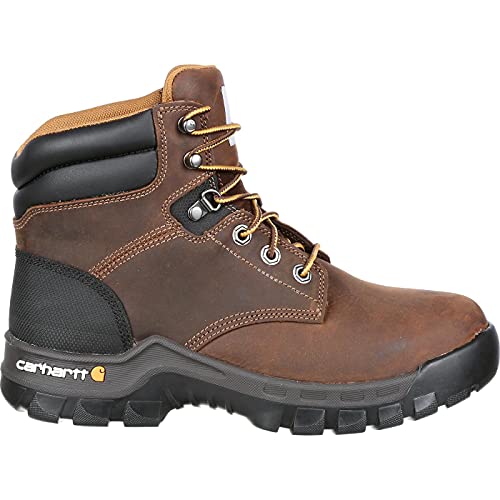
At a Glance: Comfort ★★★★☆ | Durability ★★★☆☆ | Break-in: Minimal | Best For: Jobs requiring constant movement, kneeling, and climbing
Built with Carhartt’s legendary toughness, this boot’s secret weapon is Rugged Flex® technology — a construction approach that allows the boot to bend and move with your foot rather than fighting it. For trades that require constant kneeling, crouching, climbing, and lateral movement, the comfort difference between a flexible boot and a rigid one is dramatic by the end of a 10-hour shift. Every bend of the ankle in a stiff boot requires the muscles of the foot and calf to overcome the boot’s resistance — multiplied across thousands of repetitions per day, this fatigue compounds significantly. The CMF6366 removes this resistance with a construction specifically designed for high-mobility trades.

The composite safety toe keeps the boot significantly lighter than steel-toe alternatives and is non-metallic — no temperature conduction from hot summer environments and no metal detector alarms. The cement construction is flexible from day one with essentially no break-in period. Slip, oil, and chemical-resistant outsole covers the workshop and manufacturing floor environments where fluid contact is routine. The cushioned insole provides adequate comfort for moderate daily use, though workers who cover very high step counts on hard floors may benefit from an aftermarket insole upgrade at the 6–9 month mark when the stock EVA begins to compress. A strong choice for electricians, plumbers, auto mechanics, and HVAC technicians whose daily work involves repeated squatting, climbing, and working in confined spaces.

Pros: Rugged Flex® technology genuinely reduces fatigue in high-mobility trades, composite toe is lightweight and non-metallic, zero break-in, excellent slip and chemical resistance, full ASTM certification.
Cons: Cement construction is not resolable. EVA cushioning will compress at 8–12 months of hard daily use — plan insole replacement. Not the correct boot for sustained concrete standing where a wedge sole excels.
Best For: Electricians, plumbers, auto mechanics, HVAC technicians, any trade requiring frequent kneeling, crouching, and climbing.
5. Irish Setter Ashby 83605 6″ Soft Toe — Best for Light Duty and Value
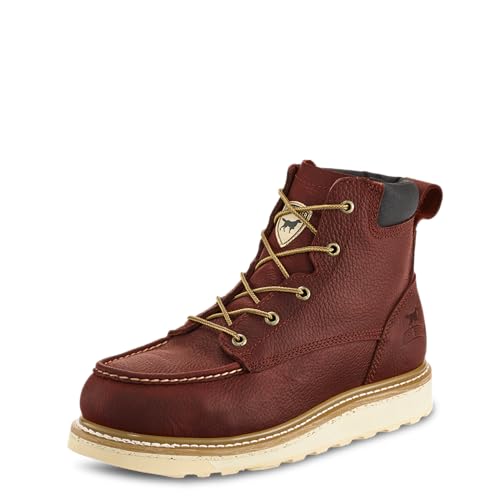
At a Glance: Comfort ★★★★★ | Durability ★★★★☆ | Break-in: Minimal | Best For: Light-duty work, professional environments, wedge sole without safety toe
For jobs where ASTM safety toe protection is not required, the Irish Setter Ashby is one of the most comfortable work boots available at any price point. It combines the comfort-wedge sole and high-quality full-grain leather of its steel-toe sibling (the 83608) in a lighter, more flexible soft-toe package that feels closer to a quality dress boot than a traditional work boot. The EH rating covers electrical environments even without the safety toe. Goodyear Welt construction provides durability and resolability typically reserved for premium heritage boots at $250+. And the near-zero break-in period means a new pair is comfortable on day one — which is not what most Goodyear Welt boots can claim.

The wedge sole is the comfort story for anyone who stands on concrete or hard floors for extended periods. The same even-weight-distribution principle that makes the Thorogood American Heritage famous applies here — the flat sole contact area eliminates concentrated heel and ball pressure, reducing foot fatigue and lower back soreness that heeled boots create through prolonged standing. The Ashby is versatile enough to wear in professional environments where heavy work boots look out of place: job site supervisors, project managers, retail floor managers, and light-duty tradespeople who need EH rating and all-day comfort without the heavy boot aesthetic. A very strong value proposition for its price.

Pros: Near-zero break-in for a welted boot, wedge sole exceptional for hard floor standing comfort, Goodyear Welt resolable for long-term value, EH rated, versatile enough for professional and casual environments, lighter than steel-toe equivalent.
Cons: Soft toe — no ASTM impact or compression protection. Not suitable for sites requiring safety toe footwear. Wedge sole not for regular ladder climbing.
Best For: Light-duty work, carpentry, warehousing, drivers, supervisors, professional environments requiring EH rating without safety toe.
6. Wolverine Overpass 6″ Composite Toe WP — Best Lightweight Composite with EH

At a Glance: Comfort ★★★★☆ | Durability ★★★★☆ | Break-in: Minimal | Best For: Electricians, utility workers, anyone needing composite EH waterproof
The Wolverine Overpass fills the specific requirement that electricians and utility workers have needed addressed properly for years: a composite safety toe boot that is simultaneously EH-rated, fully waterproof, and light enough to wear comfortably across long outdoor shifts without the weight penalty of traditional leather safety boots. The composite toe is genuinely non-metallic — no temperature conduction from hot summer environments or cold winter jobsites, and no metal detector alarms at secure facilities. The ContourWelt construction provides more flexibility than traditional Goodyear Welt alternatives, allowing the boot to move with the foot on climbing, kneeling, and active fieldwork.

The PU contour midsole is the durability advantage that separates the Overpass from EVA-midsole competitors. Workers who cycle through lightweight composite boots every 8–10 months because the cushion compresses will find the PU midsole maintains its performance at the 18-month mark where EVA has already flattened. Full waterproof membrane for outdoor electrical work in wet conditions. Removable insole accepts custom orthotics for workers with arch conditions. Wolverine sizing note: the Overpass runs slightly large — consider half a size down from your normal work boot size for best fit and heel security. The defined heel provides ladder-rung grip that wedge-sole alternatives cannot, making it the correct choice for electricians and HVAC technicians who climb daily.

Pros: True non-metallic composite for full EH system integrity, PU midsole lasts 18–24 months vs 6–12 for EVA, full waterproof for outdoor electrical work, ContourWelt flex for active trades, defined heel for ladder grip, metal-detector safe.
Cons: Runs slightly large — size down half step. Not a wedge sole — not optimised for sustained hard-floor standing. Wolverine quality varies by product line; the Overpass specifically has positive recent reviews.
Best For: Electricians, HVAC technicians, utility workers, any EH-required role with outdoor waterproof and composite toe requirements.
7. Carhartt Rugged Flex 6″ Steel Toe WP — Best for Heavy-Duty Flexibility

At a Glance: Comfort ★★★★☆ | Durability ★★★★☆ | Break-in: Minimal to moderate | Best For: Heavy construction requiring both flexibility and waterproof protection
This boot offers the best-of-both-worlds combination that demanding construction workers have asked for: Carhartt’s Rugged Flex® technology for easier movement during active trades work, combined with reliable waterproof protection for wet outdoor environments. Most flexible boots sacrifice waterproofing; most heavy-duty waterproof boots sacrifice flexibility. The Carhartt Rugged Flex 6″ gives up neither. The Storm Defender® waterproof membrane keeps feet dry through rain, morning dew, mud, and puddle contact that outdoor construction sites routinely involve. The Rugged Flex construction allows the boot to flex at the ball of the foot during kneeling and climbing without the stiff resistance that traditional cement and welt constructions impose.

The steel toe provides ASTM-certified impact and compression protection for heavy construction environments. EH rating covers proximity to live electrical systems that construction sites routinely present. The full-grain leather upper provides the durability against debris, rough lumber contact, and the abrasive surfaces of active construction that lighter synthetic uppers cannot sustain over a full season. The cushioned insole provides immediate comfort, and the break-in period is considerably shorter than traditional all-leather welted boots — the Rugged Flex construction softens the boot’s initial resistance significantly. For construction workers who need to kneel, crouch, and climb while working in wet conditions, this is the correct boot that neither compromises on waterproofing nor on mobility.

Pros: Rugged Flex® reduces fatigue from constant kneeling and climbing, Storm Defender® waterproof for outdoor wet environments, steel toe + EH full safety rating, full-grain leather for heavy construction durability, shorter break-in than traditional heavy leather boots.
Cons: Heavier than composite alternatives due to steel toe and leather upper. EVA midsole will compress at 10–14 months of hard use — plan insole replacement. Not a wedge sole — not the best for sustained flat-surface standing.
Best For: Heavy construction, framing, concrete work in wet environments, mechanics, any demanding outdoor trade requiring waterproof protection and active mobility.
8. Timberland PRO Direct Attach 6″ Soft Toe — Best for Cold-Weather Comfort

At a Glance: Comfort ★★★★★ | Durability ★★★★☆ | Break-in: Minimal | Best For: Cold-weather outdoor work, insulated all-day comfort
The Timberland PRO Direct Attach 6″ is Timberland’s take on the all-day insulated work boot — and the direct-attach construction method is specifically worth understanding. In direct-attach construction, the outsole is moulded and fused directly to the boot upper under heat and pressure, rather than being glued or stitched. This creates a one-piece bond between outsole and upper that is more waterproof at the critical sole-to-upper junction than most cement constructions, and significantly more flexible than welted constructions. The result is a boot that moves naturally with the foot from the first wear, with no break-in period to speak of, and that resists water infiltration at the seam where most boots fail first.
The 200-gram insulation provides warmth appropriate for outdoor work in cold conditions — enough insulation for active outdoor workers in temperatures down to approximately 20°F, without the heat penalty that heavier insulation creates during active movement. The generously padded collar and tongue provide immediate comfort at the ankle — a feature that benefits workers who spend time standing, walking on uneven terrain, or working in environments where the boot repeatedly contacts the lower ankle. The seam-sealed waterproofing keeps feet dry through wet grass, puddles, and light rain contact that cold-weather outdoor work routinely involves. A strong choice for landscapers, groundskeepers, general outdoor workers, and anyone who needs reliable cold-weather insulated comfort without a safety toe requirement.

Pros: Direct-attach construction more waterproof at sole junction than standard cement, 200g insulation appropriate for active cold-weather work, padded collar and tongue for immediate ankle comfort, zero break-in, flexible and lightweight for outdoor walking.
Cons: Soft toe — no ASTM impact protection. Not a safety boot for regulated construction sites. 200g insulation may be insufficient for stationary work below 10°F — choose a heavier insulation for extreme cold sitting.
Best For: Outdoor work in cold weather, landscaping, groundskeeping, light-duty winter outdoor trades, any role needing insulated waterproof comfort without safety toe requirement.
9. Ariat Treadfast 6″ Steel Toe — Best for Concrete and Hard Floor Standing

At a Glance: Comfort ★★★★★ | Durability ★★★★☆ | Break-in: 1–2 weeks | Best For: Prolonged static standing on concrete, assembly line, retail, manufacturing
Ariat built the Treadfast for one specific and underserved comfort problem: workers who stand more than they walk. The ATS (Advanced Torque Stability) dual-density midsole system combined with a fiberglass shank was specifically engineered for the sustained static standing load that concrete finishers, assembly line workers, retail floor staff, and security personnel experience. Where walking distributes load across the full gait cycle, standing concentrates continuous compressive force on the heel bone, metatarsal heads, and arch simultaneously. The ATS system distributes this load longitudinally across the shank, resisting the arch collapse that conventional midsoles allow under sustained static weight.

The Duratread outsole compound provides abrasion and chemical resistance specifically suited to concrete environments — curing compounds, sealants, and the general chemistry of concrete work that degrades standard rubber outsoles are resisted by the Duratread formulation. The full-grain leather upper moulds to the specific shape of the wearer’s foot over a 1–2 week break-in period — uncomfortable initially, but once broken in it provides a custom-fitted comfort that no synthetic upper can replicate for long-term standing. The steel toe provides full ASTM impact and compression protection, and the EH rating covers assembly and manufacturing environments with electrical exposure. Women’s version available.

Pros: ATS dual-density midsole specifically engineered for prolonged standing — not just general cushioning, Duratread chemical-resistant outsole for concrete environments, fiberglass shank for load distribution, full-grain leather moulds to foot over break-in, steel toe ASTM certified, EH rated, women’s version available.
Cons: 1–2 week leather break-in — do not attempt a full 10-hour standing shift on day one. Not the lightest boot — steel toe and leather add weight. Steel toe conducts heat/cold — consider composite alternatives for extreme temperature environments.
Best For: Concrete workers, assembly line, retail floor, manufacturing, security staff — any role with prolonged static standing on hard surfaces.
10. KEEN Utility Flint II Steel Toe — Best for Wide Feet and Best Value Safety Toe

At a Glance: Comfort ★★★★☆ | Durability ★★★★☆ | Break-in: Minimal | Best For: Wide feet, bunions, afternoon swelling, best value ASTM steel toe
The KEEN Utility Flint II earns its position here by solving the comfort problem that most safety boot buyers don’t identify correctly: a toe box that is too narrow. When the toes are compressed into a tapered steel cap all day, the forefoot musculature tightens, circulation is restricted, and the afternoon swelling that active workers experience pushes the foot further into compression. KEEN’s asymmetric wide toe box — which widens toward the big toe following the natural shape of the human forefoot, rather than tapering symmetrically — eliminates this compression. Workers who have tried multiple “comfortable” work boots and still end every shift with toe soreness and forefoot pain often find that the KEEN asymmetric design is the first boot that addresses the root cause of their discomfort.

The KEEN.DRY waterproof membrane keeps feet dry through morning dew, rain, and puddle contact. EH rating for electrical environments. Non-marking outsole for finished floors and professional indoor environments. Under $150, making the Flint II the most accessible price point in this guide for a fully ASTM-certified, waterproof, EH-rated safety boot with a genuinely wide toe box. Wide sizing available for workers with wider foot volume beyond the standard width. The minimal break-in of KEEN’s athletic-influenced construction means the Flint II is comfortable from day one — no leather conditioning protocol, no gradual wear-in sessions. For workers with wide feet who have been returning boots repeatedly because every “comfortable” option still cramped their toes, the Flint II is the boot to try before concluding comfortable safety footwear doesn’t exist for their foot shape.

Pros: KEEN asymmetric wide toe box eliminates the forefoot compression that causes most end-of-shift toe soreness, KEEN.DRY waterproof, EH rated, non-marking outsole, wide sizing available, under $150, minimal break-in.
Cons: EVA midsole — plan insole replacement at 12–14 months of daily hard use. Steel toe is metallic — triggers metal detectors (use Wolverine Overpass for composite non-metallic). Not the best arch support for flat feet — pair with Superfeet Green insole for overpronation.
Best For: Workers with wide feet, bunions, hammer toes, or afternoon foot swelling; any worker who needs the most accessible-priced fully-certified waterproof EH safety boot.
Frequently Asked Questions
What makes a work boot comfortable for standing on concrete all day?
Two things make the biggest difference. First, a high-quality midsole — PU (polyurethane) provides durable shock absorption that maintains its performance at 18 months where EVA has already compressed flat. Second, a wedge sole — a flat sole from heel to toe (like the Thorogood and Irish Setter Ashby) distributes your body weight across the entire footprint, eliminating the concentrated heel and ball pressure that a defined-heel boot creates during prolonged standing. The combination of these two features — firm PU cushioning and wedge sole geometry — is the most effective comfort system for sustained concrete standing available in a work boot.
What is the difference between a Goodyear Welt and cement construction?
A Goodyear Welt is stitched — making the boot heavier and requiring a break-in period, but extremely durable, resolable, and the correct choice for workers who want a boot that lasts 5–10 years. A cemented boot has the sole bonded to the upper, making it lighter, flexible from day one with no break-in, but not resolable — the boot’s life ends when the sole wears out. Choose Goodyear Welt for long-term value and resolability. Choose cement for immediate lightweight comfort and flexibility.
Why did my comfortable work boots start hurting after 6 months?
Almost certainly the insole has compressed. Remove the insole and press it firmly with your thumb — if it leaves a permanent indent, the insole is dead. Replace it with a $20–$40 aftermarket insole (Superfeet Green for arch support, OrthoLite Flex for general cushioning) and keep the boot. The midsole and outsole of a structurally sound boot typically last 12–18 months of hard use. Replacing the insole every 6–9 months of heavy use is the maintenance protocol that extends a boot’s service life and prevents the returning pain that causes workers to buy a new pair unnecessarily.
What is the lightest safety toe option?
Composite toe (carbon fiber, fiberglass, or Kevlar) is approximately 30–40% lighter than steel and does not conduct heat or cold from the environment. Non-metallic — passes metal detectors. The Timberland PRO Titan EV (Pick 2), Carhartt CMF6366 (Pick 4), and Wolverine Overpass (Pick 6) all use composite toe construction. Steel toe is heavier but has the thinnest cap profile — more interior toe room in the same boot size. For workers prioritising weight reduction, composite is the correct choice.
Can I make my current boots more comfortable?
Yes — and the insole replacement is the most cost-effective single improvement available. Most factory insoles are basic foam placeholders. Upgrading to a quality aftermarket insole provides meaningful arch support and cushioning that dramatically extends a boot’s useful comfort life. Match the insole to your specific need: Superfeet Green for flat feet and overpronation (medial arch posting), Tread Labs Pace for adjustable arch support, OrthoLite Flex for general cushioning replacement. Remove the stock insole first — never stack a new insole on top of the old one, which reduces toe box volume and creates new pressure points.
How do I verify a safety toe boot is genuinely ASTM-certified?
Look for the physical ASTM label inside the boot tongue or lining. It must state “ASTM F2413” followed by the edition year and protection codes — I/75 (impact) and C/75 (compression) at minimum. Product listing claims of “ASTM-rated” or “meets safety standards” without the physical label are not proof of certification. If the label is absent from boots that claim certification, the boots are not certified and should not be worn on regulated construction or manufacturing sites.
Conclusion
Choosing the most comfortable work boots requires matching the boot’s specific comfort technology to your specific work environment and the type of discomfort you experience. The right boot for a concrete worker standing still all day is fundamentally different from the right boot for an electrician climbing and kneeling all day — and buying the wrong type provides only partial relief regardless of how much you spend.
For unmatched comfort on concrete and hard floors, the Thorogood American Heritage Moc Toe remains our top pick — its MAXwear Wedge is simply the best outsole available for sustained hard-surface standing. For the best lightweight all-around safety boot with anti-fatigue technology that actually lasts, the Timberland PRO Titan EV is the correct choice for most tradespeople. For workers with wide feet who have tried everything and still finish every shift with toe pain, the KEEN Utility Flint II addresses the root cause that most boots never solve.
Whatever your trade and whatever your specific comfort challenge, the right boots are on this list — and the buying guide above gives you the framework to match the technology to your needs rather than guessing based on brand recognition alone.