Last Updated: July 2026 | Tested By: The BootsGuru
Let’s be honest — the laces that come with most boots are garbage. They fray, they snap at the worst possible moment, and they never seem to stay tied. Boot laces aren’t just strings; they’re the critical link holding your foot securely in place, essential for comfort, support, and safety on the job site or the trail.
You don’t want your laces giving out halfway through a shift or during a steep hike. Investing in a quality pair of replacement laces is one of the cheapest, most impactful upgrades you can make to any boot. But not all laces are created equal — you need something tough, abrasion-resistant, and designed to lock in and stay tied.
We’ve tested these laces in the field, analyzed materials from rugged Nylon to bulletproof Aramid fibers, and dug into real-world feedback from workers, hunters, and outdoor professionals to bring you the definitive 2026 guide. We’ve also added two new categories the original article was missing: waxed laces (which solve the knot problem that plagues stiff Aramid laces) and elastic no-tie laces (a genuinely useful option for specific users).

Quick Picks: Top 7 Heavy-Duty Boot Laces for 2026
| Award | Lace Model | Best For | Key Feature | Material | Price |
|---|---|---|---|---|---|
| 🏆 Best Overall | Miscly Heavy Duty Round Laces | All-Around Work & Hiking | Dual nylon core, braided polyester sheath | Polyester/Nylon Blend | $ |
| 💪 Most Durable | Ironlace Unbreakable Laces | Extreme Abuse & Longevity | 1,500 lb breaking strength, lifetime guarantee | 100% Para-Aramid Fiber | $$$ |
| 🔥 Best Heat/Fire Resistant | Rhino Laces | Welding, Firefighting | Proprietary Aramid blend, purpose-built for sparks | Aramid Fiber Blend | $$$ |
| 💰 Best Budget Nylon | OrthoStep Round Athletic Laces | Reliable Everyday Replacement | Fused tips, Made in USA, 2-pair pack | Nylon | $ |
| 🧵 Best Kevlar® Reinforced | GREATLACES Kevlar Reinforced | Abrasion Resistance | Kevlar® stitching in sheath, Made in USA | Polyester w/ Kevlar® | $$ |
| 🐝 Best Waxed Laces | Obenauf’s Waxed Boot Laces | Hunting, Wildland Fire, Premium Leather Boots | Beeswax coating locks knots without stiffness | Waxed Cotton/Polyester | $$ |
| ⚡ Best No-Tie / Elastic | Lock Laces Elastic No-Tie | Accessibility, Quick Entry, Standing-Only Work | One-size elastic with locking buckle | Elastic Polymer | $ |
Boot Lace Buyer’s Guide: What Actually Matters
Choosing laces seems simple, but getting it wrong means constant re-tying, fraying, or a snapped lace mid-shift. Here’s the complete breakdown of every factor worth considering.
Material: Nylon vs. Polyester vs. Aramid vs. Waxed
| Material | Strength | Knot Hold | Heat Resist. | Best For | Watch Out For |
|---|---|---|---|---|---|
| Nylon | Good | ★★★★☆ | Low | General work, hiking, everyday | Can feel rough initially |
| Polyester | Good | ★★★★☆ | Low | UV/moisture resistance, color retention | Stiffer than nylon |
| Para-Aramid (Ironlace) | ★★★★★ | ★★☆☆☆ | Up to 630°F | Extreme abuse, welding, firefighting | Stiff, slippery knots — needs double knot |
| Meta-Aramid (Nomex®) | Good | ★★★☆☆ | Excellent | Fire/heat resistance priority | Less cut-resistant than para-aramid |
| Kevlar® Reinforced | ★★★★★ | ★★★★☆ | Moderate | Abrasion/cut resistance without full stiffness | More expensive than pure nylon/polyester |
| Waxed Cotton/Polyester | Good | ★★★★★ | Low | Hunting, leather boots, premium look | Not for extreme heat or chemicals |
Construction: Core & Sheath
Most quality boot laces have a braided core (for tensile strength) surrounded by a braided sheath (for abrasion resistance). A tightly woven sheath is less likely to snag and fray. Some premium laces incorporate reinforcing fibers — like Kevlar® strands — directly into the sheath for a best-of-both-worlds result. The Miscly laces use dual parachute-grade nylon cords as their core, which is why they punch well above their price point.
Thickness (Diameter): Finding the Balance
Boot laces are typically thicker than sneaker laces, often around 3/16″ (4–5mm). Thicker laces are generally more durable and comfortable across the instep, but make sure they fit through your boot’s eyelets or speed hooks without forcing. Thinner round laces (around 1/8″ or 3mm) are often better for hiking or tactical boots with smaller eyelets. When in doubt, measure your existing lace diameter before ordering.
Aglets (The Tips): Don’t Overlook Them
The aglet is the tip at each end. Cheap plastic ones crack or fall off, and once they’re gone, the lace frays fast and becomes nearly impossible to thread through eyelets.
- Heat-fused / melted tips: The lace fibers are melted into a hardened point. Very durable — they can’t crack or pop off. Can feel slightly rough, but that roughness actually helps thread eyelets faster.
- Metal aglets: Premium look, very durable. Can occasionally scratch leather boot uppers if the lace hangs loose.
- Standard plastic aglets: Most common. Quality varies enormously — thicker, well-crimped ones (like on OrthoStep) outlast thin ones by a wide margin.
Flat vs. Round: Which Lace Profile Is Right for You?
This gets overlooked more than it should.
- Round laces are the standard for most work and hiking boots. They distribute pressure evenly across the instep and hold knots better than flat laces. Recommended for 90% of use cases.
- Flat laces can lie more smoothly across the tongue, which some people prefer aesthetically or for narrow eyelets. They’re also more common on dress or heritage boots (think Red Wing, Thorogood). The downside: flat laces are more prone to abrasion on the edges and can work loose faster.
- Oval (hybrid) laces sit somewhere between — slightly flattened but maintaining the structure of a round lace. Increasingly common in hiking-specific boots.
Length: The #1 Mistake People Make
Buying laces that are too long or too short wastes money and causes real frustration. Do not guess. The only reliable method:
- Remove your current lace from one boot.
- Lay it flat and measure from tip to tip with a tape measure.
- Order that exact length. If your old laces felt slightly too long or short, adjust by the nearest available size (usually 6″ increments).
General guidelines — these vary widely by boot style and lacing method:
| Eyelet Count | Approximate Length | Typical Boot Type |
|---|---|---|
| 4–5 eyelets | 40–45″ | Low-cut work shoes, chukkas |
| 5–6 eyelets | 45–54″ | Standard 6″ work boots |
| 7–8 eyelets | 63–72″ | 8″ work boots, mid hiking boots |
| 9–10 eyelets | 84–96″ | Tall work boots |
| 10+ eyelets | 96–108″+ | Logger boots, lineman boots, 17″+ snake boots |
Seriously — just measure your old laces. It takes 30 seconds and saves you two return shipments.
Lacing Techniques That Extend Lace Life
How you lace your boots affects how quickly laces wear. A few tips worth knowing:
- Skip the speed hooks when possible — hooks concentrate abrasion at a single point on the lace sheath, which is where most laces fail first. If your boot has both hooks and eyelets, threading through the eyelets at the highest wear points extends lace life significantly.
- Heel lock lacing (also called “lace lock” or “runner’s loop”) creates a loop with the top two eyelets before tying. This dramatically reduces heel lift during hiking and prevents the lace from slipping loose during the day — with zero additional hardware needed.
- Surgeon’s knot for slippery laces: Cross the laces and wrap around twice at the base before completing the bow. Adds just enough friction to keep stiff Aramid laces from self-loosening.
Top 7 Best Boot Laces: Detailed Reviews
🏆 Best Overall: Miscly Heavy Duty Round Laces (3-Pair Pack)
![Miscly Round Boot Laces [1 Pair] Heavy Duty and Durable Shoelaces for Boots, Work Boots & Hiking Shoes (Brown, 45 inches (114 cm))](https://m.media-amazon.com/images/I/51PGNbP84TL.jpg)
At a Glance:
- 💪 Durability: ★★★★☆ — Excellent for the price
- 🔒 Knot Security: ★★★★☆ — Good hold all day
- 💰 Value: ★★★★★ — 3 pairs per pack
- 🧵 Material: Polyester/Nylon Blend, dual nylon inner core
- 📏 Diameter: 3/16″ (4.8mm)
The Honest Take: For most work boots and hiking shoes, the Miscly laces hit the perfect sweet spot. They use a parachute-grade dual nylon core wrapped in a tightly braided polyester sheath — the same basic architecture as laces costing twice as much. At 3/16″ thick, they feel substantial and hold knots without constant re-tying. They don’t have exotic Aramid fibers, but their construction is genuinely robust, and three pairs in one pack makes the value hard to beat. A straightforward, reliable upgrade from stock laces for anyone who doesn’t work around open flame or chemicals.
✅ Pros
|
❌ Cons
|
Best For: General work boots, hiking boots, daily wear. The right choice for anyone upgrading from stock laces without a specific extreme-use requirement.
💪 Most Durable: Ironlace Unbreakable Laces
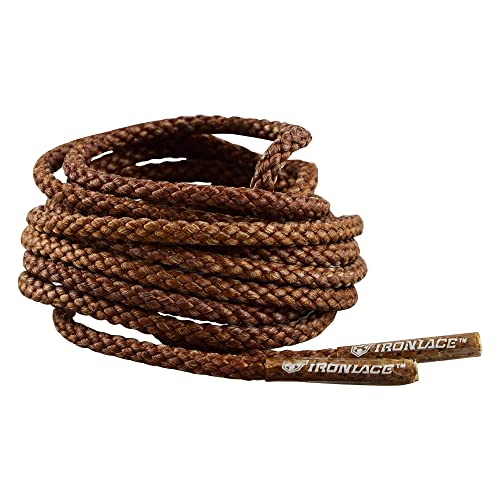
At a Glance:
- 💪 Durability: ★★★★★ — Virtually indestructible
- 🔒 Knot Security: ★★★☆☆ — Slippery; requires surgeon’s knot or double bow
- 💰 Value: ★★★☆☆ — Expensive per pair, but lifetime guarantee
- 🧵 Material: 100% Para-Aramid fiber
- 📏 Diameter: 1/8″ (3.2mm) — fits virtually all boot eyelets
- 🌡️ Heat resistance: Up to 630°F / 332°C
The Honest Take: If you’re consistently snapping laces through abrasion, chemical exposure, or sheer force, Ironlace is the nuclear option. Made from 100% advanced para-aramid fibers with a claimed 1,500 lb breaking strength per pair, these are genuinely ridiculous in the best way — resistant to cuts, chemicals, UV, and heat up to 630°F. They’re manufactured in the USA by visually impaired and blind workers, which is worth knowing.
The trade-off is real and unavoidable: para-aramid fibers are inherently stiff and slippery. You will need to use a surgeon’s knot or double bow to keep them tied throughout the day. Factor that into your decision. The lifetime guarantee means the high price is a one-time investment — if they ever fail, Ironlace replaces them.
✅ Pros
|
❌ Cons
|
Best For: Welders, firefighters, ironworkers, miners, and anyone in an extreme-abuse environment where standard laces fail quickly and repeatedly.
🔥 Best Heat/Fire Resistant: Rhino Laces
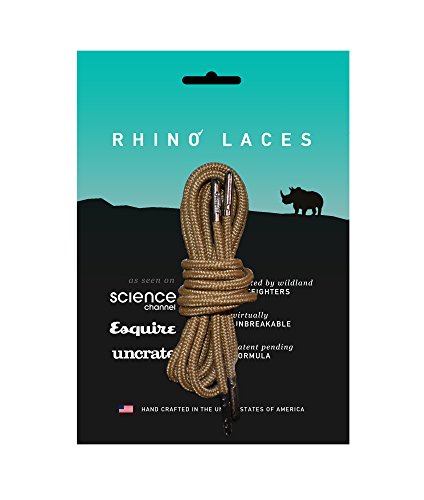
At a Glance:
- 💪 Durability: ★★★★★ — Extremely tough
- 🔒 Knot Security: ★★★☆☆ — Use the Rhino Knot or surgeon’s knot
- 💰 Value: ★★★☆☆ — Premium price
- 🧵 Material: Proprietary Aramid fiber blend
- 🌡️ Primary advantage: Direct spark/ember/flame contact resistance
The Honest Take: Similar to Ironlace in their use of Aramid fibers, Rhino Laces are marketed squarely at firefighters and welders for extreme heat and fire resistance. They’re uncuttable and indestructible under normal use. Like Ironlace, they’re incredibly strong but suffer from the same Aramid stiffness — users consistently report needing the “Rhino Knot” (a simple box tie variation) to keep them secured. If your primary concern is direct exposure to sparks, embers, or high heat rather than pure tensile strength, Rhino Laces are the more purpose-built solution. If you’re torn between Ironlace and Rhino, ask yourself: are you pulling hard on laces (Ironlace), or are you near open flame and sparks (Rhino)?
✅ Pros
|
❌ Cons
|
Best For: Firefighters, welders, foundry workers — anyone with direct, regular exposure to flame and sparks.
💰 Best Budget Nylon: OrthoStep Round Athletic Laces
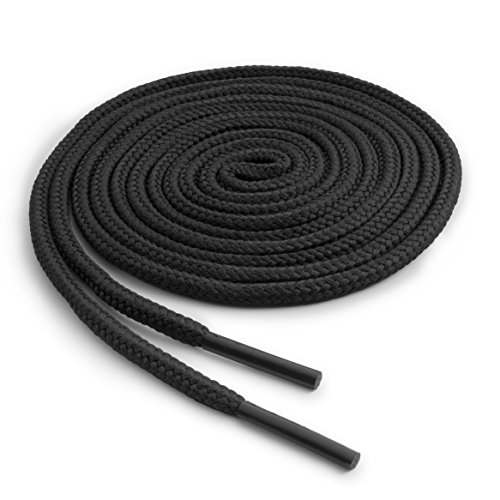
At a Glance:
- 💪 Durability: ★★★☆☆ — Good for everyday nylon
- 🔒 Knot Security: ★★★★☆ — Holds well
- 💰 Value: ★★★★★ — Very affordable 2-pair pack
- 🧵 Material: Nylon, Made in USA
- 📏 Diameter: 1/8″ (3mm) — thinner profile
The Honest Take: If you just need a solid, no-frills replacement lace without breaking the bank, OrthoStep’s nylon laces are exactly that. Made in the USA, they use a sturdy nylon braid with good strength and durability for everyday work or hiking. The standout feature is the fused tips — instead of plastic aglets that crack, the ends are heat-formed into a permanent, roughened point. They come in a 2-pair pack at a price that makes them easy to buy in bulk. Note the 1/8″ diameter — slightly thinner than the Miscly laces, which makes them a better fit for tighter eyelets in hiking or tactical boots.
✅ Pros
|
❌ Cons
|
Best For: Budget-conscious buyers, general work boots, hiking shoes, tactical boots with smaller eyelets.
🧵 Best Kevlar® Reinforced: GREATLACES Kevlar Reinforced
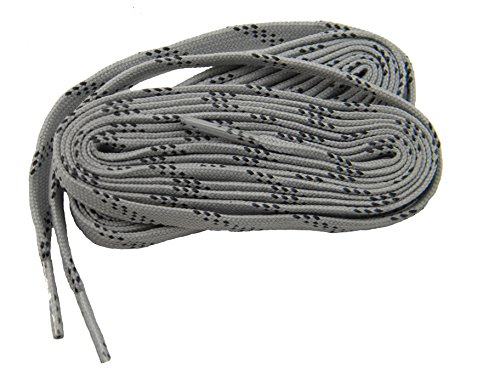
At a Glance:
- 💪 Durability: ★★★★☆ — Enhanced abrasion resistance
- 🔒 Knot Security: ★★★★☆ — Good hold, normal to tie
- 💰 Value: ★★★★☆ — Good for reinforced laces
- 🧵 Material: Polyester sheath with Kevlar® stitching
The Honest Take: These laces offer a smart middle ground. Instead of being 100% Aramid (which brings stiffness and knotting headaches), they use a durable polyester sheath with Kevlar® fibers stitched directly into it. This significantly boosts abrasion and cut resistance compared to standard polyester or nylon — without the extreme stiffness of pure Aramid. Made in the USA. They feel normal to handle and hold knots well. The right choice if you find yourself frequently fraying laces at the eyelets or speed hooks but find Ironlace too rigid to work with comfortably.
✅ Pros
|
❌ Cons
|
Best For: Construction workers, landscapers, demanding hikers — anyone whose laces die from abrasion rather than tensile failure.
🐝 Best Waxed Laces: Obenauf’s Waxed Boot Laces NEW PICK

At a Glance:
- 💪 Durability: ★★★★☆ — Exceptional with proper care
- 🔒 Knot Security: ★★★★★ — Beeswax coating grips itself; stays tied without double-knotting
- 💰 Value: ★★★★☆ — Premium but long-lasting
- 🧵 Material: Waxed cotton/polyester blend
- 🌡️ Heat resistance: Low — not for welding or direct flame
The Honest Take: Obenauf’s solves the problem that Aramid laces create: you want durability, but you also want laces that stay tied without knotting gymnastics. The beeswax coating on these laces makes them grip each other naturally — knots lock in and stay locked without double-knotting, surgeon’s knots, or any special technique. They’re not as strong as para-aramid fibers in a lab, but in real-world conditions (dirt, moisture, constant movement) they outlast most alternatives by a significant margin.
The trade-offs: not suitable for welding or firefighting due to limited heat resistance, and waxed laces need occasional re-waxing if used in extremely wet conditions over a long period. But for hunting, hiking, daily work boot use, and premium leather boots where you want the look and feel to match the quality of the boot — these are the pick.
✅ Pros
|
❌ Cons
|
Best For: Hunters, backcountry hikers, craftsmen, anyone with premium leather boots (Red Wing, Thorogood, Danner) who wants laces that match the boot quality and stay tied all day without fuss.
⚡ Best No-Tie / Elastic: Lock Laces Elastic No-Tie NEW PICK
At a Glance:
- 💪 Durability: ★★★★☆ — Elastic holds well over time
- 🔒 Knot Security: N/A — No knot; locking buckle system
- 💰 Value: ★★★★☆ — Affordable one-time purchase
- 🧵 Material: Elastic polymer with locking buckle
- 🎯 Key feature: Converts any laced boot into slip-on with one-step entry
The Honest Take: Lock Laces are not for everyone, and we won’t pretend otherwise. If you need maximum ankle support, precise lace tension, or your boots regularly take heavy abuse, stick to traditional laces. But for the specific user who needs a work boot (for safety toe compliance, for example) but finds traditional lacing painful, slow, or impractical, elastic no-tie laces are a genuine solution that doesn’t get covered enough in articles like this one. One-size-fits-all with a simple locking buckle — thread once, adjust once, and your boots function as slip-ons from then on. The locking buckle tucks away neatly so there’s no protruding hardware to snag.
✅ Pros
|
❌ Cons
|
Best For: Workers with arthritis or limited hand mobility, warehouse and standing-station workers, healthcare professionals in safety-toe footwear, and anyone who needs quick repeated boot entry/exit throughout the day.
Which Boot Lace Is Right for You? Quick Decision Guide
| Your Situation | Go With | Why |
|---|---|---|
| General work boots, hiking, daily wear | Miscly Heavy Duty | Best all-around durability and value; 3 pairs per pack |
| Laces keep snapping or fraying at speed hooks | GREATLACES Kevlar | Kevlar sheath dramatically extends life without stiffness penalty |
| Welding, foundry, near sparks or flame | Rhino Laces | Purpose-built for direct spark and flame contact |
| Wildland firefighting, chemicals, extreme abuse | Ironlace Unbreakable | Maximum tensile strength and durability; lifetime guarantee |
| Premium leather boots, hunting, heritage look | Obenauf’s Waxed | Natural grip, stays tied, matches quality leather aesthetics |
| Budget replacement, tight eyelets, USA-made | OrthoStep Nylon | Fused tips, thinner profile, solid value |
| Arthritis, accessibility, quick daily entry/exit | Lock Laces No-Tie | Converts any boot to slip-on; locking buckle maintains tension |
Frequently Asked Questions
What’s the difference between Kevlar®, Para-Aramid, and Aramid laces?
Aramid is the family name for high-strength synthetic fibers. Kevlar® is DuPont’s brand name for a specific para-aramid fiber, known for exceptional tensile strength and cut resistance — the same material used in body armor. Technora® is another para-aramid brand. Nomex® is a meta-aramid fiber that excels in heat and flame resistance rather than cut resistance. When a lace is marketed as “Para-Aramid” (like Ironlace), it uses these fibers for extreme durability. When it’s “Kevlar® reinforced” (like GREATLACES), Kevlar® strands are woven into a polyester sheath — improving performance without full Aramid stiffness.
How do I stop my boot laces from coming untied?
Three approaches, depending on the root cause: (1) Surgeon’s knot — wrap the laces around each other twice at the base before completing the bow. The extra wrap adds friction that prevents loosening, which is especially important for stiff Aramid laces. (2) Switch to waxed laces — Obenauf’s beeswax coating makes laces grip each other naturally, so standard knots hold without any special technique. (3) Check your lace profile — round laces generally hold knots better than flat laces. If your boots came with flat laces and you’re constantly re-tying, switching to round laces is often all it takes.
What are fused tips vs. plastic aglets? Which lasts longer?
Plastic aglets are the standard crimped tips found on most laces. Quality varies — cheap ones crack or pop off after a few months of regular use, leaving frayed ends that are nearly impossible to thread through eyelets. Fused tips (like on OrthoStep) are made by melting the lace fibers themselves into a hardened point — they physically cannot crack or separate because they are the lace. They may feel slightly rougher to the touch, but for practical durability, fused tips win every time.
How do I measure for the right boot lace length?
Remove one lace completely from your boot. Lay it flat and measure it from tip to tip with a tape measure. Order the closest available length to that measurement. Don’t rely on eyelet count charts alone — eyelet spacing varies significantly between brands and boot styles, and the same eyelet count can require lace lengths that differ by 12″ or more.
Should I use round or flat boot laces?
Round laces are the better choice for most work and outdoor boots — they distribute pressure evenly across the instep and hold knots more reliably than flat laces. Flat laces are more common on heritage and dress boots (Red Wing, Thorogood, some Danner models) where the look matters as much as function. If you’re replacing laces on a purely functional work or hiking boot, go round. If you’re maintaining the look of a premium leather boot, check what the manufacturer spec’d first.
Do elastic no-tie laces provide enough support for work boots?
For most moderate-duty work, yes — the locking buckle system on elastic laces like Lock Laces maintains consistent tension throughout the day, and many workers in warehouse, healthcare, and service roles use them without issues. However, for applications requiring maximum ankle support (roofing, scaffolding, uneven terrain, load-carrying), traditional lacing provides a level of lockdown that elastic systems can’t fully replicate. Know your use case before switching.
Are waxed laces waterproof?
Waxed laces (like Obenauf’s) are water-resistant — the beeswax coating repels light moisture and prevents the lace from absorbing water in the same way an untreated lace would. They’re not waterproof in the sense that they can withstand sustained submersion. In very wet conditions over time, the wax coating can wear in specific high-friction areas (around eyelets and speed hooks) and may benefit from a light re-application of beeswax or leather conditioner to maintain full performance.
Conclusion: Don’t Skimp on Your Laces
It seems like a small detail — but your boot laces work hard all day under constant tension and abrasion. Replacing flimsy stock laces with the right aftermarket pair is one of the cheapest, highest-impact upgrades you can make to any boot.
Here’s the short version of where each pick lands:
- Most users → Miscly Heavy Duty — The best all-around value, full stop. Three pairs, great durability, works everywhere.
- Laces dying from abrasion → GREATLACES Kevlar — Kevlar sheath extends eyelet life without Aramid rigidity.
- Near fire or sparks → Rhino Laces for direct flame contact; Ironlace for extreme tensile and chemical abuse.
- Premium leather boots, hunting → Obenauf’s Waxed — Stays tied naturally, built to last years.
- Budget nylon → OrthoStep — Fused tips, USA-made, reliable and inexpensive.
- Accessibility needs → Lock Laces — The one category most guides skip, but genuinely useful for the right person.
Measure your old laces, match the material to your environment, and lace up with confidence.