The honest answer is: it depends on the actual hazard, not the fact that you’re “doing a project.” Most people either overbuy, steel toe boots for painting a fence, or underbuy, a dead pair of sneakers for a job that genuinely calls for real protection. Neither mistake is really about work boots as a category. It’s about matching the footwear to what’s actually going to happen to your feet.
This guide sorts home and garage projects into the categories that actually matter, then points you to the right kind of purchase for each one, which sometimes isn’t a boot at all.
The Real Failure Point Isn’t Missing Safety Toes, It’s Worn-Out Sneakers
For most light DIY work, painting, gardening, general assembly, puttering around the garage, the actual injury risk isn’t a crushed toe. It’s a slip or a rolled ankle from wearing sneakers that have already given up: dead tread, no support, soles compressed flat from years of casual wear. That’s a real, common failure point that has nothing to do with steel toes and everything to do with the shoe simply being worn out.
If this describes your projects, the fix isn’t necessarily a work boot. It’s a shoe with real tread and actual support, doesn’t need a safety toe, doesn’t need to be marketed as “work” footwear at all, it just needs to not be the pair you’ve been wearing since they lost their structure years ago.
When You Actually Need a Safety Toe
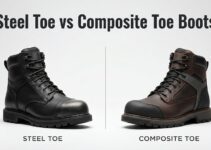
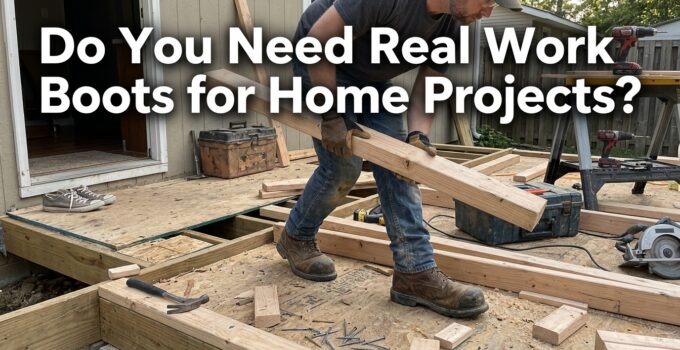
Real impact risk shows up in specific, identifiable situations: moving heavy lumber, working under a vehicle where something could shift or drop, appliance installation or removal, anything involving genuine weight that could land on your foot. This is a real, worthwhile reason to buy a certified safety toe boot.
It’s also a smaller slice of home projects than people assume. Painting, light gardening, assembling furniture, and most puttering-around tasks simply don’t carry this risk, and buying steel toe protection for them is spending money and tolerating extra weight for a hazard that isn’t there.
When Puncture Resistance Matters More Than Toe Protection
Roofing work, flooring removal, and demolition projects carry a different hazard entirely: exposed nails, screws, and sharp debris underfoot, not overhead impact risk. A puncture-resistant sole matters more here than a safety toe does, since the danger is what you’re stepping on, not what might fall on you. If this is your project, our puncture-resistant work boots guide covers the right category of footwear for exactly this hazard.
When the Real Problem Is Fatigue, Not Impact
Long stretches standing at a workbench, woodworking, detail work, garage tinkering that keeps you in one spot for hours, isn’t really a boot problem at all. It’s a fatigue and support problem. Experienced woodworkers on forums like FineWoodworking consistently point to anti-fatigue mats and proper insoles as the actual fix, not a heavier or more rugged boot. If your feet and legs are tired after hours at a bench, a quality insole is often a better first purchase than a new pair of boots entirely. Our guide to insoles for work boots covers this directly.
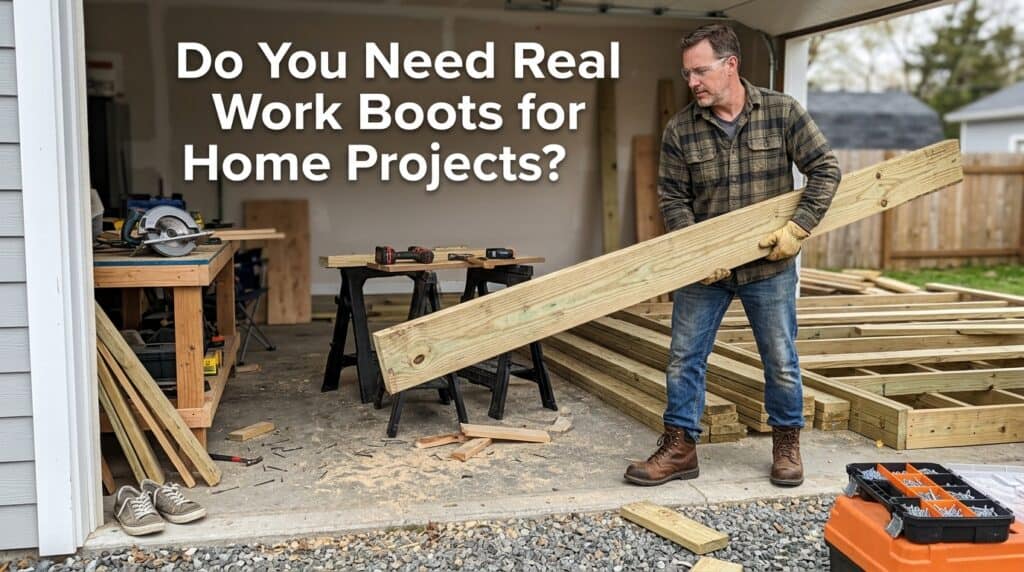
homeowner wearing work boots for… 202608250759
A Simple Decision Guide
- Light chores, painting, gardening, assembly: a supportive, non-safety shoe with real tread, not necessarily a “work boot” at all
- Heavy materials, lumber, appliances, vehicle work: a genuine certified safety toe boot
- Roofing, flooring removal, demo with exposed debris: a puncture-resistant sole specifically
- Long stretches standing at a workbench: a quality insole or anti-fatigue mat before a new boot
If You Do Need a Real Work Boot
For heavier home projects that genuinely call for a certified boot, you don’t need to spend construction-crew money on something you’ll wear on weekends. Our guide to work boots under $100 covers solid, genuinely certified options that hold up without the premium price tag, and our current most comfortable work boots guide is worth a look if all-day comfort matters more to you than price alone.
Frequently Asked Questions
Do I need steel toe boots for basic home projects?
For most basic projects, painting, gardening, light assembly, no. Steel or composite toe protection is worth it specifically when you’re handling heavy materials or working around genuine drop-and-crush risk, not as a default for any project labeled “DIY.”
What’s the difference between work boots and regular boots for DIY use?
Certified work boots carry specific protections, safety-rated toes, puncture-resistant soles, electrical hazard ratings, tested to ASTM standards. Regular boots or shoes can still have good tread and support without any of those certifications. Whether you need the certified version depends entirely on the actual hazard in front of you, not on whether the project counts as “work.”
Are sneakers ever okay for garage work?
Yes, for light projects without real impact or puncture risk, a supportive pair of sneakers with intact tread is genuinely fine. The problem isn’t sneakers as a category, it’s worn-out sneakers with dead tread and no remaining support, which is a real hazard regardless of what footwear category they fall into.
What should I buy if I’m mostly standing at a workbench, not moving heavy things?
Consider a quality insole or an anti-fatigue mat before a new pair of boots. Standing fatigue is usually a support and cushioning problem, not an impact-protection problem, and experienced hobbyists consistently point to these as the more effective fix.
Bottom Line
Match the purchase to the actual hazard, not to the idea that “doing a project” automatically means buying work boots. Light chores usually just need a supportive shoe with real tread. Heavy materials call for a genuine safety toe. Nails and debris call for a puncture-resistant sole. And if your feet just get tired standing at a bench for hours, a good insole will likely serve you better than a heavier boot ever will.