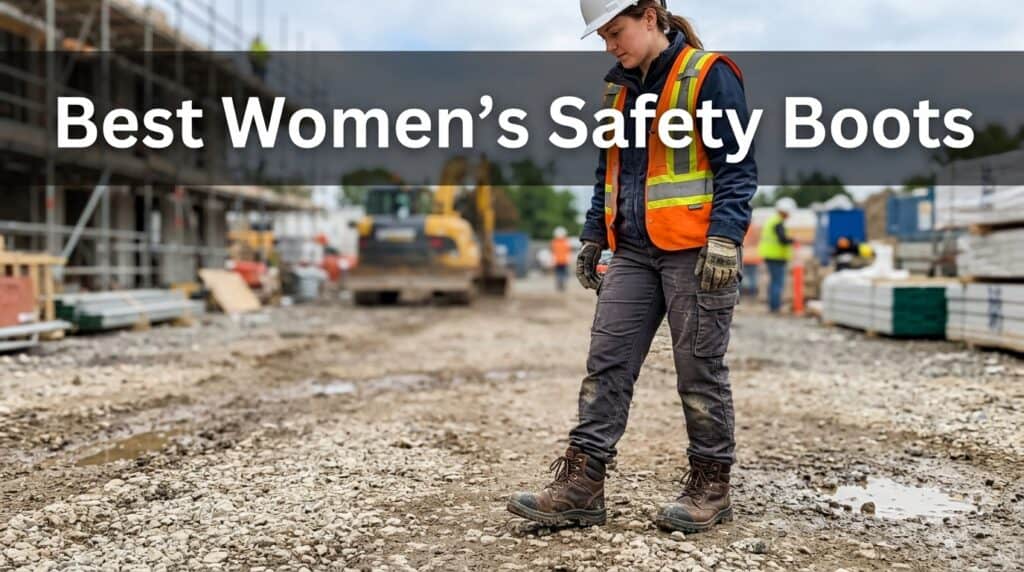

A genuine safety boot for women needs two things at once: real certified protection and a fit that's actually built for a woman's foot, not a men's boot sized down a size or two. That second part gets glossed over constantly, and it's the reason so many women end up in a "women's" safety boot that still doesn't fit right despite being the correct listed size.
This guide covers five current, genuinely available picks across different jobs and comfort priorities, then breaks down what actually separates a real women's-last boot from a downsized men's one, and how to choose between steel and composite toe for your specific work.
Best Overall: Timberland PRO Women's Titan EV
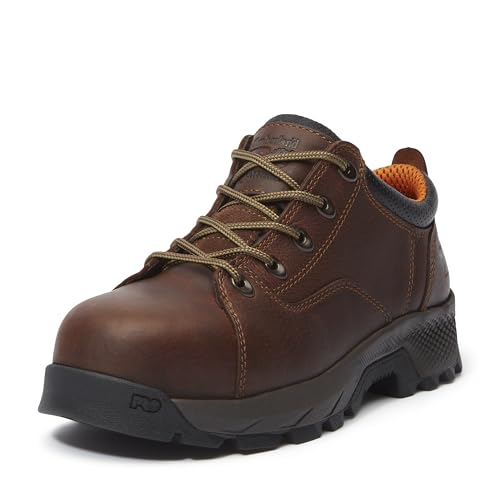
Titan EV is Timberland PRO's newer safety-toe platform, built on the same women's-specific last philosophy that made the brand's Hightower line successful, with an updated comfort and traction system layered on top. This is the boot to start with if you want current-generation Timberland PRO construction rather than an older, established model that hasn't been refreshed in years.

The certified safety toe and updated outsole make this a genuine jobsite boot, not a comfort shoe with a safety label attached, while the newer platform means you're getting current construction standards rather than a design that's stayed static for a decade.
Not the right fit if: you want a long track record of owner reviews to lean on before buying. As a newer platform, it has less accumulated feedback than Timberland PRO's older, more established lines.
Pros: Current-generation safety toe platform, genuine women's-specific last, updated comfort and traction tech.
Cons: Less established review history than older Timberland PRO models.
Buy the Timberland PRO Titan EV on Amazon today with FREE returns
Best for All-Day Comfort: KEEN Utility Women's Flint II Steel Toe
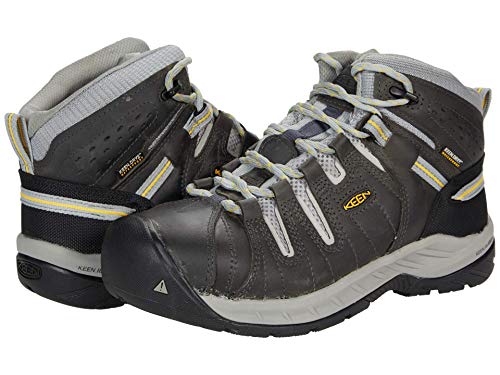
The Flint II pairs a certified steel toe with KEEN's ReGEN cushioning midsole, engineered specifically to return energy with each step rather than just absorbing shock passively. If comfort over a full shift is your top priority and you're not willing to give up steel toe protection to get it, this is the boot built around exactly that trade-off.

KEEN builds this on its own women's-specific foot form, wider through the midfoot than the industry standard, which shows up as real comfort during long stretches of standing or walking rather than just a marketing claim.
Not the right fit if: you want the lightest possible toe protection available. Composite options, like the Skechers pick below, shave more weight at the cost of steel's slightly better cost-to-protection ratio.
Pros: Certified steel toe, genuinely comfort-focused energy-return midsole, built on a real women's-specific last.
Cons: Steel toe adds more weight than a composite alternative.
Buy the KEEN Utility Flint II on Amazon today with FREE returns
Best Western-Style Safety Boot: Ariat Women's Treadfast 6" Steel Toe
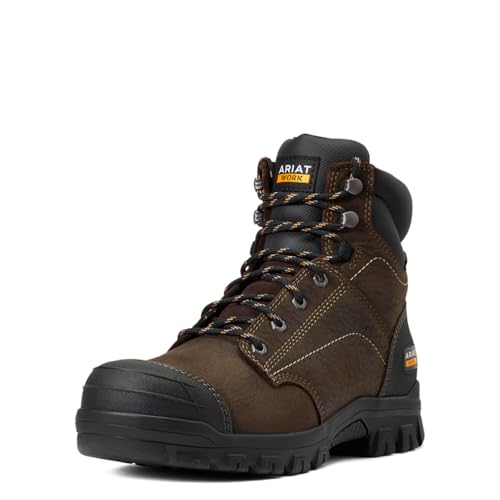
Treadfast brings Ariat's western-boot comfort heritage into a genuine 6-inch lace-up safety silhouette, a good pick if you want Ariat's established fit and sole feel without the pull-on western profile of models like the Krista. The certified steel toe makes this a real jobsite boot rather than a western-styled boot borrowing safety branding.

Standard lace-up construction gives more fit adjustability than a pull-on, useful if you've had trouble getting a locked-in heel fit from pull-on western safety boots in the past.
Not the right fit if: you specifically want a pull-on western silhouette. This is a standard laced boot despite the western heritage brand.
Pros: Certified steel toe, Ariat's established comfort sole technology, standard lace-up adjustability.
Cons: Doesn't have the pull-on western styling some Ariat buyers specifically shop the brand for.
Buy the Ariat Treadfast on Amazon today with FREE returns
Best Lightweight, Athletic-Style Pick: Skechers Women's Work Arch Fit SR Composite
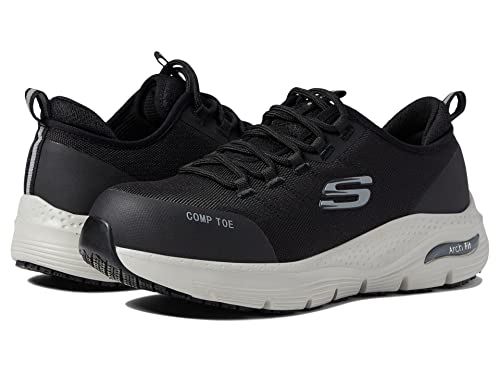
Built more like a running shoe than a traditional safety boot, the Arch Fit SR pairs a certified composite toe with Skechers' Arch Fit cushioning system and a genuinely slip-resistant outsole. This is the lightest, most athletic-feeling option on this list, and a strong pick for retail, food service, or light industrial roles where all-day comfort and slip resistance matter as much as impact protection.

The low-cut, sneaker-like profile trades ankle coverage for a lighter, more breathable feel, worth weighing against your specific job's terrain and hazard profile before choosing this over a taller boot.
Not the right fit if: you need ankle coverage or a more rugged, traditional work boot silhouette for uneven terrain.
Pros: Certified composite toe, genuinely lightweight athletic feel, strong slip-resistant outsole, real arch support cushioning.
Cons: No ankle coverage, less rugged than a traditional lace-up work boot.
Buy the Skechers Work Arch Fit SR on Amazon today with FREE returns
Best Hiking Crossover for Outdoor Work: Danner Women's Trail 2650 GTX
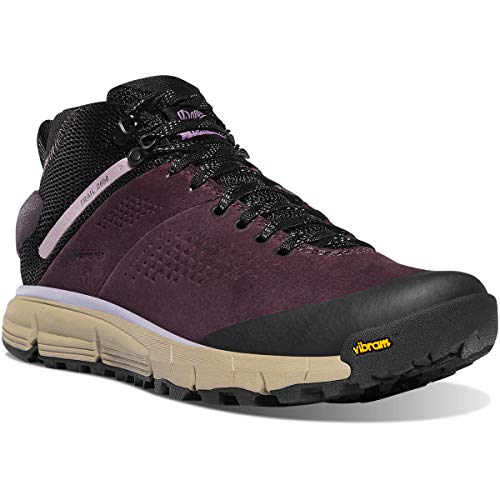
Not a certified safety toe boot, and worth being upfront about that. This is the pick for outdoor work roles, land management, parks and recreation, agricultural fieldwork, where a genuine hiking shoe with real Gore-Tex waterproofing makes more practical sense than a traditional safety boot silhouette.

Danner's trail heritage shows in the fit and traction, built for genuine outdoor mileage rather than standing on a warehouse floor, which is exactly the use case this fills that the four safety-toe picks above don't.
Not the right fit if: your job requires certified toe protection. This is a genuine hiking shoe, not a safety-rated boot, regardless of how rugged it looks.
Pros: Genuine Gore-Tex waterproofing, excellent trail traction, comfortable for long days of outdoor walking.
Cons: No safety toe certification, not a substitute for a rated safety boot on jobsites that require one.
Buy the Danner Trail 2650 GTX on Amazon today with FREE returns
Why a Women's Last Actually Matters
A "last" is the foot-shaped mold a boot is built around. Boots built on a genuine women's last account for a narrower heel, different arch positioning, and different overall foot volume than a men's boot simply sized down. Every boot in this guide is built this way. The practical difference shows up as less heel slip, a more secure fit without needing to over-tighten laces to compensate, and a shorter break-in period since the boot isn't fighting your foot's actual shape from day one.
Steel Toe vs. Composite Toe: Which Should You Choose?
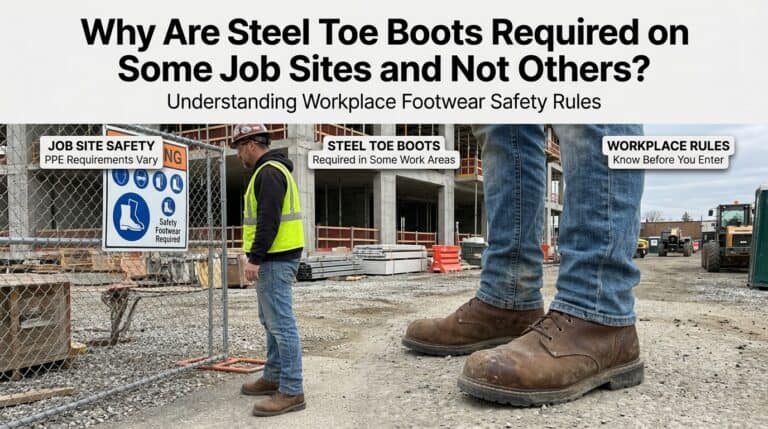
Both meet the same ASTM F2413 impact and compression standards when properly certified, so "safer" isn't really the right frame. Steel offers strong protection at a lower cost and a thinner profile. Composite is lighter and non-conductive, which matters directly if your work involves electrical hazards or you pass through metal detectors regularly. Neither is a universal upgrade over the other, it comes down to your specific job's hazards. Our full steel toe requirements guide covers this decision in depth if you're unsure which your role actually calls for.
Sizing Notes for Women's Safety Boots
Even on a genuine women's last, fit can vary meaningfully between brands. Ariat and Timberland PRO both run closer to true-to-size based on consistent owner feedback, while athletic-style safety shoes like the Skechers pick above sometimes benefit from checking the specific size chart rather than assuming your regular sneaker size carries over directly. If you're between sizes, sizing up slightly is generally the safer call for a safety-toe boot specifically, since a boot that's too tight against a rigid toe cap causes real discomfort that a half-size adjustment won't fix later.
Frequently Asked Questions
Do women's safety boots really fit differently than men's boots in the same size?
Yes, when built on a genuine women's last. The heel width, arch position, and overall foot volume are shaped differently from a men's pattern, not just scaled down, which is why a properly built women's boot in your size typically fits more securely than a men's boot ordered a size or two smaller.
Is composite toe or steel toe better for women's safety boots?
Neither is universally better. Composite is lighter and non-conductive, useful for electrical work or metal-detector environments. Steel offers strong protection at a lower cost. Both meet the same ASTM F2413 certification when properly rated, so the right choice depends on your specific job's hazards.
Should I size up in a safety-toe boot if I'm between sizes?
Generally yes. A safety boot that's slightly too tight against a rigid toe cap causes real discomfort that doesn't improve with break-in the way a soft-toe boot might, so sizing up slightly is usually the safer choice when you're between sizes.
Can a hiking boot like the Danner Trail 2650 replace a certified safety boot?
No, not for any job that requires certified toe protection. It's a genuine hiking shoe with real waterproofing and trail performance, but it carries no ASTM safety certification, so it's only appropriate for outdoor work roles that don't have a certified footwear requirement.
Bottom Line
If your job requires certified toe protection, choose from the first four: the Timberland PRO Titan EV for the newest platform, the KEEN Flint II for comfort-first steel toe, the Ariat Treadfast for western-brand comfort in a lace-up fit, or the Skechers Arch Fit SR for the lightest, most athletic option. The Danner Trail 2650 is the pick only if your work is genuinely outdoor and trail-based without a certified toe requirement. Whichever you choose, a real women's-last fit and the right toe type for your actual hazards matter more than brand name alone.