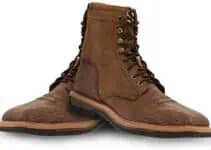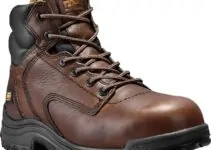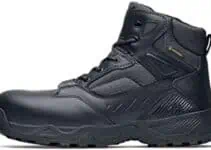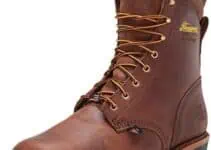
More than 60 percent of workers report foot pain from steel toe shoes — and most of them are looking in the wrong place for the solution. They buy a softer midsole. They add memory foam insoles. They size up half a step. And often, none of it helps, because the real cause of steel toe discomfort is not what they think.
The most common steel toe pain is not a cushioning problem. It is a cap geometry problem. Inside every steel toe boot is a rigid metal ceiling above the toes that creates friction on the dorsal surface of the toe knuckles with each step. No amount of heel cushioning addresses this. The correct solution — which this guide explains in detail before recommending a single product — is asymmetric cap design, the right sock, and the right fit protocol.
Beyond the cap problem: plantar fasciitis sufferers need structured arch support, not softness (soft midsoles actually worsen PF by allowing arch collapse). Workers with wide feet need asymmetric cap geometry, not just wider sizes. And the most common cause of a boot that was comfortable in month one and painful by month seven is a compressed insole — not a dead boot — which a twenty-dollar replacement fixes completely.
This guide covers all of it. Ten verified Amazon picks matched to specific pain types, surfaces, and foot conditions, plus the educational sections that make the difference between buying a boot that works and buying another pair that disappoints by spring.
Why Steel Toe Shoes Hurt: The Cap Geometry Problem Nobody Explains
Before you look at any product, understanding this mechanism will save you from returning another pair of boots.
Inside every steel toe boot, there is a rigid metal ceiling above the toe area — fixed, unyielding, shaped by the manufacturer rather than your anatomy. During normal walking gait, the foot slides forward slightly on each heel strike before the toes make contact with this ceiling. With thin socks or a gap between the top of the foot and the cap, this creates repeated friction between the dorsal (top) surface of the toe knuckles and the metal. After four to six hours of repeated contact, the skin develops the classic steel-toe blister on top of the toes — and most workers conclude the boot does not fit, when in reality the fit is correct and only the sock is wrong.
The solution to this specific problem is a sock with high-density cushioning at the toe knuckle zone. Quality merino work socks from Darn Tough, Smartwool, or Wigwam have precisely this feature — a loop-cushion layer at the toe that fills the gap between the foot and the cap ceiling, absorbing the friction force before it reaches the skin. A twenty-dollar pair of merino work socks eliminates the blister problem that leads workers to return a perfectly well-fitted boot.
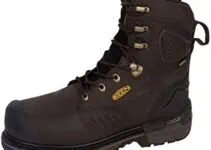
The secondary solution is asymmetric cap geometry. KEEN Utility designs its safety toe caps to widen toward the big toe, following the natural shape of the human forefoot rather than a symmetrical taper. Where standard symmetric caps press against the big toe joint from the side, the KEEN asymmetric design creates lateral room that eliminates side-pressure blisters. For workers with bunions, wide forefoot, or simply a wider big toe area, this geometry is specifically better than any symmetric alternative regardless of cushioning.
What does not solve cap friction blisters: a softer midsole, memory foam insoles, or sizing up. These all address different problems. If your pain is on top of your toes, the solution above is the correct one.
Pain-Type Diagnostic: Match Your Pain to the Right Boot
Workers searching for comfortable steel toe shoes have different pain types that require different boot features. Buying for the wrong pain type means buying another boot that helps at first and then disappoints. Identify your pain before reading any review.
Pain on top of the toes or toe knuckles: Cap friction problem. Need asymmetric or wide cap geometry plus toe-cushion socks. Best picks: KEEN San Jose (Pick 1), KEEN Flint II Wide (Pick 6).
Heel pain — worst in the morning or after sitting: Plantar fasciitis. Need firm heel cup, structured medial arch posting, and heel shock absorption. Do NOT buy the softest boot available — soft midsoles allow arch collapse and worsen PF. Best picks: Timberland PRO Titan EV (Pick 2), OrthoFeet Granite (Pick 3).
Arch pain — collapses after long standing: Flat feet or overpronation. Need medial arch posting and motion control. Standard memory foam and soft cushioned boots make this worse. Best pick: OrthoFeet Granite (Pick 3).
Ball-of-foot burning or pain behind the toes: Metatarsalgia or Morton’s neuroma. Need wide forefoot room with no constrictive pressure at the metatarsal heads. Best picks: KEEN Flint II Wide (Pick 6), KEEN San Jose (Pick 1).
Everything aches by end of shift: Check for midsole compression first — do the thumb test on your current insole (press firmly; if it leaves a permanent indent, the insole is dead, not the boot). If the boot is under 12 months old with a compressed insole, replace the insole for twenty dollars before buying a new boot. If the boot is over 14 months old under heavy daily use, the midsole itself may have compressed. Best new picks: Timberland PRO Reaxion (Pick 4), Merrell Work Moab 3 (Pick 7).
Toes cramping by afternoon: Heat-driven swelling in a toe box that was correct in the morning but too narrow by 2 PM. Feet swell 5–10% in volume during active shifts. Size up half a step from your perfect morning fit, or choose a wide toe box boot. Best picks: KEEN Flint II Wide (Pick 6), KEEN San Jose (Pick 1).
Steel Toe vs. Alloy Toe vs. Composite Toe: The Comfort Differences That Matter
Every article compares these on safety ratings and weight. None explains the comfort differences that actually affect your daily experience on the job.
Steel toe has the thinnest cap profile of the three materials — which means the most interior toe room in a given boot size. It conducts heat from the environment: on a 95°F summer site with hot concrete underfoot, a steel toe box heats measurably throughout the day. In cold storage environments, it becomes cold. If you work in extreme temperatures and toe thermal comfort matters to you, steel is not your best choice.
Alloy (aluminum) toe is 20–30% lighter than steel with a similarly thin cap profile, providing comparable interior toe room at reduced weight. It is still metallic — still conducts temperature, still triggers metal detectors. The comfort advantage over steel is purely the weight reduction, which is real and meaningful on high-step-count shifts.
Composite toe (fiberglass, Kevlar, or carbon fiber) is the lightest option, is non-metallic, and does not conduct heat or cold from the environment. On summer outdoor sites, the composite toe box stays close to interior boot temperature rather than heating from ambient heat and hot surfaces — a genuine thermal comfort advantage that no competitor article quantifies. The one trade-off: composite caps have a slightly bulkier profile than steel caps, meaning slightly less interior toe room in the same boot size. For workers on the edge of toe box width, this matters; for most workers, it does not.
The practical comfort rule: for summer outdoor construction or cold storage environments, composite provides better thermal comfort in the toe box alongside its weight advantage. For workers needing maximum interior toe room in a fixed boot size, steel’s thin profile may be preferable. For workers crossing metal detectors at work, composite is mandatory.
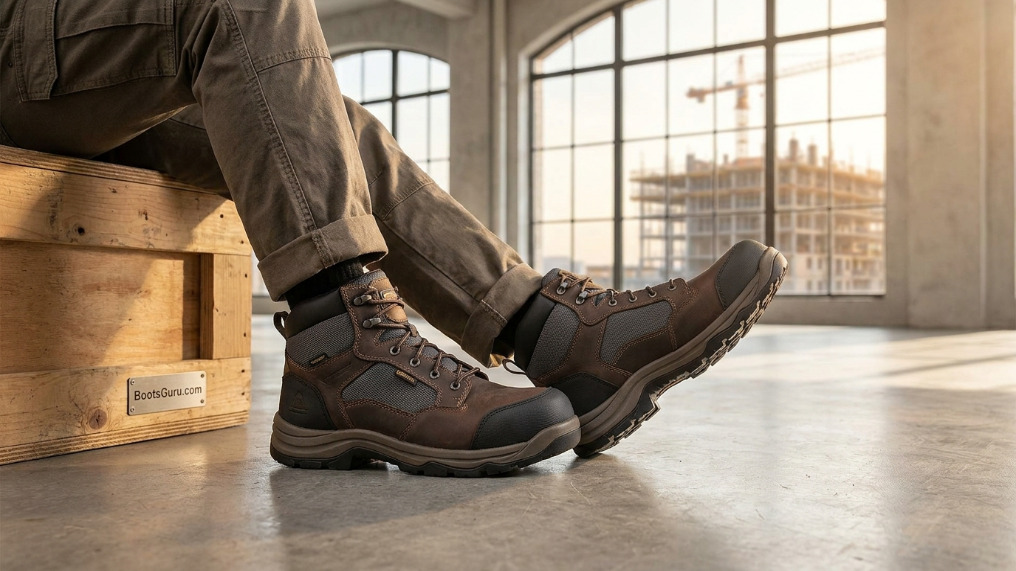
Step into adventure with these durable hiking boots! Perfect for any terrain, they combine style and comfort.
Quick Comparison: Most Comfortable Steel Toe Shoes (2026)
| Boot | Best For | Toe Type | Midsole | Weight | Removable Insole | Price |
|---|---|---|---|---|---|---|
| KEEN Utility San Jose 6″ | Best overall / cap friction / forefoot pain | Alloy (asymmetric) | LuftCell PU | ~15 oz | Yes | ~$150–$175 |
| Timberland PRO Titan EV 6″ | Plantar fasciitis / heel pain / concrete | Composite | PU anti-fatigue geometry | ~18 oz | Yes | ~$160–$190 |
| OrthoFeet Granite Work Boot | Flat feet / overpronation / arch conditions | Safety toe (verify) | Ortho-Cushion System | ~14 oz | Yes — orthotic | ~$130–$160 |
| Timberland PRO Reaxion CT | Best lightweight / sneaker feel / step count | Composite | EVA anti-fatigue | ~13 oz | Yes | ~$130–$165 |
| Ariat Treadfast 6″ Steel Toe | Concrete / hard floor static standing | Steel | ATS dual-density EVA | ~18 oz | Yes | ~$120–$145 |
| KEEN Utility Flint II Steel Toe | Wide feet / bunions / afternoon swelling | Steel (asymmetric wide) | EVA cushion | ~16 oz | Yes | ~$120–$150 |
| Merrell Work Moab 3 Mid WP | Warehouse / high step count / Vibram outsole | Safety toe (verify) | Air cushion + EVA | ~14 oz | Yes | ~$130–$155 |
| KEEN Utility Vista Energy Lo | Best low-cut / breathable / no break-in | Steel (asymmetric) | KEEN.ReGEN | ~14 oz | Yes | ~$120–$150 |
| Skechers Work Arch Fit SR | Indoor / retail / healthcare / Arch Fit fans | Composite | Arch Fit (APMA-accepted) | ~13 oz | Yes | ~$90–$120 |
| BRUNT Marin Welted CT | Best long-term value / resoleable | Composite | Athletic flex PU | ~20 oz | Yes | ~$140–$165 |
1. KEEN Utility San Jose 6″ — Best Overall Comfortable Steel Toe Shoe
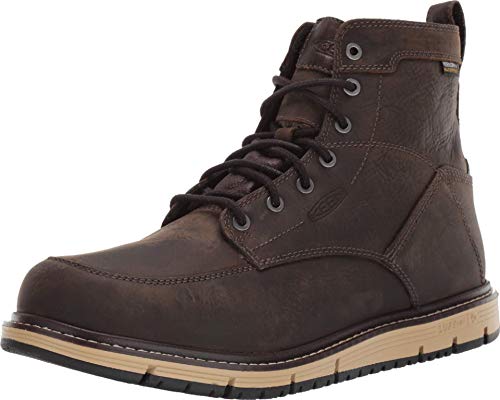
Best for: Workers experiencing cap friction blisters on top of the toes, forefoot cramping in standard boots, metatarsalgia, or anyone who has tried multiple “comfortable” steel toe boots and found every one too narrow by mid-afternoon.
| ASIN | B07RV2GZ21 |
| Toe type | Alloy (asymmetric) — wider toward big toe, no pressure at first MTP joint |
| Toe box width | 106mm+ at widest point — most interior room in this guide |
| Midsole | LuftCell PU — lightweight and maintains performance 18–24 months vs. 6–12 for EVA |
| Weight | ~15 oz per boot |
| Waterproof | Yes — KEEN.DRY membrane |
| ASTM | F2413 I/75 C/75 EH — verify on current listing |
| Break-in | Minimal — athletic construction comfortable from day one |
| Removable insole | Yes — metatomical footbed, orthotic-compatible |
| Pain conditions | Cap friction, forefoot cramping, metatarsalgia, bunions, afternoon swelling |
| Women’s version | Yes — genuine women’s last |
| Price range | ~$150–$175 |

The KEEN San Jose earns its overall position through the combination of features that directly addresses the most common steel toe comfort failure: the asymmetric wide toe box. At 106mm at its widest measured point, the interior toe space is the most generous in this guide — and the asymmetric geometry widens toward the big toe following the natural shape of the human forefoot, rather than tapering symmetrically as standard safety toe caps do. Workers who have developed blisters on the side of the big toe joint in other boots, or whose big toe has been pressed inward by symmetric caps over years of daily wear, typically feel the difference within the first hour. The cap design specifically avoids any structural element at the first metatarsophalangeal joint — the anatomical point where bunion pressure concentrates and where most symmetric caps cause the greatest discomfort.

The LuftCell PU midsole is a genuine comfort durability advantage over the EVA-based midsoles that dominate this price range. Where standard EVA foam loses 20–40% of its shock-absorbing capacity at 300–500 miles of daily use — typically six to twelve months for a construction worker — the LuftCell PU compound maintains its performance for eighteen to twenty-four months. Workers who have bought comfortable boots that became painful at month seven are experiencing EVA compression; the KEEN San Jose specifically avoids this with its PU formulation. The KEEN.DRY membrane provides waterproofing without the full inner bootie that Gore-Tex uses, maintaining more interior volume than sealed waterproof alternatives. The metatomical footbed is removable and leaves sufficient clearance for a Superfeet Green or custom orthotic after removal.
Pain conditions addressed: Cap friction blisters (asymmetric geometry fills the cap gap), metatarsalgia, bunions, forefoot cramping, afternoon swelling.
Pros: Widest asymmetric toe box in guide, LuftCell PU midsole lasts longer than EVA, lightweight at 15 oz, KEEN.DRY maintains interior volume, genuine women’s last available, no break-in period.
Cons: Alloy toe is metallic — triggers metal detectors (choose Wolverine Overpass CT or Timberland PRO Reaxion for metal-detector-safe composite). Mesh hybrid upper abrades faster than full-grain leather in heavy outdoor construction with debris.
2. Timberland PRO Titan EV 6″ — Best for Plantar Fasciitis and Heel Pain
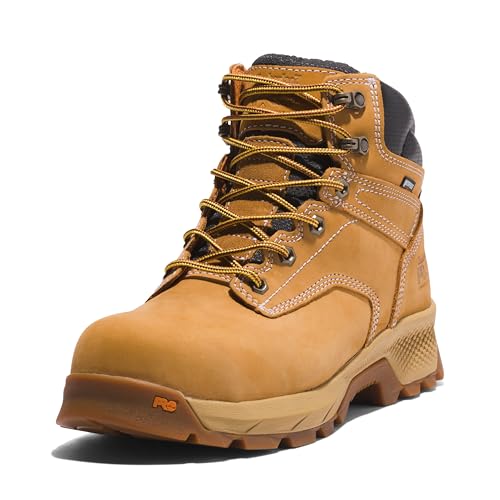
Best for: Workers with plantar fasciitis, morning heel pain, or fatigue from prolonged standing on concrete — and specifically for workers who have tried soft cushioned boots for their PF and found them making it worse.
| ASIN | B0CPN9XC1R |
| Toe type | Composite — ASTM F2413, non-metallic, metal-detector safe |
| Midsole | Timberland PRO Anti-Fatigue Technology — geometric PU-based energy return |
| ASTM | F2413 EH — verify on current listing |
| Weight | ~18 oz per boot |
| Break-in | Minimal — cement construction, immediate comfort |
| Removable insole | Yes — orthotic-compatible |
| Pain conditions | Plantar fasciitis, heel impact pain, hard-floor standing fatigue, general shift fatigue |
| Price range | ~$160–$190 |

The counterintuitive truth about plantar fasciitis comfort in work boots: the softest boot available is usually the wrong choice. When a very soft midsole allows the arch to sink inward under body weight during the stance phase of each step, the plantar fascia — the ligament running from heel to toes along the arch — is stretched further than it would be in a firm, supported boot. Workers with plantar fasciitis who have been buying “maximum cushion” boots and finding their heel pain worsening are experiencing this mechanism. The Timberland PRO Titan EV addresses PF correctly: its Anti-Fatigue geometric insert provides shock absorption specifically at heel strike (where PF pain originates), while the structured insole maintains arch support that resists inward collapse. The PU-based composition of the AFT system maintains this energy-return performance for eighteen to twenty-four months — significantly longer than EVA alternatives that feel great initially and then compress flat.

The composite safety toe reduces weight compared to steel and provides the metal-detector clearance that increasingly matters for workers at distribution centres and secure facilities. Available in black for uniform-compliant roles. The removable insole accepts a Superfeet Green or custom orthotic for workers who need stronger medial arch posting than the stock system provides — in plantar fasciitis cases where arch collapse is the primary driver, a Superfeet Green in the Titan EV provides better structural correction than either product alone. The EH rating covers workers in electrical-adjacent environments including electrical contractors, HVAC technicians, and warehouse workers near high-voltage charging infrastructure.
Pain conditions addressed: Plantar fasciitis (heel strike energy return), general shift fatigue from hard floor standing, heel impact soreness.
Pros: AFT geometric insert specifically addresses heel strike — correct mechanism for PF, not just softness; PU-based system lasts 18–24 months; composite toe non-metallic; EH rated; available in black.
Cons: Not the widest toe box in guide — workers with forefoot cramping alongside PF may need a KEEN asymmetric toe alongside a firmer arch. Heavier than athletic-construction alternatives at ~18 oz.
3. OrthoFeet Granite Work Boot — Best for Flat Feet and Overpronation

Best for: Workers with diagnosed or suspected flat feet, overpronation, arch collapse, or structural plantar fasciitis who have been told by a podiatrist they need arch support — and who have found that standard cushioned boots do not help.
| ASIN | B0B71FTLBR |
| Key feature | Ortho-Cushion System — medial arch posting, deep heel cup, APMA-accepted design |
| Extra depth | Yes — designed to accommodate custom orthotics without stack-height issues |
| Toe box | Wide — non-constrictive, accommodates bunions and wide forefoot |
| ASTM | Safety toe — EH rated, slip-resistant (verify specific toe type on current listing) |
| Break-in | Minimal — designed for immediate orthopedic support |
| Removable insole | Yes — designed for orthotic replacement |
| Pain conditions | Flat feet, overpronation, arch collapse, structural PF, heel spurs |
| Price range | ~$130–$160 |

OrthoFeet is the only purpose-built orthopedic safety footwear brand in this guide — and it exists in the lineup specifically because standard “comfortable” boots fail workers with structural foot conditions. The Ortho-Cushion System provides genuine medial arch posting: a firm, shaped wedge under the arch that physically prevents the foot from rolling inward during the stance phase. This is not foam cushioning — it is motion control. For workers whose arch pain or heel pain has an overpronation component, no amount of soft midsole cushioning will provide lasting relief because the root cause is mechanical, not impact-related. The OrthoFeet addresses the mechanical cause directly.

The extra-depth design is OrthoFeet’s second critical feature: it builds additional interior volume specifically to accommodate custom orthotic devices without pushing the foot too high in the boot. Workers prescribed custom orthotics by a podiatrist have consistently found that standard work boots do not have sufficient depth to accept the device without compressing the foot upward into the toe cap. OrthoFeet designs from the ground up with this requirement in mind. The wide non-constrictive toe box is appropriate for the wider, flatter foot shape that often accompanies overpronation. Verify the current ASTM safety toe specification on the Amazon listing — the Granite is available in multiple configurations and the certification details should be confirmed before purchasing for ASTM-required job sites.
Pain conditions addressed: Flat feet, overpronation, arch collapse, structural plantar fasciitis, heel spurs, diabetic neuropathy (low-pressure interior).
Pros: Only purpose-built orthopedic safety boot in guide, genuine medial arch posting controls overpronation at root cause, extra-depth for custom orthotics, wide toe box, ASTM certified, EH rated.
Cons: Best for indoor and light-duty environments — not for rugged outdoor heavy construction. Verify current ASTM safety toe type on listing before purchase for safety-critical sites.
4. Timberland PRO Reaxion CT — Best Lightweight / Sneaker Feel

Best for: Workers whose primary comfort problem is boot weight — anyone transitioning from heavy traditional steel toe boots who wants to feel the weight reduction immediately, and high-step-count workers walking 8,000–15,000 steps per shift.
| ASIN | B0CLT1R54L |
| Toe type | Composite — non-metallic, metal-detector safe, ASTM F2413 |
| Weight | ~13 oz per boot — lightest ASTM-rated boot in this guide |
| Upper | Synthetic and mesh — athletic sneaker construction |
| Midsole | Anti-fatigue footbed with EVA — geometric energy return |
| ASTM | F2413 EH — verify on current listing |
| Break-in | Zero — immediate comfort, full shift use from day one |
| Removable insole | Yes |
| Pain conditions | Weight-driven fatigue, high-mileage shift soreness, general end-of-day ache from heavy boots |
| Price range | ~$130–$165 |

Research on footwear weight and fatigue is consistent: each 100 grams of additional shoe weight increases the oxygen consumption of walking by approximately 1%. For a worker covering 8 miles across a 10-hour shift, the difference between a 13-ounce Reaxion and a 28-ounce traditional leather steel-toe boot represents roughly 6–7% more energy expended on locomotion every single day. Over a 50-hour work week, that compounds into measurable end-of-week fatigue and elevated joint loading. Workers who switch from heavy traditional boots to the Reaxion consistently report that the comfort improvement they feel is primarily the weight reduction, not any difference in cushioning — and they are correct to identify it this way. The weight is the dominant comfort variable for high-step-count workers.

The composite safety toe is non-metallic and passes both standard metal detectors and body scanners without triggering alarms — increasingly relevant as distribution centres and airport facilities add entry screening. The synthetic and mesh upper provides far superior breathability to full-grain leather equivalents, reducing the internal heat and sweat accumulation that contributes to afternoon foot swelling and blister formation. The anti-fatigue footbed provides geometric energy return at toe-off, reducing the cumulative energy cost of each step beyond the weight benefit. Zero break-in period: the Reaxion is comfortable on day one, full shift, with no adaptation protocol required — a meaningful practical advantage for workers who cannot tolerate the 30–50-hour break-in of Goodyear welt alternatives.
Pain conditions addressed: Weight-driven fatigue, high-mileage shift soreness, heat-related foot discomfort (mesh upper ventilation).
Pros: Lightest ASTM boot in guide at ~13 oz, composite toe for metal-detector environments, zero break-in, anti-fatigue footbed, EH rated, available in black.
Cons: EVA midsole will compress at 12–14 months of daily hard use — plan insole replacement at that interval. Not suitable for heavy outdoor construction with abrasive debris (mesh upper abrades faster than leather). Not the widest toe box — workers with forefoot width issues should look at KEEN alternatives.
5. Ariat Treadfast 6″ Steel Toe — Best for Concrete and Hard Floor Standing

Best for: Workers who stand more than they walk — concrete finishers, assembly line workers, retail floor staff, security guards — where the pain comes from sustained static loading on unforgiving surfaces rather than walking fatigue.
| ASIN | B08ZRVL1R1 |
| Toe type | Steel — ASTM F2413 I/75 C/75 EH |
| Midsole | ATS (Advanced Torque Stability) — fiberglass shank + dual-density EVA for standing |
| Outsole | Duratread — abrasion and chemical resistant (concrete, sealant, grout) |
| Upper | Full-grain leather — moulds to foot over break-in |
| ASTM | F2413 I/75 C/75 EH |
| Break-in | 1–2 weeks leather softening — plan before first full standing shift |
| Removable insole | Yes |
| Pain conditions | Hard-floor standing fatigue, heel and arch pain from static load, metatarsal pressure from concrete floors |
| Women’s version | Yes |
| Price range | ~$120–$145 |

Static standing on concrete is biomechanically distinct from walking. Where walking distributes load across the foot through each heel-to-toe roll, standing places continuous compressive force on the same anatomical points — the heel bone, the metatarsal heads, and the arch — without the muscle-pump benefit of the gait cycle. Workers who stand for 6–10 hours describe a different, duller type of pain than construction workers who walk: a deep aching from the heel and across the forefoot that worsens progressively through the shift. Ariat’s ATS system was developed specifically for this load pattern — the fiberglass shank distributes the standing load longitudinally across the arch rather than allowing it to concentrate at the heel and ball, and the dual-density EVA provides both surface cushioning and structural resistance to arch collapse under sustained static weight.

The Duratread outsole compound provides abrasion resistance and chemical resistance specifically suited to concrete environments: curing compounds, sealants, grout, epoxy tile adhesives, and general concrete chemistry that degrades standard rubber outsoles are resisted by the Duratread formulation. The full-grain leather upper moulds to the specific shape of the wearer’s foot over a one to two week break-in period — uncomfortable at first, but once broken in, it provides a custom-formed fit that no synthetic upper can replicate for long-term standing comfort. Plan the break-in period before a demanding standing shift: wear the Treadfast for three to four hour sessions for the first week, not a full ten-hour standing day on day one.
Pain conditions addressed: Prolonged static standing on concrete and hard floors, heel and arch fatigue from standing load, metatarsal pressure from hard surface contact.
Pros: ATS system specifically engineered for hard-floor standing, Duratread chemical-resistant outsole extends life on concrete, full-grain leather moulds to foot, EH rated, women’s version available.
Cons: 1–2 week leather break-in required. Steel toe conducts ambient heat in summer and cold in winter — consider composite alternative for temperature-extreme environments. Not the lightest option.
6. KEEN Utility Flint II Steel Toe — Best for Wide Feet and Afternoon Swelling

Best for: Workers with wide feet, bunions, hammer toes, or feet that swell significantly from morning to afternoon — where the primary pain driver is forefoot compression in the toe box rather than midsole inadequacy.
| ASIN | B07VCLW7B4 |
| Toe type | Steel — asymmetric KEEN wide toe box, no structure at MTP joint |
| Key feature | Wide asymmetric cap — most budget-friendly wide steel toe in guide |
| Waterproof | Yes — KEEN.DRY membrane |
| Midsole | EVA cushion midsole |
| ASTM | F2413 I/75 C/75 EH |
| Outsole | Oil/slip-resistant rubber — non-marking |
| Wide sizing | Yes — wide version available |
| Break-in | Minimal — KEEN athletic construction |
| Removable insole | Yes |
| Pain conditions | Forefoot cramping, bunions, hammer toes, afternoon swelling, toe cap side pressure |
| Price range | ~$120–$150 |

There is a fundamental rule about forefoot comfort in steel toe shoes: if the toe box is too narrow, the toes are being compressed, and that compression causes pain regardless of how good the midsole is. No insole, no cushioning technology, and no break-in period fixes a box that does not fit. The KEEN Flint II’s asymmetric wide toe box addresses forefoot pain at its source — the cap widens toward the big toe following natural forefoot geometry, and KEEN specifically engineers the cap to avoid contact at the first metatarsophalangeal joint. This is the anatomical point where bunion pressure concentrates and where symmetric caps cause the greatest lateral pressure on the big toe. Workers who have returned three pairs of steel toe boots because of big-toe-joint pain consistently report that the KEEN asymmetric design is the first cap that does not create this pressure.

Afternoon swelling is the second reason this boot earns its place. Human feet swell 5–10% in volume over an active shift as blood and lymphatic fluid accumulate in the lower extremities. A boot that fits perfectly at 8 AM can be creating forefoot compression by 2 PM as the foot expands toward the maximum internal volume of the toe box. The KEEN asymmetric wide design accommodates this swelling volume — and the KEEN.DRY waterproof membrane maintains interior volume better than Gore-Tex bootie construction by using a laminate rather than a full inner bootie. The non-marking outsole is a practical benefit for finished floors and professional environments, and wide sizing is available for workers who need even more room across the full foot platform rather than just at the toe.
Pain conditions addressed: Bunions, forefoot cramping, hammer toes, afternoon swelling, big-toe-joint side pressure from symmetric caps.
Pros: KEEN asymmetric wide toe box under $150, wide sizing available, KEEN.DRY waterproof, non-marking outsole, EH rated, immediate comfort, women’s version on women’s last.
Cons: EVA midsole — plan insole replacement at 12–14 months of daily hard use. Steel toe is metallic — triggers metal detectors. Not the best arch support for plantar fasciitis — combine with Superfeet Green insole for that.
7. Merrell Work Moab 3 Mid WP — Best for Warehouse and High Step Count

Best for: Workers covering 8,000–15,000 steps per shift on mixed indoor surfaces — warehouse pickers, distribution workers, inspectors, and mobile site workers who need outsole durability that outlasts standard rubber compounds.
| ASIN | B0D97392TQ |
| Toe type | Safety toe — verify type on current Amazon listing |
| Outsole | Vibram TC5+ — the key comfort durability feature; outlasts standard rubber |
| Waterproof | Yes — Merrell DRY membrane |
| Midsole | Air cushion heel + EVA foam |
| Weight | ~14 oz per boot |
| Break-in | Minimal — athletic construction |
| Removable insole | Yes — Kinetic Fit Base, orthotic-compatible |
| Pain conditions | High-step-count fatigue, heel impact soreness, outsole wear on mixed surfaces |
| Women’s version | Yes — genuine women’s last |
| Price range | ~$130–$155 |
The Merrell Work Moab 3’s defining comfort advantage for warehouse and high-step-count workers is the Vibram TC5+ outsole — a feature that directly addresses the comfort durability problem that causes workers to describe their boots as “comfortable for three months then terrible.” Standard rubber outsoles on most athletic-construction work shoes wear down on warehouse concrete and mixed surfaces within 8–12 months, creating uneven pressure distribution that causes foot pain. The Vibram TC5+ compound is engineered for sustained mixed-terrain wear and maintains grip and structural integrity significantly longer — workers who have experienced rapid outsole wear in Skechers or similar athletic work shoes will find the Moab 3’s outsole a qualitatively different durability experience.

The air cushion heel specifically absorbs the compressive spike of heel strike during walking — the Merrell proprietary air pocket integrated into the rear of the midsole. This is the component that makes the Moab 3 particularly effective for workers whose heel soreness worsens progressively across a walking shift rather than being worst in the morning (the PF pattern). The Kinetic Fit Base removable insole accepts Superfeet or custom orthotics for workers who need arch support in addition to the walking cushion the stock setup provides. The Merrell DRY waterproof membrane provides weather protection without the full-bootie construction that reduces interior volume in Gore-Tex equivalents. Women’s version available on a genuine women’s last with the same Vibram outsole and air cushion heel.
Pain conditions addressed: High-step-count fatigue, heel impact soreness from walking shifts, outsole wear on abrasive mixed surfaces.
Pros: Vibram TC5+ outsole outlasts standard rubber significantly, air cushion heel for walking fatigue, Merrell DRY waterproof, orthotic-ready removable insole, lightweight at 14 oz, women’s version available.
Cons: Verify safety toe type and ASTM certification on current listing before purchasing for regulated sites. EVA midsole will compress at 10–14 months of daily hard use — plan insole replacement.
8. KEEN Utility Vista Energy Lo — Best Low-Cut / Breathable
No products found.Best for: Workers who find traditional 6-inch boots uncomfortably hot and restrictive — warm-climate outdoor workers, indoor light-duty workers, and anyone for whom the low-profile look and superior breathability of a low-cut design matters more than ankle shaft height.
| ASIN | B08JPNVZCY |
| Toe type | Steel — KEEN asymmetric, ASTM F2413 I/75 C/75 EH |
| Height | Low-cut — most sneaker-like silhouette in guide |
| Upper | Leather and open mesh — active ventilation zones |
| Midsole | KEEN.ReGEN energy return compound |
| Waterproof | No — DWR treated; breathability-first design |
| Outsole | KEEN All-Terrain rubber — non-marking |
| Break-in | Minimal to none — low-cut athletic construction |
| Removable insole | Yes |
| Pain conditions | Heat-related foot discomfort, upper-ankle restriction pain from high-cut boots, general fatigue in warm environments |
| Women’s version | Yes — KEEN women’s last |
| Price range | ~$120–$150 |
The Vista Energy Lo exists to solve a specific comfort problem that 6-inch boots create: heat and restriction at the ankle. Each inch of shaft above the ankle adds material that insulates the ankle and lower leg, trapping heat and reducing airflow in the lower extremity. For workers in warm environments or roles where the ankle is not at meaningful lateral risk (flat indoor surfaces, established outdoor trails), this insulation is a comfort cost without a safety benefit. The Vista Lo’s low-cut design eliminates this shaft material, and the open mesh zones in the leather-mesh hybrid upper provide active heat venting that exceeds the passive breathability of solid leather uppers. The KEEN asymmetric steel toe maintains the wide cap geometry that addresses forefoot cramping at the same time, giving warm-environment workers both the breathability and the toe room that standard 6-inch alternatives cannot simultaneously provide.
No products found.The KEEN.ReGEN midsole provides energy return that maintains its performance longer than standard EVA foam alternatives — an important durability consideration in a boot that prioritises breathability, ensuring the comfort experience is sustained rather than front-loaded. The non-marking outsole is a practical benefit for finished floors and professional interior environments where standard rubber leaves marks. The DWR-treated leather zones provide basic splash and morning dew resistance — adequate for incidental wet contact but not for sustained rain, stream crossings, or wet outdoor construction environments where waterproofing is necessary. For warm-climate outdoor workers on dry sites where the primary moisture source is foot sweat rather than external water, the non-waterproof Vista Lo often provides drier feet overall than a sealed waterproof boot.
Pain conditions addressed: Heat-related foot discomfort, ankle restriction from high-cut boots, forefoot cramping (asymmetric cap), general fatigue in warm environments.
Pros: Lowest-cut profile for minimum heat retention, open mesh zones for active ventilation, KEEN asymmetric wide toe, KEEN.ReGEN midsole lasts longer than EVA, non-marking outsole, women’s version available.
Cons: Not waterproof — wrong choice for persistent wet conditions. Low-cut provides less ankle support and debris exclusion than 6-inch alternatives — not for active outdoor construction on rough terrain.
9. Skechers Work Arch Fit SR — Best for Indoor / Healthcare / Light Duty
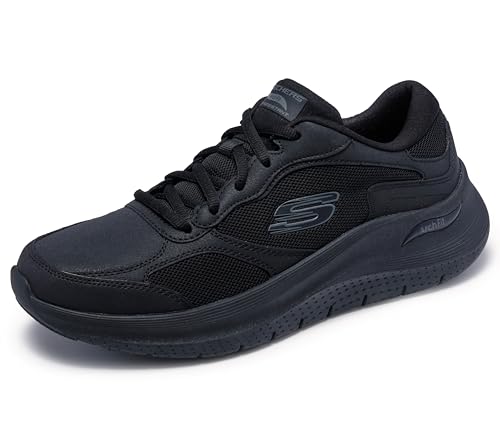
Best for: Workers in controlled indoor environments — healthcare, airport, retail, warehouse — who want the best Skechers comfort technology with genuine arch support rather than standard Memory Foam, at the most accessible price point in this guide.
| ASIN | B0D7QVKY9Z |
| Comfort technology | Arch Fit — 120,000 foot scans, APMA-accepted, genuine medial arch posting |
| Toe type | Composite — non-metallic, metal-detector safe, ASTM F2413 |
| ASTM | F2413 EH — verify on current listing |
| Weight | ~13 oz per boot |
| Outsole | SR slip-resistant — rated for wet and oily surfaces |
| Break-in | Zero — immediate comfort from first wear |
| Removable insole | Yes — accepts custom orthotics after removal |
| Pain conditions | General shift fatigue, arch pain, mild plantar fasciitis, standing-heavy indoor roles |
| Price range | ~$90–$120 |

The Skechers Work Arch Fit SR occupies a unique position in this guide: it is the most accessible price point with the most technology specifically designed for workers who stand on hard floors in controlled environments. The Arch Fit insole system — developed from 120,000 foot scans and carrying American Podiatric Medical Association acceptance — provides genuine medial arch posting that the standard Skechers Memory Foam line does not. This distinction is critical: for workers with arch pain who have tried Skechers Memory Foam and found their pain persisting or worsening, the Arch Fit is a fundamentally different experience. The Memory Foam accommodates arch collapse by conforming to it; the Arch Fit resists arch collapse by posting under it. Workers who cannot distinguish the two by description will feel the difference immediately upon standing.

The composite toe is non-metallic, making this the correct Skechers choice for airport workers, healthcare workers near MRI equipment, and any worker at a facility with metal-detector entry screening. The SR slip-resistant outsole is rated for both water-contaminated and oil-contaminated surfaces — the two most common slip scenarios in healthcare, food service, and commercial cleaning environments. The removable Arch Fit insole accepts custom orthotics after removal, which is valuable for workers who use podiatrist-prescribed devices. The honest durability context: the Arch Fit SR is excellent for the environments it is designed for — clean indoor floors, moderate daily use — and will provide 14–20 months of service in these conditions. For heavy outdoor construction or chemical-exposed environments, the alternatives in this guide are more appropriate.
Pain conditions addressed: General shift fatigue, arch pain, mild plantar fasciitis, standing-heavy indoor roles, metal-detector environments.
Pros: Most affordable in guide with genuine arch posting (not just foam), composite toe for metal-detector environments, APMA-accepted insole, SR slip-resistant, zero break-in, removable for orthotics.
Cons: Best for controlled indoor environments — not for heavy outdoor construction (midsole compresses faster under hard-use conditions). Realistic lifespan: 14–20 months indoor / 8–12 months light construction.
10. BRUNT Marin Welted CT — Best Long-Term Value
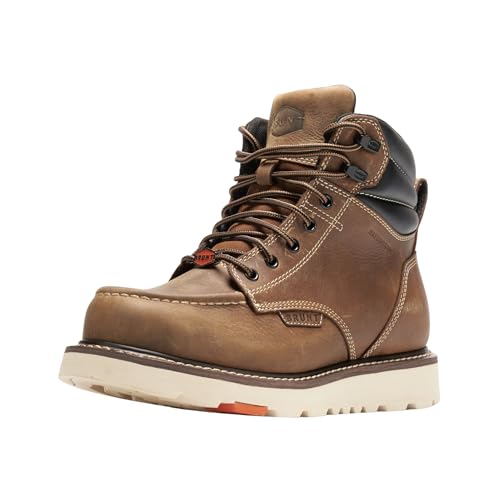
Best for: Workers who have cycled through multiple pairs of comfortable steel toe boots that became painful at 6–9 months — the Goodyear welt construction can be resoled to renew the cushion system instead of replacing the entire boot, breaking the expensive and frustrating replacement cycle.
| ASIN | B0D4RKKZZ1 |
| Sole construction | Goodyear welt — resoleable when midsole compresses |
| Toe type | Composite — non-metallic, ASTM F2413 I/75 C/75 EH |
| Waterproof | Yes — full waterproof construction |
| Upper | Full-grain leather |
| Midsole | Athletic flex PU compound within Goodyear welt construction |
| ASTM | F2413 EH — verify on current listing |
| Break-in | 1–2 weeks — Goodyear welt leather construction |
| Removable insole | Yes |
| Pain conditions | Recurring fatigue from midsole collapse in previous boots, general construction comfort |
| Price range | ~$140–$165 |

The BRUNT Marin’s Goodyear welt construction addresses the most common comfortable-boot-disappointment pattern in a specific and permanent way. Every boot in this guide — every boot in every comfortable steel toe guide — will eventually have its midsole compress. EVA boots compress at 6–12 months. PU boots at 18–24 months. When that happens, standard cement and direct-attach boots are finished — the sole cannot be separated from the upper for replacement, meaning the entire boot must be discarded. Goodyear welt boots can be resoled: a cobbler separates the stitched sole, replaces the midsole and outsole materials, and restores the boot to near-new cushion performance. The cost is approximately seventy-five to ninety dollars — less than half the price of a new boot. Workers who have spent three hundred and sixty dollars on three pairs of hundred-and-twenty-dollar boots over two years can instead spend two hundred and forty-five dollars on a Marin and one resole, with better outcomes and no additional break-in cycles.

BRUNT’s direct-to-consumer model delivers Goodyear welt construction — historically available only on boots costing two hundred and fifty dollars or more from traditional brands — at under one hundred and sixty-five dollars. The composite toe is genuinely non-metallic. The athletic flex construction within the welt framework provides more natural foot movement than traditional rigid welted boots, reducing the gait compensation soreness that stiff work boots cause in calves and arches. Full-grain leather provides genuine durability against the abrasion of construction materials. The one to two week break-in period is the expected and accepted cost of Goodyear welt leather construction — plan for it before the first demanding shift.
Pain conditions addressed: Recurring fatigue from midsole collapse, general construction comfort, workers in the boot-replacement cycle who need a longer-lasting solution.
Pros: Goodyear welt resoleable — permanently solves the midsole compression cycle; composite non-metallic toe; waterproof; EH rated; athletic flex in welted construction; full-grain leather durability.
Cons: 1–2 week break-in for Goodyear welt leather. Heavier than athletic-construction alternatives at ~20 oz. Not the best choice if boot weight is the primary pain driver — choose Timberland PRO Reaxion instead.
The Midsole Lifespan Problem: Why Comfortable Boots Become Painful at 6–9 Months
This is the single most important educational section in this guide. If you understand it, you will save significant money and avoid buying another boot that disappoints on the same timeline.
EVA (ethylene-vinyl acetate) foam — the midsole material in most athletic-construction work shoes — is a closed-cell foam that permanently compresses under repeated load. Most EVA midsoles lose 20–40% of their shock-absorbing capacity within 300–500 miles of hard daily walking. For a construction worker covering 6 miles per shift in a 50-hour work week, this equates to roughly 8–12 months of daily use. The boot looks fine on the outside: the leather is intact, the tread has depth, the stitching is clean. But the midsole has compressed flat, and every heel strike is now transmitting near-full impact force through the foot.
When this happens, most workers conclude “the boot is done” and buy a new pair. Often, they are wrong. The most common scenario is that the removable stock insole — not the midsole — has compressed. The insole sits above the midsole and is the first layer of foam to fail. The thumb test reveals which has failed: press firmly on the midsole rubber (the bottom of the boot, not the removable insole). If the rubber springs back, the midsole is functional and only the insole has compressed. Replace the insole for twenty to forty-five dollars and keep the boot. If the midsole rubber itself leaves a permanent indent under thumb pressure, the midsole has failed and the boot genuinely needs replacement.
The lifespan timeline by use profile: Light duty indoor work (retail, healthcare, airport) — EVA insole: 12–15 months; midsole: 18–24 months. Warehouse walking — EVA insole: 9–12 months; midsole: 14–18 months. Heavy construction at 180 lbs+ — EVA insole: 4–7 months; midsole: 8–12 months. The proactive protocol: replace the insole at the first half of these intervals, before the pain arrives. A Superfeet Green, OrthoLite Flex, or Timberland PRO AFT replacement insole costs twenty to forty-five dollars and restores the comfort of a structurally sound boot. Never stack an aftermarket insole on top of the factory insole — always remove the stock insole first, then insert the replacement.
Boots with PU-based midsoles (KEEN LuftCell PU, Timberland PRO AFT midsole, Wolverine contour PU) maintain their performance 18–24 months under conditions where EVA fails in 6–12 months. For workers who cycle through boots at 8-month intervals, switching to a PU-midsole boot is the most cost-effective long-term strategy.
The Sock System: How the Right Sock Makes Any Steel Toe Shoe More Comfortable
Cotton socks are specifically wrong for steel toe work shoes. Cotton holds seven times its weight in moisture — a saturated cotton sock in a steel toe boot within four hours of an active shift creates a wet, heat-trapping environment against the skin that dramatically accelerates blister formation and increases internal temperature. Cotton provides no temperature regulation. For steel toe footwear, cotton is a comfort liability regardless of how good the boot is.
Merino wool is specifically right for three reasons. First, merino fibers wick moisture away from skin and release it into the surrounding air for evaporation — maintaining this function even when the sock is substantially wetted by sweat. Second, quality merino work socks (Darn Tough, Smartwool Work series) have high-density loop cushioning at the toe knuckle zone — precisely the area that creates friction blisters from steel cap contact. This cushioning fills the gap between the dorsal foot surface and the cap ceiling, absorbing friction before it reaches skin. Third, merino regulates temperature in both directions — moderating heat buildup in warm environments and reducing cold transfer in cold environments, the latter being particularly relevant near steel or alloy toe caps that conduct ambient temperature.
Sock weight for steel toe boots: medium-weight merino (not heavy cushion). Heavy cushioned hiking socks add meaningful insulation that traps heat in warm work environments. Medium-weight provides the toe-zone cushioning and moisture management without the thermal penalty. For workers in hot environments above 80°F, thin merino liner socks under a medium merino crew provide the best combination of moisture management, blister protection, and temperature neutrality.
The mid-shift swap protocol: carry a second pair of dry merino socks and swap at lunch or the midpoint of your shift. Removing accumulated sweat, resetting skin moisture, and restarting with dry cushioning against the toe cap dramatically reduces afternoon blister formation — particularly in waterproof or semi-waterproof boots where vapor transfer is limited. This twenty-dollar investment (a second pair of socks) often provides more comfort improvement than a new pair of boots.
Break-In Protocol by Construction Type
Every article says to break in new steel toe boots gradually. None provides the specific protocol by construction type that determines whether the first week is mildly uncomfortable or genuinely painful.
Goodyear welt (BRUNT Marin) — 30 to 50 hours of break-in: The stiffest construction type. The stitched leather upper and rigid welt resist bending at the ball of the foot until the leather softens. Week one: wear for three to four hour sessions only with thick merino socks. Apply leather conditioner to the collar and ankle crease area — this accelerates softening at the points where the boot makes first contact with the Achilles and shin. Expect collar irritation at the back of the ankle in the first 10–15 hours. Do not attempt a full 10-hour shift on day one with a Goodyear welt boot — the result will be raw skin at the Achilles and a returned boot that would have been perfectly comfortable at week three.
Full-grain leather cement construction (Carhartt, CAT) — 15 to 25 hours: More flexible than Goodyear welt from day one due to the cemented (glued) sole, which flexes at the ball without the resistance of a welt stitch. The leather upper still stiffens the collar and toe area. Apply conditioner to the upper on the first day. Wear in three to four hour increments increasing to full shifts by day five or six. Heel cup softens within the first week; collar and toe stiffness resolves within 20 hours for most workers.
Athletic cement construction (Merrell Moab, Skechers Work) — zero to five hours: Essentially immediate comfort. Synthetic or light leather uppers flex from the first wear. Cement construction is flexible from day one. Suitable for full shift use from day one. The only adaptation is the minor upper adjustment in the first few hours — not a break-in in any meaningful sense. The correct choice for workers who have returned boots due to break-in discomfort or who cannot tolerate a multi-week adaptation period.
Mesh and synthetic cement (Timberland PRO Reaxion, KEEN Vista Lo) — zero break-in: Synthetic uppers flex immediately. No conditioning needed. Wear immediately for any shift length. The comfort experience on day one is essentially identical to month one.
The rule that breaks all break-in advice: if forefoot cramping or forefoot pain persists past 20 hours of wear, the boot does not fit — the cap geometry or width is wrong for your foot. Return it and look for a wider or asymmetric-cap alternative. Break-in softens leather and resolves collar stiffness; it does not widen a steel cap or change the fundamental toe box geometry.
Job-Surface Matching: The Most Comfortable Boot Depends on Where You Work
A boot engineered for outdoor construction terrain is not the most comfortable option on polished warehouse concrete, and vice versa. Surface matching is one of the most underappreciated comfort decisions in safety footwear.
Polished concrete, terrazzo, and sealed tile (warehouse, airport, hospital): These surfaces provide zero energy absorption — every heel strike transmits full compressive force upward. Maximum midsole cushioning and energy return are the priority. Outsole tread pattern matters more than most guides acknowledge: aggressive deep-lug outsoles (4–5mm construction site lugs) have less contact area on smooth polished floors, which creates uneven pressure distribution and reduces comfort. Fine-tread or flat-profile outsoles (Vibram TC5+ in the Merrell Moab 3, Timberland PRO Titan EV) provide maximum contact area on smooth surfaces and better comfort. Best picks for this surface: Timberland PRO Titan EV (Pick 2) and Merrell Work Moab 3 (Pick 7).
Outdoor construction sites, gravel, mixed terrain: Aggressive lug outsoles provide the traction needed for grip in loose terrain, debris, and wet outdoor surfaces. Ankle support from a 6-inch shaft is important. Sole integrity under abrasion is the durability consideration — Goodyear welt or 270° welt construction resists outsole separation that abrasive terrain causes in cemented boots. Best picks: KEEN Flint II (Pick 6), BRUNT Marin (Pick 10).
Wet tile, kitchen, restaurant environments: Oil-resistant soft rubber compound is the critical outsole specification. Standard hard rubber compounds that grip concrete poorly perform even worse on grease-contaminated tile. The slip-resistance rating (SR) specifically for glycerol (oil simulation) testing is what to verify — not just general “slip-resistant” marketing language. Soft outsole compound provides better grip on smooth wet surfaces than hard aggressive-lug outsoles. Best pick: Skechers Arch Fit SR (Pick 9) — the SR rating specifically addresses this surface.
Comfort for Specific Foot Conditions
Plantar fasciitis: The most common misguided purchase in this category is the softest boot available. Soft midsoles allow arch collapse under bodyweight, stretching the plantar fascia further with each step — the opposite of therapeutic. The correct requirement is firm heel cushioning for impact absorption combined with medial arch posting that resists inward arch collapse. Best picks: OrthoFeet Granite (Pick 3) for structural control, Timberland PRO Titan EV (Pick 2) for heel-strike energy return. Insole upgrade: Superfeet Green — the firm medial post is the key feature, not the top cushioning layer.
Flat feet and overpronation: Same requirement as plantar fasciitis in terms of arch control — medial posting. The OrthoFeet Granite (Pick 3) is the only boot in this guide purpose-built for this condition. Workers with diagnosed overpronation who use podiatrist-prescribed custom orthotics need a boot with extra depth, which OrthoFeet specifically provides. Do not buy maximum-cushion boots for flat feet — they make the structural problem worse by accommodating collapse rather than resisting it.
Metatarsalgia (ball-of-foot pain): Wide forefoot room and a metatarsal pad are the two requirements. KEEN’s asymmetric wide toe box provides the forefoot room. A metatarsal pad insole (placed just behind the metatarsal heads, not under them) redistributes pressure away from the most loaded points. The combination of a KEEN boot (Pick 1 or Pick 6) and a metatarsal pad insole addresses most metatarsalgia in work settings without requiring any other changes.
Diabetic neuropathy: The requirements are more specific than general comfort: seamless or minimal-seam interior to prevent pressure points on sensitive feet, smooth interior of the safety cap without protrusions that could cause ulceration, extra-depth for orthotics, and generous toe room to prevent compression on reduced-sensation feet where pressure injuries may not be felt before they are serious. The OrthoFeet Granite (Pick 3) is specifically designed with these requirements in mind. Verify with a podiatrist before selecting footwear for diabetic neuropathy — the stakes of an incorrect fit are higher than for standard foot conditions.
Insole Upgrade Guide: The Right Insole by Pain Type
When a new insole is the right solution (boot is under 12 months old, fits correctly in width and length, but has lost cushion), match the insole to your specific pain type.
For plantar fasciitis and flat feet: Superfeet Green. Firm fiberglass shell with deep heel cup and medial arch post. The most recommended OTC insole for PF by sports podiatrists. Remove the stock insole first — never stack.
For metatarsalgia and ball-of-foot pain: A metatarsal pad insole or a full insole with an integrated metatarsal raise (Spenco Total Support Max). The metatarsal pad should be positioned just behind the metatarsal heads — when properly placed, it separates the metatarsal bones slightly and redistributes pressure away from the inflamed heads.
For general fatigue and midsole upgrade: OrthoLite Flex or Tread Labs Pace. Designed to replace the factory insole with a longer-lasting, more supportive system. Good for any boot where the stock insole has flattened but the midsole is still functional.
For custom orthotics: Boots in this guide with verified custom-orthotic compatibility: OrthoFeet Granite (designed specifically for this), KEEN San Jose, KEEN Flint II, Merrell Moab 3, Timberland PRO Titan EV. Remove the stock insole, place the orthotic, and verify the heel seats correctly in the heel cup with no upward pressure on the Achilles.
Women’s Guide: Most Comfortable Steel Toe Shoes for Women
Women represent a growing segment of trades and industrial roles where steel toe footwear is required, and the most comfortable steel toe shoes for women share one critical requirement beyond all else: a genuine women’s last. A men’s boot scaled to a smaller size has a heel cup that is too wide for women’s narrower heel anatomy, an arch that hits in the wrong position for women’s shorter arch length, and a forefoot proportioned for men’s narrower forefoot-to-heel ratio. The result is heel slippage, arch fatigue, and forefoot cramping that worsens throughout the day.
Women’s-last picks from this guide: KEEN San Jose (Pick 1) has a genuine women’s version on KEEN’s women’s last with the same asymmetric wide toe box. KEEN Flint II (Pick 6) has a women’s version. Merrell Work Moab 3 (Pick 7) has a women’s version on Merrell’s women’s last. Ariat Treadfast (Pick 5) has a women’s version. KEEN Vista Energy Lo (Pick 8) has a women’s version.
For women with plantar fasciitis or arch conditions, the OrthoFeet Granite (Pick 3) addresses structural foot conditions in women’s sizing. For women who prefer the Skechers brand, the Arch Fit SR (Pick 9) is available in women’s sizing with genuine women’s last proportions rather than a scaled-down men’s boot.
Frequently Asked Questions
Why do steel toe shoes hurt my toes even in the right size?
The most likely cause is cap friction — the rigid metal ceiling of the toe cap creates friction on the dorsal (top) surface of the toe knuckles with each step. This is not a sizing problem. The solution is a sock with high-density loop cushioning at the toe zone (merino wool work socks, not cotton), and choosing a boot with asymmetric cap geometry (KEEN Utility) that widens toward the big toe rather than pressing against the MTP joint. If the pain is on the side of the big toe rather than on top, the cap is pressing laterally — a wide or asymmetric cap is the correct fix.
How do I make steel toe boots more comfortable immediately?
Three steps that work today without buying new boots: (1) Replace cotton socks with merino wool medium-weight work socks with toe-zone cushioning. (2) Do the thumb test on your insole — if it leaves a permanent indent, replace it with a Superfeet Green ($45) or OrthoLite Flex ($30) before concluding the boot is dead. (3) Check your fit in the afternoon after walking — feet swell 5–10% over an active shift. A boot that was correct in the morning store try-on may be too narrow by afternoon. If so, size up half a step at next purchase.
Are composite toe boots more comfortable than steel toe?
In extreme temperatures — yes, meaningfully. Steel and alloy toes conduct ambient heat and cold; composite does not. In summer outdoor construction or cold storage environments, composite toe provides notably better thermal comfort inside the toe box. In terms of interior room, steel’s thinner cap profile provides slightly more interior space than composite’s bulkier cap in the same boot size — though this difference is marginal for most foot widths. Composite is also lighter (30–40% vs steel), which reduces fatigue on high-step-count shifts.
Why did my comfortable steel toe boots start hurting at 6 months?
Almost certainly the insole has compressed. Do the thumb test: press firmly on the removable insole — if it leaves a permanent indent, the insole is dead. Replace it with a twenty to forty-five dollar aftermarket insole (Superfeet Green for arch support, OrthoLite Flex for general comfort) and keep the boot. The midsole and outsole likely still have many months of service life. Only if the midsole rubber itself (the bottom of the boot, not the removable insole) fails the thumb test is the entire boot done.
What are the most comfortable steel toe shoes for standing all day on concrete?
Ariat Treadfast (Pick 5) for workers who stand stationary with minimal walking — the ATS dual-density system was specifically engineered for sustained static standing on hard surfaces. Timberland PRO Titan EV (Pick 2) for workers who both stand and walk, needing both the Anti-Fatigue geometric energy return and the concrete-appropriate fine-tread outsole. Both should be combined with a Superfeet Green insole if any arch pain is also present.
What socks should I wear with steel toe work boots?
Medium-weight merino wool crew socks from Darn Tough, Smartwool Work, or Wigwam. The merino wicks moisture away from skin and releases it for evaporation; the medium-weight provides toe-zone cushioning that fills the cap gap without adding thermal insulation you don’t need in warm environments. Never cotton. For very warm environments or summer work: thin merino liner socks under a medium-weight crew provide the best combination of moisture management, cap-gap cushioning, and temperature neutrality.
Are there comfortable steel toe shoes that don’t need breaking in?
Yes. Athletic-construction cement-soled boots are comfortable from day one: Timberland PRO Reaxion CT (Pick 4) and KEEN Utility Vista Energy Lo (Pick 8) have zero break-in. Skechers Work Arch Fit SR (Pick 9) and Merrell Work Moab 3 (Pick 7) have minimal 0–5 hour adaptation. All four are appropriate for immediate full-shift use. Only Goodyear welt leather boots (BRUNT Marin, Timberland PRO Pit Boss) require the 30–50 hour break-in period that traditional work boots are known for.
What are the most comfortable steel toe shoes for plantar fasciitis?
OrthoFeet Granite (Pick 3) for workers with structural overpronation driving the PF — the medial arch posting controls the root cause. Timberland PRO Titan EV (Pick 2) for workers with heel-strike impact driving the PF — the geometric anti-fatigue insert absorbs and returns heel-strike energy specifically. Add a Superfeet Green insole to either boot if stock support is insufficient. Avoid the softest boots available — maximum softness worsens PF by allowing arch collapse.
Final Verdict: The Right Boot for Your Pain Type and Work Surface
The most comfortable steel toe shoe is not a universal product — it is the correct match between your specific pain type and the boot feature that addresses it.
For cap friction blisters, forefoot cramping, bunions, or afternoon swelling: KEEN Utility San Jose 6″ — asymmetric wide cap geometry, LuftCell PU midsole, immediate comfort.
For plantar fasciitis and heel pain — and critically, for workers who have been buying soft boots for PF and finding them making it worse: Timberland PRO Titan EV 6″ — geometric anti-fatigue energy return at heel strike, PU midsole lasting 18–24 months.
For flat feet, overpronation, or structural arch conditions where other boots have failed: OrthoFeet Granite Work Boot — the only purpose-built orthopedic safety boot in this guide, with genuine medial arch posting and extra depth for custom orthotics.
For maximum weight reduction and immediate comfort — workers transitioning from heavy traditional boots: Timberland PRO Reaxion CT — 13 oz, composite, zero break-in, anti-fatigue footbed.
For concrete and hard floor static standing: Ariat Treadfast 6″ — ATS dual-density system specifically engineered for sustained standing, Duratread outsole for concrete chemistry resistance.
For wide feet, bunions, or forefoot cramping at the best value: KEEN Utility Flint II Steel Toe — KEEN asymmetric wide toe, KEEN.DRY waterproof, under $150.
For warehouse and high step-count roles with outsole durability priority: Merrell Work Moab 3 Mid WP — Vibram TC5+ outsole outlasts standard rubber, air cushion heel, Merrell DRY waterproof.
For maximum breathability in a low-cut non-boot silhouette: KEEN Utility Vista Energy Lo — open mesh ventilation, KEEN.ReGEN midsole, zero break-in, non-marking.
For controlled indoor environments (healthcare, airport, retail) at the most accessible price: Skechers Work Arch Fit SR — APMA-accepted Arch Fit insole, composite toe for metal-detector environments, SR slip-resistant.
For workers in the boot replacement cycle who need a long-term solution: BRUNT Marin Welted CT — Goodyear welt resoleable construction permanently ends the 6-month midsole compression problem.
All prices are approximate and subject to Amazon changes. Always verify current ASTM certification on the Amazon product listing — certifications can vary between colorways and production runs. As an Amazon Associate, Bootsguru.com earns from qualifying purchases.