The noise is usually just physics—friction—as materials rub together. The good news is that squeaking won’t damage your boots. Once you figure out exactly what’s causing the noise, you can use one of these standard field fixes to get back to walking in peace.
Step 1: The Diagnosis (Find the Culprit)
Before you start dumping powder everywhere, you need to play detective. Applying the wrong fix to the wrong problem is just going to waste your time.
Here is a quick diagnostic rundown based on where we usually see the trouble coming from:
| Location of Squeak | The Test | Likely Culprit |
|---|---|---|
| Inside the Boot | Remove the insole and walk around. | Internal friction (Insole rubbing on footbed). |
| Top / Ankle Area | Flex your ankle or press down on the tongue. | Leather rubbing (Tongue rubbing against eyelets). |
| Outsole | Walk on carpet vs. tile. | External friction (Rubber is too smooth/grippy). |
| Deep Internal Rattle | Bend the sole by hand near the arch. | Structural failure (Loose shank). |
2. Fix #1: The Easy Stuff (Internal Squeaks)
Friction inside the boot—usually between the insole and the footbed—is the biggest squeak culprit, accounting for about 60% of the issues we see. This is especially true if your foot slides around inside or if you have moisture trapped inside.
Method A: The Powder Trick
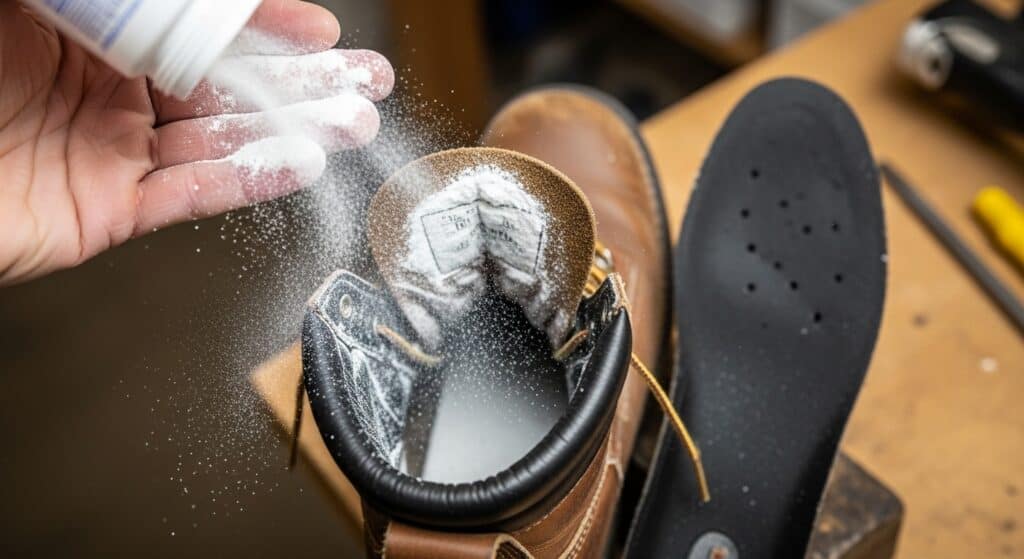
This is the tried and true method, and it works about 80% of the time for internal squeaks.
- Remove Insoles: Take everything out, including the laces, and pull the tongue forward.
- Apply Powder: Sprinkle talcum powder, baby powder, or cornstarch liberally into the footbed (under where the insole sits).
- Rub it In: The powder absorbs moisture and creates a dry lubricant barrier.
- Reassemble: Dump out the excess, put the insoles back in, and walk.
Guru Tip: Use a foot powder that contains talc. It serves a dual purpose: reduces friction and fights moisture and odor (“Swamp Foot”).
Method B: The Dryer Sheet
If powder is too messy, try the dryer sheet hack. Fold a dryer sheet flat and place it underneath your removable insole. The fabric creates a buffer layer, and the waxy coating lubricates the rubber.
Method C: Swap the Insole
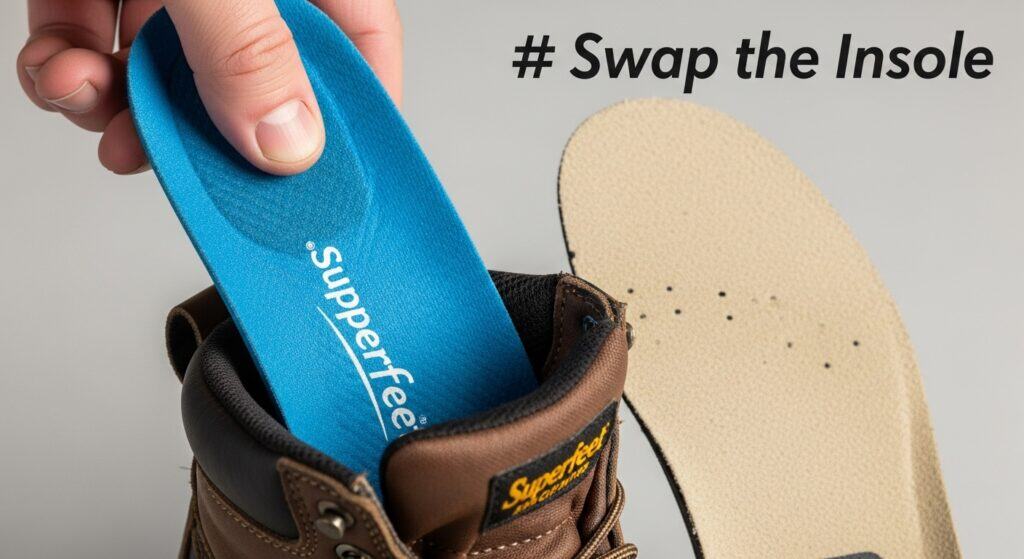
Sometimes the stock insole is just junk. Swapping it out for a quality aftermarket insole (like Superfeet or Timberland Pros) can kill the noise simply by changing the material density.
3. Fix #2: Conditioning (Leather Squeaks)
New boots often squeak simply because the leather is stiff. When leather is dry, the fibers rub together, creating creaking sounds.
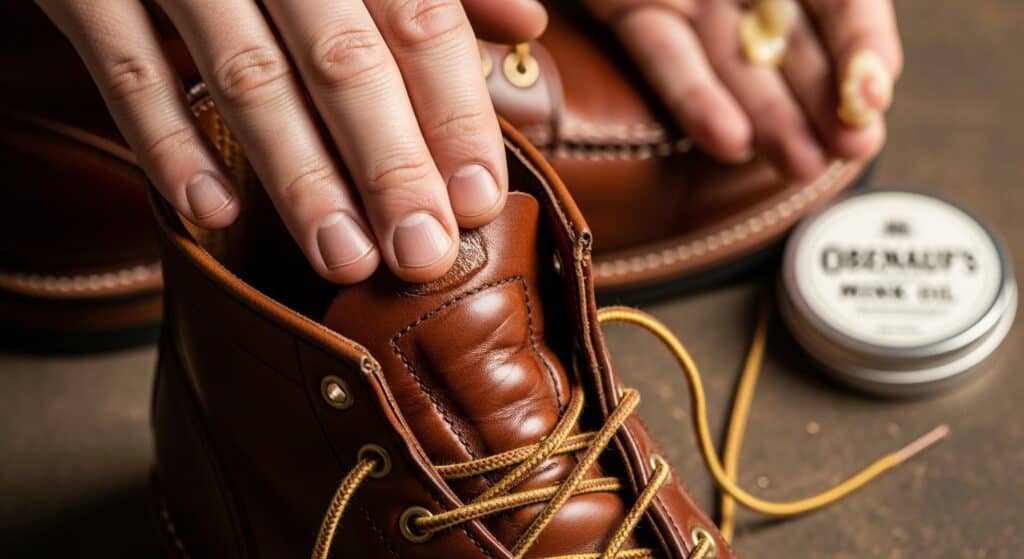
Method D: Oil the Tongue
The most common noise point is the tongue rubbing against the backside of the lace eyelets.
- Clean First: Always wipe dirt away before oiling.
- Target the Tongue: Apply conditioning oil (like Obenauf’s or Mink Oil) or saddle soap specifically to the tongue and the inside of the lace facing.
- Let it Absorb: Give it a few hours to soak in.
⚠️ Crucial Warning: If you have suede or Nubuck boots (like wheat Timberlands), oil will darken them and ruin the nap. Test on a small, hidden spot first.
4. Fix #3: Sandpaper (Outsole Squeaks)
If the noise only happens on smooth floors like tile, polished concrete, or linoleum, the issue is external friction—your rubber sole is gripping too aggressively (the suction cup effect).
Method E: Scuff the Soles
You need to roughen the surface texture of the sole.
- Grab a sheet of 80-grit or 120-grit sandpaper.
- Lightly sand the bottom of the lugs, focusing on the heel and ball of the foot.
- Don’t go crazy: You just want to take the shine off, not sand away your tread.
Instant Relief Hack: Need quiet right now? Rub an ordinary dryer sheet firmly along the bottom of the outsole. The waxy coating temporarily reduces the friction on slick floors.
5. Structural Failures: The “Bad News”
Sometimes the squeak isn’t friction; it’s a broken boot. If you’ve tried the powder and the oil, and the noise is a deep “click” or “groan,” check these:
The Loose Shank
The shank is a stiff strip (steel or fiberglass) inside the sole that supports your arch. If the glue fails, it rattles around. Unless these are expensive heritage boots, a cobbler repair is rarely cost-effective. It’s often time for the trash bin.
Sole Delamination
If the outsole is peeling apart, air gets trapped and “farts” every time you step. You can try gluing this yourself with Barge Cement (not Super Glue!), but the boot is likely on its last legs.
6. The Wet Boot Scenario
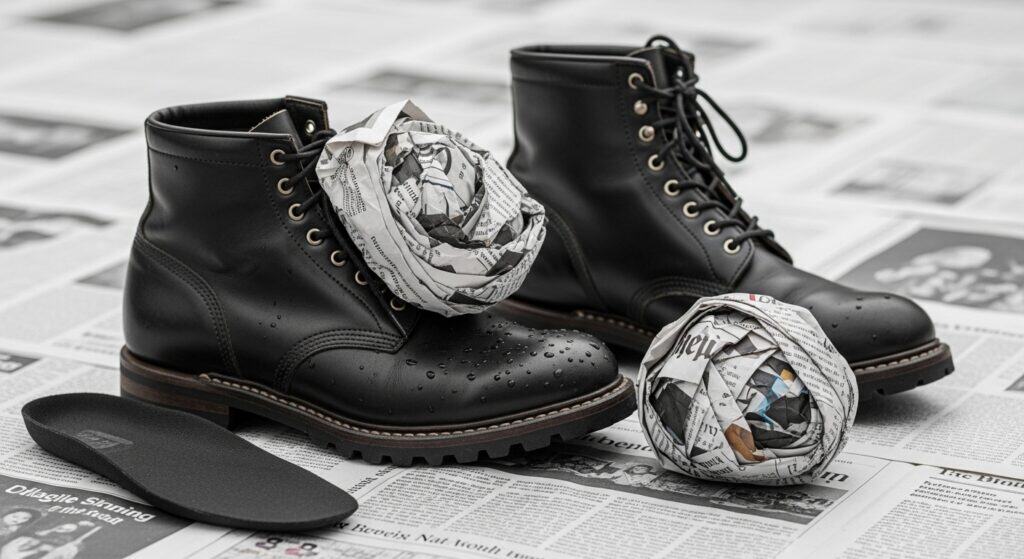
Stepped in a puddle? Now you squeak? That’s just trapped water.
The Fix: Remove insoles and stuff the boots tight with newspaper. Let them dry naturally for 12-24 hours.
The “Don’t”: NEVER use high heat (oven, hair dryer, fire). You will cook the leather and melt the glue, turning a temporary squeak into a destroyed boot.
7. FAQs (The Guru Knowledge)
Can I use WD-40 to stop the squeak?
NO. We have to put on the protective dad hat here. WD-40 is a solvent. It eats glue, stains leather, attracts dirt, and ruins stitching. Keep it for your door hinges, not your boots.
Why does only one boot squeak?
It’s usually your gait. Most people put more weight or torque on one foot, stressing that boot differently. Your boots likely aren’t mismatched; your walking style just found the squeak in one of them first.
Can wearing socks stop the squeak?Yes, quality moisture-wicking socks can be game-changers. They reduce moisture (sweat) and eliminate skin-to-boot friction. Going barefoot in work boots is basically asking for noise (and blisters).
8. Conclusion
Life’s too short to walk around sounding like a clown shoe.
Always start with the simplest fix: The Powder Trick for internal squeaks. If that fails, condition the tongue. If none of these work, you might be dealing with a structural issue, and it’s time to check the warranty.
Next Steps: Once you get them quiet, make sure they’re comfortable. Check out our guide on How to Break in Work Boots Fast.