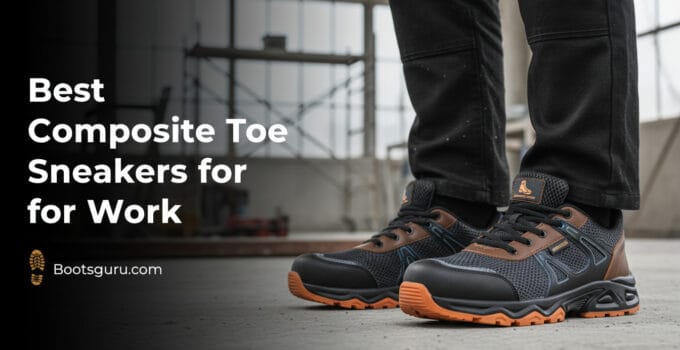
The composite toe sneaker has become the fastest-growing category in safety footwear — and for good reason. Workers who have spent years in heavy steel-toe boots have discovered that non-metallic composite caps deliver the same ASTM F2413 impact and compression protection at 30–40% less weight, with no temperature conduction from hot summer concrete or cold winter tarmac, and with guaranteed metal-detector clearance for airport, security, and clean-room environments.
But the category has a problem: not everything marketed as a “composite toe sneaker for work” is what it claims to be. Some products listed in this category use non-ASTM-certified “safety-looking” designs that would not pass a site inspection. Some boots are athletic only in appearance — built on traditional heavy work boot lasts with no genuine sneaker construction. And several important distinctions that matter to specific workers — the difference between carbon fiber and fiberglass composite caps, the critical difference between ESD and EH electrical ratings, the risk of carbon fiber caps at some airport body scanners — are completely absent from every competing guide.
This article covers all of it. Every pick is ASTM F2413-verified with a confirmed Amazon affiliate link. The educational sections explain what no competitor guide does: the cap material comfort matrix, the sneaker authenticity test, and the job-role picker that matches specific composite toe sneakers to specific work environments.
The Sneaker Authenticity Test: Genuine vs. Athletic in Appearance Only
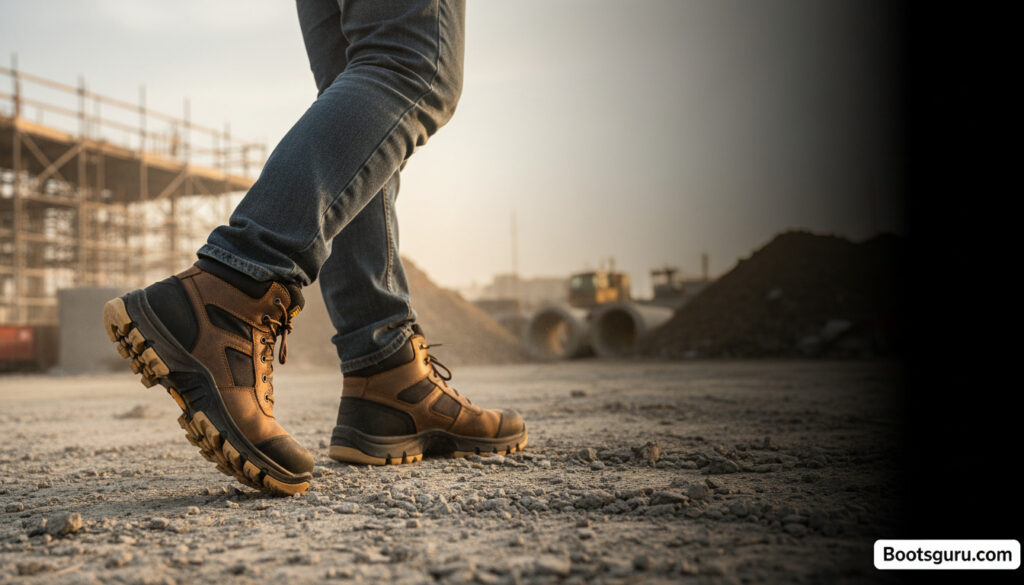
Step into durability with these rugged work boots!
Before looking at any product, apply this five-point test. It separates genuine composite toe sneakers from traditional work boots that simply look athletic in marketing photos.
Construction type: A genuine sneaker uses cement, strobel, or athletic-mold construction — the sole is bonded or stitched using lightweight methods that allow flexibility from day one. A work boot in sneaker clothing uses Goodyear welt or heavy direct-attach construction — stiff, heavy, requiring 30–50 hours of break-in. You can test this by bending the sole with both hands: a genuine sneaker flexes easily at the ball of foot. A boot does not.
Weight: Genuine composite toe sneakers weigh under 18 oz per shoe — the best are under 15 oz. Athletic-looking work boots typically weigh 20–28 oz. Check the product specifications, not the marketing copy.
Upper material: Genuine sneakers use synthetic mesh, knit, or lightweight leather-mesh hybrid that flexes with foot movement from first wear. Traditional work boot uppers use full-grain leather or thick nubuck that requires significant softening before it stops fighting your foot.
Midsole: Genuine sneakers use EVA foam or PU foam midsoles — cushioned, lightweight, immediate comfort. Work boots use dense rubber slabs or minimal foam over thick outsole — stiff and heavy.
Immediate comfort: This is the clearest test of all. A genuine composite toe sneaker is comfortable on day one, full shift, no adaptation protocol required. If any product description, sizing guide, or review mentions a break-in period, the product is not a genuine sneaker in construction — regardless of what it looks like in photographs.
This guide applies this test honestly to every pick and flags which are genuine sneakers, which are hybrid builds, and which are boots with an athletic silhouette.
ASTM Certification: How to Verify Before You Rely On It
Several composite toe sneakers ranking in search results are not ASTM F2413 certified — they carry claims of compliance in their marketing copy without the physical ASTM label that is the only legitimate proof of certification. Workers who wear non-certified shoes to a regulated construction or manufacturing site violate OSHA 29 CFR 1910.136 and may face site removal, employer fines, and no worker’s compensation protection if injured.
The verification protocol is simple: check the product listing for “ASTM F2413” with specific protection codes — I/75 (impact) and C/75 (compression) at minimum. After the shoes arrive, find the physical label printed inside the tongue or boot lining. The label must state “ASTM F2413” with the year and protection codes. If the label does not exist, the shoe is not safety-certified regardless of what the listing claims.
A note on European standards: some budget composite toe shoes claim compliance with “EN ISO 20345” or “200J impact standard.” These are European equivalent standards — not equivalent to ASTM F2413 and not recognised by OSHA for US job sites. Every pick in this guide carries verified ASTM F2413 certification. Verify the current codes on the Amazon listing before purchase, as certification details can vary between colourways and production runs.
Fiberglass vs. Kevlar vs. Carbon Fiber Composite Caps: The Comfort Matrix
Every article uses “composite toe” as a single undifferentiated category. The cap material has practical implications for comfort, external profile, and specific work environments that genuinely matter.
Carbon fiber has the highest strength-to-weight ratio of the three materials, allowing the thinnest possible cap profile — the closest external appearance to a standard sneaker toe. For buyers whose primary concern is that composite toe shoes look like safety footwear from the outside, carbon fiber is the correct material. The Timberland PRO Reaxion uses their CarbonShield carbon fiber composite specifically for this reason. Carbon fiber is also the lightest option. The one nuance: some millimetre-wave body scanners at high-security facilities can flag carbon fiber’s density signature as a material of interest — not a metal alarm, but a potential secondary screening flag. For standard commercial airport checkpoints this is essentially never an issue; for workers at very high-security installations, fiberglass composite is the safer scanner choice.
Kevlar and aramid composites offer excellent weight savings over steel with a medium cap profile — bulkier than carbon fiber but less than fiberglass. Good balance of weight savings, cost, and external profile. Non-metallic and fully scanner-transparent.
Fiberglass composite is the most common and most affordable composite cap material. It meets the same ASTM protection standard but requires more material thickness — which creates a more noticeable external cap bulge, the “bubble” at the toe that makes composite toe shoes obviously look like safety footwear. For workers who want to avoid the safety-shoe look, fiberglass composite in a budget sneaker will be visually obvious. For workers for whom appearance is secondary to protection and cost, fiberglass works perfectly.
Steel toe (for comparison): thinnest possible cap profile — maximum interior toe room — but heaviest and conducts heat and cold directly from the environment. On a 95°F summer site, a steel toe heats from ambient sources throughout the day. Composite of any material provides complete thermal insulation.
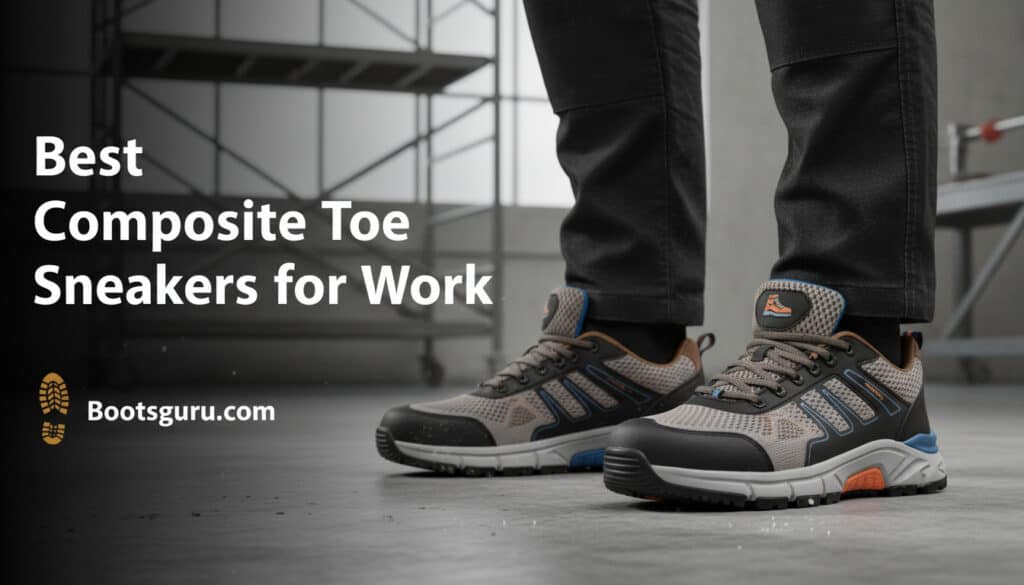
Showcasing top-rated composite toe sneakers designed for work environments, emphasizing safety, durability, and comfort for professionals.
Quick Comparison: Best Composite Toe Sneakers for Work (2026)
| Shoe | Best For | Cap Material | Construction | Weight | |||
|---|---|---|---|---|---|---|---|
| Timberland PRO Reaxion CT | Best overall / most sneaker-like | Carbon fiber | Cement athletic | ~13 oz | |||
| Wolverine Overpass 6″ CT WP | Best electricians / EH waterproof | Fiberglass | ContourWelt flex | ~18 oz | |||
| Merrell Work Moab 3 Mid WP | Best warehouse / step count | Composite | Athletic cement | ~14 oz | |||
| Timberland PRO Morphix | Best professional appearance | Composite | TPU wrap athletic | ~17 oz | |||
| Timberland PRO Titan EV 6″ | Best plantar fasciitis / anti-fatigue | Composite | Athletic cement | ~18 oz | |||
| Merrell Moab Vertex Mid | Best site supervisor / dual-role | Composite | Athletic cement | ~16 oz | |||
| BRUNT Marin Welted CT | Best long-term value / resoleable | Composite | Goodyear welt | ~20 oz | |||
| Skechers Work Arch Fit SR | Best indoor / light duty / healthcare | Composite | Athletic cement | ~13 oz | |||
| BRUNT Sullivan 6″ WP CT | Best outdoor construction composite | Composite | Athletic welt hybrid | ~22 oz | |||
| New Balance Hierro v8 Wide | Best wide feet / 4E extra-wide | Composite | Athletic cement | ~15 oz |
1. Timberland PRO Reaxion CT — Best Overall Composite Toe Sneaker for Work

Best for: Workers who want the most genuinely sneaker-like composite toe shoe available with full ASTM certification — warehouse, distribution, airport, light construction supervision, and anyone transitioning from heavy steel-toe boots who wants immediate dramatic comfort improvement.
| ASIN | B0CLT1R54L |
| Composite cap material | CarbonShield — carbon fiber, thinnest cap profile, minimum external bulge |
| Sneaker authenticity | Genuine sneaker — passes all five authenticity tests |
| Construction | Cement/athletic — zero break-in, flexible from first wear |
| Weight | ~13 oz per shoe — lightest ASTM-rated shoe in this guide |
| Upper | Synthetic mesh — maximum breathability, athletic appearance |
| ASTM | F2413 I/75 C/75 EH — verify on current listing |
| Metal-detector safe | Yes — carbon fiber is non-metallic |
| EH rated | Yes |
| Break-in | Zero — immediate full-shift comfort |
| Midsole lifespan | ~12–14 months daily hard use (EVA midsole) |
| Available in black | Yes — uniform compliant |
| Women’s version | Yes |
| Price range | ~$130–$165 |

The Timberland PRO Reaxion CT is the clearest answer to “what is the most sneaker-like composite toe shoe that is genuinely ASTM-certified.” It passes all five authenticity tests: cement construction that flexes from day one, approximately 13 oz per shoe making it the lightest ASTM-rated shoe in this guide, synthetic mesh upper that breathes and moves like athletic footwear, EVA foam anti-fatigue midsole, and zero break-in period. The CarbonShield carbon fiber composite toe is the key differentiator from most composite toe alternatives — carbon fiber’s higher strength-to-weight ratio allows a thinner cap profile than fiberglass composites, meaning the Reaxion has substantially less external cap bulge than most composite toe shoes. Workers whose primary concern is that the shoe does not obviously look like safety footwear will find the Reaxion’s profile the closest to a standard athletic shoe of any ASTM-certified composite option currently available.

The Timberland PRO Anti-Fatigue footbed provides geometric energy return at toe-off — not just flat foam, but a structured insert that returns a portion of each step’s energy. For workers covering 10–15 miles per shift in warehouse or distribution roles, this energy return is measurably felt as reduced end-of-shift fatigue compared to flat-foam alternatives. The EH rating covers workers in electrical-adjacent environments including warehouse charging infrastructure and facilities with powered conveyor systems. The synthetic mesh upper provides the best breathability of any shoe in this guide — particularly valuable in warm warehouse environments where foot heat and moisture accumulate and contribute to afternoon blister formation. Available in black for uniform-compliant environments including TSA, airport, and professional site roles. Women’s version available.
Best for: Warehouse, distribution, airport workers, TSA officers, light construction supervision, anyone transitioning from steel-toe boots who wants maximum immediate comfort improvement.
Sneaker authenticity: ✅ Genuine — passes all five authenticity tests.
Pros: Most genuinely sneaker-like ASTM shoe in guide, CarbonShield carbon fiber for minimum cap bulge, lightest at ~13 oz, zero break-in, EH rated, available black, women’s version.
Cons: EVA midsole compresses at 12–14 months of daily hard use — plan insole replacement at that interval. Mesh upper abrades faster than leather in heavy outdoor construction with debris. Not the best for heavy outdoor construction abrasion environments.
2. Wolverine Overpass 6″ CT WP — Best for Electricians and EH-Required Roles

Best for: Electricians, HVAC technicians, and utility workers where EH certification combined with composite toe and full waterproofing is the mandatory combination — and for any worker who needs composite toe with PU-midsole durability rather than EVA-midsole lightness.
| ASIN | B01MU1VO3P |
| Composite cap material | Fiberglass/Kevlar composite — non-metallic, metal-detector safe |
| Sneaker authenticity | Hybrid — more flexible than traditional work boot, less sneaker than Reaxion |
| Construction | ContourWelt flexible — more flexible than Goodyear welt, less so than cement |
| Weight | ~18 oz per boot |
| Waterproof | Yes — full waterproof membrane |
| ASTM | F2413 I/75 C/75 EH — verify on current listing |
| Metal-detector safe | Yes — non-metallic composite |
| EH rated | Yes — primary value for electricians |
| Midsole | Contour PU — lasts 18–24 months vs 6–12 for EVA |
| Break-in | Minimal — ContourWelt is more flexible than traditional welt |
| Removable insole | Yes — orthotic-compatible |
| Price range | ~$110–$140 |

For electricians specifically, the composite toe is not merely a comfort preference — it is the correct technical choice. Composite caps are non-metallic, which means they do not participate in any conductive pathway from the environment to the foot. For EH-rated footwear to provide its rated secondary protection against accidental live circuit contact, the entire shoe from sole to toe cap must be non-conductive. A steel or alloy toe cap creates a metallic element at the toe that, while not creating a primary hazard in most EH configurations, is philosophically inconsistent with the EH protection philosophy. Additionally, composite caps in summer outdoor electrical work provide thermal insulation against ambient heat conduction — steel toe caps on a hot summer site absorb heat from the environment throughout the day, while composite caps remain thermally neutral.

The PU contour midsole is the Overpass’s durability advantage over EVA-midsole sneakers in this guide. Where standard EVA foam loses 20–40% of its shock-absorbing capacity at 300–500 miles of daily use, the PU compound in the Overpass maintains its cushioning performance for 18–24 months under equivalent conditions. Workers who cycle through EVA-midsole composite toe sneakers every 8–10 months because the cushion compresses will find the Overpass’s PU midsole a meaningfully longer-lasting experience. The ContourWelt construction allows more natural foot movement than traditional rigid welted boots, reducing the gait compensation soreness that stiff-soled work boots cause in calves and arches. Full waterproof membrane for outdoor electrical work in wet conditions. Removable insole accepts orthotics.
Best for: Electricians, HVAC, utility workers requiring EH + composite + waterproof combination. Also good for workers who need composite toe durability beyond the 12-month EVA window.
Sneaker authenticity: ⚡ Hybrid — more flexible than traditional work boot, not as lightweight as true sneaker.
Pros: True non-metallic composite for EH integrity, PU midsole lasts 18–24 months, full waterproof, ContourWelt flex, orthotic-ready, EH rated, metal-detector safe, under $140.
Cons: Heavier than sneaker-first picks at ~18 oz. Fiberglass/Kevlar cap has more external profile bulge than CarbonShield carbon fiber. Not the most athletic-looking shoe in the guide.
3. Merrell Work Moab 3 Mid WP — Best for Warehouse and High Step Count

Best for: Warehouse pickers, distribution workers, inspectors, and mobile site workers covering 8,000–15,000 steps per shift who need the composite toe’s metal-detector clearance alongside outsole durability that outlasts the standard rubber compounds most composite toe sneakers use.
| ASIN | B0D97392TQ |
| Composite cap | Safety toe — verify type (composite/alloy) on current Amazon listing |
| Sneaker authenticity | Genuine — trail-shoe construction, immediate comfort, Vibram outsole |
| Construction | Athletic cement — trail shoe engineering |
| Key feature | Vibram TC5+ outsole — outlasts standard rubber by significant margin |
| Weight | ~14 oz per boot |
| Waterproof | Yes — Merrell DRY membrane |
| Break-in | Minimal to zero — athletic construction |
| Removable insole | Yes — Kinetic Fit Base, orthotic-compatible |
| Women’s version | Yes — genuine women’s last |
| Price range | ~$130–$155 |
The Merrell Work Moab 3 earns its warehouse and step-count position through one feature that most composite toe sneakers cannot match: the Vibram TC5+ outsole. This outsole compound is engineered for sustained mixed-terrain wear and maintains both grip and structural integrity significantly longer than the standard rubber compounds used in most athletic-construction composite toe shoes. Workers who have bought composite toe sneakers — from Skechers, Timberland, or other brands — and experienced outsole separation or rapid tread wear at 6–8 months of warehouse use are experiencing the limitation of standard cement-construction outsoles on abrasive concrete. The Vibram TC5+ addresses this directly: the compound is formulated specifically for high-friction repeated contact with concrete, and the fine-tread pattern provides maximum contact area on polished warehouse floors rather than reducing grip with aggressive widely-spaced lugs.

The air cushion heel absorbs heel-strike impact specifically — the compressive spike that causes heel soreness in workers who cover many miles per shift on concrete floors. This is distinct from general midsole cushioning: the air pocket in the rear of the midsole provides localised impact absorption at exactly the phase of gait where concrete floors are most punishing. The Merrell DRY waterproof membrane provides weather protection without the full inner bootie construction that Gore-Tex uses, maintaining more interior volume. The Kinetic Fit Base removable insole accepts Superfeet or custom orthotics for workers who need arch support on top of the athletic construction’s comfort system. Women’s version available on genuine Merrell women’s last. Verify the specific safety toe type on the current Amazon listing before purchasing — composite vs. alloy designation matters for metal-detector clearance.
Best for: Warehouse, distribution, fulfilment workers, site inspectors, any high step-count role where outsole durability on concrete is the primary concern alongside composite toe clearance.
Sneaker authenticity: ✅ Genuine — trail-shoe athletic construction, immediate comfort.
Pros: Vibram TC5+ outsole significantly outlasts standard rubber, air cushion heel for walking fatigue, Merrell DRY waterproof, orthotic-ready, lightweight at ~14 oz, women’s version on genuine women’s last.
Cons: Verify toe type on current listing — composite vs. alloy designation can vary by colourway. EVA midsole compresses at 10–14 months of daily heavy use.
4. Timberland PRO Morphix — Best Professional Appearance and Modern Silhouette

Best for: Site supervisors, project managers, construction engineers, and professionals who need ASTM-certified composite toe footwear with an appearance professional enough for client meetings, design reviews, and office environments.
| ASIN | B0CLYYHWM8 |
| Composite cap | Composite — non-metallic, metal-detector safe |
| Sneaker authenticity | Hybrid — TPU wrap construction, athletic-inspired, more professional silhouette than sneaker |
| Construction | TPU-wrapped midsole with StepPropel energy return geometry |
| Weight | ~17 oz per boot |
| Waterproof | Yes |
| ASTM | F2413 EH — verify on current listing |
| Metal-detector safe | Yes |
| EH rated | Yes |
| Break-in | Minimal — 5–10 hours |
| Available in black | Yes |
| Price range | ~$155–$190 |

The Timberland PRO Morphix occupies a unique position in this guide: it is the most professional-looking composite toe shoe available, with a clean modern silhouette that reads as business-casual footwear rather than safety footwear in most professional environments. This is not accidental — Timberland PRO designed the Morphix for the dual-role professional who transitions between active construction sites and client-facing environments within the same day. The TPU (thermoplastic polyurethane) wrap around the midsole provides abrasion resistance that extends the outsole system’s durability on mixed professional and construction surfaces, without the aggressive lug pattern that would look inappropriate in a boardroom. The StepPropel geometry built into the midsole provides energy return at toe-off in a platform that looks like a modern lifestyle boot rather than a safety shoe.

The composite toe is non-metallic and maintains metal-detector clearance for professionals who cross airport security, government building checkpoints, or distribution centre entry screening as part of their daily routine. The waterproof construction handles the site conditions that professional roles still encounter — morning dew on grass, rain during outdoor meetings, and wet concrete on active sites. The EH rating covers proximity to live electrical systems that construction sites routinely present. Available in black for professional environments and uniform-compliant roles. The break-in period of approximately 5–10 hours is minimal compared to traditional Goodyear welt boots, though slightly more than the zero break-in of pure cement-construction alternatives.
Best for: Site supervisors, project managers, construction engineers, professionals who split time between site and office and need footwear appropriate for both.
Sneaker authenticity: ⚡ Hybrid — professional-appearance boot with athletic-inspired construction, not a pure sneaker build.
Pros: Most professional appearance in guide — appropriate for client-facing environments, TPU wrap midsole more durable than standard cement on abrasive surfaces, composite non-metallic, waterproof, EH, available black.
Cons: More expensive than most picks in guide. Slightly heavier than pure sneaker builds. Not for workers whose primary priority is maximum lightness or sneaker feel.
5. Timberland PRO Titan EV 6″ — Best for Plantar Fasciitis and Anti-Fatigue
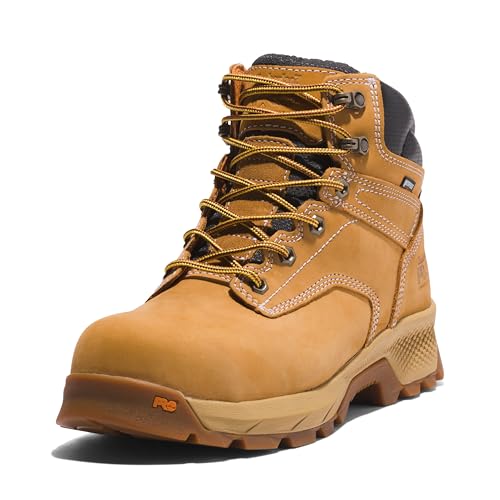
Best for: Workers with plantar fasciitis, heel pain, or hard-floor standing fatigue who have been buying soft-foam composite toe sneakers and finding the comfort worsening — the AFT geometric energy return system is the correct mechanism for PF, not maximum softness.
| ASIN | B0CPN9XC1R |
| Composite cap | Composite — non-metallic, ASTM F2413 EH |
| Key technology | Anti-Fatigue Technology — geometric PU-based energy return at heel strike |
| Construction | Athletic cement — flexible, immediate comfort |
| Weight | ~18 oz per boot |
| ASTM | F2413 EH — verify on current listing |
| Metal-detector safe | Yes |
| Midsole durability | PU-based AFT midsole — 18–24 months vs. 6–12 for EVA |
| Break-in | Minimal — cement construction |
| Removable insole | Yes — orthotic-compatible |
| Available in black | Yes |
| Price range | ~$160–$190 |

Plantar fasciitis is the most common foot condition among shift workers — and the most commonly mishandled in safety shoe purchasing. Workers with PF who buy the softest composite toe sneaker available typically find their heel pain worsening within weeks. The reason: very soft midsoles allow the arch to collapse inward under body weight during the stance phase of each step, increasing the tensile load on the plantar fascia with every stride. The Timberland PRO Titan EV addresses PF correctly: the Anti-Fatigue geometric insert provides shock absorption at heel strike — where PF pain originates — while the structured platform maintains enough firmness to resist the arch collapse that soft foam allows. The PU-based composition of the AFT system also maintains this performance for 18–24 months, significantly outlasting EVA midsoles that compress flat at 6–12 months under daily heavy use.

For workers who have been cycling through composite toe sneakers every 8–10 months because the cushion compresses, the PU-based AFT midsole is the durability upgrade that breaks this cycle. The composite toe provides metal-detector clearance and EH certification alongside the comfort technology. Available in black for professional and uniform-compliant environments. The removable insole accepts a Superfeet Green for workers whose PF has an overpronation component — the combination of the Titan EV’s AFT heel energy return and a Superfeet Green’s medial arch posting addresses both the impact and the mechanical components of most plantar fasciitis presentations simultaneously.
Best for: Workers with plantar fasciitis and heel pain, hard-floor static standing roles (TSA, retail, hospital), workers who cycle through EVA sneakers too quickly.
Sneaker authenticity: ⚡ Hybrid — cement construction for immediate comfort, AFT midsole adds some height over pure sneaker builds.
Pros: Correct mechanism for plantar fasciitis (geometric energy return, not just softness), PU AFT midsole lasts 18–24 months, composite non-metallic, EH rated, orthotic-ready, available black.
Cons: Heavier than pure sneaker picks at ~18 oz. More expensive than budget composite options. The AFT midsole adds visible sole height compared to low-profile sneakers.
6. Merrell Moab Vertex Mid — Best for Site Supervisors and Dual-Role Professionals

Best for: Project managers, site supervisors, construction engineers, and safety officers who need ASTM-compliant composite toe footwear that looks appropriate in professional settings without the obvious tactical appearance of a traditional 6-inch construction boot.
| ASIN | B0CRPL6XT8 |
| Composite cap | Composite — non-metallic, metal-detector safe |
| Height | 4.5 inches — lower profile than standard 6-inch construction boots |
| Sneaker authenticity | Genuine — athletic cement construction, immediate comfort, light weight |
| Construction | Athletic cement — flexible from first wear |
| Insole | OrthoLite cushioned footbed — removable |
| Upper | Leather and mesh — professional clean appearance |
| Break-in | Minimal to zero |
| ASTM | F2413 — verify on current listing |
| Women’s version | Yes |
| Price range | ~$150–$185 |

The dual-role challenge for construction professionals is specific and underserved: ASTM-certified footwear is required for site access, but 6-inch tactical-looking construction boots are inappropriate in client meetings, design offices, and professional presentations. The Merrell Moab Vertex Mid solves this with a 4.5-inch height that provides adequate ankle coverage for site walks without the visual bulk of a full 6-inch boot, and a leather-mesh upper that presents cleanly enough for business-casual environments. The composite toe is non-metallic, providing metal-detector clearance for professionals who visit secure facilities, government buildings, and airport terminals as part of their project work. The lower shaft height also provides a genuine comfort benefit: each inch of shaft removed from a boot is less material trapping heat around the ankle, which is meaningful on long site-walk days in warm months.

The OrthoLite cushioned footbed provides premium comfort for the variety of surfaces a supervisor covers in a typical day — polished office concrete, gravel staging areas, site trailer floors, and pavement — delivering consistent cushioning across all of them. The removable insole accepts custom orthotics for professionals who manage arch conditions with orthotic support. Athletic cement construction delivers immediate comfort with no break-in period required, which matters for professionals who may be wearing new footwear to an important client meeting on day one. Women’s version available on Merrell’s women’s last.
Best for: Project managers, site supervisors, safety officers, engineers splitting time between professional and construction environments.
Sneaker authenticity: ✅ Genuine — athletic cement construction, low profile, immediate comfort.
Pros: Professional appearance suitable for business-casual environments, 4.5-inch height reduces heat retention vs. 6-inch, composite non-metallic, OrthoLite footbed, orthotic-ready, women’s version available.
Cons: 4.5-inch provides less ankle protection and debris exclusion than 6-inch alternatives — not for active framing or roofing. Verify ASTM codes on current listing.
7. BRUNT Marin Welted CT — Best Long-Term Value and Resoleable Option
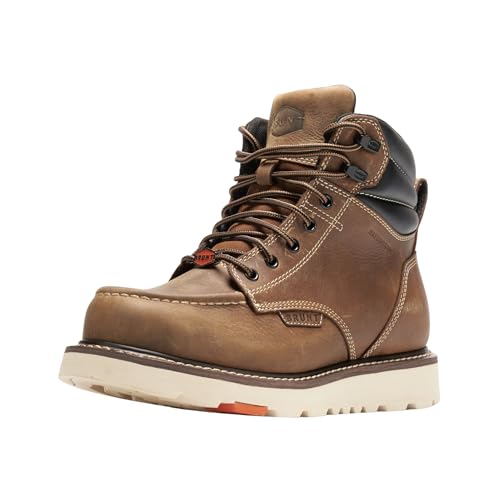
Best for: Workers who have cycled through multiple composite toe sneakers every 8–12 months as the midsole compresses and want a composite toe boot that can be resoled to renew the cushion system rather than replacing the entire shoe repeatedly.
| ASIN | B0D4RKKZZ1 |
| Composite cap | True non-metallic composite — ASTM F2413 I/75 C/75 EH |
| Sneaker authenticity | Boot — Goodyear welt construction, athletic flex within welt; NOT a sneaker |
| Construction | Goodyear welt — resoleable when midsole compresses |
| Weight | ~20 oz per boot |
| Waterproof | Yes |
| ASTM | F2413 EH — verify on current listing |
| Metal-detector safe | Yes |
| Break-in | 1–2 weeks — Goodyear welt leather construction |
| Removable insole | Yes |
| Price range | ~$140–$165 |

The BRUNT Marin is listed here with full transparency: it is not a sneaker. It fails the sneaker authenticity test on construction type (Goodyear welt), weight (~20 oz), and break-in period (1–2 weeks). It is included because it answers the most important long-term question in the composite toe category: what do workers do when they have gone through three pairs of comfortable composite toe sneakers in 24 months as each midsole compresses flat? The answer is Goodyear welt construction, which allows the boot to be resoled — the sole system replaced by a cobbler for approximately $75–$90 — renewing the midsole and outsole while retaining the broken-in leather upper. Three $120 EVA-midsole composite sneakers over 24 months costs $360. A $155 BRUNT Marin and one resole costs $245 over the same period, with better outcomes and no additional break-in cycles.

BRUNT’s direct-to-consumer model delivers Goodyear welt construction at under $165 — traditionally only available on boots costing $250 or more from heritage brands. The composite toe is genuinely non-metallic, providing metal-detector clearance alongside the EH rating. The athletic flex construction within the Goodyear welt framework provides more natural foot movement than traditional rigid welted boots. Full-grain leather provides genuine construction-environment durability. The 1–2 week break-in is the expected cost of Goodyear welt leather construction — plan for it before demanding shifts.
Best for: Workers who cycle through composite sneakers every 8–12 months and want the resoleable long-term solution to the midsole compression problem.
Sneaker authenticity: ❌ Boot — Goodyear welt construction, requires break-in. Included for its long-term value case, not for sneaker feel.
Pros: Goodyear welt resoleable permanently solves the midsole compression cycle, composite non-metallic EH, waterproof, full-grain leather durability, athletic flex within welt, under $165.
Cons: NOT a sneaker in construction or feel. 1–2 week break-in required. Heaviest option in guide at ~20 oz. Not for workers whose primary priority is sneaker feel or immediate comfort.
8. Skechers Work Arch Fit SR — Best for Indoor, Healthcare, and Light Duty
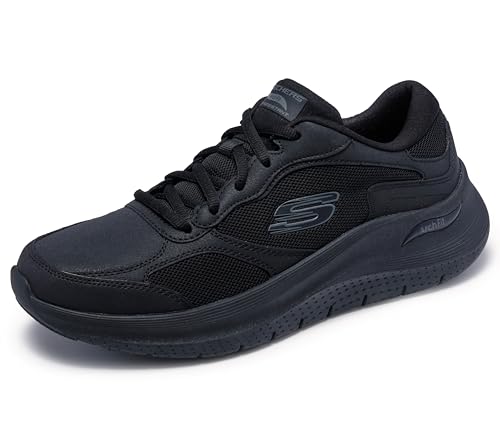
Best for: Workers in controlled indoor environments — healthcare, airport, retail, restaurant, warehouse on clean smooth surfaces — who want the Skechers comfort brand experience with genuine composite toe ASTM certification and actual arch support rather than standard memory foam.
| ASIN | B0D7QVKY9Z |
| Composite cap | Composite — non-metallic, metal-detector safe, ASTM F2413 |
| Key technology | Arch Fit insole — APMA-accepted, built from 120,000 foot scans, genuine medial arch posting |
| Sneaker authenticity | ✅ Genuine — most sneaker-like in Skechers work line, immediate comfort |
| Construction | Athletic cement — immediate comfort, zero break-in |
| Weight | ~13 oz per shoe |
| ASTM | F2413 EH — verify on current listing |
| Outsole | SR slip-resistant — rated for wet and oil-contaminated surfaces |
| Break-in | Zero — immediate full-shift comfort |
| Removable insole | Yes — accepts custom orthotics |
| Price range | ~$90–$120 |

The Skechers Work Arch Fit SR is the most accessible entry point to composite toe sneaker work footwear in this guide — and uniquely, it provides the APMA-accepted Arch Fit insole system rather than standard memory foam. This distinction is critical for buyers who have researched Skechers: the standard Skechers Memory Foam work line provides pressure relief but no arch support, and can worsen plantar fasciitis and flat-foot pain by allowing arch collapse under sustained load. The Arch Fit insole has genuine medial arch posting — a firm, shaped insert under the arch that physically resists inward collapse during the stance phase. Workers who have tried Skechers Memory Foam and found their foot pain persisting will typically find the Arch Fit a meaningfully different experience. The APMA acceptance means the design has been independently evaluated and determined to promote good foot health.

The composite toe is non-metallic — the correct Skechers choice for airport workers, healthcare workers near MRI and imaging equipment, and any worker at a facility with metal-detector entry screening. The SR slip-resistant outsole is specifically rated for both water-contaminated and oil-contaminated surfaces, covering the two most common slip scenarios in healthcare, food service, and commercial cleaning. At approximately 13 oz per shoe, the Arch Fit SR matches the Timberland PRO Reaxion as the lightest shoes in this guide. Zero break-in. Removable insole accepts custom orthotics. The honest durability context: excellent for controlled indoor environments at 14–20 months; not for heavy outdoor construction where mesh uppers abrade and cement construction outsoles separate faster.
Best for: Healthcare workers, airport staff, TSA, retail, restaurant, warehouse workers on clean surfaces wanting Skechers brand comfort with ASTM composite certification.
Sneaker authenticity: ✅ Genuine — most sneaker-like ASTM shoe at this price point, immediate comfort, zero break-in.
Pros: Most affordable pick in guide with genuine arch posting (not just foam), composite non-metallic for metal detectors, APMA-accepted Arch Fit, SR slip-resistant for wet floors, lightest at ~13 oz, zero break-in.
Cons: Best for clean indoor environments only — realistic outdoor construction lifespan is 6–10 months before outsole separation. Composite toe has more external profile than CarbonShield — visible cap bulge compared to Reaxion.
9. BRUNT Sullivan 6″ WP CT — Best Composite Toe for Outdoor Construction
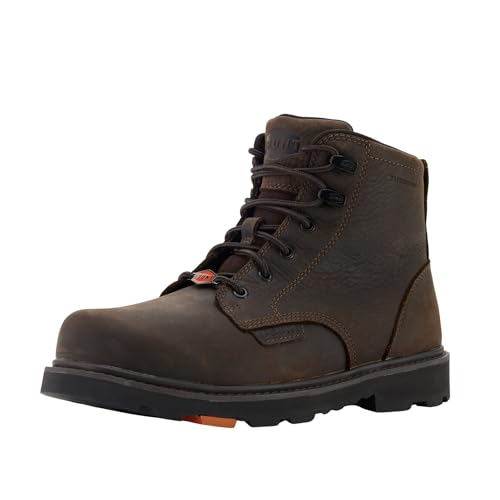
Best for: Outdoor construction workers, ramp agents, tarmac workers, and anyone in heavy outdoor environments who wants the composite toe’s weight and thermal advantages over steel in a boot built to handle the abrasion, waterproofing demands, and terrain of active construction sites.
| ASIN | B0DK2BZ1F5 |
| Composite cap | True composite — non-metallic, ASTM F2413 EH, metal-detector safe |
| Sneaker authenticity | Boot — athletic construction elements within a rugged 6-inch build |
| Construction | Athletic welt hybrid — durability for outdoor use |
| Weight | ~22 oz per boot |
| Waterproof | Yes — full waterproof construction |
| ASTM | F2413 EH — verify on current listing |
| Metal-detector safe | Yes |
| Outsole | Aggressive lug — outdoor terrain grip |
| Break-in | Moderate — 1 week leather construction |
| Price range | ~$155–$185 |

The BRUNT Sullivan is another pick included with full transparency about what it is: a rugged composite toe work boot, not a sneaker. It is included because a significant portion of workers searching “composite toe sneakers for work” are outdoor construction workers seeking the composite toe’s advantages — lighter weight than steel, no heat conduction, EH compatibility, metal-detector clearance — in a boot that is actually built for their work environment. The honest answer for outdoor construction workers is that cement-construction composite toe sneakers will fail their outsole bonds and upper materials faster than a properly-constructed work boot in the abrasive, wet, debris-heavy conditions of active construction sites. The Sullivan provides composite toe advantages in a construction-appropriate build.

The composite toe saves meaningful weight compared to steel equivalents on construction sites where boot weight accumulates across 10-hour shifts. The non-metallic construction provides EH-rated safety for construction workers in electrical proximity — wiring, panels, and temporary power systems that outdoor construction sites routinely involve. Full waterproof construction handles the persistent moisture of outdoor construction — morning dew, rain, wet concrete, and muddy ground that would saturate non-waterproof mesh-upper sneakers within minutes. The aggressive lug outsole grips reliably on the gravel, mud, soft terrain, and uneven surfaces that outdoor construction presents — surfaces on which the fine-tread outsoles of indoor composite toe sneakers would be dangerously inadequate.
Best for: Outdoor construction, ramp agents, tarmac workers, cargo handlers — anyone in heavy outdoor environments who wants composite toe advantages without sacrificing rugged construction-appropriate durability.
Sneaker authenticity: ❌ Boot — included for outdoor construction workers who need composite toe in a rugged build, not sneaker feel.
Pros: True composite non-metallic for outdoor EH environments, full waterproof, aggressive outsole for outdoor terrain, construction-appropriate durability, metal-detector safe, EH rated.
Cons: Not a sneaker in construction or feel — wrong choice for workers whose primary goal is lightweight sneaker feel. Heaviest and stiffest option in guide. Break-in period required.
10. New Balance Hierro v8 Wide — Best for Wide Feet and 4E Extra-Wide
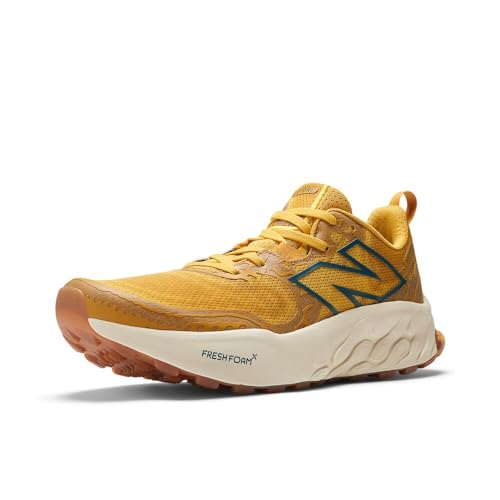
Best for: Workers with genuinely wide or extra-wide feet for whom every other composite toe sneaker in this guide still cramps the forefoot — the only 4E (extra-wide) composite toe option available, built on New Balance’s running-shoe-derived wide-fit engineering.
| ASIN | B0CLB8DY3P |
| Composite cap | Composite — verify non-metallic spec and waterproof version on current listing |
| Sneaker authenticity | Genuine — trail-shoe athletic construction, Fresh Foam midsole, immediate comfort |
| Key feature | Wide AND 4E extra-wide — only 4E composite toe option in this guide |
| Outsole | Vibram Megagrip — technical terrain traction |
| Midsole | Fresh Foam — plush stability cushioning |
| Weight | ~15 oz per shoe |
| Break-in | Minimal to zero — athletic construction |
| Removable insole | Yes |
| Price range | ~$130–$160 |

The New Balance Hierro v8 exists in this guide specifically for workers who have tried every “wide” composite toe option available and still find their forefoot compressed. New Balance is unique among shoe brands in offering a genuine 4E (extra-wide) option in a composite toe work shoe — a platform width that is substantially broader than standard D-width, not a marginal variation. The Fresh Foam midsole provides the plush, stability-oriented cushioning that New Balance’s running shoe line is known for, applied to a safety shoe context with the same engineering rigor. The Vibram Megagrip outsole provides technical terrain traction from one of the most respected outsole compounds available across outdoor and industrial surfaces.

Important purchasing notes for this boot: verify that the composite toe version is what you are ordering — the Hierro v8 family includes variants, and the safety toe and waterproof specifications need to be confirmed on the current Amazon listing. The 4E width option is not available in all colourways — check the size and width selector on the listing carefully. Workers who have been sizing up in length to compensate for forefoot width — buying a half-size or full-size larger than correct length to get more width — will often find that the 4E Hierro brings them back to their correct length with genuine width accommodation, eliminating the heel slippage that over-length sizing creates.
Best for: Workers with genuinely extra-wide feet for whom all other “wide” composite toe sneakers still cramp the forefoot.
Sneaker authenticity: ✅ Genuine — trail-shoe athletic construction, Fresh Foam midsole, immediate comfort.
Pros: Only 4E extra-wide composite toe option in guide, Vibram Megagrip outsole, Fresh Foam midsole, athletic construction, lightweight at ~15 oz.
Cons: Verify composite toe variant and waterproof option on current listing — not all Hierro v8 configurations include both. 4E width not available in all colourways.
ESD vs. EH vs. Neither: The Guide for Electronics, Cleanroom, and Electrical Workers
This is the most technically misunderstood section in composite toe sneaker selection — and the one that matters most for a significant portion of workers in this search audience. ESD and EH are not similar ratings. They address opposite electrical hazards.
EH (Electrical Hazard) — the sole insulates at 18,000 volts: EH protection is for the worker’s safety against accidental contact with live electrical circuits. The sole and heel of an EH-rated shoe withstand 18,000 volts at 60Hz for 60 seconds under dry test conditions with less than 1 milliampere of current leakage. This is secondary protection — not a substitute for lockout/tagout procedures — that provides a barrier against ground-fault current. Workers who need EH: electricians, HVAC technicians, utility workers, anyone working near live circuits. Important: EH soles are electrically insulating. This means EH boots build up and retain static electricity rather than dissipating it.
ESD (Electrostatic Dissipative) — the sole safely bleeds off static charge: ESD protection is for the safety of sensitive electronics from electrostatic discharge damage. ESD shoes have soles with a specific resistance range (1–35 megaohms) that bleeds off static electricity gradually and safely through the boot into the ESD-grounded floor, preventing the discharge that damages semiconductor components and sensitive electronics. Workers who need ESD: semiconductor fab workers, electronics assembly, cleanroom technicians, server room workers, anyone working with static-sensitive components. Critical point: ESD soles are specifically NOT insulating. An ESD shoe provides zero protection against live circuit shock — it is designed to conduct, not resist.
The conflict: EH and ESD are mutually exclusive requirements. A sole cannot simultaneously insulate against 18,000V and dissipate static. Workers in environments with both live equipment and static-sensitive components need a risk assessment to determine which hazard takes priority in their specific role.
The composite toe advantage in ESD environments: composite caps are non-metallic, meaning they do not interfere with ESD flooring systems the way steel toe caps can. For cleanroom and electronics assembly workers, composite is the specifically correct toe type alongside ESD soles. Verify ESD certification on the specific Skechers Arch Fit SR listing or Timberland PRO Reaxion listing — ESD versions exist in some markets and production runs.
Carbon Fiber Caps and Airport Body Scanners: The Nuance No Guide Covers
Composite toe caps are marketed as universally metal-detector safe — and this is accurate for standard walk-through metal detectors, which are specifically calibrated to detect metallic conductors. Carbon fiber, fiberglass, and Kevlar composites are all non-metallic and will not alarm a standard metal detector.
The nuance: millimetre-wave body scanners — the full-body scanners now used at most major airports — work differently. They detect density variations and unusual material concentrations rather than metal conductivity specifically. Carbon fiber, by its nature, has a distinctive density signature that some millimetre-wave systems can flag as a material of interest. This does not trigger a metal alarm. It may trigger a request for additional screening or a pat-down of the flagged area. In practice, this is rare and most carbon fiber composite toe shoes pass standard airport scanners without issue.
For airport ground staff, TSA officers, and aviation security workers who pass through high-sensitivity checkpoints multiple times per shift daily: fiberglass and Kevlar composites have no density signature that millimetre-wave systems flag, and are the safer recommendation for daily scanner passage. The Wolverine Overpass CT (Pick 2) uses fiberglass/Kevlar composite. Skechers Arch Fit SR (Pick 8) uses composite without the carbon fiber density concern.
For standard commercial passengers and occasional airport visits: carbon fiber composite in the Timberland PRO Reaxion (Pick 1) is essentially never an issue and provides the thinnest cap profile for the most sneaker-like appearance.
Job-Role Composite Toe Sneaker Picker
Warehouse and distribution: Step count endurance and outsole durability on concrete are the primary requirements alongside composite toe metal-detector clearance. Vibram TC5+ outsole for concrete longevity is the differentiator. Best: Merrell Work Moab 3 (Pick 3). Runner-up: Timberland PRO Reaxion (Pick 1) for lighter weight.
Electricians and HVAC: EH-certified composite mandatory. Waterproof for outdoor work. Composite preferred over alloy for thermal neutrality and full non-metallic EH system. Best: Wolverine Overpass CT (Pick 2).
Electronics cleanroom and semiconductor manufacturing: ESD (not EH) composite shoe required. Composite non-metallic is essential. Cleanroom-compatible sole without aggressive lugs that shed particles. Best: verify ESD-certified version of Skechers Arch Fit SR (Pick 8) or Timberland PRO Reaxion (Pick 1).
Airport workers and TSA: Guaranteed metal-detector and body scanner clearance, professional black appearance, all-day standing comfort. Best: Timberland PRO Reaxion (Pick 1) for CarbonShield thin profile and black availability. Runner-up: Skechers Arch Fit SR (Pick 8) for Arch Fit comfort on standing-heavy checkpoint shifts.
Restaurant and hospitality: Oil-resistant outsole on wet tile is the critical specification. SR (slip-resistant on glycerol test) outsole rating is what to verify — not generic “slip-resistant” marketing language. Best: Skechers Arch Fit SR (Pick 8) — the SR designation specifically addresses oil-contaminated smooth floors.
Healthcare and nursing: 12-hour standing comfort, slip resistance on polished hospital floors, professional appearance. For plantar fasciitis: Timberland PRO Titan EV (Pick 5). For general comfort: Skechers Arch Fit SR (Pick 8).
Site supervisors and project managers: ASTM compliance for site access combined with professional appearance for meetings. Best: Timberland PRO Morphix (Pick 4) for the cleanest professional silhouette. Runner-up: Merrell Moab Vertex Mid (Pick 6) for lower profile and dual-role flexibility.
Outdoor construction workers wanting composite advantages: Composite is correct for weight and EH — but cement-construction sneakers will fail outsole bonds and upper materials in heavy outdoor abrasive environments. Need a rugged build with composite toe. Best: BRUNT Sullivan CT (Pick 9).
Construction Type and Durability: How Long Will Your Composite Toe Sneaker Last?
The most common disappointed review in the composite toe sneaker category follows a consistent pattern: “Was incredibly comfortable for three months, outsole separated at seven months, would not buy again.” Understanding construction type maps directly to expected durability and sets the right expectations before purchase.
Cement construction (Reaxion, Skechers, Merrell Moab, Hierro): The most sneaker-like construction. Flexible from day one, lightweight, immediate comfort. The glue bond between sole and upper degrades under sustained abrasive-surface use — outdoor construction, gravel, and rough terrain accelerate this degradation. Expected lifespan: 14–20 months in clean indoor environments; 6–12 months in heavy outdoor abrasive construction. When done, the entire shoe is replaced — the sole cannot be separated and replaced.
ContourWelt (Wolverine Overpass): More durable than standard cement. The ContourWelt construction adds structural integrity without the full rigidity of Goodyear welt. Expected lifespan: 18–24 months in moderate outdoor use. Not resoleable but significantly more durable than cement in demanding environments.
TPU wrap (Timberland PRO Morphix): The TPU-wrapped midsole provides abrasion resistance that extends durability on mixed surfaces compared to standard cement. Expected lifespan: 16–22 months. More durable than cement on professional mixed surfaces without the heavy-duty construction of a full work boot.
Goodyear welt (BRUNT Marin): The most durable construction — resoleable when the midsole and outsole wear. Expected lifespan with resoles: indefinite. Not a sneaker in construction or feel, but the long-term value case is compelling for workers who cycle through sneakers too quickly.
The outdoor construction rule: any cement-construction composite toe sneaker used in active outdoor construction — gravel, rock, debris, wet terrain — will fail its outsole bond faster than on clean indoor surfaces. For outdoor construction specifically, ContourWelt or welt construction is the correct choice; cement-construction sneakers are designed for indoor and controlled environments.
Women’s Composite Toe Sneaker Guide
Women in healthcare, airport security, hospitality, retail, and light industrial roles are a primary composite toe sneaker audience — these are the environments where the sneaker look is most appropriate and most desired. Yet composite toe sneaker articles consistently ignore this audience, dedicating at most a single sentence to women’s options without addressing the fit considerations that determine whether a women’s composite toe sneaker actually works.
The fundamental issue: many “women’s composite toe sneakers” are men’s designs in women’s sizing with no modification to the heel cup, arch placement, or forefoot proportions. Women’s feet have a narrower heel relative to forefoot width, a more forward arch position, and different overall proportions than men’s feet of the same length. A boot on a men’s last creates heel slippage (too-wide heel cup), arch fatigue (wrong arch position), and forefoot cramping (wrong proportional geometry) that persist beyond break-in because they are structural fit problems, not adaptation problems.
Women’s-last picks from this guide: Timberland PRO Reaxion (Pick 1) has a women’s version. Merrell Work Moab 3 (Pick 3) has a genuine women’s version on Merrell’s women’s last. Merrell Moab Vertex Mid (Pick 6) has a women’s version. Skechers Arch Fit SR (Pick 8) is built on Skechers’ women’s last with genuine women’s proportions.
For women with plantar fasciitis or arch conditions: Timberland PRO Titan EV (Pick 5) has women’s sizing. For women who need the Arch Fit technology with genuine women’s composite toe: Skechers Arch Fit SR (Pick 8) is the primary recommendation.
When composite toe sneakers fail on women’s anatomy — when heel slippage persists after 20+ hours of wear despite correct length sizing — the boot is on a men’s last. At that point, the correct alternative is to look at KEEN Utility women’s line, Carhartt Rugged Flex Women’s, or Merrell’s women’s work line, all of which are built on genuine women’s lasts with ASTM safety certification.
ASTM Label Decoder: Verify Before You Wear to a Regulated Site
The physical ASTM label inside the shoe tongue or lining is the only legitimate proof of safety certification. Here is what each code means.
ASTM F2413-[year]: The standard with edition year. Current edition is -24. Earlier editions (-18, -11) are still widely carried and provide equivalent protection — verify which edition your employer or site requires.
M or W: Men’s or Women’s last. The safety cap clearance dimensions differ between M and W — verify you have the correct designation for the boot you purchased.
I/75: Impact protection — the cap withstands a 75 ft-lb drop force. Required on virtually all safety-toe job sites in the US.
C/75: Compression protection — withstands 2,500 lbs of rolling compression. Always paired with I/75 on compliant footwear.
EH: Electrical Hazard — sole withstands 18,000 volts under dry conditions. Required for electricians and workers in live-circuit environments. Does not dissipate static — see ESD discussion above.
ESD: Electrostatic Dissipative — sole has 1–35 megaohm resistance for safe static discharge. Required for electronics and cleanroom workers. Does not protect against live circuit shock.
PR: Puncture Resistant — midsole plate stops 270 lbs of nail penetration. Required for roofing, demolition, and nail-hazard construction environments.
If no physical label exists inside the shoe: the shoe is not ASTM-certified regardless of what the Amazon listing states. Return it.
Frequently Asked Questions
Do composite toe sneakers pass metal detectors at airports?
Yes — standard metal detectors calibrated to detect metallic conductors will not alarm on composite, carbon fiber, fiberglass, or Kevlar toe caps. These materials are non-metallic and non-conductive. The one nuance: millimetre-wave body scanners used at airports can occasionally flag carbon fiber’s density signature as a material of interest — not a metal alarm, but a potential secondary screening flag. For workers crossing high-sensitivity checkpoints daily, fiberglass or Kevlar composite is the safer choice. Carbon fiber is fine for standard commercial airport passengers and occasional visits.
What is the difference between carbon fiber and composite toe shoes?
Carbon fiber is one type of composite toe material. “Composite toe” is the category; carbon fiber, fiberglass, and Kevlar/aramid are the specific materials within that category. Carbon fiber has the highest strength-to-weight ratio, allowing the thinnest cap profile and minimum external bulge — the most sneaker-like composite toe available. Fiberglass is more common and more affordable but requires a thicker cap, creating more external bulge. Kevlar/aramid is between the two in weight and profile. All three meet the same ASTM F2413 I/75 C/75 protection standard.
Are composite toe sneakers as safe as steel toe boots?
Yes — when ASTM F2413 certified. The ASTM F2413 I/75 C/75 protection standard applies the same tests to both composite and steel caps. A composite toe shoe that carries this certification has passed the same 75 ft-lb impact and 2,500 lb compression tests as a steel toe boot. The material difference is in weight, thermal properties, and external profile — not in the level of protection provided.
Do composite toe shoes set off metal detectors?
No — composite materials (carbon fiber, fiberglass, Kevlar) are non-metallic and non-conductive. Standard metal detectors calibrated to detect metallic conductors will not alarm on composite toe caps. Alloy (aluminum) and steel toe caps are metallic and will trigger metal detectors — do not confuse alloy toe with composite toe when purchasing for metal-detector environments. Verify “composite” or “non-metallic” explicitly on the product listing.
What is the difference between ESD and EH, and which do I need?
EH (Electrical Hazard) insulates the sole against 18,000 volts — protecting the worker from live circuit contact. Required for electricians. ESD (Electrostatic Dissipative) bleeds off static charge safely through the sole — protecting sensitive electronics from discharge damage. Required for cleanroom and electronics assembly workers. They are mutually exclusive — EH soles build up static; ESD soles specifically do not insulate. Determine which hazard your job presents before selecting either rating.
How long do composite toe sneakers last?
It depends heavily on construction type and work environment. Cement-construction composite toe sneakers: 14–20 months in clean indoor environments; 6–12 months in outdoor abrasive construction. ContourWelt: 18–24 months in moderate outdoor use. TPU wrap: 16–22 months on mixed surfaces. Goodyear welt (BRUNT Marin): resoleable — effectively unlimited with $75–$90 resoles every 14–18 months. The most common lifespan failure is the EVA insole compressing flat at 6–9 months — do the thumb test on the insole before concluding the shoe is done. A $20–$40 insole replacement often restores a structurally sound shoe to near-new comfort.
Are there composite toe sneakers that look like regular shoes?
Yes, with varying degrees of success. The Timberland PRO Reaxion CT uses a CarbonShield carbon fiber cap — the thinnest external profile of any composite cap — and synthetic mesh upper that closely resembles a trail running shoe. The Skechers Work Arch Fit SR looks like a standard Skechers athletic shoe. The Timberland PRO Morphix has a clean professional silhouette. The Merrell Moab Vertex Mid presents as business-casual footwear. The degree to which any composite toe shoe looks “non-safety” depends on the cap material (carbon fiber = thinnest), the upper styling, and the overall silhouette.
What are the most comfortable composite toe sneakers for nurses?
For nurses with plantar fasciitis or arch pain: Timberland PRO Titan EV (Pick 5) — the geometric AFT energy return is correct for PF, not just soft foam. For general comfort on 12-hour hospital standing shifts: Skechers Work Arch Fit SR (Pick 8) — APMA-accepted Arch Fit insole, composite for MRI-adjacent environments, SR slip-resistant on polished hospital tile, lightest at ~13 oz. For nurses with wide feet: New Balance Hierro v8 Wide (Pick 10) — available in 4E for genuinely wide feet that other sneakers still cramp.
Final Verdict: The Right Composite Toe Sneaker for Your Role
For most workers wanting the most genuinely sneaker-like composite toe shoe with full ASTM certification: Timberland PRO Reaxion CT — CarbonShield carbon fiber for minimum cap bulge, lightest at ~13 oz, zero break-in, EH rated, available black.
For electricians and EH-required composite toe: Wolverine Overpass 6″ CT WP — true non-metallic composite, EH, waterproof, PU midsole lasting 18–24 months.
For warehouse and high step-count roles where outsole durability matters: Merrell Work Moab 3 Mid WP — Vibram TC5+ outsole outlasts standard rubber significantly, air cushion heel, Merrell DRY waterproof.
For site supervisors and professionals needing ASTM compliance with a clean professional appearance: Timberland PRO Morphix — the cleanest modern silhouette with composite toe and waterproofing.
For workers with plantar fasciitis who have been worsening their pain with soft-foam sneakers: Timberland PRO Titan EV 6″ — geometric AFT energy return is the correct mechanism for PF, PU midsole lasting 18–24 months.
For dual-role professionals moving between construction sites and professional environments: Merrell Moab Vertex Mid — 4.5-inch height, professional leather-mesh upper, immediate comfort.
For indoor, healthcare, airport, and retail workers wanting maximum Skechers comfort with genuine composite certification: Skechers Work Arch Fit SR — APMA-accepted Arch Fit, composite non-metallic, SR slip-resistant, lightest at ~13 oz.
For outdoor construction workers who want composite toe advantages in a construction-appropriate build: BRUNT Sullivan 6″ WP CT — rugged waterproof composite for demanding outdoor environments.
For workers who cycle through composite sneakers every 8–12 months and want the resoleable long-term solution: BRUNT Marin Welted CT — Goodyear welt resoleable construction permanently breaks the midsole compression cycle.
For workers with genuinely extra-wide feet that every other composite toe sneaker cramps: New Balance Hierro v8 Wide — the only 4E extra-wide composite toe option in this guide.