
Hey there! Let’s talk about something that literally impacts every step of your shift—your shoes.
Choosing the right footwear for nursing isn’t just about comfort (though that matters). It’s about survival. A 12-hour shift isn’t a leisurely walk—it’s sprinting to a code blue, standing frozen during a procedure, dodging spills you don’t want to think about, and somehow still having the energy to help a 250-lb patient to the bathroom at hour eleven.
Here’s what most “best walking shoes” articles don’t tell you: Nurses walk 4-5 miles per shift on surfaces designed to hurt you. Polished hospital floors, hard tile, that weird rubberized stuff in the OR—none of it has any give. And about one in six nurses deal with actual physical limitations from foot or ankle pain. That’s not a coincidence.
The truth is, a mesh running shoe might crush a 5K, but it’s a disaster the first time someone drops a bedpan or you need rigid support to keep your lower back from screaming at 7 AM when you finally clock out.
We’re breaking down what actually works on the hospital floor—fluid resistance, slip resistance, support that lasts all shift, and durability. No marketing fluff. Just the shoes that help you get through the day without wanting to cry when you take them off.
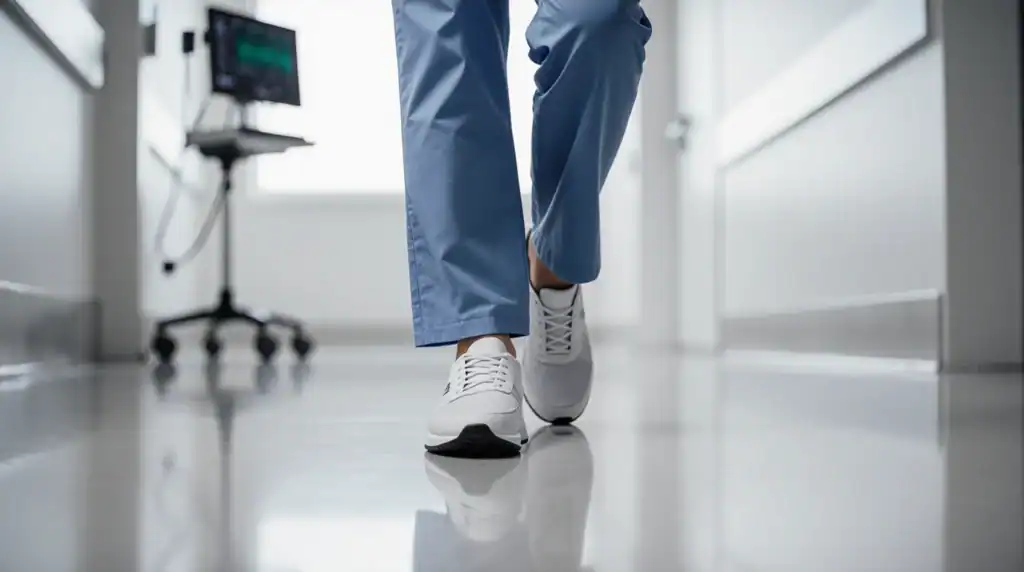
best shoes for nurses
The Quick Summary: Too Tired to Read Edition
Coming off a rough shift? Here’s the cheat sheet:
| Model | Award | Check Price |
|---|---|---|
| Hoka Bondi SR The “Walking on Clouds” Pick |
🏆 Best Overall | Check Amazon |
| Dansko XP 2.0 Clogs Rigid Support for Posture |
Best for Back Pain | Check Amazon |
| Brooks Ghost 17 Reliable & Stable Sneaker |
Best Sneaker | Check Amazon |
| Crocs Bistro Clog No Holes, Easy to Clean |
Easy Clean | Check Amazon |
| Skechers Work Series Slip-Resistant & Affordable |
Best Value | Check Amazon |
Buying Guide: What Actually Matters in a Hospital?
Before you drop $150 on shoes, here’s what separates hospital-worthy footwear from regular sneakers.
⚠️ Check Your Dress Code First (Seriously)
I know this sounds boring, but please—PLEASE—check your unit’s policy before you buy. Some hospitals are weirdly strict about this stuff. ICUs and ORs especially. I’ve heard stories of nurses getting sent home on day one because their shoes had mesh or open backs. The usual rules: enclosed toe and heel (no Crocs with holes), non-absorbent material (leather or synthetic, NOT suede), slip-resistant sole with defined tread. Five minutes checking your employee handbook can save you from wasting money on shoes you can’t even wear to work.
1. The “Pancake Test” (Cushion vs. Support)
Here’s the thing about memory foam: it feels AMAZING when you try shoes on in the store. Like walking on clouds. But by hour six of your shift, that “cloud” has compressed into a flat pancake, and you’re basically walking on hard rubber.
For 12-hour shifts, you don’t want foam that just squishes—you need foam with rebound. Think trampoline, not pillow. Brands like Hoka use EVA foam that actually pushes back. Brooks uses DNA cushioning that adapts but doesn’t collapse.
If a shoe feels unbelievably soft in the store, be suspicious. You want cushion with structure underneath, not just squishy foam that dies halfway through your shift.
2. The “Gross Factor” (Why Mesh is Your Enemy)
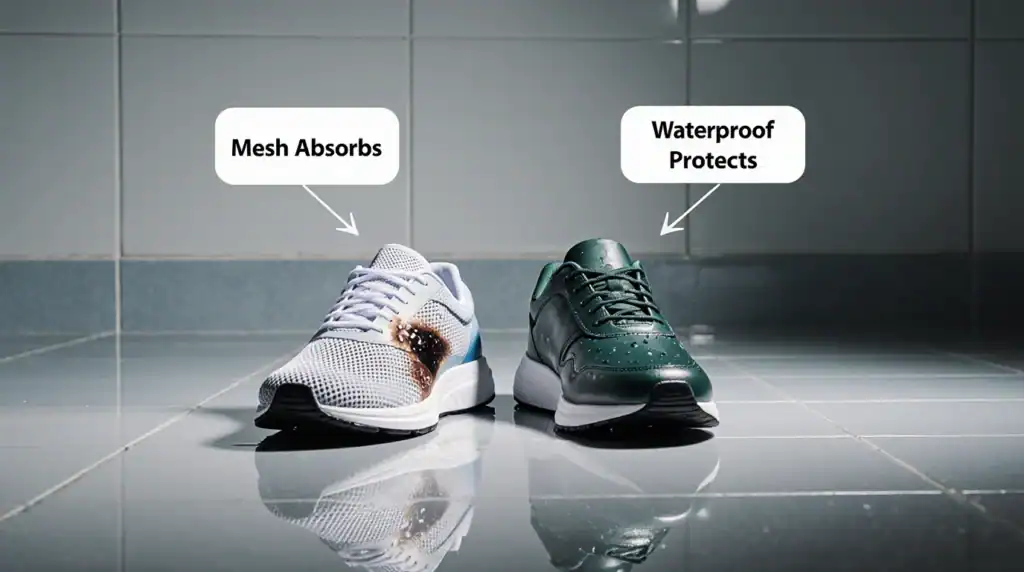
hospitals are wet
Hospitals are wet. And not the good kind of wet.
When something splashes—blood, urine, irrigation fluid, whatever—mesh fabric absorbs it instantly. It soaks through to your socks. You’re walking around in biohazard shoes for the rest of your shift. A study actually tested this: athletic shoes made of nylon or polyester let contaminants leak through to the sock even after disinfection. Lovely.
You want leather or synthetic uppers that you can wipe down with CaviWipes and move on with your life. Waterproof isn’t just a nice feature—it’s a necessity if you work in the ED, OR, or anywhere near bodily fluids.
3. The Swell Factor (Size Up, Trust Me)
Your feet at 7 PM are not the same feet you had at 7 AM. After hours of standing and walking, they can swell up to half a size. If your shoes fit “perfectly” in the morning, they’ll feel like torture devices by the end of your shift.
Pro tip: Try on shoes at the END of a shift, not the beginning. Or at least later in the day when your feet are slightly swollen. You want about a thumb’s width between your longest toe and the front of the shoe.
And if you’re between sizes? Go up. Seriously. A little extra room is way better than losing a toenail (yes, that happens to nurses in tight shoes).
4. Body Type Actually Matters
This is something most shoe guides ignore, but it’s huge: your weight affects how shoes perform.
If you’re pregnant, have a larger frame, or weigh over 200 lbs, those ultra-cushy Hokas might not be your friend. Too much soft foam without structure can collapse too fast, leading to instability and pain. You’ll burn through them in three months instead of six.
For heavier builds, look for stability or motion control shoes: Brooks Addiction Walker, Asics Foundation, or New Balance 860. These have firmer midsoles that hold up under more weight and last longer.
If you’re petite (under 130 lbs), you have more flexibility. You can probably get away with lighter, softer shoes without compression issues.

nurses
The Reviews: What Nurses Are Actually Wearing
Let’s break down the real options. I’m organizing this by what you actually need, not by brand.
Category 1: The “Max Cushion” Kings

- Leather, Synthetic
- Polyurethane

- Fresh Foam X midsole delivers our most cushioned Fresh Foam experience for incredible comfort
- Durable rubber outsole
- Lightweight synthetic material
- 8 mm drop; due to variances created during the development and manufacturing processes, all references to 8 mm drop are approximate
- Adjustable lace closure for a secure fit
Top Picks: Hoka Bondi SR (the “SR” stands for Slip Resistant—highly recommended), Hoka Clifton 9, New Balance Fresh Foam 1080
The Vibe: Walking on marshmallows. These are currently the most popular choice in hospitals.
Why they work:
The Bondi has almost comical amounts of cushioning—it looks like you strapped foam blocks to your feet. But that massive stack height actually works. The EVA foam absorbs shock like crazy, and the meta-rocker sole helps you roll forward smoothly instead of fighting every step.
ER nurses swear by these for plantar fasciitis. The cushioning takes pressure off your arches and heels in a way that rigid shoes just can’t match.
The cons:
They’re bulky. Like, noticeably bulky. If you need to move fast or squeeze into tight spaces, you’ll feel it. Most models have mesh uppers, which means fluid absorption issues. And at $140-180, they’re expensive.
Some nurses also mention the high stack height feels unstable at first—like you’re walking on platform shoes. Takes a few shifts to adjust.
Real talk from nurses:
“I tried Danskos, Brooks, Asics—everything. My feet would be screaming by hour 10. Hokas are the only shoes where I can actually finish a shift without limping to my car. Yeah, they look ridiculous. I don’t care anymore.” – Sarah, ER nurse, 8 years
Guru Verdict:
If you have foot pain RIGHT NOW—especially plantar fasciitis or heel pain—start here. Yes, they’re $160. Yes, they look chunky. But if they let you work without agony, they’re worth every penny. Just know you’ll replace them every 4-6 months in high-intensity units like the ED. The Bondi SR with slip-resistant outsole is your best bet for hospital floors.
Category 2: The “Old School” Clogs
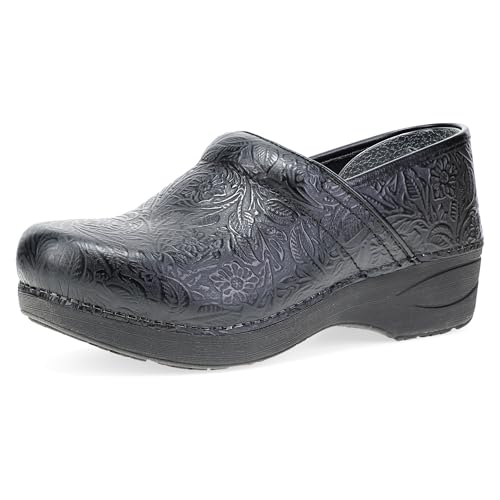
- ALL-DAY COMFORT: Our lighter weight XP 2.0 clogs are ergonomically designed with padded instep collar, roomy toe box, and TPU heel counter for women who are on their feet all-day.
- LONG-STANDING SUPPORT: An EVA midsole provides stability and shock absorption, while the dual-density PU footbed includes Dansko Natural Arch technology and memory foam for cushioning.
- QUALITY & STYLE: With a classic clog shape, this practical footwear features high quality leather uppers. The removable footbed accommodates standard and custom orthotics.
- SLIP-RESISTANT OUTSOLE: The lightweight clogs are finished with a 1.75" heel and a slip-resistant rubber outsole, which is suitable for dry, wet, and oily/wet surfaces.
- DANSKO HIGH PERFORMANCE CLOGS: Providing quality footwear with legendary comfort, Dansko shoes are chosen by nurses, veterinarians, surgeons, chefs, dentists, food servers and healthcare professionals.
Top Picks: Dansko XP 2.0 (upgraded version of the classic “Professional”—lighter with better arch support), Sanita, Birkenstock Super Birki
The Vibe: Built like a tank. Heavy, rigid, loud. Your mom probably wore these.
Why they work:
The rigid sole and rocker-bottom design force your body into better posture. If you have lower back pain from slouching or favoring one side, the stiffness of Danskos can actually help by making you walk more upright.
They also last forever—like, outlast three pairs of sneakers. The leather upper wipes clean instantly. And the wide toe box is amazing if you have bunions or just want room for your toes to spread out.
The cons:
They’re HEAVY. They feel clunky. They make noise when you walk (that distinctive clog clop-clop sound that announces your arrival).
There’s basically zero cushion—just firm support. And the rocker bottom can be dangerous if you have weak ankles. Multiple nurses have told me they rolled their ankle trying to move fast in Danskos. If you sprint to codes regularly, these might not be your shoe.
The break-in period is brutal. Like, blister-city for 2-3 weeks brutal.
Break-in tip:
Wear them around your house for a week before your first shift. Seriously. Do chores in them. Walk the dog. Let your feet adjust before you commit to 12 hours in them at work. Some nurses even recommend wearing them with thick socks initially to speed up the leather softening.
Guru Verdict:
If you have back pain or stand in one spot a lot (OR nurse, cath lab, procedures), try these. They’re especially good for plus-size nurses because the rigid structure doesn’t compress. But if you’re in the ED or anywhere you need to move fast, the clunkiness might drive you insane. Also: make sure they fit snug. A loose Dansko will slip off at the worst possible moment.
Category 3: The Reliable Runners
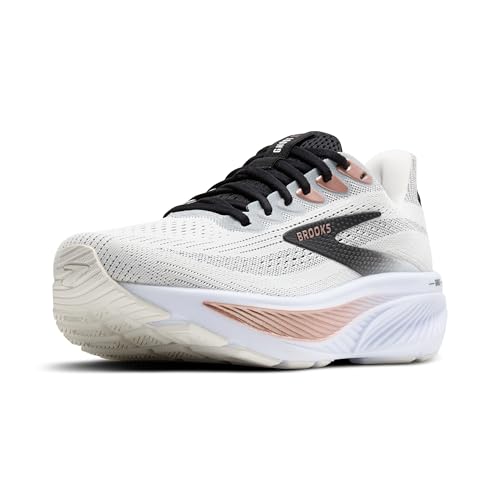
- THIS WOMEN’S SHOE IS FOR: The Ghost 17 is for runners and walkers alike looking for an everyday companion that provides smooth, reliable comfort. Now featuring an extra 1mm of DNA LOFT v3 in the heel and 3mm in the forefoot to help every mile feel as good as the first. This Brooks Ghost 17 is a certified PDAC A5500 Diabetic shoe and has been granted the APMA Seal of Acceptance. The Ghost 17 is a certified carbon neutral product. Predecessor: Ghost 16.
- SOFT & DYNAMIC CUSHIONING: The Ghost 17 offers neutral support with premium nitrogen-infused DNA Loft v3 cushioning to deliver lightweight softness and feel-good comfort after every mile. Ideal for road running, walking, cross training, travel, and the gym.
- SMOOTH TRANSITIONS: The newly designed midsole incorporates precise flex grooves that enhance the shoe's ability to promote smooth transitions. This innovative feature allows for a more natural flow during toe-off, enabling runners to maintain speed and momentum with ease.
- COMFORT & BREATHABILITY: The double jacquard air mesh upper provides premium comfort and breathability, while the kick-back collar adds support and structure. This design ensures optimal airflow, keeping your feet cool and dry during intense activities, while adapting to your foot’s natural movements for a comfortable snug fit.
- RUBBER OUTSOLE: The innovative rubber compound, crafted with recycled silica, offers a perfect balance of durability, lightweight performance, and responsive rebound, making it ideal for any terrain.
Top Picks: Brooks Ghost 17 (the latest model), Asics Gel-Kayano, Saucony Triumph
The Vibe: Just a solid, normal athletic shoe. Nothing crazy.
Why they work:
These are the middle ground between “walking on clouds” and “rigid clog.” You get good cushioning (Brooks’ DNA foam, Asics’ gel technology) without the extreme bulk of Hokas. They’re stable, durable (500+ miles), and don’t look weird if you wear them outside of work.
Brooks Ghost is probably the most popular “normal” sneaker among nurses. It’s got enough cushion to protect your feet but enough structure to last all day. Plus, they come in all-white if your hospital requires it.
The cons:
Most models have mesh uppers, so fluid resistance is an issue. And while they’re comfortable, they’re not designed for standing all day—they’re designed for running, which is a different kind of stress on your feet.
Body type note:
If you’re over 200 lbs or pregnant, skip the “neutral” cushion shoes and go straight to stability models: Brooks Addiction Walker or Asics Foundation. These have firmer midsoles that won’t collapse under heavier weight. The Brooks Addiction Walker is actually a certified diabetic shoe—it’s built for durability and support over long periods.
Guru Verdict:
If you’re coming from regular sneakers and don’t want to look like you’re wearing moon boots (Hoka) or clogs (Dansko), start here. Brooks Ghost is the safe, reliable choice. Just accept that the mesh upper means you’ll need to replace them if you get anything gross on them. For heavier nurses: the Brooks Addiction Walker is your best bet. Don’t mess around with ultra-cushion—you need stability.
Category 4: The “Wipe-Down” Specialists
Top Picks: Clove, Crocs Bistro Clog, Calzuro, STAND+ (formerly Gales)
The Vibe: Shoes designed specifically for healthcare workers who deal with fluids.
Why they work:
These are purpose-built for hospitals. Fluid-resistant uppers, slip-on designs (no laces to touch with bloody gloves), antimicrobial linings, and easy-to-clean materials. The Crocs Bistro eliminates the holes found in standard Crocs, making them safe for fluid spills.
If you work in the OR, ED, or anywhere with high splash risk, these matter. You can literally hose them down at the end of a shift.
The cons:
Because they prioritize waterproofing, they’re less breathable than mesh sneakers. Your feet might get sweaty. And Crocs offer almost zero arch support—if you have flat feet, you’ll need to add an insole (Superfeet or Powerstep).
Guru Verdict:
If you work in the ED, OR, L&D, or anywhere fluids are a daily thing, the Crocs Bistro is worth the investment at under $50. They’ll pay for themselves the first time you avoid throwing away $150 Hokas because someone bled on them. The Bistro model is slip-resistant and has no holes, making it actually functional for clinical work. For everyone else, they’re a nice-to-have backup pair to keep in your locker.
Category 5: Budget Options That Don’t Suck

- WORKPLACE SAFETY CERTIFIED: Slip-resistant traction outsole rated for wet, dry, oily surfaces, plus Electrical Hazard (EH) safe design tested ASTM-F2892
- ALL-DAY COMFORT DESIGN: Memory Foam cushioned insole and relaxed fit design provide roomy comfort at toe and forefoot for non slip work shoes for women
- WEATHER-READY PROTECTION: 3M Scotchgard treatment repels water while flat knit and synthetic upper ensures durability
- CONVENIENT SLIP ON STYLE: Easy slip on design with stretch laces that never come untied for quick on and off
- RELIABLE TRACTION: Flexible slip resistant work shoes for women with tested traction outsole for confident stability

Top Pick: Skechers Work Series
The reality: Not everyone can drop $180 on shoes, especially new grads or nursing students.
Why they work:
These are around $60-80, they have legitimate slip resistance (not just marketing), and the memory foam insole is decent for the first few months. They come in all-black and all-white, so they work for most dress codes.
The catch:
They won’t last as long as Hokas or Brooks. The foam flattens out faster, the outsole wears down quicker. Budget for replacing them every 4-6 months instead of 8-12.
But if you’re between paychecks or just starting out, Skechers Work is a solid temporary solution. Just start saving for the upgrade.
Guru Verdict:
If $150+ shoes aren’t in your budget right now, Skechers Work SR is your best bet. They’re not amazing, but they’re way better than wearing regular sneakers to a 12-hour shift. Think of them as the “get you through nursing school” option, not the “10-year career” option. The slip-resistant outsole is legit, and for the price, you can afford to replace them more frequently.
The Great Crocs Debate: Let’s Settle This
are crocs okay
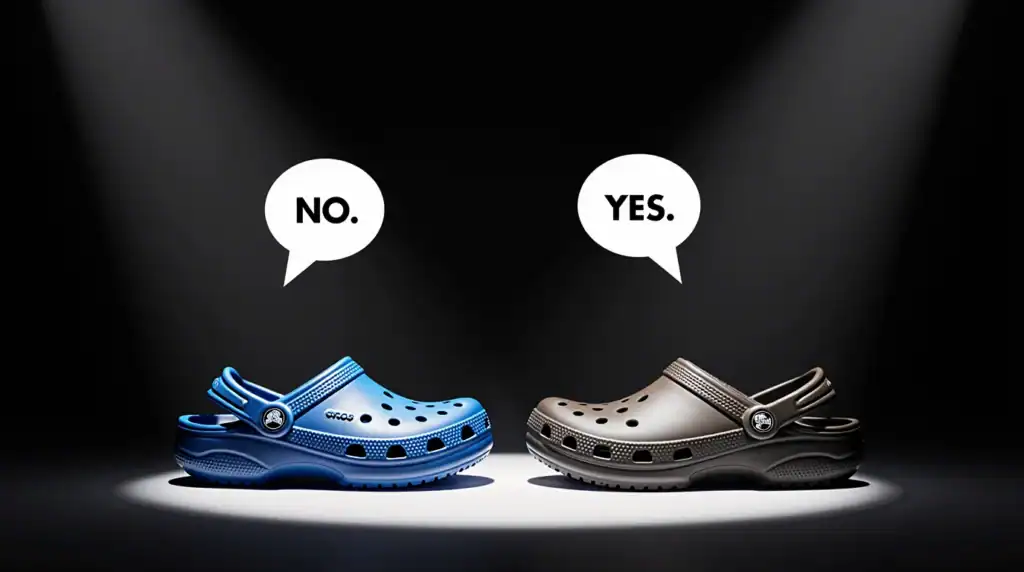
The question: Everyone wears Crocs. Are they actually good, or are we all just lazy?
The answer: It depends on which Crocs.
Classic Crocs (with the holes): HARD NO
These are banned in most clinical settings for good reason. The holes let fluids and needles through. They’re not slip-resistant. And they offer basically zero support for your arches.
If you wear these to work, you’re asking for a sharps injury or a soaked sock. Don’t do it.
Crocs Bistro or Work Clogs (NO holes): Acceptable
These are actually fine for short shifts or as backup shoes. They’re slip-resistant, easy to bleach, cheap ($40-50), and great if you have wide feet.
The big caveat: Crocs have almost zero arch support. If you have flat feet or plantar fasciitis, wearing these for 12 hours will destroy you unless you add a good insole (Superfeet or Powerstep).
Real talk: The Aesthetics vs. Comfort Debate
Are they ugly? Yes. Do veteran nurses care? No. I’ve seen ICU nurses wearing neon pink Crocs covered in pen marks and they’re perfectly happy. Comfort beats aesthetics after your third double in a week.
There’s something freeing about reaching the point in your career where you just don’t care what your shoes look like anymore. If your feet don’t hurt, the shoes are doing their job.
Guru Verdict:
Crocs Bistro are fine as backup shoes you keep in your locker for when your main shoes get trashed, or for lighter shifts. But for full 12s, especially if you have any foot issues, you need something with more support. If you’re going to do Crocs full-time, at least add a real insole. Your feet will thank you.
Care & Maintenance: Making Your Shoes Last
You spent good money on these shoes. Let’s make them last.
The Rotation Rule (This Saves You Money)
Always rotate between two pairs of shoes. Here’s why:
The cushioning foam in your shoes needs about 24 hours to fully decompress and dry out after a long shift. If you wear the same pair every day, the foam never recovers—it stays compressed, loses its bounce, and dies faster.
The math: Two $150 pairs that you rotate will each last 12-18 months = $300 for 24-36 months of total use.
One $150 pair worn daily = dead in 6 months = you’re buying 4-6 pairs in the same timeframe = $600-900.
Rotating literally doubles your shoe lifespan and saves you hundreds of dollars. It’s not optional if you want to save money long-term.
Cleaning the “Ick”
Let’s be real: by Friday, your shoes are biohazards. Here’s how to deal with it:
For leather/synthetic shoes:
Wipe down with CaviWipes or hospital-grade disinfectant. For dried blood, use 3% hydrogen peroxide—it breaks down the proteins and lifts stains. Let it sit for a minute, then wipe clean.
For mesh shoes:
Good luck. Mesh absorbs everything. If you get blood or other fluids on mesh, you’re probably tossing them. This is why we keep telling you to avoid mesh in clinical settings.
For machine-washable shoes (some Clove, certain specialty nursing shoes):
Cold water, gentle cycle, air dry. Add a little bleach if needed. Don’t put them in the dryer—it destroys the foam and can warp the shoe structure.
Fighting odor:
Sprinkle baking soda inside after each shift. Let it sit overnight, shake it out in the morning. For nuclear-level smell, freeze them overnight (yes, really—freezing kills odor-causing bacteria). Or invest in shoe deodorizer spray.
The “Don’t Bring Work Home” Rule
Keep your work shoes in your car or in a plastic bin by the door. Don’t wear them inside your house, especially if you do direct patient care.
You’re tracking hospital germs everywhere if you wear them inside. Keep a pair of slides or flip-flops in your car to change into. Your family will appreciate it.
When to Replace
Every 300-500 miles (most fitness apps can track this), OR every 6-12 months, whichever comes first.
How do you know they’re dead?
- The foam sidewalls show deep wrinkles or creases
- The outsole tread is worn smooth (do the AA battery test: if the battery is wider than your remaining tread, the shoe fails)
- Your feet start hurting again even though nothing else changed
- The heel counter (back support) feels floppy or broken down
Don’t try to stretch it another month. Dead shoes cause foot pain, which causes knee pain, which causes back pain. Just replace them.
⚡ The 30-Second Decision Tree
Still stuck? Here’s exactly what to buy based on your specific problem:
- 🦵 Foot / Heel Pain? → Get the Hoka Bondi SR
- 🔙 Lower Back Pain? → Get the Dansko XP 2.0
- 🩸 Easy Clean / Wipe Down? → Get the Crocs Bistro
- 🏋️ Plus Size / Heavy Frame? → Get the Brooks Addiction Walker
- 🦶 Wide Feet? → Get the New Balance 860 (Wide)
- 💸 On a Budget? → Get the Skechers Work Series
FAQs: Solving Real Problems
How often should I replace my nursing shoes?
Most nurses replace shoes every 6-12 months, or roughly every 300-500 miles of walking. The mileage depends heavily on your weight, gait, and how demanding your shifts are.
How do you know they’re dead? If the foam sidewalls show deep “wrinkles,” or if the outsole tread is worn smoother than the width of an AA battery, they’re done. If your feet suddenly start hurting again for no reason, that’s also a sign your shoes have lost their support.
Why do my feet still hurt even with expensive shoes?
This is frustrating, I know. Here are the usual culprits:
1. Arch mismatch: Flat feet in high-arch shoes = pain. High arches in flat shoes = pain. You might need to see a podiatrist to figure out your actual foot structure.
2. Worn-out insoles: Even if the shoe looks fine, the insole might be compressed and dead. Try replacing it with aftermarket insoles like Superfeet or Powerstep.
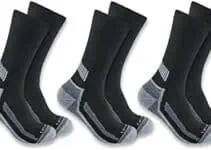
3. Your socks are trash: Seriously. If you’re wearing old cotton socks that are stretched out and thin, your feet have no cushioning. Get compression socks (15-20 mmHg) and replace them every 6 months.
4. The shoes are too small: Your feet swell during shifts. If they felt “perfect” in the store, they’re probably too tight by hour 8.
5. It’s not the shoes—it’s your body: If you have persistent heel pain or arch pain, you might have plantar fasciitis or another condition. See a podiatrist. You can’t fix a medical problem with better shoes alone.
Should I size up?
Yes. Go up half a size to account for swelling.
Try shoes on late in the day when your feet are already slightly swollen. And remember the thumb’s width rule—you should have about a thumb’s width (roughly 1/2 inch) between your longest toe and the tip of the shoe.
Tight shoes lead to black toenails, blisters, and misery. A little extra room is always better than too tight.
What’s the best shoe for wide feet?
New Balance is the gold standard—they offer multiple width options (2E, 4E).
Also good: Hoka Wide, Brooks Wide, Dansko clogs (naturally roomy).
Avoid: Narrow European brands like some Asics models (tends to run narrow) unless you try them on first.
Can I wear compression socks with these shoes?
YES. You absolutely should.
Compression socks (15-20 mmHg) improve circulation, reduce swelling, and minimize leg fatigue during long shifts. Pair them with good shoes and you’ve got the one-two punch against foot and leg pain.
Just make sure your shoes have enough room to accommodate the slightly thicker socks. This is another reason to size up half a size.
What if my hospital requires all-white shoes?
All-white options that don’t suck:
- Brooks Ghost (available in all-white)
- New Balance 608 (the dad shoe that never dies)
- Hoka Bondi (available in white)
- Dansko Professional (white leather)
- Skechers Work (white versions available)
My shoes squeak on hospital floors. Help?
This is usually the insole rubbing against the shoe bed.
Quick fix: Remove the insole, sprinkle baby powder or cornstarch in the shoe, replace the insole. The powder reduces friction and stops the squeak.
If that doesn’t work, try rubbing a dryer sheet on the bottom of your shoe (seriously—it reduces static). Or check if your outsole is picking up floor wax—sometimes cleaning the bottom with rubbing alcohol helps.
Are nursing-specific brands like Clove worth the money?
If you work in high-splash environments (ED, OR, L&D), yes. The fluid-resistant uppers and easy-clean materials justify the price.
If you work in outpatient, clinic, or lower-risk settings, you can probably get away with regular athletic shoes or Crocs Bistro for way less money.
Think about how often you’re dealing with fluids. If it’s daily, invest in the specialty shoes. If it’s rare, save your money.
Final Thoughts: Don’t Cheap Out on Your Feet
Look, there’s no “perfect” shoe that works for every nurse. The right choice depends on your specific foot structure (wide, narrow, flat, high arch), your body type, and where you work (OR vs. ED vs. clinic).
But here’s what I know for sure: don’t try to save money by buying cheap shoes.
You earn your living on your feet. Spending $150 on quality shoes now can save you thousands later on physical therapy, cortisone shots, custom orthotics, or taking time off because you can’t walk without pain.
Think about it this way: you’re probably working 3-4 shifts per week. That’s 36-48 hours on your feet every week. Over a year, that’s nearly 2,000 hours of standing and walking. Your shoes are one of the most important pieces of equipment you own for your job—more important than your stethoscope, more important than your badge holder, more important than your fancy scrubs.
Your feet are your career. Invest in them.
The Bottom Line
If you’re in pain right now, start with Hoka Bondi SR. If you have back issues, try Dansko XP 2.0. If you need waterproof, go Crocs Bistro as a backup. And whatever you buy, get TWO pairs and rotate them.
One Last Non-Shoe Tip
Pair your shoes with high-quality compression socks (15-20 mmHg). This combo—good shoes + compression—is what actually gets you through 12-hour shifts without wanting to cut your feet off.
Good shoes alone won’t save you if you’re wearing garbage socks. The compression helps with circulation, reduces swelling, and keeps your legs from feeling like dead weight by the end of your shift. It’s not optional—it’s essential.
Now go buy the shoes, rotate them properly, and save your feet. You’ve got enough to worry about without your shoes making you miserable.