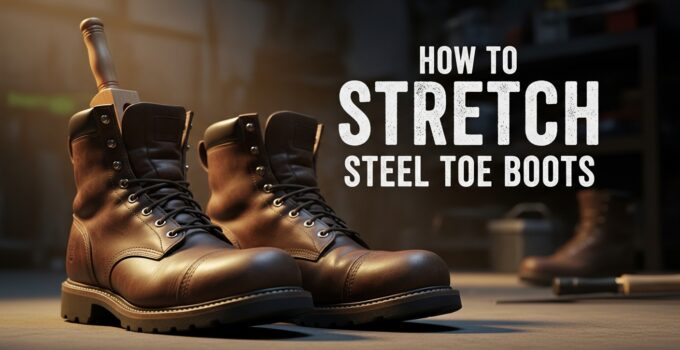
Let’s be real: there are few things more miserable than a 10-hour shift in safety boots that feel like a vice grip. You’re distracted, you’re limping, and by the time you clock out, your feet are throbbing.
We often hear the advice to just “tough it out” or “break them in.” But with steel toe boots, toughing it out is dangerous advice. Long-term compression can lead to permanent issues like Morton’s Neuroma (nerve damage) and bunions. Saving $150 on a pair of boots isn’t worth a lifetime of foot problems or surgery.
The hard truth? You cannot stretch steel. It’s physics. That steel cap is ASTM-rated to withstand 2,500 pounds of compression force—no hairdryer or stretcher will make it budge.
However, you can manipulate the leather, padding, and insoles around that steel cage to create essential wiggle room. This guide will show you exactly how to do it—and how to know when it’s time to cut your losses and return them.
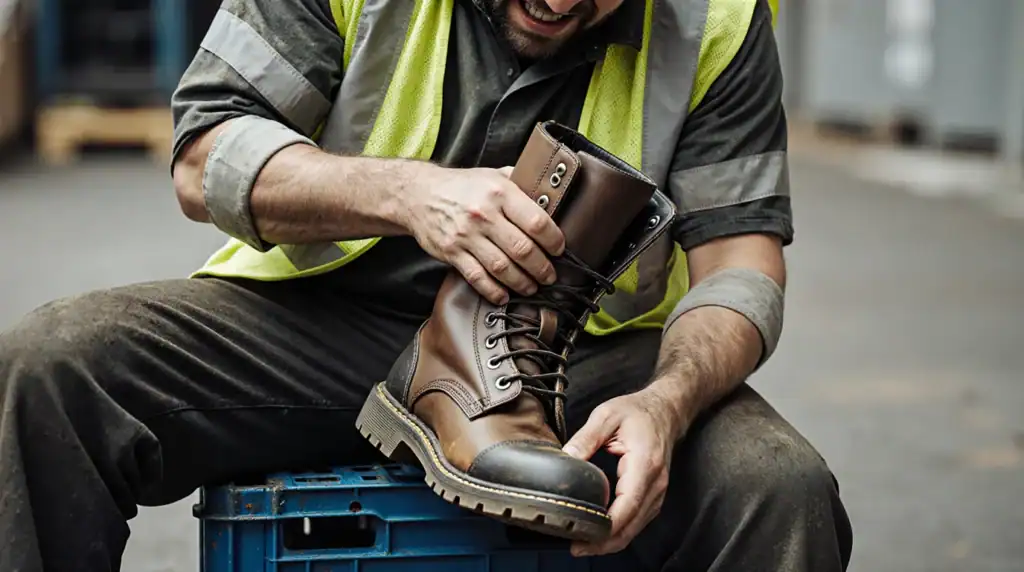
break them in
STOP: Check This Before You Start
Perform this 30-second check. If you fail step 1, stop immediately and return the boots.
1. The Length Test
Push your heel firmly against the back of the boot. Can you wiggle your toes without touching the front steel wall?
- If No: Return them immediately. You cannot make a boot longer. The steel cap will not move.
2. The Width Test
Is the pressure coming from the sides of the ball of your foot (the widest part)?
- If Yes: Proceed to Method 3. Time to fix: 48 hours.
3. The Volume Test
Is the pressure on the top of your foot (instep) or the bridge?
- If Yes: Proceed to Method 1 or 2. Time to fix: Instant to 24 hours.
The Anatomy of the Problem
To fix the fit, you have to understand what you’re working with. The safety toe cap is ASTM F2413-rated to withstand massive compression (2,500 lbs) and impact (75 ft-lbs). It is a rigid cage designed to save your toes from a forklift or falling I-beam, not to be comfortable.
You cannot stretch the cap itself. If you try to force the steel outward with hammers or hydraulic jacks, you risk denting it inward, creating a sharp metal ridge that will dig into your toes with every step. Worse, you’ll void the safety certification—meaning your employer or worker’s comp could deny coverage if you’re injured.
The “Sweet Spot”
The areas we can fix are the “Green Zones”:
- The leather upper covering and surrounding the steel cap
- The heel counter (the stiff cup around your heel)
- The instep (the bridge of your foot)
- The metatarsal area (the widest part of your foot, where the ball sits)
This is where stiff leather meets your foot, and it’s usually where the pinching happens.
Steel vs. Composite vs. Alloy: Does Material Change the Stretch?
- Steel & Alloy: Both are metal. They have zero “give.” Alloy (usually aluminum) is thinner, allowing slightly more internal room, but neither will stretch.
- Composite: Made of carbon fiber, Kevlar, or fiberglass-reinforced plastic. These also do not stretch—in fact, they’re brittle and will crack or shatter if you apply force. However, composite caps are often molded with a wider, more foot-shaped internal cavity than traditional steel.
The Verdict: The material doesn’t change the stretching techniques you’ll use. You’re stretching the leather around the safety toe, not the toe itself. But if you have genuinely wide feet, switching to composite boots for your next purchase might solve the problem at the source.
Assessing the Fit: The “Red Zone” vs. “Green Zone”
Before you grab a hairdryer or stretcher, you need to diagnose where the boot is hurting you. This determines whether stretching is even possible.
The Red Zone (The Toe Box)
This is the area covered by the safety cap.
Scenario A: Toes Hitting the Front
- Verdict: Impossible to fix. The length of the steel cap is fixed. If your big toe or second toe is touching the front wall, you need to go up half a size. Return the boots immediately.
Scenario B: Pinky Toe Rubbing the Edge of the Steel Cap
- Verdict: Difficult. You’re fighting the lateral edge of the steel wall. You might gain 1-2mm by compressing the foam lining with a stretcher, but don’t expect miracles. If the pain is severe, return them.
The Green Zone (Instep & Metatarsals)
This is the leather area behind the toes and over the bridge of the foot.
Scenario C: Squeezing Across the Sides or Top
- Verdict: High Success Rate. This is almost always stiff leather that needs to break in, or too much volume being taken up by a thick factory insole. The methods below will work well for you.
3 Safe Methods to Improve Fit (Ranked by Ease)
Method 1: The “Volume Swap” (Insoles & Socks)
Why this is first: It requires zero skill, is completely non-destructive, and offers instant results.
The Problem: Most factory insoles are thick, cheap foam that takes up valuable space inside your boot. Your foot sits higher in the boot, which means your toes are closer to the curved roof of the steel cap and the top of your foot presses harder against the tongue.
The Fix: Swap the factory insole for a thinner, high-density foam insole. This drops your foot deeper into the boot, giving your toes more clearance and reducing pressure on your instep.
Look for insoles marketed as “low-profile” or “work boot” specific. Brands like Superfeet CARBON (around $50) or Dr. Scholl’s Work Massaging Gel ($15-20) are under 3mm thick and won’t compress into nothing after a week of wear.
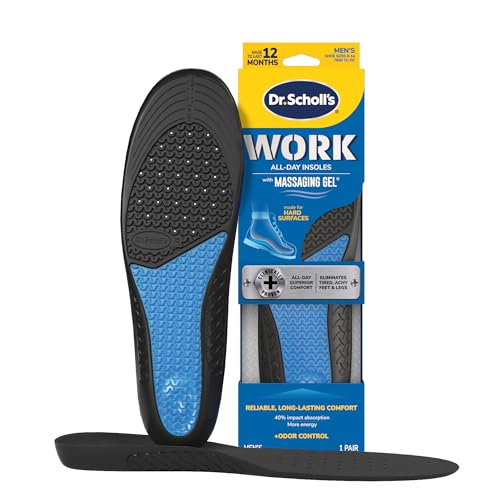
- CLINICALLY PROVEN ALL-DAY SUPERIOR COMFORT: Dr. Scholl’s Work All-Day Insoles for Men deliver proven comfort throughout the day, for hard-working feet. Designed for those with physically demanding jobs and active, on-your-feet lifestyles
- ELIMINATES TIRED, ACHY FEET & LEGS TO STAY ENERGIZED: Distributes foot pressure evenly to reduce fatigue and joint strain, eliminates sore muscles, and keeps you feeling more energized even during your longest work day
- MASSAGING GEL TECHNOLOGY: The only extended gel cushioning that reduces impact and shock to muscles and joints from working long hours on hard surfaces like asphalt, concrete, cement, hard dirt, and wood floors - helping reduce daily foot and leg stress
- RESPONSIVE CUSHIONING FOR ENHANCED ENERGY RETURN: Adaptive cushioning responds to movement and delivers energy back into every step, improving comfort at each key area of your foot for long-lasting support and fatigue-fighting power
- ADVANCED ODOR CONTROL FOR FRESHNESS: New Polygiene StayFresh Technology provides foot odor control and helps reduce moisture buildup to keep your feet feeling fresh. Trim-to-fit sizing allows easy customization for most work shoes and boots


- Specially designed for men over 200 lbs., tall and/or those with wide width feet
- All-day support & relief, every day
- Extra supportive heel cushioning surrounds the heel and relieves lower back pain & leg fatigue
- Durable and Built-to-Last
- Clinically Proven & Scientifically designed and engineered

- Arch Support and Pain Relief for Foot Pain: This comfortable cushioning insole is ergonomically designed to effectively relieve foot pain such as plantar fasciitis, heel pain, plantar fasciitis, etc.
- Comfortable and Breathable: These insoles feature a honeycomb design that promotes air circulation and keeps your feet cool and dry. Advanced materials wick away moisture, dry quickly, and help prevent foot odor
- Shock Absorption and Anti-Slip: The U-shaped memory foam heel provides excellent shock absorption, reducing impact on the feet and knees, and there is a comfortable and flexible gel insert at the bottom of the insole for effective shock absorption.
- Memory Foam Comfort Insoles: These insoles are made of high-quality PU material, which is beautiful, soft and comfortable, super soft U-shaped memory foam sports insoles, suitable for both men and women, to keep your feet warm
- Suitable for all occasions: These insoles can easily fit any shoe size, including: sports; walking/running, work, etc., and a transition period is required for the first use
The Sock Strategy: While you’re at it, ditch those thick cotton work socks. Cotton bunches, holds moisture, and creates friction. Switch to Merino wool socks—they compress under pressure, wick sweat away from your skin, and reduce the chance of blisters.
Time to Relief: Instant. You’ll feel the difference the moment you lace up.
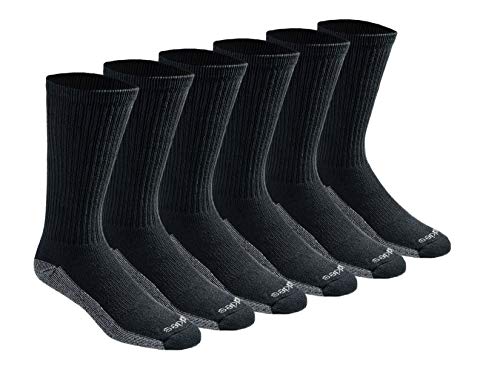
- Soft Breathable Moisture Control Fibers
- Arch Compression Support and Stability
- Ventilation Channels Enhance Air Flow
- Durable Reinforced Heel and Toe
- Fabric content may vary by color

- Soft Breathable Moisture Control Fibers
- Arch Compression Support and Stability
- Ventilation Channels Enhance Air Flow
- Durable Reinforced Heel and Toe
- Fabric content may vary by color
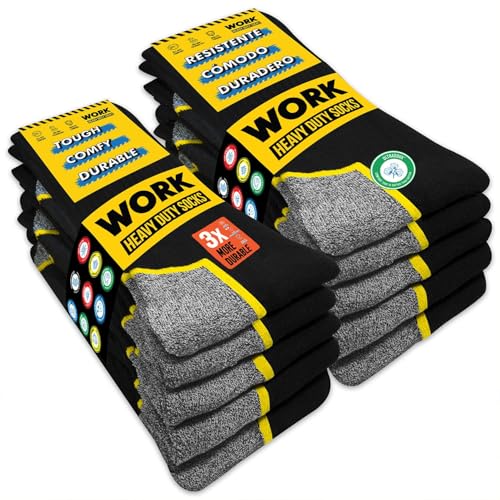
- All-Day Comfort: The HEX-COMB mesh with cushioning on our WORK socks provides all-day comfort, reducing foot fatigue and allowing you to stay focused on your job. And with their affordable price point, our WORK socks offer excellent value for money, making them the perfect economical choice for anyone who needs high-quality work socks.
- DRI-WIK Moisture-Wicking Technology: Our proprietary DRI-WIK technology wicks moisture away from your feet, keeping them dry and comfortable throughout the day. This helps to prevent blisters and other foot-related problems, ensuring that you can focus on your work without distraction.
- TGTD Reinforcement: Our WORK socks feature reinforced heel and toe areas, providing extra protection and support where you need it most. This added durability ensures that your socks will last longer and provide better value for your money.
- DURA-STRETCH Elastic: With top-grade elastic, our WORK socks provide a snug fit that lasts all day long. The elastic is designed to retain its shape over time, so you won't have to worry about your socks slipping down or losing their stretch.
- Superior Durability: Our WORK socks are designed to last long, thanks to their thick cushioning and reinforced heel and toe areas. They're built tough to withstand the rigors of any job site, making them the perfect choice for anyone who needs reliable work socks.
Method 2: The Thick Sock & Heat Trick (For Leather Uppers)
Best for: Tightness across the bridge of the foot (instep) or around the ankle.
CRITICAL WARNING: Check your boot’s material tag before you try this. If your boots have synthetic uppers (PU leather, polyurethane coating, faux leather) or heavy mesh panels, SKIP THIS METHOD. Heat will melt synthetic materials and can soften the adhesive holding the sole to the upper, causing delamination. This method is for full-grain leather boots only.
The Process:
- Put on two pairs of thick wool socks (or one pair of your regular socks plus a thick hiking sock over top).
- Jam your feet into the boots. Yes, it will be uncomfortable.
- Identify the tight spots—usually across the instep or around the ball of your foot.
- Set a hairdryer to medium heat (not high) and blast the tight area for 20-30 seconds while flexing your foot back and forth.
- Crucial Step: Keep the boots on and walk around your house for 10-15 minutes while the leather cools and molds to your foot shape. If you take them off while warm, they will shrink back.
- Remove the boots and immediately apply a leather conditioner (Mink Oil, Bick 4, or Obenauf’s). This is non-negotiable. Heat dries out leather, and dried leather cracks.
Repeat this process 2-3 times over 24 hours. Each session will give you a bit more room.
Time to Relief: 24 hours (after 2-3 sessions).
Method 3: The Mechanical Stretcher & Spray
Best for: General width issues across the ball of the foot (metatarsal area).
The Tool: You need an actual boot stretcher, not a standard shoe stretcher. Boot stretchers have a longer shaft and a different angle to accommodate the higher collar of work boots. A two-way stretcher (length and width) is ideal, though for steel toes you’ll only be using the width function.
The Chemical Helper: Boot stretch spray is basically a solution of water and rubbing alcohol (some add conditioning agents). It temporarily weakens the collagen fibers in leather, making them easier to stretch. You can buy commercial spray or make your own with a 50/50 mix of rubbing alcohol and water in a spray bottle.
The Technique:
- Spray the inside and outside of the boot liberally, focusing on the tight areas.
- Insert the boot stretcher while the leather is still damp.
- If you have a specific hot spot (like a bunion), insert a “bunion plug” into the stretcher at that spot for targeted stretching.
- Turn the crank until you feel firm resistance. Stop if you hear creaking or popping sounds. That’s the stitching beginning to tear. If you over-crank, you’ll rip the boot apart from the inside. Back off half a turn if the leather starts to creak.
- Leave the stretcher in place for 24-48 hours. The longer, the better.
- Remove the stretcher, try the boots on, and repeat if necessary.
Time to Relief: 48 hours (for maximum stretch).
The Method We DON’T Recommend (And Why)
You’ll see “The Freezer Bag Trick” all over Pinterest and YouTube. Do not do this to safety boots.
The Myth: Fill a Ziploc bag with water, shove it into the toe box, and stick the boots in the freezer overnight. The water will freeze, expand, and magically stretch the boot.
The Reality: Water expands in all directions when it freezes. In a normal shoe, it might push the leather out. But in a steel toe boot, the steel wall will not move. The ice follows the path of least resistance—which is inward and downward.
The Damage:
- The expanding ice crushes your footbed and destroys the arch support.
- Worse, if your boots are waterproof (like Gore-Tex), the jagged ice expansion can puncture the membrane, ruining the waterproofing of a $200+ pair of boots.
- The pressure can even pop stitching or delaminate the sole.
I’ve seen this method recommended by people who have clearly never tried it on an actual pair of expensive work boots. Don’t learn this lesson the hard way.
The Professional Route: When to See a Cobbler
If your boots cost $250 or more (Red Wing, Thorogood, Timberland PRO, Danner), don’t mess around with DIY methods. Take them to a professional cobbler.
What They Have That You Don’t: Industrial hydraulic boot stretchers and “ball and ring” machines that can apply thousands of pounds of controlled pressure to specific areas. A cobbler can “lift” the instep, punch out hot spots near the heel, and stretch the metatarsal area far more effectively than any $30 plastic stretcher from Amazon.
The Cost: Usually $30-50, depending on how much work is needed.
The Benefit: You’re paying for expertise and equipment. A good cobbler has stretched thousands of boots and knows exactly how far they can push the leather without damaging the structure or stitching.
Sizing Guide: Preventing This Next Time
If you’re reading this article, you’ve already bought the wrong size. Let’s make sure it doesn’t happen again.
The Finger Test
When the boots are unlaced and you’re standing up, you should be able to slide one index finger behind your heel. If you can’t, the boots are too small.
The “Sneaker Trap”
Most people buy work boots in the same size as their Nikes or Adidas. This is wrong. Safety boots almost always require going up half a size compared to your athletic shoes.
Why? Two reasons:
- The steel or composite cap takes up internal volume at the front of the boot.
- Your feet swell during a shift—especially if you’re standing on concrete for 8-10 hours.
If you wear a size 10 in sneakers, you probably need a 10.5 in work boots.
Width Ratings Matter
Boot widths are designated by letters:
- D = Regular (standard width)
- EE (or 2E) = Wide
- EEE (or 3E) = Extra Wide
If your foot spills over the edge of the insole when you remove it from the boot, you don’t need a stretcher—you need a wider boot. No amount of leather manipulation will give you the structural width you need.
Timing: When to Try Boots On
Always try boots on in the afternoon or evening. Your feet swell during the day, and a boot that fits perfectly at 8:00 AM might be torture by 4:00 PM on the job site. Shop when your feet are at their largest.
FAQ
Q: Can I hammer the steel toe cap to widen it?
A: NO. This is dangerous and will ruin your boots. Steel won’t bend outward—it will dent inward, creating a sharp metal ridge that digs into your toes with every step. If you’re wearing composite toes, hammering will shatter the cap completely, destroying the boot’s safety rating.
Even if you could reshape the cap without destroying it, doing so would void the ASTM F2413 safety certification. If you’re injured on the job while wearing modified boots, your employer or worker’s comp insurance could deny your claim.
Q: Can I return worn boots?
A: It depends on where you bought them. Amazon and Zappos require boots to be in “unworn” condition, which means no scuffs on the soles and no signs of outdoor use.
Pro Tip: Wear your new boots on carpet only for the first 2-3 days. Walk around your house, go up and down stairs, wear them while watching TV. If they still hurt after this indoor break-in period, return them before you wear them outside or apply any heat or chemicals.
Some retailers (REI, certain Red Wing stores) have satisfaction guarantees that allow returns even after work use, but always check the specific return policy before you modify the boots.
Q: How long is the normal break-in period for steel toe boots?
A: High-quality full-grain leather boots typically need 80-100 hours of wear to fully break in. That’s roughly two weeks of full-time work.
Synthetic or soft-leather boots should feel comfortable almost immediately. If synthetic boots are painful after a week, they’re the wrong size—synthetic materials don’t stretch much.
Conclusion: The 3-Day Rule
Here’s my final advice: Try the insole swap (Method 1) immediately. If that doesn’t solve the problem, move to the heat method or stretcher over the next 2-3 days.
If you’ve tried all three methods over a period of 3-4 days and you’re still in pain, admit defeat. The boots simply do not fit your feet. Trying to force it will lead to blisters, calluses, or worse—permanent nerve damage like Morton’s Neuroma.
Your feet carry you through your entire workday and the rest of your life, whether you’re framing houses, driving a forklift, or hiking backcountry trails. They’re worth more than $150. If the boots don’t fit, return them, sell them, or give them away—but don’t wear them.
Your feet will thank you.