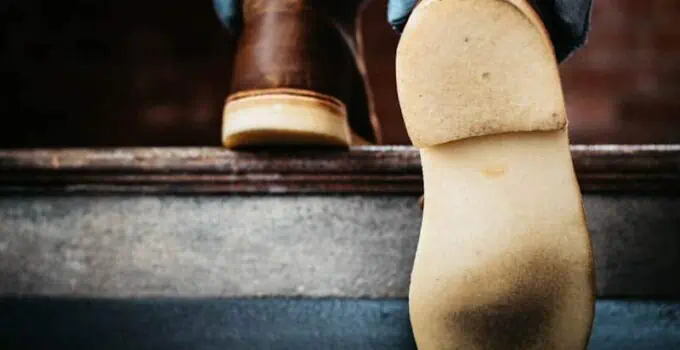
You’ve seen them. Those soft, bouncy, gummy-looking soles on everything from chukka boots to high-fashion sneakers. That, my friend, is the crepe sole. It’s one of the most iconic and divisive materials in footwear.
People who love them *swear* they’re the most comfortable boots on earth. People who hate them call them “dirt magnets” that melt on hot pavement.
So, what’s the real story? As your resident boot expert, I’m here to give you the brutally honest breakdown of the crepe sole—the good, the bad, and the truly ugly. Let’s dive in.
What Is Crepe Rubber?
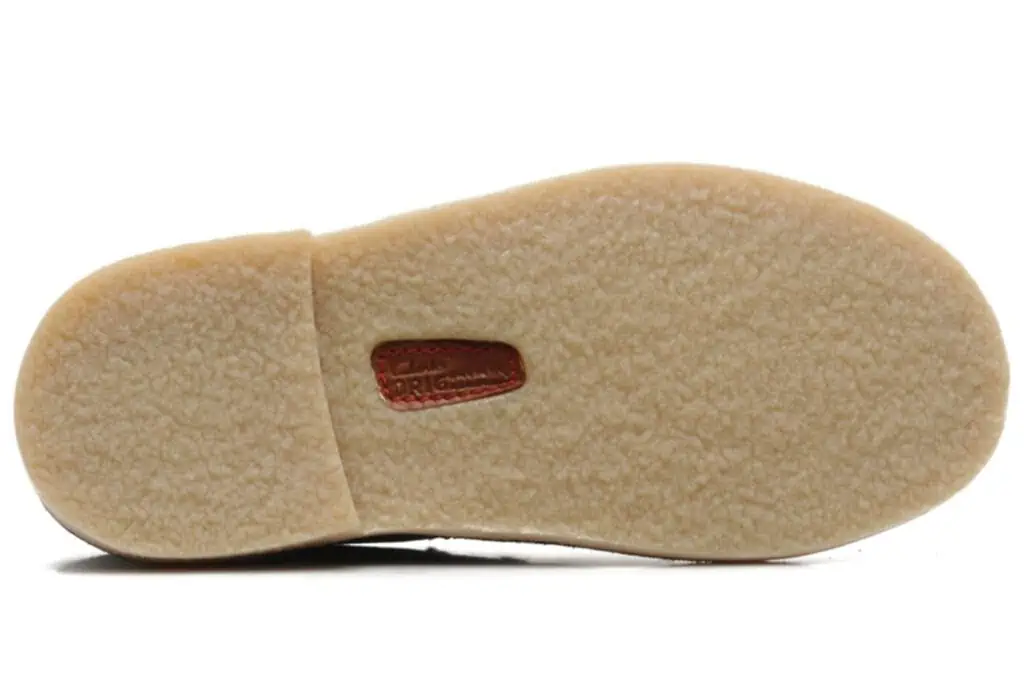
A sheet of natural crepe rubber.
Forget the complex science for a second. At its simplest, crepe rubber is a natural material made from organic latex (sap) tapped from the Pará rubber tree. This isn’t a synthetic, factory-made petroleum product. It’s a raw, minimally processed material.
The latex is coagulated, rolled into sheets, and dried, which gives it that signature sticky, porous, and crumpled texture. Because it’s so natural, it has a “springy” and “bouncy” quality that synthetic rubber just can’t match, making it a popular choice for chukka boots.
| Property | Description |
|---|---|
| Texture | Crumpled, porous, and slightly “gummy” or “tacky” |
| Comfort | Excellent shock absorption; feels like a sneaker |
| Traction | Great on dry surfaces; very poor on wet/ice |
| Sustainability | Natural, biodegradable, and eco-friendly material |
| Aesthetic Appeal | Instantly adds a casual, classic, or high-end look |
History of the Crepe Sole for Boots
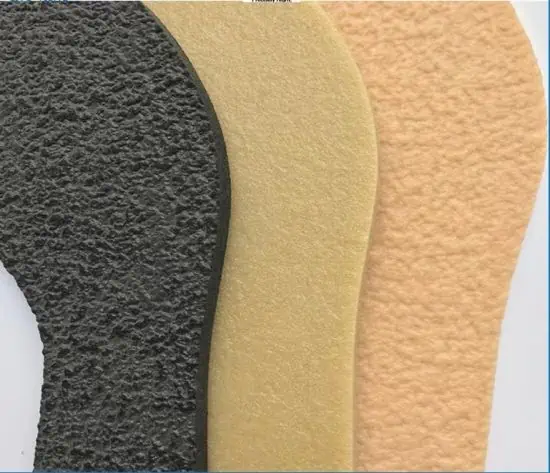
The iconic crepe sole of a desert boot.
The crepe sole’s story is the stuff of legend. It goes back to WWII, where a British infantryman named Nathan Clark (yes, *that* Clark) was stationed in Burma. He noticed that officers were commissioning custom-made suede boots from a bazaar in Cairo.
These boots were lightweight, flexible, and used a soft, crepe rubber sole that gripped the dry sand and rock. Clark took the idea back home, and in 1949, C. & J. Clark introduced the iconic Clarks Desert Boot. It became an instant classic, and the crepe sole has been a style staple ever since.
The Good (Crepe Sole Benefits)
I’ll be honest, the first time you put on a crepe sole boot, it feels amazing. Here’s why:
- 1. Insane Out-of-the-Box Comfort: This is their #1 benefit. There is zero break-in period. The sole is soft, flexible, and bouncy, acting as a natural shock absorber. It genuinely feels like wearing a sneaker, but with the sharp look of a leather boot.
- 2. Good Traction (in the Dry): On dry pavement, sand, or office carpet, the grip is fantastic. The naturally sticky rubber really holds on.
- 3. Sustainability: In a world of plastic and petroleum, crepe is a win for the environment. The sap tapping is harmless to the tree (it’s like tapping a maple for syrup), and the final product is biodegradable.
- 4. The Look: A crepe sole has a distinct, organic look that just screams classic. It can make a dressy boot look more casual or a casual boot look more refined.
The Bad & The Ugly (Crepe Sole Drawbacks)
Okay, here’s the brutally honest part. For all their comfort, crepe soles have some *serious* drawbacks. You need to know what you’re getting into.
-
- 1. They Are a DIRT MAGNET: This is the big one. That porous, gummy texture soaks up dirt, grime, oil, and anything else on the street. A brand new, beautiful tan sole can turn a nasty, dark grey in a matter of weeks.
- 2. They Have ZERO Wet Traction: This is a critical safety warning. That same soft rubber that grips so well in the dry becomes a slippery, dangerous mess on wet or icy surfaces. I mean it—walking on wet tile or packed snow is like strapping on ice skates.
JOHN_Q_USER
- 3. They Wear Down FAST: Crepe is a soft material. If you’re a heavy walker or you drag your heels, you will wear through a crepe sole much, much faster than a hard rubber lug sole.
- 4. They Can “Melt”: Not literally, but they have a very low tolerance for high heat. Don’t leave them in a hot car, stand on fresh blacktop in August, or get too close to a campfire. The sole will get gummy, sticky, and can even deform.
- 5. No Arch Support: All that soft bounciness comes at a price. Crepe soles are flat and offer almost no arch support. If you have flat feet or plantar fasciitis, you will find them very uncomfortable for long-term standing.
3 Iconic Crepe Sole Boots
1. Clarks Desert Boots
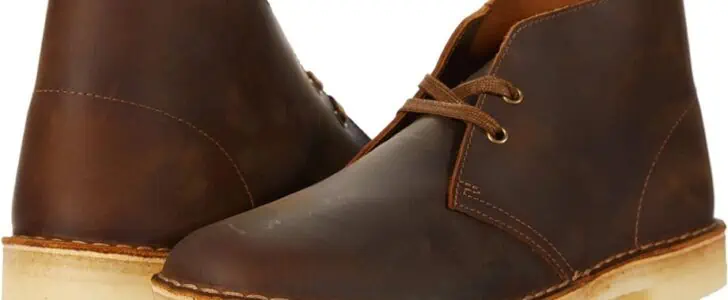
The original and still the icon: Clarks Desert Boots.
This is the legend, the original, the one that started it all. The Clarks Desert Boot is timeless. Whether you get it in quality leather or suede, it’s the gold standard for a “smart-casual” look. It’s best suited for casual office wear, weekend outings, and any dry-weather event where you want to look sharp and feel comfortable.
2. Grenson Oscar Suede Desert Boots
If you want to take the desert boot concept up a few levels, you look at a brand like Grenson. The Oscar is a masterpiece in craftsmanship. The key feature here is the Goodyear Welt, which means a cobbler can *easily* replace the sole. This directly solves one of the crepe sole’s biggest drawbacks (durability), allowing you to resole the boot for years to come—for a price.

- Our legendary Desert Boot returns in a new and ultra-versatile finish for easy wear this season and the next
3. Common Projects Chelsea Boot
This is where crepe crosses over into high-fashion. The Common Projects Chelsea Boot is a minimalist, luxury icon. The crepe sole here adds an earthy, organic contrast to the ultra-clean, laceless upper. It’s the epitome of versatility—you can wear it with jeans or a suit. It’s the perfect example of how a crepe sole can elevate a design to a new level of style.
The Guru’s Final Verdict: Who Should Buy Crepe Soles?
So, after all that, what’s my final take? Crepe sole boots are a unique blend of comfort and style, but they are absolutely *not* for everyone.
You SHOULD buy a crepe sole boot if:
- You prioritize out-of-the-box comfort over everything.
- You want a stylish boot for the office, date nights, or casual weekends.
- You live in a mostly dry climate.
- You understand this is a “light-duty” boot, not a workhorse.
You should AVOID a crepe sole boot if:
- You need a durable, all-weather boot.
- You work on your feet all day and need serious arch support.
- You can’t stand your footwear looking dirty.
- You live in a place with a real winter (snow and ice).
My advice? Treat a crepe sole boot like a high-end sneaker, not a rugged work boot. Understand its weaknesses, play to its strengths, and you’ll absolutely love it.
Frequently Asked Questions
What are crepe sole boots made from?
They’re made from natural crepe rubber, which is a raw latex (sap) tapped from the Pará rubber tree. It’s a natural, biodegradable, and eco-friendly material.
Are crepe soles comfortable for the feet?
They are extremely comfortable. The material is naturally soft, bouncy, and flexible, providing excellent shock absorption. It’s their number one benefit. However, they are flat and offer almost no arch support, which can be a problem for some people.
Do crepe soles provide good traction?
This is a “yes and no” answer.
- YES: On dry surfaces like pavement, sand, and carpet, their grip is excellent.
- NO: On wet or icy surfaces, they are dangerously slippery. I do not recommend them for rain or snow.
Are crepe soles durable?
No. This is their biggest weakness. Because the rubber is so soft, it wears down much faster than a standard hard rubber sole, especially if you walk a lot on rough pavement. They also get very dirty, very fast.
Are crepe sole boots suitable for heavy-duty work?
Absolutely not. They lack the durability, support, and all-weather traction needed for a real work environment. They are a casual/style boot, not a work boot.