Your work boots are a serious investment—they’re your comfort, your protection, and honestly, a badge of honor for the miles you put in. But whether you’re constantly slogging through mud and muck or just dealing with concrete dust that sucks the life out of the leather, proper work boot maintenance is non-negotiable.
Cleaning your boots isn’t just about making them look pretty; it’s proactive care that keeps the materials strong, prevents structural breakdown, maintains crucial safety features like sole grip, and extends the lifespan of that pricey investment for years.
Here’s the straightforward, no-fluff guide on how to clean work boots the right way, drawing on real-world tests and job site experience.
Honesty First: The Wall of Shame (What Not to Do)
what not to do
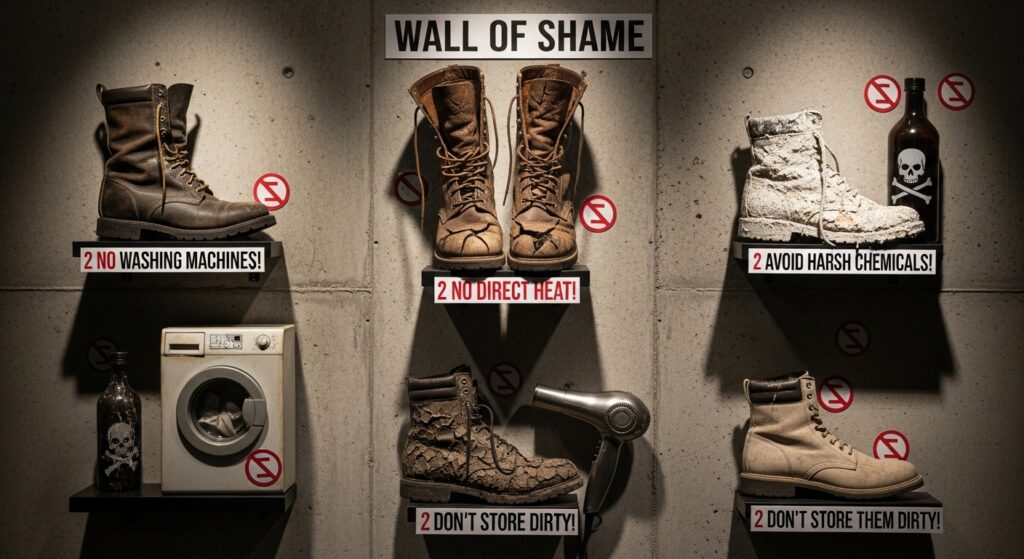
Before we start cleaning, let’s talk about the fastest ways to kill your boots. Avoid these common mistakes if you want your footwear to last:
- ❌ No Washing Machines: Unless you have super cheap synthetic boots, the washer will ruin the structure, damage adhesives, and cause leather to shrink. The weight of soaked boots can even dent your machine.
- ❌ No Direct Heat: This is critical. learning how to dry work boots safely means never putting them on a radiator, near a fireplace, or using a hairdryer. Excessive heat cracks leather and melts adhesive bonds.
- ❌ Avoid Harsh Chemicals: Skip the bleach and heavy laundry detergents. These strip the natural oils and waterproofing right out of your leather, leading to instant cracking.
- ❌ Don’t Store Them Dirty: Concrete dust is particularly bad because it draws moisture out of the leather, drying it until it splits. Mud does the opposite—it traps moisture in, causing rot.
Your Essential Work Boot Toolkit
your essential work boot toolkit
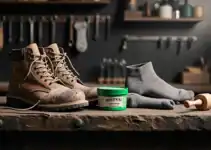
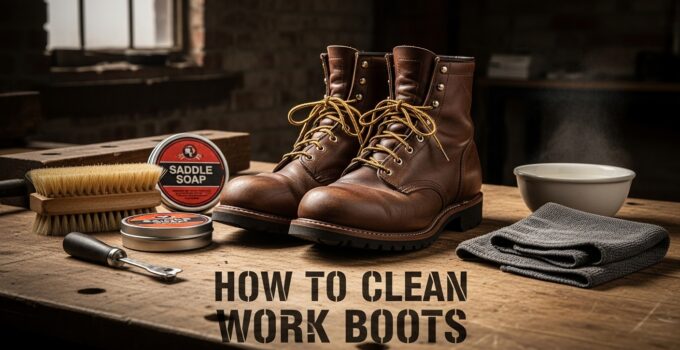
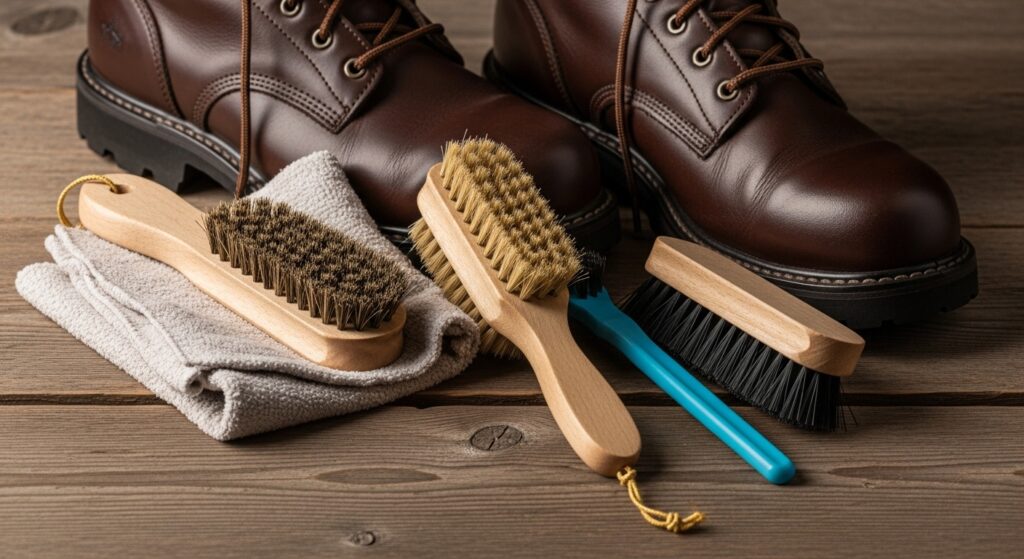
You don’t need a fancy arsenal to maintain waterproof work boots; simple is best.
- Brushes: A horsehair brush for general cleaning and a stiff nylon brush for the soles. (An old toothbrush works wonders for the welt/seams).
- Cleaner: Saddle Soap is the gold standard (cleans and lubricates). In a pinch, mild dish soap (like Dawn) works, but you must condition afterward.
- Conditioner: Essential to restore dried leather. (See our specific recommendations table below).
- Odor Fix: White vinegar and baking soda.
How to Clean Work Boots (Step-by-Step Guide)
how to clean work boots step by step
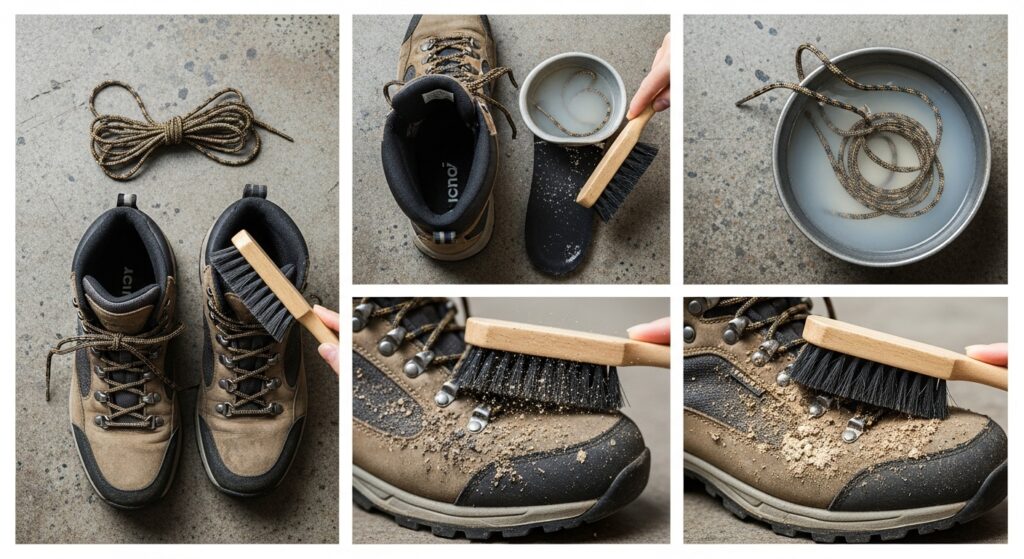
The cleaning method changes drastically based on what your boots are made of. Follow these steps to avoid damaging the material.
Step 1: Strip Down and Dry Scrape
Remove Components: Take out the laces and the insoles. These harbor moisture and bacteria, so clean them separately. You can throw your laces in a bowl of warm, soapy water.
Dry Brush First: Before adding any water, use a stiff brush to scrape off loose mud and dirt. Crucial Tip: If you scrub wet dirt, you just push the grit deeper into the leather pores.
Cleaning Full-Grain Leather Boots
This is the most common material. It is tough, but needs regular hydration. Here is how to clean leather work boots properly:
- Apply Cleaner: Create a lather with saddle soap and a damp brush (or cloth).
- Scrub: Work in circular motions to lift the grime.
- Rinse: Wipe off the dirty lather with a clean, damp cloth. Do not soak the leather.
Cleaning Suede and Nubuck Work Boots
These are sanded leathers (think Timberland Wheat boots), and water is the enemy.
- Dry Scrub Only: Use a specialized suede brush or “Suede Eraser” block.
- Tackle Stains: If you have a grease spot, sprinkle cornstarch on it and let it sit overnight to absorb the oil.
- Vinegar Trick: For salt stains, lightly dab a cloth with white vinegar.
How to Clean the Soles
Don’t forget the bottoms! Mud-packed treads lose their slip resistance.
- Action: Use a stiff nylon brush and hot soapy water to scrub the grooves.
- Pro Tip: If you stepped in oil or grease, use undiluted dish soap on the sole to cut through the slickness.
How to Remove Odor From Work Boots
how to remove odor from work boots
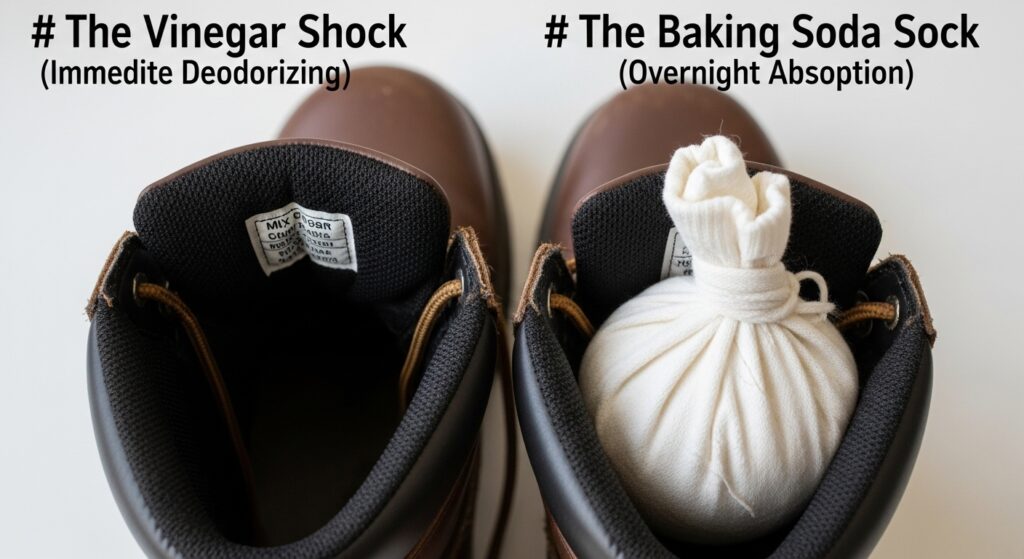
Let’s be honest, your feet sweat—up to a pint of moisture daily. That warm, damp environment breeds Brevibacteria. If you need to know how to clean smelly work boots, follow this triage protocol:
- The Vinegar Shock: Mix white vinegar and water (50/50) in a spray bottle. Mist the inside of your boots. The acid kills fungus and bacteria on contact. (The vinegar smell vanishes when dry).
- The Baking Soda Sock: Don’t dump powder directly in (it creates a paste with sweat). Instead, fill an old sock with baking soda, tie it off, and stuff it in the boot overnight.
- Insole Replacement: The #1 cause of odor is the old insole. If you can’t get the smell out, spend $15 on a new pair.
⚠️ Myth Buster: Putting boots in the freezer does not kill bacteria; it just makes them dormant. The smell will return the second they warm up.
The Finishing Move: Conditioning and Waterproofing
Washing strips natural oils. Knowing how to condition work boots correctly puts those oils back, restoring flexibility and preventing cracking.
Best Conditioners for Work Boots
Not all oils are created equal. Use this table to find the right match for your job.
| Type | Best For… | Example Products |
|---|---|---|
| Light | Doesn’t darken leather. Good for dressier boots or lighter colors (Wheat). | Bick 4 |
| Medium | Most boots. Deep conditioning with a slight shine. | Venetian Leather Balm |
| Heavy | Waterproofing & Mud work. Will darken leather significantly but offers max protection. | Obenauf’s Heavy Duty LP |
Application Tip: Once the boots are 100% dry, apply the conditioner with your fingers (body heat helps melt the wax into the pores). Let it sit for 15 minutes, then buff off the excess with a clean rag.
Boot Care Pro Tips
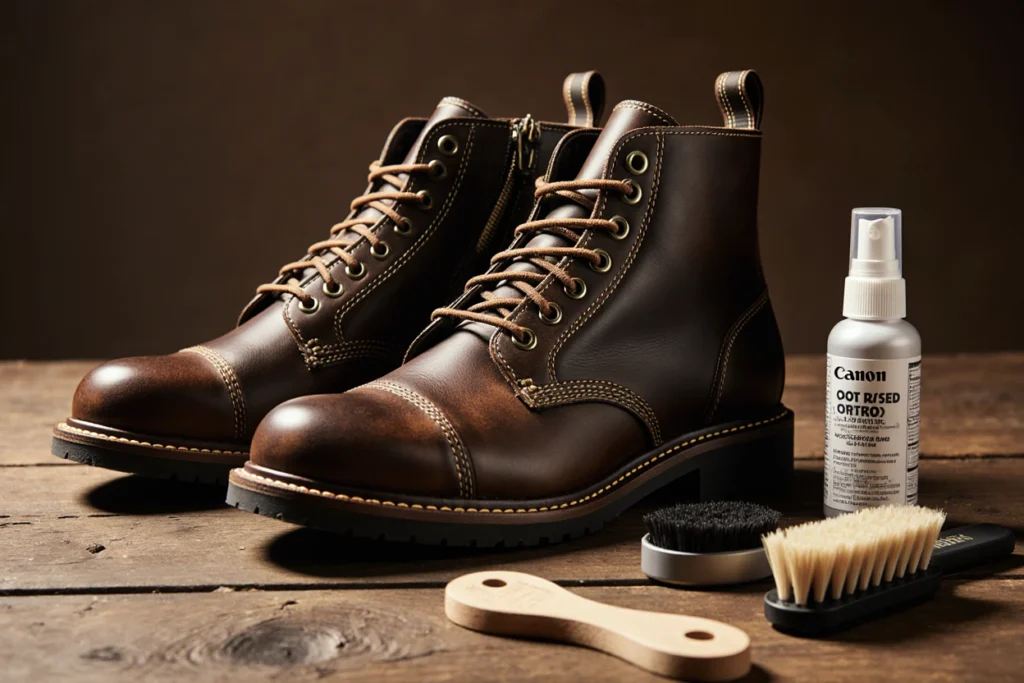
boot care pro tips
- Rotate Your Boots: This is the single most important tip. Alternating between two pairs gives each pair 24 hours to dry out, preventing the “rot” that kills boots from the inside.
- Use Boot Dryers: Invest in a Peet Dryer. It uses gentle thermal convection (warm air rises) to dry boots silently and safely.
- Wear Wool Socks: Cotton socks hold sweat like a sponge. Merino wool socks wick moisture away, keeping the inside of your boot drier and less smelly.
Final Thought
Cleaning your boots takes 20 minutes. Replacing them costs $200+. Do the math, grab a brush, and take care of the gear that takes care of you.