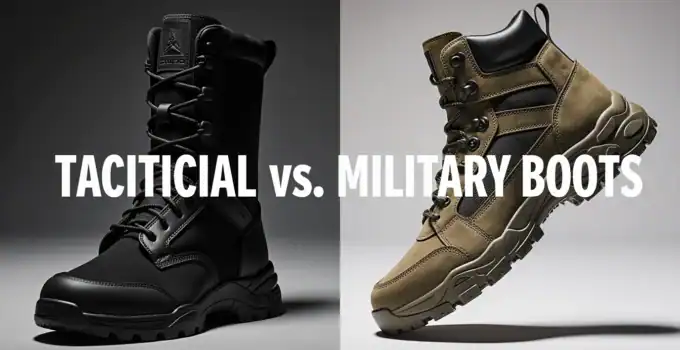
Hey Bootsguru community! I get this question all the time, both online and from guys I work with: “What’s the real difference between tactical vs military boots, and does it actually matter for your mission?”. It’s a fair question because honestly, marketing departments love slapping the word “tactical” onto anything rugged, blurring the lines completely.
But let’s be straight: in the real world, these are two distinct types of combat footwear designed for two fundamentally different jobs. Choosing the wrong one can turn a mission or a long shift into a miserable slog.
As a serving member in the Armed Forces myself, I’ve put together this breakdown to cut through the noise and explain the core difference: you’re almost always trading weight for durability.
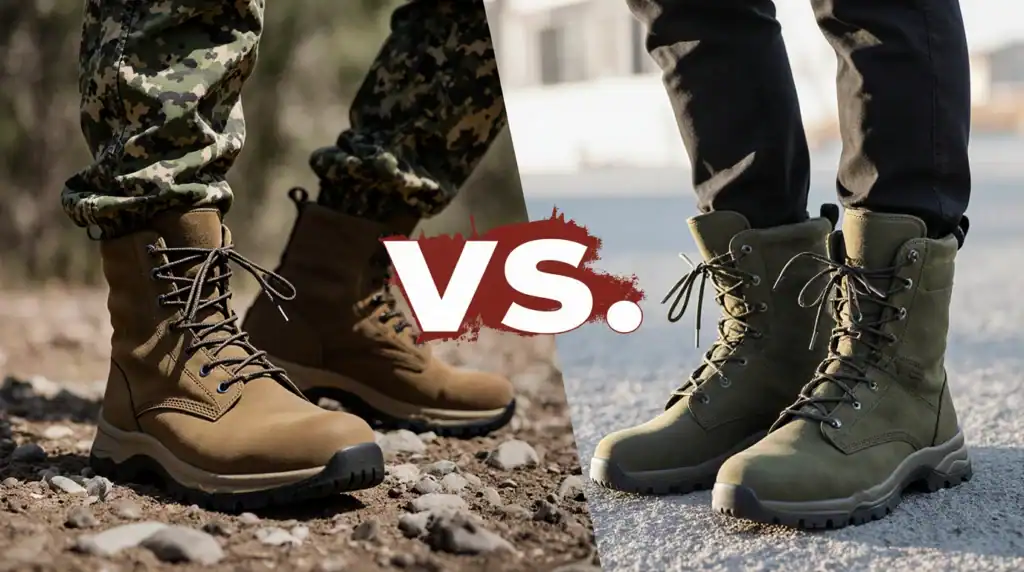
tactical or military boots
Key Takeaways at a Glance
| Key Point | Details |
|---|---|
| Core Trade-Off | Military boots = durability (700g+ per boot); Tactical boots = agility (500-600g per boot) |
| Mission Design | Combat boots built for marathons; tactical boots built for sprints. |
| Weight Difference | Military boots typically 40-50% heavier than tactical equivalents. |
| Break-In Time | Combat boots need weeks; tactical boots often comfortable immediately. |
Part 1: The Mission Difference—Two Tools for Two Jobs
The simplest way to understand the difference between military and tactical footwear is to look at the primary mission each boot was engineered to accomplish.
Military & Combat Boots: Built for the Grind (Marathons)
A true military or combat boot is built with maximum durability in mind. These field boots are designed to survive months or years of intense use, often while the wearer is carrying heavy packs over unpredictable terrain.
- Primary Focus: Durability, protection, and long-term field stability.
- Weight Check: They are generally heavier, typically weighing 700g or more per boot (1400-1800g per pair). This extra weight comes from reinforced features and serious ankle protection.
- Protection First: They prioritize protection against impacts and hazards with features like reinforced toe caps and shanks.
- Regulations: Army boots are often required to comply with strict regulations, such as the U.S. Army’s AR 670-1.
- Materials: They’re usually made from robust materials like full-grain leather and thick nylon.
Tactical Boots: Built for Speed and Agility (Sprints)
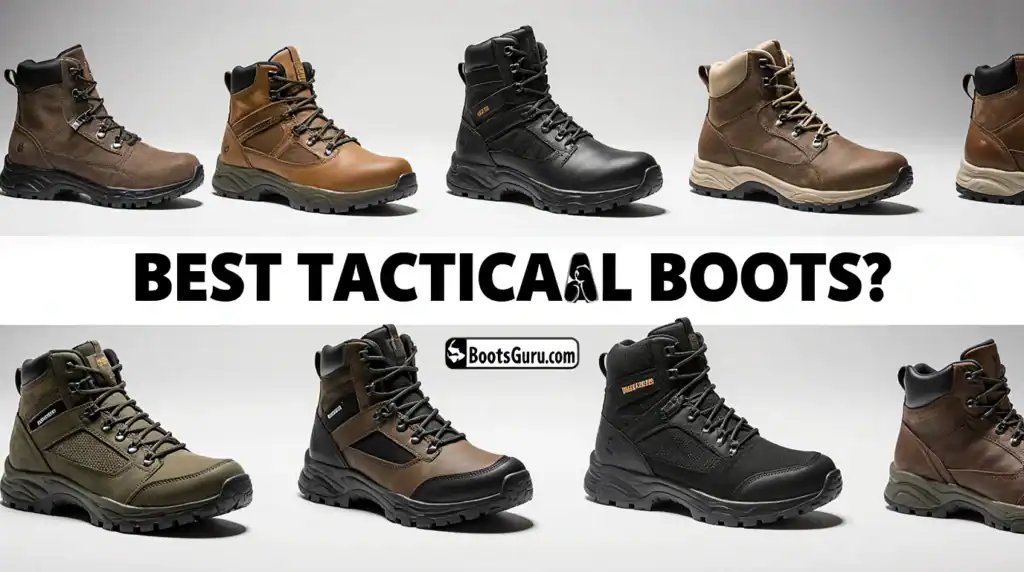
best tactical boots
Tactical boots are a more modern, specialized piece of gear. Think athletic footwear made durable enough for quick reactions, patrol work, and agility. They’re the footwear of choice for law enforcement, security personnel, and first responders.
- Primary Focus: Agility, speed, flexibility, and enhanced comfort for prolonged wear.
- Weight Check: They’re noticeably lighter, often weighing between 500g and 600g per boot (1000-1200g per pair).
- Flexibility: Police tactical boots feature more flexible materials and softer midsoles, allowing for a wider range of motion.
- Comfort: They focus heavily on comfort, often featuring cushioned soles and breathable materials to reduce fatigue during long hours of standing or walking.
Part 2: Head-to-Head Feature Breakdown
When you look at the construction side-by-side, the different design priorities become crystal clear.
| Feature | Military/Combat Boot (The Defender) | Tactical Boot (The Quick Responder) |
|---|---|---|
| Primary Mission | Long-term field durability, rucking, combat operations. | Quick response, urban patrol, training, agility. |
| Typical Weight | Heavier (700g+ per boot / 1400-1800g per pair). | Lightweight (500g–600g per boot / 1000-1200g per pair). |
| Key Materials | Full-grain leather, robust nylon. | Synthetic leather, breathable mesh, Cordura. |
| Flexibility | Generally stiffer, prioritizing support. | More flexible, built for natural foot movement. |
| Ankle Support | Stiffer, higher cut, focusing on injury prevention. | More flexible and athletic, often through padded collars. |
| Outsole Design | Deep, aggressive lugs for mud/rough terrain. | Multi-directional tread for grip on pavement and trails. |
| Break-In Period | Usually requires a longer break-in (2-4 weeks). | Often comfortable out of the box. |
Part 3: The Honesty Check—Which Boot Is Right for You?
Forget the labels for a second. The right choice depends entirely on what you’re doing 90% of the time.
I learned this the hard way during urban warfare training. I wore my issued combat boots for a rapid-entry drill. By the third story of stairs, my legs were burning from the extra weight. I switched to lighter duty boots for subsequent drills—it was a night and day difference in speed and fatigue. But when we went back to field exercises with full rucks? Those heavy combat boots saved my ankles on uneven ground.
You Need a Military/Combat Boot If…
- You need maximum protection. If you’re working in a high-risk environment where sharp objects, heavy impacts, or extreme terrain are constant threats, combat boots provide the superior protection you need.
- You’re carrying heavy loads. The robust construction and stiffer ankle support are crucial for stability and safety when rucking or carrying significant weight over long distances.
- You require regulation compliance. If you’re active-duty military, compliance with standards like AR 670-1 often dictates the required 8-inch height and materials.
- You prioritize long-term durability. High-quality combat boots are built to last longer and may even offer recrafting services, making them a solid long-term choice.
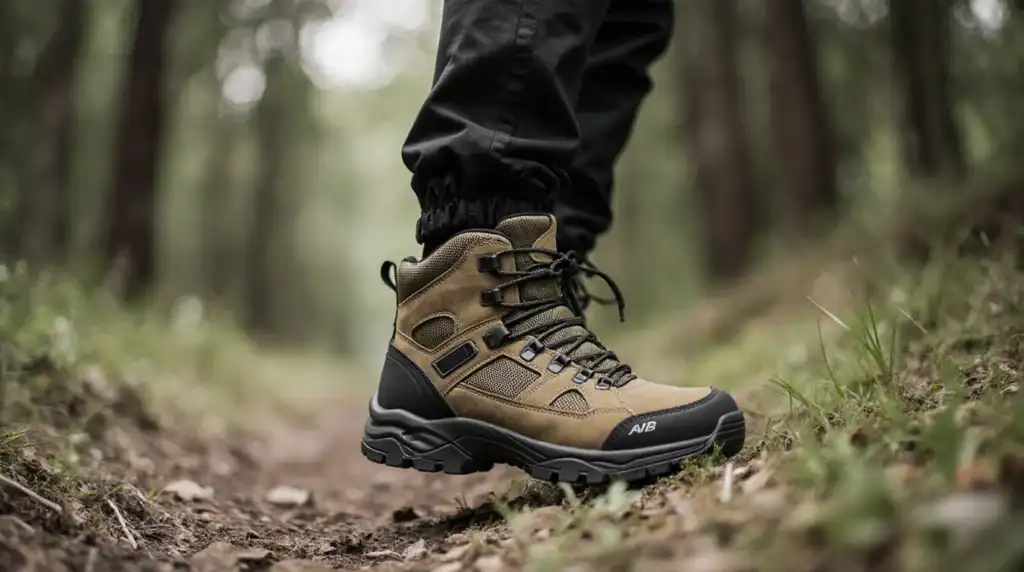
tactical boot
You Need a Tactical Boot If…
- Agility is critical. If your job or hobby involves quick, short movements (like law enforcement or first response), the lightweight design of a tactical boot saves energy.
- You spend long hours on hard surfaces. Tactical boots are designed with cushioning that works well for long periods of standing or patrol on concrete and urban terrain.
- You prioritize quick on/off. Many tactical boots come with convenient features like side zippers, which are a huge advantage when seconds count.
- You need versatility for outdoor hobbies. Tactical boots are versatile enough for hiking, hunting, and casual wear due to their lightweight design and comfort.
The Weight Reality: What 300 Grams Actually Means
Here’s something most people don’t realize: a 300-gram difference per boot (600g per pair) might not sound like much, but over the course of a 12-hour shift or a 10-mile march, you’re lifting thousands of extra pounds.
Do the math: If you take 2,000 steps per mile, that’s 20,000 steps over 10 miles. With an extra 600g on your feet, you’re lifting an additional 12,000 kg (over 26,000 pounds) total. That’s the equivalent of lifting a small car with your legs throughout the day.
That’s why tactical boots feel so much less fatiguing for patrol work and why military boots are worth their weight when you need that protection and stability.
Final Verdict: Match the Tool to the Job
The lines might keep blurring, but the core design philosophies remain separate.
- Military/Combat boots are built for marathons; they’re designed to endure. They prioritize support and rugged construction to keep you protected across hostile environments.
- Tactical boots are built for sprints; they’re designed to perform. They prioritize agility, speed, and comfort to keep you moving comfortably during long shifts or quick-reaction scenarios.
Take a hard look at your primary use case, and choose the pair that truly serves that specific mission. That’s the only way you guarantee happy feet at the end of the day.
And honestly? If your work varies significantly, consider owning both. Use the right tool for the right job, and your feet will thank you.