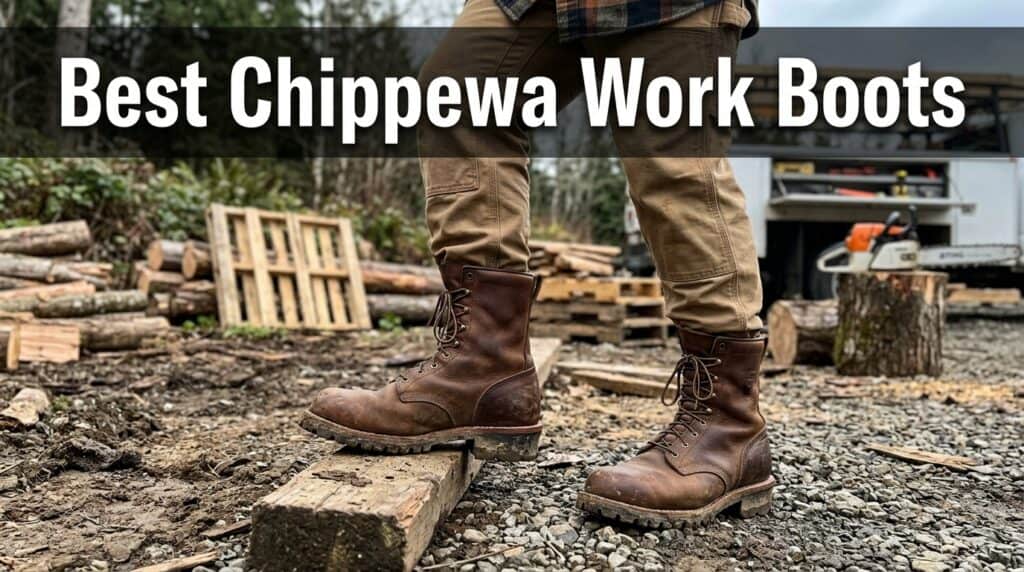

Chippewa has been building boots in Chippewa Falls, Wisconsin since 1901, and the name still carries weight on job sites where Timberland PRO and Ariat get more marketing spend. The problem is that almost every "best Chippewa" roundup online treats the brand as one undifferentiated product line, when in reality the Hador, Super Logger, Thunderstruck, and Edge Walker are built on different lasts, different constructions, and answer completely different jobs. Buy the wrong one and you end up either overpaying for logger-boot durability you don't need on a warehouse floor, or underprotected on ground the boot was never designed for.
There's also a question almost no article answers honestly: how much of a Chippewa boot is actually made in the USA. We're answering that directly below, along with which model fits which trade, and where the brand's narrow-fitting reputation actually comes from.
Quick Picks: Best Chippewa Work Boots 2026
| Best For | Model | Toe | Construction |
|---|---|---|---|
| Best overall / ankle support | 55025 Hador 8" | Steel | Goodyear welt |
| Best for extreme cold | Super Logger 9" | Steel | Goodyear welt |
| Best composite / non-metallic EH | Thunderstruck | Composite | Cement |
| Best for concrete / standing | Edge Walker 8" Wedge | Composite | Wedge / cement |
| Best lightweight / warm weather | Sador 6" | Composite | Cement |
| Best women's | 73050 Women's 8" Logger | Steel | Goodyear welt |
| Best pull-on / ranch | 20076 10" Pull-On EH | Steel | Cement |
Is Chippewa Actually Made in the USA? The Honest Answer
Chippewa markets its heritage hard, and the "handcrafted in the USA since 1901" line shows up on nearly every product page. It's not fiction, but it's not the whole picture either.
The core Logger and Super Logger models, built on Chippewa's original Chippewa Falls patterns, are still assembled domestically and are the boots that earned the brand its reputation. Chippewa is also a division of Justin Brands (the same parent company behind Justin Boots and Tony Lama), headquartered in Fort Worth, Texas, which has shifted a portion of the newer, lower-priced lines toward overseas component sourcing and assembly. That doesn't make those boots bad. It means the "handcrafted USA" claim applies most strongly to the traditional logger line, and less strongly to newer, budget-oriented models like some Classic 2.0 and cement-construction composite-toe boots.
If USA assembly specifically matters to you, the Hador, Super Logger, and Super DNA lines are the safest bet. If you're buying based on job requirements rather than country of origin, the distinction matters less.
Goodyear Welt vs. Cement: Why It Matters More on Chippewa Than Most Brands
Chippewa runs both construction types across its lineup, and the gap in long-term cost between them is bigger here than on most competing brands because the welted models are specifically built to be resoled by a cobbler.
Goodyear welt (Hador, Super Logger, Super DNA): the upper is stitched to a welt, not glued. When the outsole wears through, a cobbler replaces just the outsole for somewhere in the $70 to $100 range. The boot itself, upper and midsole, keeps going. This is also the construction responsible for the brand's famously long break-in period, since the stitched welt doesn't flex the way a cemented sole does until the leather softens.
Cement construction (Thunderstruck, Sador, Edge Walker, most pull-on models): the upper is bonded directly to the outsole. Lighter, flexible from day one, effectively no break-in. When the outsole wears out, the boot gets replaced, not repaired.
Neither is objectively better. A logger who wears one pair five days a week for years wants the welt. A warehouse worker who wants to walk in wearing them the same day wants the cement construction.
Quick Comparison: All 7 Chippewa Models
| Model | Height | Toe | Construction | Insulated | Best Trade |
|---|---|---|---|---|---|
| Hador 55025 | 8" | Steel | Welt | Yes | General construction, lineman, arborist |
| Super Logger | 9" | Steel | Welt | 400g | Logging, railway, extreme cold |
| Thunderstruck | 9" | Composite | Cement | No | Electrical, EH-required, detector sites |
| Edge Walker | 8" | Composite | Wedge | No | Concrete, warehouse, standing shifts |
| Sador | 6" | Composite | Cement | Light | Warm climate, mixed indoor/outdoor |
| 73050 Women's | 8" | Steel | Welt | 400g | Women in logging, ranch, cold-climate trades |
| 20076 Pull-On | 10" | Steel | Cement | No | Ranch, farm, fast on/off |
1. Best Overall: Chippewa 55025 Hador 8" Steel Toe
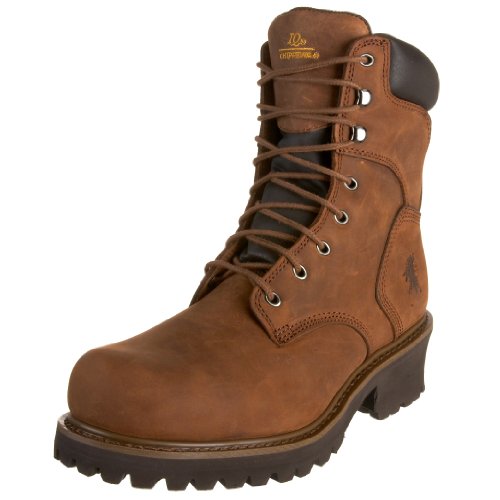
The Hador is the boot most people mean when they say "Chippewa work boot," and it earns that reputation with a combination most competitors don't match at the price: an ASTM F2413 steel toe, full electrical hazard protection, and a Goodyear welt that means this boot can be resoled instead of replaced. The Vibram Mount outsole runs deep, aggressive lugs that grip loose dirt and uneven ground better than the flatter tread on cement-construction competitors.

The 8-inch height and stiff leather collar give real ankle support on uneven ground, which is the boot's main selling point over a 6-inch alternative. That support comes with a genuine tradeoff: the leather is stiff out of the box, and the welted construction needs real break-in time before a full 10-hour shift is comfortable. Reviewers consistently describe the same arc: rough for the first one to two weeks, then a custom molded fit that lasts for years once the leather gives.
Chippewa Specs
Construction: Goodyear welt, resoleable | Toe: Steel, ASTM F2413
EH Rated: Yes | Waterproof: Yes | Outsole: Vibram Mount
Origin: Assembled in the USA (verify current listing)
Best for: General construction, lineman work, arborists, uneven terrain
Skip this boot if: you need to be comfortable on day one, or your job is mostly flat concrete. The stiffness and weight that make it good on rough ground work against you on a warehouse floor.
2. Best for Extreme Cold: Chippewa Super Logger 9"

Where the Hador is the general-purpose pick, the Super Logger is built specifically for standing outdoors in genuine cold. The 400 grams of 3M Thinsulate Ultra insulation is enough to keep feet functional in sustained sub-zero temperatures without the boot becoming a sweat trap during moderate activity, and the taller 9-inch shaft with a high heel is a real functional feature for linemen and arborists who use climbing spurs, not a styling choice.

The Vibram Tacoma Logger outsole is a step up in traction over the Hador's Mount sole on loose bark, wet logs, and soft ground, which is exactly the terrain this boot is designed to be on. The Dri-Lex lining manages moisture from the inside, which matters more than it sounds like it should once you're sweating inside an insulated boot on a working day.
Chippewa Specs
Construction: Goodyear welt, resoleable | Toe: Steel, ASTM F2413
Insulation: 400g 3M Thinsulate Ultra | Outsole: Vibram Tacoma Logger
Lining: Dri-Lex moisture management | Origin: Assembled in the USA (verify listing)
Best for: Logging, railway work, extreme cold, standing outdoors for long stretches
Skip this boot if: your work is mostly indoors or in a moderate climate. 400g of insulation in a warm environment means sweating through your socks by lunch.
3. Best Composite / Non-Metallic EH: Chippewa Thunderstruck

The Thunderstruck answers a specific need the Hador and Super Logger can't: a composite toe that passes metal detectors while still carrying the logger-boot styling and EH rating Chippewa is known for. The Ortholite Triple Density insole is a genuine upgrade over the basic orthotic footbeds in the welted line, and it shows up most on longer shifts where cushioning matters more than raw ankle support.

Being cement-constructed rather than welted, the Thunderstruck breaks in fast and doesn't require the multi-week softening period of the Hador. That flexibility trades off against long-term repairability: when the outsole wears through, this one gets replaced rather than resoled.
Chippewa Specs
Construction: Cement, not resoleable | Toe: Composite, non-metallic
EH Rated: Yes | Waterproof: Yes | Outsole: Vibram Thunderstruck
Insole: Ortholite Triple Density | Metal detectors: Passes
Best for: Electricians, utility workers, facilities with detector access control
Skip this boot if: you want a boot that can be resoled and kept for a decade. The Hador or Super Logger are the better long-term investment for that.
4. Best for Concrete and Standing: Chippewa Edge Walker 8" Wedge
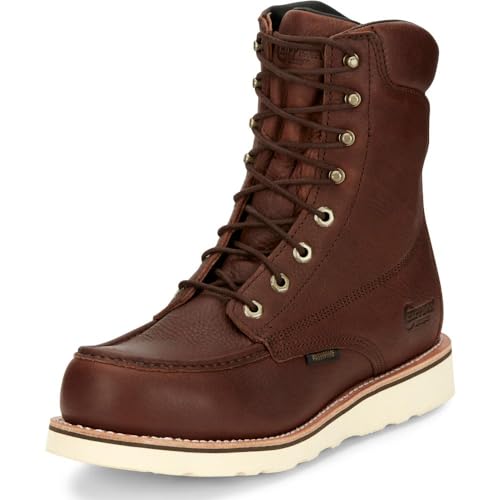
The Edge Walker trades the deep-lug logger tread for a wedge sole, and that single change makes it the right pick for anyone whose day is spent on flat concrete or warehouse floors rather than rough ground. A wedge distributes weight across a flat contact surface instead of concentrating it under lugs, which is a noticeable difference by hour eight of standing in one spot.

The moc toe design has more room across the forefoot than the Hador's traditional cap toe, and the Chip-A-Tex waterproof membrane keeps the composite-toe protection without adding the bulk of the welted line. It's a specialist boot, not a do-everything boot: the flat wedge sole that makes it comfortable on concrete is a liability the moment the ground turns to mud or loose gravel.
Chippewa Specs
Construction: Wedge, cement | Toe: Composite | Waterproof: Yes, Chip-A-Tex
Toe box: Roomy moc toe | Sole type: Full-contact wedge
Best for: Concrete finishers, warehouse workers, indoor trades, standing-heavy roles
Skip this boot if: your work includes mud, gravel, or steep uneven terrain. The wedge sole is worse than a lug outsole the moment the ground gets loose or wet dirt.
5. Best Lightweight / Warm Weather: Chippewa Sador 6"
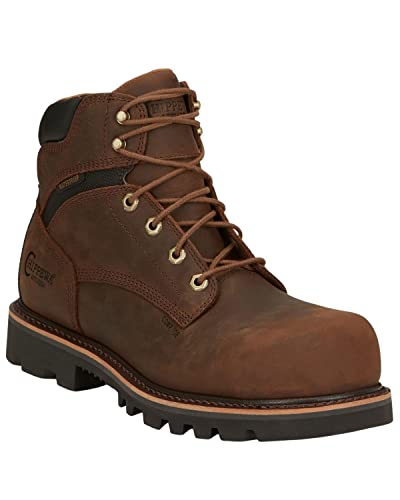
The Sador is Chippewa's answer for workers who find the Hador and Super Logger too heavy and too hot. The shorter 6-inch shaft and breathable mesh lining make a real difference in warm climates, and the composite toe keeps the weight down further compared to any of the steel-toe options in this lineup.

This is the lightest-duty boot in the roundup, and that's the point. It carries a light layer of Thinsulate for cool mornings without the bulk of a true winter boot, and the cement construction means zero break-in. Reviewers of Chippewa's lighter composite-toe boots consistently report they trade some multi-year durability for a boot that's actually comfortable to wear all day, every day, which is a fair trade for a lot of trades.
Chippewa Specs
Construction: Cement | Toe: Composite | Lining: Breathable mesh
Insulation: Light | Waterproof: Yes | Height: 6"
Best for: Warm climates, mixed indoor/outdoor work, all-day wear over multi-year durability
Skip this boot if: you need serious ankle support on rough ground, or you want a boot that lasts a decade with resoling. This one is built for comfort and shift length, not longevity.
6. Best Women's: Chippewa 73050 Women's 8" Steel Toe Logger
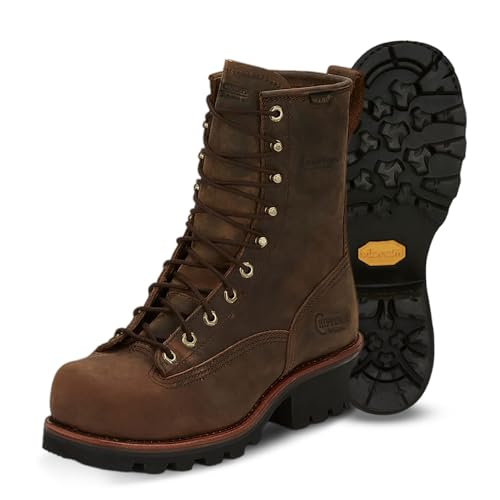
Chippewa builds the 73050 on a women's-specific last rather than scaling down a men's pattern, which shows up most in the heel cup and instep fit. It carries the same core spec sheet as the men's Hador and Super Logger line: steel toe, 400 grams of Thinsulate, Chip-A-Tex waterproofing, and a Goodyear welt that can be resoled.
For women working in logging, ranching, or any cold-climate outdoor trade, this is the direct equivalent of the men's Super Logger rather than a lighter, "downgraded" women's version, which is not always true across other brands' women's lines.
Chippewa Specs
Construction: Goodyear welt, resoleable | Toe: Steel, ASTM F2413
Insulation: 400g Thinsulate | Waterproof: Yes, Chip-A-Tex | Last: Women's-specific
Best for: Women in logging, ranch, and cold-climate outdoor trades
Skip this boot if: you need a lightweight option for warm-weather indoor work. This carries the same weight and break-in demands as the men's welted line.
7. Best Pull-On / Ranch: Chippewa 20076 10" Steel Toe EH Pull-On
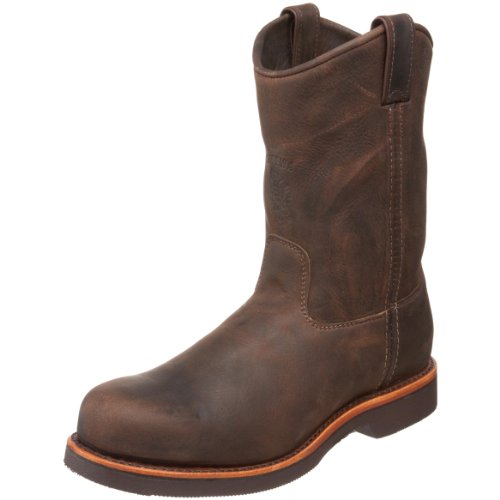
For ranch and farm work where boots go on and off constantly and speed matters more than lace precision, the 20076 delivers Chippewa's core protection, steel toe, EH rating, in a pull-on format with a tall 10-inch shaft that helps keep mud and debris out. The short shaft profile of the brand's lace-up loggers makes them a worse fit for this specific use case, which is exactly the gap this model fills.

The thick rubber sole and heavy tread hold up on farm terrain, though it's worth sizing carefully. Owner feedback on Chippewa's pull-on line consistently notes it runs slightly larger than expected, and unlike a lace-up boot, a pull-on gives you no way to tighten a loose fit after the fact.
Chippewa Specs
Construction: Cement | Toe: Steel, ASTM F2413 | EH Rated: Yes
Shaft: 10" pull-on | Sizing note: Runs slightly large per owner reports
Best for: Ranch, farm, fast on-off, repeated daily donning
Skip this boot if: you have a narrow heel. Pull-on boots without lacing give you no way to adjust volume, and Chippewa's pull-on line runs roomy.
Chippewa Sizing: The Narrow Fit Most Reviews Don't Mention
Chippewa's lace-up logger line runs closer to a traditional, narrower last than most modern work boots. Owners with wide feet consistently report needing to size up into the brand's E or EEE width options rather than assuming a standard D width will work, especially on the Hador and Super Logger. The Edge Walker's moc toe and the Sador's composite build both run with more forefoot room out of the box, so if you've had trouble with the narrow fit on a traditional Chippewa logger, either of those is worth trying before assuming you need a different brand entirely.
The pull-on line is the opposite problem: it tends to run a touch large rather than narrow, since there's no lacing to take up extra volume.
Boot Care for Chippewa Leather
The thick, oil-tanned leather on Chippewa's welted line needs conditioning to avoid drying and cracking, especially once the initial factory treatment wears off. Obenauf's Heavy Duty LP or a straight mink oil are the two most commonly recommended options among owners of the logger line, applied every few weeks under regular outdoor use. Never dry a wet Chippewa boot near direct heat. It will crack the leather and can damage the Chip-A-Tex membrane.
For the Goodyear-welted models, resoling through a local cobbler once the Vibram outsole wears through, rather than replacing the boot outright, is the entire point of paying the welt-construction premium in the first place.
Frequently Asked Questions
Are Chippewa boots made in the USA?
Partially. The traditional Logger and Super Logger lines are assembled in the USA and are the models the brand's American heritage claims are most accurate for. Chippewa is owned by Justin Brands, and some newer, lower-priced lines use overseas-sourced components. Verify the specific listing if USA assembly is a requirement for you.
Do Chippewa boots run narrow?
The traditional lace-up logger line does, and it's a common enough complaint that wide-footed buyers should look at the brand's E or EEE width options rather than ordering standard width and hoping. The Edge Walker and Sador run roomier in the forefoot than the Hador or Super Logger.
What's the difference between Chippewa Super Logger and Super DNA?
Both are 9-inch, steel toe, Goodyear welted logger boots with similar insulation and waterproofing. Super DNA is generally the newer branding on the same core logger construction philosophy. Check the current listing's specific outsole and insulation numbers, since Chippewa has used both names across overlapping product generations.
How long do Chippewa boots last?
The Goodyear welted models (Hador, Super Logger, Super DNA, the 73050 women's logger) are built to be resoled, and owners commonly report multiple years of service with one or two outsole replacements along the way. The cement-constructed models (Thunderstruck, Sador, Edge Walker, the pull-on line) are not resoleable and typically get replaced rather than repaired when the outsole wears through, generally in the one to two year range under daily heavy use.
Are Chippewa boots good for wide feet?
Yes, if you order the correct width. The standard lace-up logger line runs narrow in standard D width, but Chippewa offers E and EEE options on most of its steel toe logger models specifically to address this.
Chippewa vs Red Wing or Danner, which is better?
All three build Goodyear welted, resoleable boots with similarly premium leather. Chippewa's logger line has the tallest shaft and highest heel of the three, which matters specifically for climbing spurs and rough terrain. Red Wing and Danner tend to run slightly wider out of the box and have a shorter break-in reputation. If your work specifically involves logging, linework, or climbing, Chippewa's logger-specific geometry is the more purpose-built choice.
Final Verdict: The Right Chippewa for Your Trade
Trade → Boot Quick Reference
General construction, lineman, arborist: Hador 8", the most balanced logger boot in the line
Logging, railway, extreme outdoor cold: Super Logger 9", built specifically for standing in sustained cold
Electrical, EH required, metal detector sites: Thunderstruck, non-metallic composite toe
Concrete, warehouse, standing shifts: Edge Walker Wedge, flat-contact sole for hard floors
Warm climate, mixed duty: Sador 6", lightest boot in the lineup
Women in outdoor cold-climate trades: 73050 Women's 8" Logger, women's-specific last
Ranch and farm, fast on-off: 20076 Pull-On, tallest shaft for mud and debris
Chippewa isn't the boot for someone who wants immediate, sneaker-like comfort. It's the boot for someone whose job actually demands what a stiff leather welt and a deep-lug outsole are built to do, and who's willing to pay the break-in cost for a boot that can be resoled for years afterward. Match the model to your trade rather than just the brand name, and that investment pays off.