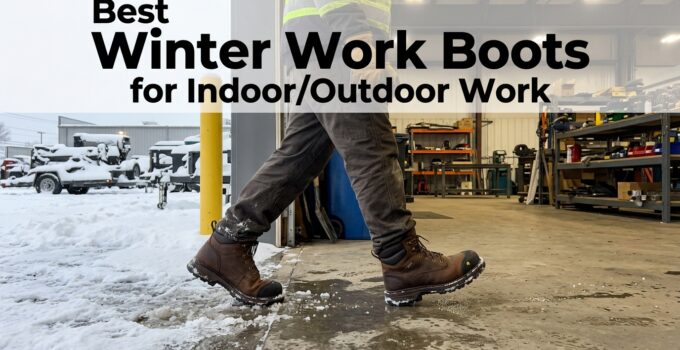
If you spend most of your shift in a heated warehouse, truck cab, or retail space and only step outside for deliveries, breaks, or quick outdoor tasks, heavy winter insulation can make your feet colder, not warmer. The problem is sweat. Once moisture builds up inside a heavily insulated boot, your feet cool rapidly when you step outside, often feeling colder than someone wearing a lighter, more breathable boot. This guide covers the best winter work boots for indoor/outdoor jobs, where light insulation, moisture-wicking liners, and breathable construction matter more than maximum warmth.
Why “Warmest” Isn’t What You Want
Insulation traps heat. If your environment is already warm, indoors, in a heated cab, that trapped heat has nowhere to go. Sweat accumulates inside the boot as a result. Moisture conducts heat away from your foot faster than dry air does, so when you finally step outside, wet feet cool rapidly, creating that “cold after being warm all day” feeling that heavily insulated boots are actually causing, not preventing.
| Insulation | Best For | Typical Use |
|---|---|---|
| 100g-200g | Mild cold, high indoor time | Delivery drivers, warehouse, retail, light outdoor work |
| 400g | Mixed indoor/outdoor, moderate activity | General winter work, light construction, maintenance |
| 600g-800g | Cold outdoor work, moderate activity | Construction, landscaping, outdoor utility work |
| 1000g-1200g | Extreme cold, low activity | Stationary outdoor work, extreme climates, ice fishing |
If you’re outside all day in sustained cold exposure, read our guide to the best winter work boots for extreme conditions instead. That guide covers heavy insulation, ice traction, and extreme-cold picks this one deliberately skips.
Who This Guide Is Actually For
This guide is for:
- Delivery drivers (UPS, FedEx, Amazon, food delivery)
- Warehouse and dock workers
- Retail and grocery workers
- Forklift operators
- Maintenance and HVAC technicians moving between buildings
- Anyone whose day alternates between heated indoor spaces and brief outdoor exposure
This guide is not for:
- Road crews and asphalt workers
- Outdoor construction in sustained cold
- Loggers, linemen, or utility workers outside all day
- Ice fishing, hunting stands, or stationary cold-weather work
If you’re a delivery driver specifically, our full delivery drivers guide covers the broader picture beyond just winter, traction, weight, and all-season options.
Best Light-Insulation Boot: Timberland PRO Resistor 200G
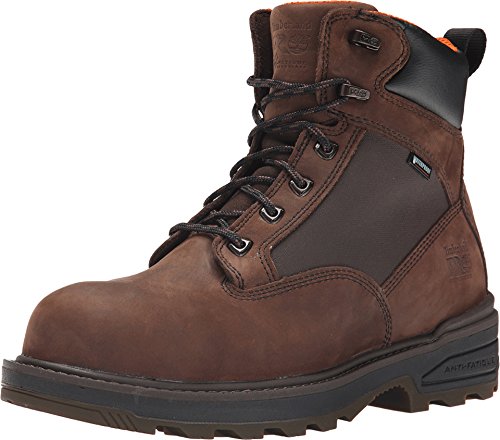
This is the genuine 100g-200g tier answer: 200 grams of insulation, a breathable mesh lining with antimicrobial treatment, and a composite toe built on Timberland’s TiTAN last for a roomier fit. It’s light enough that you won’t be sweating through an indoor shift, but it still takes the edge off brief cold exposure on a loading dock or a quick outdoor stop.

Seam-sealed waterproof leather keeps this genuinely functional in wet winter conditions, not just cold ones, and the dual-density anti-fatigue midsole holds up for a full shift of standing or walking.
Not the right fit if: you have real sustained outdoor exposure, not just brief stops. Step up to the 400g pick below or our full winter guide for that use case.
Pros: Genuine 200g insulation without overheating indoors, breathable mesh lining, composite toe, seam-sealed waterproofing.
Cons: Not warm enough for extended outdoor exposure in genuinely cold conditions.
Check price and available sizes on Amazon
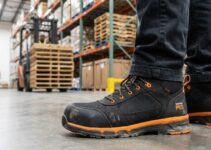
Best 400G for Mixed Exposure: Timberland PRO Boondock 6″
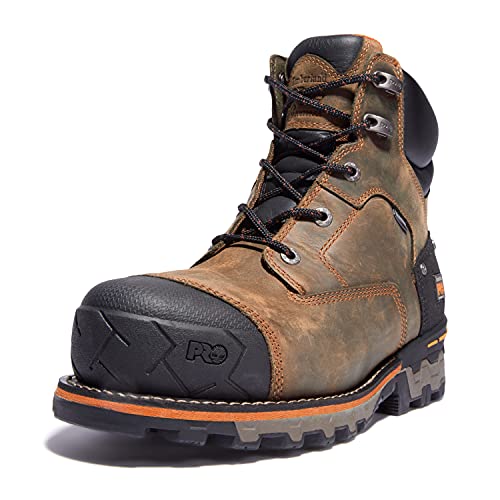
If your outdoor stretches run longer than a quick dock trip, cold delivery routes, extended forklift work near a bay door, this 400g version of the Boondock gives you meaningfully more warmth than the Resistor above while staying in genuinely breathable territory. The moisture-wicking ReBOTL lining is built from recycled material and does real work managing sweat, not just marketing copy.

Composite toe and EH rating carry over from the rest of the Boondock line, and the Anti-Fatigue footbed holds up whether you’re standing at a station or walking a route.
Not the right fit if: you’re almost entirely indoors. The Resistor 200G above is the better match for high indoor time with only brief cold exposure.
Pros: Genuine 400g insulation with breathable moisture-wicking lining, composite toe, EH rated, waterproof.
Cons: More insulation than needed for workers who are indoors most of the day.
Check price and available sizes on Amazon
Best Non-Insulated Option (Pair with Wool Socks): CAT Second Shift Steel Toe
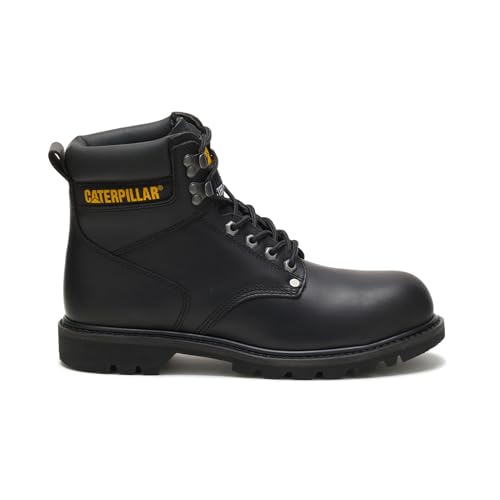
For very mild climates or workers who are almost entirely indoors with only the briefest outdoor exposure, non-insulated with the right socks is a legitimate strategy, not a compromise. The Second Shift carries a genuine steel toe, a Climasphere breathable insole, and a nylon mesh lining built for airflow rather than warmth retention.

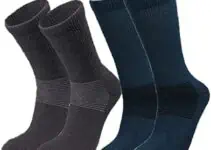
Pair this with a heavyweight wool sock on colder days and you get adjustable warmth without ever risking the overheat-then-sweat cycle a fixed heavy insulation boot creates.
Not the right fit if: you get any real sustained cold exposure. This boot has zero insulation, wool socks only go so far.
Pros: Genuine steel toe, excellent breathability, Goodyear welt durability, adjustable warmth via sock choice.
Cons: No insulation at all, not suitable for real outdoor cold exposure without heavy sock compensation.
Check price and available sizes on Amazon
Best Lightweight Athletic Alternative: New Balance Allsite Composite Toe
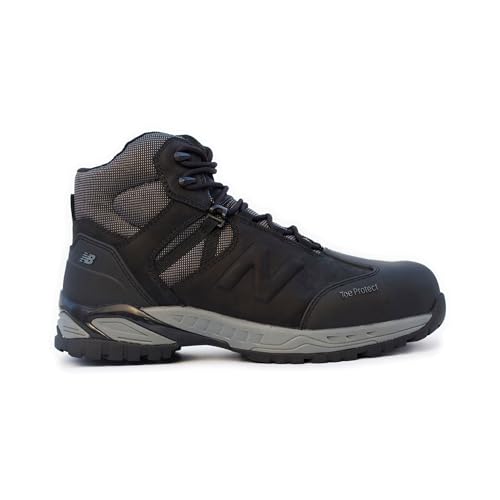
The same non-insulated-plus-socks strategy as the CAT pick above, in a lighter, more athletic package. Built on New Balance’s running shoe heritage, this is the pick if all-day comfort and reduced leg fatigue matter more to you than a traditional boot silhouette.

Not the right fit if: you need ankle coverage or any real cold-weather insulation. This is a lightweight indoor-first shoe, not a winter boot.
Pros: Genuinely lightweight, certified composite toe, athletic comfort tech, adjustable warmth via sock choice.
Cons: No insulation, no ankle protection, not built for real outdoor cold exposure.
Check price and available sizes on Amazon
Buying Guide
Moisture-Wicking Lining Matters More Than Insulation Grams
A boot with a wool-blend or performance textile lining manages sweat better than a fully sealed waterproof liner, even at a similar insulation weight. For indoor/outdoor work specifically, the lining doing the moisture management matters as much as the insulation number on the box.
Breathable Membrane vs. Fully Sealed Construction
Breathable membranes, Gore-Tex, KEEN.DRY, Timberland PRO’s waterproof-breathable construction, let some vapor escape while still keeping water out. Fully sealed rubber or PVC boots keep water out completely but trap sweat with nowhere to go. For this specific use case, a breathable waterproof boot generally beats a fully sealed rubber boot, even though rubber wins on raw waterproofing.
A Note on Removable Liners
A safety-toe boot with a genuinely removable, adjustable liner would be an ideal fit for this exact problem, and it’s worth knowing that combination is genuinely rare in certified work footwear. Removable-liner systems show up far more often in non-certified pac boots and hunting boots than in ASTM-rated safety boots. The practical answer for most indoor/outdoor workers is the tiered approach in this guide instead: match insulation weight to your actual exposure time, or run a non-insulated boot with sock changes for flexibility.
Toe Type Note
Composite toe conducts less heat and cold than steel toe, which can matter for workers who step outside frequently. If your job requires steel toe specifically, a boot with a breathable lining and the right sock weight can help offset the temperature transfer. Our steel toe vs. composite toe guide covers the full comparison.
Frequently Asked Questions
Why do my feet get cold after being warm all day in insulated boots?
Because sweat accumulates inside the boot when you’re in a heated environment. Moisture conducts heat away from your feet much faster than dry air. When you step outside, that trapped moisture cools rapidly, making your feet feel colder than if you had worn a lighter, more breathable boot.
What insulation weight is right for a job that’s half indoor, half outdoor?
For most indoor/outdoor jobs, 100g-200g insulation is sufficient if you’re moving regularly. If you’re stationary for long periods or work in very cold climates, 400g may be better. Avoid 600g or higher unless you’re outside most of the day.
Are removable liners worth it for winter work boots?
Yes, if your job involves large temperature swings and you can find one, though genuine removable-liner systems in certified safety-toe boots are uncommon. If your workplace requires safety certification, verify that the boot still meets that requirement with any liner removed before relying on it.
Do delivery drivers need insulated boots?
It depends on climate and exposure time. In mild winter climates or for drivers who spend most of their time in a heated vehicle, 100g-200g insulation or a non-insulated boot with heavy wool socks is often sufficient. In very cold climates or for drivers making frequent outdoor stops, 400g insulation with a breathable waterproof membrane is a better choice.
Can I wear my summer work boots in winter with thick socks?
For short outdoor exposure and mild climates, yes. For sustained cold or wet conditions, a dedicated winter boot with appropriate insulation and waterproofing is safer and more comfortable.
Bottom Line
The right winter work boot for indoor/outdoor jobs is not the warmest boot on the shelf. It’s the boot that keeps your feet dry and comfortably warm without trapping sweat. For most delivery drivers, warehouse workers, and maintenance techs, the Timberland PRO Resistor 200G is the best balance of light insulation and breathability. If your outdoor stretches run longer, step up to the Boondock 400G. And if you’re almost entirely indoors, the CAT Second Shift or New Balance Allsite paired with the right socks covers you without ever risking the sweat-then-cold cycle. If you’re outside all day in sustained cold, read our guide to the best winter work boots for extreme conditions instead.