Nurses walk an average of 4–6 miles during a 12-hour shift — and most of that is on unforgiving hospital concrete or polished tile. By hour 9, your feet don’t just hurt. They affect your focus, your reaction time, and your patience with patients who deserve better than a nurse who can barely walk to their room. The right boot doesn’t just make the shift more comfortable. It protects your feet, your ankles, and your longevity in the profession.
Every “best shoes for nurses” guide on the internet covers clogs and sneakers. This guide is different. It covers work boots specifically — because a growing number of nurses prefer boots for the ankle support clogs can’t provide, the toe protection against stretcher wheels and equipment carts that sneakers won’t give you, and the sealed uppers that handle fluid exposure better than mesh.
All 10 picks are available on Amazon. Every profile includes nursing-specific experience signals, honest limitations, and a specialty match so you know exactly which boot fits your unit.
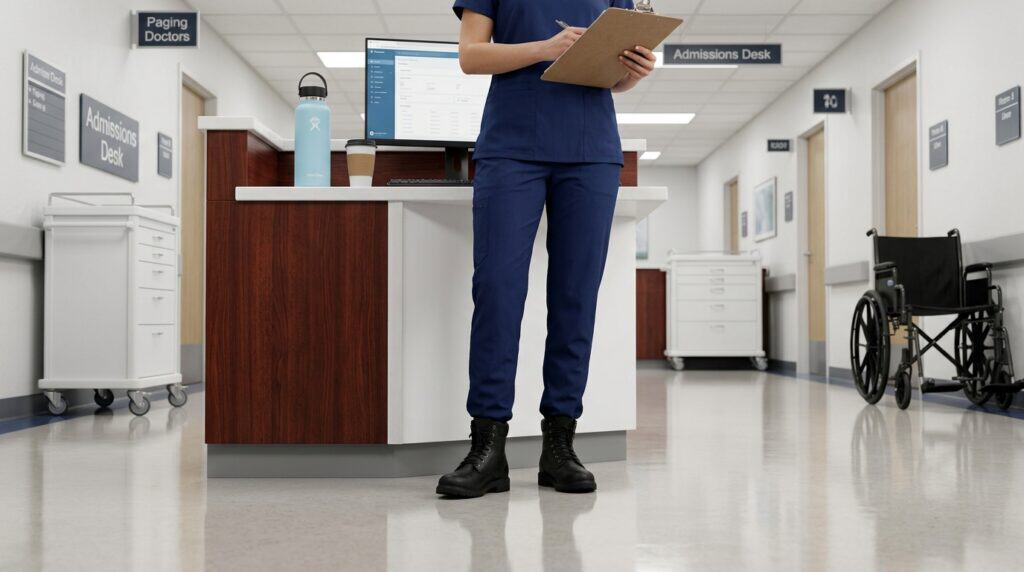
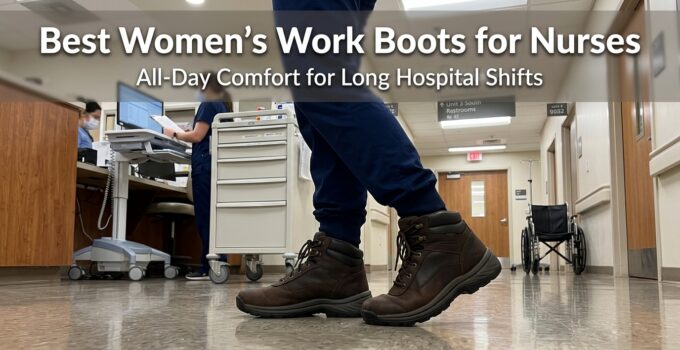
nurse wearing work boots hospital 202607272004
This guide is not for: nurses in sterile OR environments (hospital-issued footwear typically required) or facilities with strict approved footwear lists. If your hospital requires specific sneakers or clogs, see our Best Shoes for Nurses guide.
📊 Nursing Shift Reality Check:
• Average steps per 12-hour shift: 8,000–12,000
• Average distance walked per shift: 4–6 miles
• Most common nursing foot conditions: plantar fasciitis, bunions, flat feet, ankle instability
• Most common nursing foot injuries: stretcher wheel toe trauma, slip-and-fall on wet floors
• EVA midsole lifespan in daily nursing use: 6–8 months before meaningful compression
Best Work Boots for Nurses — Quick Picks by Situation
| Situation | Best Pick | Key Reason | Buy |
|---|---|---|---|
| Best overall (floor / med-surg) | Dansko Professional Lace-Up | Rocker sole + deep heel cup + all-day standing | Amazon |
| Best for plantar fasciitis / heel pain | HOKA Women’s Kaha 2 Low GTX | Max-cushion rocker midsole + GORE-TEX | Amazon |
| Best ankle support / active nursing | KEEN Utility Flint II Mid Steel Toe | True mid-cut + KEEN.ReGEN midsole + steel toe | Amazon |
| Best ER / trauma nursing | Skechers Work Sure Track Steel Toe | ASTM slip resistance + steel toe + memory foam | Amazon |
| Best EH-rated / composite toe | Reebok Nano X1 Adventure Comp Toe EH | Composite toe + EH rating + athletic comfort | Amazon |
| Best community / outdoor nursing | Merrell Women’s Moab 3 Mid WP | Waterproof + trail traction + mid-cut ankle support | Amazon |
| Best full safety rating / correctional nursing | Carhartt Women’s 6″ WP Composite Toe | ASTM F2413 + waterproof + high shaft coverage | Amazon |
| Best lightweight / value | CAT Women’s Venward Composite Toe | Lightweight composite toe + oil-resistant + professional look | Amazon |
| Best for wide feet / bunions | KEEN Utility Women’s Atlanta Cool Steel Toe | KEEN’s widest toe box + steel toe + standing comfort | Amazon |
| Best lightweight / transitional | Skechers Women’s D’Lites 3.0 Mid Boot | Sneaker comfort in boot form — easiest transition from clogs | Amazon |
Full Comparison: All 10 Nursing Boots at a Glance
| Boot | Toe Type | Slip Rating | Fluid Resistant Upper | Ankle Height | Best Shift | Price |
|---|---|---|---|---|---|---|
| Dansko Professional Lace-Up | Reinforced (no ASTM) | ★★★★★ | ✅ Full-grain leather | Mid | Floor / ICU / standing | $130–$155 |
| HOKA Kaha 2 Low GTX | Soft (no safety toe) | ★★★★☆ | ✅ GORE-TEX + sealed leather | Low-Mid | Plantar fasciitis / heel pain | $175–$200 |
| KEEN Flint II Mid Steel Toe | Steel (ASTM F2413) | ★★★★★ | ✅ Leather upper | Mid (5–6″) | Active / mobile / ankle support | $130–$155 |
| Skechers Work Sure Track | Steel (ASTM F2413) | ★★★★★ | ✅ Smooth leather | Mid | ER / trauma / budget | $80–$100 |
| Reebok Nano X1 Comp Toe EH | Composite (ASTM F2413) | ★★★★★ | ⚠️ Synthetic (limited panels) | Mid | EH required / active nursing | $100–$130 |
| Merrell Moab 3 Mid WP | Soft (no safety toe) | ★★★★☆ | ✅ Waterproof membrane | Mid (5″) | Community / home health / outdoor | $130–$155 |
| Carhartt 6″ WP Comp Toe | Composite (ASTM F2413) | ★★★★☆ | ✅ Full waterproof leather | High (6″) | Correctional / facility / outdoor | $150–$175 |
| CAT Venward Comp Toe | Composite (ASTM F2413) | ★★★★☆ | ✅ Leather upper | Mid | All-round / lightweight preference | $100–$130 |
| KEEN Atlanta Cool Steel Toe | Steel (ASTM F2413) | ★★★★★ | ✅ Leather upper | Low-Mid | Wide feet / bunions / standing | $100–$125 |
| Skechers D’Lites 3.0 Mid | Soft (no safety toe) | ★★★★☆ | ⚠️ Synthetic (moderate) | Mid | Lightweight / transitional | $65–$85 |
Why Nurses Are Choosing Work Boots Over Clogs and Sneakers
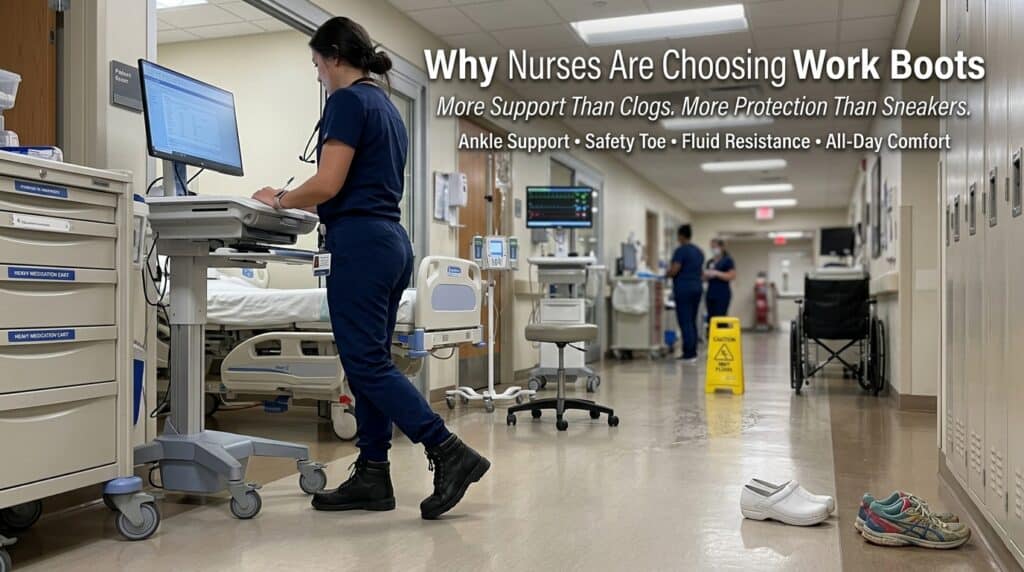
nurse choosing work boots over 202607272005
Every best-of nursing shoe list covers the same sneakers and clogs. Here’s why boots deserve a serious look — and which nurses specifically benefit most.
The Ankle Support Argument
Hospital corridors involve constant pivoting, quick directional changes, stepping over equipment cords, and moving between uneven floor surfaces at thresholds. After 8 hours, ankle stabilizer muscles fatigue. A mid-cut boot provides a physical support collar that low-cut shoes and open-back clogs cannot offer. For nurses with previous ankle sprains, overpronation, or jobs requiring sustained rapid movement, a mid-cut boot is meaningfully safer and more comfortable than alternatives at shift end.
The Toe Injury Argument
Stretcher wheels, IV pole rollers, hospital bed lock mechanisms (many require foot engagement), and heavy equipment carts are daily hazards in ER, floor, and ICU environments. Multiple nurses in online nursing communities explicitly cite stretcher wheel toe injuries as the reason they switched to steel or composite toe footwear. One nurse explained it directly: “I hate getting my toes smashed by stretcher wheels, and some beds require using your toes to lift up the locks.” A safety toe converts these incidents from potential fractures to non-events.
The Fluid Resistance Argument
Code situations, patient care, and floor spills create fluid exposure. A sealed full-grain leather or waterproof synthetic boot upper protects against biological fluid contact more comprehensively than open-mesh sneakers or perforated clogs. In clinical environments, wipe-clean uppers are also practical — a leather boot can be wiped down with a hospital-grade disinfectant; a mesh sneaker cannot be effectively disinfected.
The Versatility Argument (Travel and Community Nurses)
Travel nurses work across hospital types, long-term care facilities, correctional settings, and outdoor ambulatory environments. A boot that performs in all these settings is a better investment than specialized footwear for one clinical context. Community and home health nurses additionally navigate driveways, lawns, and uneven outdoor terrain that sneakers and clogs handle poorly.
What Nurses Actually Need in a Work Boot — 6 Non-Negotiables
1. Slip Resistance (ASTM F2913)
Hospital floors — polished tile, wet linoleum, freshly mopped corridors — are among the most hazardous slip surfaces in any work environment. ASTM F2913 is the objective standard for slip resistance. Most quality nursing boots carry this certification. A boot that merely claims “non-slip” without a rating may not perform meaningfully better than a standard boot on a wet clinical floor.
2. Anti-Fatigue Midsole for 12-Hour Shifts
Standing on concrete and tile for 12 hours without meaningful midsole support causes plantar fasciitis, heel pain, and lower back fatigue. Three midsole technologies matter for nurses:
- Rocker sole geometry (Dansko, HOKA) — rolls weight from heel to toe in a controlled arc, dramatically reducing forefoot and arch loading on each step. The most effective anti-fatigue feature for standing-dominant nurses.
- EVA cushioning — standard; comfortable and adequate. Compresses to 60–70% effectiveness after 6–8 months of daily nursing use. Replace boots or insoles at that point.
- Memory foam insoles — immediate comfort; can reduce stability under dynamic movement. Better for ICU/standing nurses than high-movement ER nurses.
3. Sealed, Wipe-Clean Upper
In patient care settings, a non-porous, wipeable upper is both a practical and often a policy requirement. Full-grain leather is the gold standard — it can be wiped with hospital-grade disinfectants, resists fluid absorption, and lasts years with proper conditioning. Sealed synthetic uppers are the second choice. Mesh panels or fabric uppers absorb fluids, cannot be effectively disinfected, and should be avoided in clinical patient care areas.
4. Arch Support for Sustained Standing
Contoured footbeds (Dansko’s anatomical footbed, KEEN’s metatomical footbed, HOKA’s wide-base EVA) prevent arch collapse during long standing periods. A removable insole is essential for nurses who use custom orthotics or quality aftermarket insoles (Superfeet Green ~$55 on Amazon significantly improves arch support in any boot).
5. Appropriate Weight for Shift Length
Every additional ounce costs cumulative energy over 10,000 steps. Steel toe adds approximately 0.4–0.6 lbs per pair versus composite toe. Composite toe adds approximately 0.2–0.3 lbs over soft toe. For nurses who don’t face significant impact hazards, the lightest boot that provides the support needed reduces end-of-shift fatigue.
6. Hospital Dress Code Compatibility
Most hospitals require closed toe and heel, wipeable uppers in patient care areas, slip-resistant soles, and sometimes specific colors. Verify your facility’s footwear policy before purchasing. Some units (OR, burn unit, sterile environments) prohibit boots entirely — check with your charge nurse or infection control.
The 10 Best Women’s Work Boots for Nurses — Full Reviews
1. Dansko Women’s Professional Lace-Up Boot — Best Overall for Floor Nursing
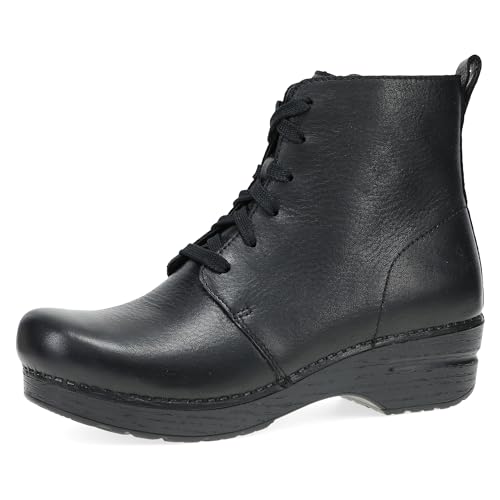
Best for: Med-surg, ICU, long-term care, and any nurse spending the majority of a shift standing or walking on hard hospital floors.
Dansko has been the de facto nursing boot brand for decades, and the Professional Lace-Up earns that reputation with one feature above all others: the rocker bottom sole. Rocker geometry rolls your weight from heel to toe in a controlled arc, reducing the peak load on your plantar fascia, forefoot, and metatarsals on every single step. Over 10,000 steps in a 12-hour shift, that adds up to a measurably different experience at hour 9 versus any flat-soled alternative.
The deep heel cup controls rearfoot motion and maintains ankle alignment during sustained standing — the ankle drift that causes knee and back fatigue in clogs is significantly reduced. The wide toe box accommodates the natural foot splay that happens over the course of a long shift. Full-grain leather upper wipes clean with a damp cloth and handles hospital-grade disinfectants without degradation.
At hour 10 on a busy med-surg floor, nurses consistently report that the Dansko feels like the beginning of the shift. That’s not marketing — it’s the rocker geometry doing its job for 10,000 steps while most boots’ midsoles have already started transmitting the floor directly to your arch.

Key Specs
| Price | $130–$155 |
| Toe Type | Reinforced toe box (no ASTM safety toe rating) |
| Slip Resistance | Dansko slip-resistant outsole — excellent on clinical floors |
| Midsole | PU rocker sole — more durable than EVA, maintains cushion longer |
| Upper | Full-grain leather — wipe-clean, fluid-resistant |
| Heel Cup | Deep anatomical — strong rearfoot alignment control |
| Ankle Height | Mid-cut |
| Best Shift Type | Floor nursing, ICU, long-term care, standing-dominant shifts |
✅ Pros
- Rocker sole — the most effective anti-fatigue feature for standing-dominant nursing
- Deep heel cup maintains ankle and knee alignment over full shift
- Full-grain leather upper — easy disinfection, fluid-resistant
- Dansko’s PU midsole lasts longer than EVA alternatives (12–18 months vs 6–8 months)
- Professional appearance — appropriate for any clinical setting
❌ Cons
- No ASTM safety toe rating — not appropriate where toe protection is required
- Rocker sole is visually distinctive — chunky profile some nurses dislike
- Break-in period of 1–2 weeks — do not wear for first time on a demanding shift
❌ Skip this if: Your facility requires ASTM-rated safety toe / you need a slim, low-profile boot appearance / you primarily work in high-mobility ER or trauma environments where agility matters more than standing comfort.
2. HOKA Women’s Kaha 2 Low GTX — Best for Nurses with Plantar Fasciitis or Heel Pain

Best for: Nurses with existing plantar fasciitis, heel spurs, or chronic arch pain who need maximum cushioning and rocker geometry to get through a full shift without significant heel pain.
HOKA has become the brand name nurses with foot pain trust most — and the Kaha 2 Low GTX justifies that trust with a specific structural combination that no other boot on this list matches: an oversized EVA midsole (approximately 32mm at the heel) combined with HOKA’s signature rocker geometry. The rocker reduces peak plantar fascia stretch on each heel strike. The stack height absorbs impact before it reaches an already-inflamed fascia. Together, they make a boot that nurses with plantar fasciitis describe as the difference between finishing a shift and not finishing a shift.
GORE-TEX waterproofing adds a clinical benefit — the sealed construction resists fluid penetration, and the smooth leather/nubuck upper is wipeable. The wide midsole base provides lateral stability so the maximum cushioning doesn’t translate into ankle wobble. Vibram Megagrip outsole handles wet tile reliably.

Key Specs
| Price | $175–$200 |
| Toe Type | Soft toe (no ASTM safety rating) |
| Waterproofing | GORE-TEX — sealed fluid-resistant construction |
| Midsole | Max-cushion EVA (~32mm heel stack) + rocker geometry |
| Outsole | Vibram Megagrip — excellent wet traction |
| Upper | Leather/nubuck — wipeable surface |
| Ankle Height | Low-mid |
| Best Shift Type | Any specialty where foot pain is the primary concern |
✅ Pros
- Best plantar fasciitis and heel pain management of any boot on this list
- GORE-TEX waterproofing — fluid-resistant sealed construction
- Rocker geometry reduces plantar fascia loading on every step
- Wide stability base prevents lateral wobble despite max cushion stack
- Vibram Megagrip — reliable on wet hospital floors
❌ Cons
- No safety toe — not appropriate where ASTM toe protection is required
- Premium price point
- High stack height reduces ground feel — some nurses find this disorienting initially
❌ Skip this if: Your facility requires a safety toe / you need maximum agility for fast-paced environments / your primary concern is slip resistance rather than heel pain.
3. KEEN Utility Women’s Flint II Mid Steel Toe — Best Mid-Cut Ankle Support for Active Nursing
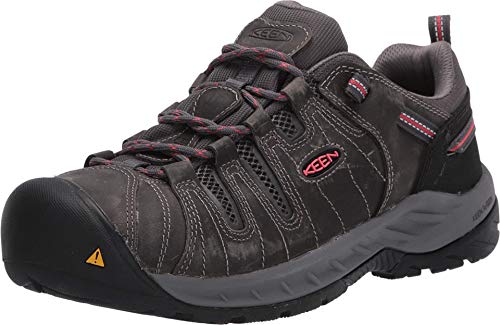
Best for: Nurses with high step counts, ankle instability, or roles involving rapid movement — ER, trauma, med-surg floor rounds — who need safety toe protection alongside genuine ankle support.
The KEEN Utility Flint II Mid addresses the specific problem that makes most nursing boots inadequate for active, mobile nurses: the combination of genuine ankle support, a steel safety toe, and a midsole that actually manages step-count fatigue. The KEEN.ReGEN midsole returns more energy per step than standard EVA — the difference is cumulative over 10,000 steps, resulting in measurably less lower-limb fatigue by the end of a shift than foam midsoles that simply absorb and dissipate energy without returning it.
The KEEN metatomical footbed provides real structured arch support — not just shaped foam. The asymmetric steel toe accommodates natural forefoot splay without pinching. The mid-cut collar gives ankle stability that prevents the eversion fatigue that sets in after hour 6 on high-movement shifts. KEEN’s oil and slip-resistant outsole handles wet clinical floors and spills.
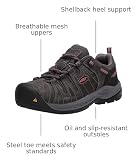
Key Specs
| Price | $130–$155 |
| Toe Type | Steel toe — ASTM F2413 I/C |
| EH Rated | Yes — verify current Amazon listing |
| Midsole | KEEN.ReGEN energy return + metatomical footbed |
| Outsole | Oil and slip-resistant rubber |
| Ankle Height | Mid-cut (5–6″) |
| Toe Box | Asymmetric wide — accommodates foot splay |
| Best Shift Type | Active nursing, high step count, ER, floor rounds |
✅ Pros
- KEEN.ReGEN midsole returns energy — reduces step-count fatigue over 10,000+ steps
- Steel toe ASTM F2413 — real protection from stretcher wheels and equipment impacts
- Mid-cut ankle collar — secondary support for nurses with ankle instability
- Metatomical footbed — genuine structured arch support
- Asymmetric wide toe box — accommodates forefoot splay during long shifts
- EH rated — appropriate for facility environments with electrical hazard requirements
❌ Cons
- Not waterproof in the standard version — water-resistant leather only
- Steel toe adds weight vs. composite alternatives — relevant for nurses covering high mileage
❌ Skip this if: You need maximum waterproofing / your shift is primarily standing (Dansko rocker sole is better for static standing) / you prefer the lightest possible boot.
4. Skechers Women’s Work Sure Track Steel Toe — Best ER Boot and Best Budget Safety Toe

Best for: ER nurses, trauma nurses, and any nurse needing maximum slip resistance with ASTM-rated toe protection — at a price that makes annual replacement financially manageable.
The Sure Track is the most widely trusted steel-toe boot in nursing, and the reason is simple: it delivers the two most critical safety features for ER nurses — ASTM-certified slip resistance and steel toe protection — at a price under $100 that makes replacing it every 8–12 months (when the EVA midsole compresses) financially reasonable. Skechers’ memory foam insole provides immediate out-of-box comfort with zero break-in time, which matters enormously for nurses who can’t afford a painful shift in new boots.
The smooth leather upper wipes clean with any surface disinfectant — essential in trauma and code environments. The defined outsole lug pattern handles wet floors without the aggressive tread that would mark polished hospital tile. At 8–10 months in daily nursing use, replace the insole or the boot — the memory foam will have compressed to the point of providing no meaningful cushioning.

Key Specs
| Price | $80–$100 |
| Toe Type | Steel toe — ASTM F2413 I/C |
| Slip Rating | ASTM F2913 — maximum clinical slip resistance |
| Midsole | Memory foam insole — immediate comfort, compresses at 8–10 months |
| Upper | Smooth leather — wipe-clean, clinical-grade disinfection compatible |
| Ankle Height | Mid |
| Break-in | Minimal — comfortable from day one |
| Best Shift Type | ER, trauma, high-slip-risk environments |
✅ Pros
- ASTM-certified slip resistance — best clinical floor safety on this list
- Steel toe ASTM F2413 — equipment and stretcher wheel protection
- Memory foam — immediate comfort, zero break-in required
- Smooth leather — wipes clean with hospital disinfectants
- Best value safety-toe nursing boot on this list
❌ Cons
- Memory foam compresses at 8–10 months — replace insole or boot at that point
- Not waterproof — water-resistant only
- Less arch support than KEEN or Dansko — consider Superfeet insole upgrade
❌ Skip this if: You have plantar fasciitis or significant arch issues (HOKA or KEEN provide better support) / you need waterproofing / you prefer a lightweight composite toe over steel.
5. Reebok Women’s Nano X1 Adventure Composite Toe EH — Best Athletic-Style Safety Boot for Nurses

Best for: Nurses who want the feel of athletic footwear with full ASTM safety ratings and EH certification — particularly in facilities requiring composite toe for metal detector access.
The Reebok Nano X1 Adventure brings a genuine crossfit-inspired athletic platform into a safety-rated work boot, and for nurses who’ve been uncomfortable in traditional rigid leather work boots, it’s a legitimate bridge. The composite toe meets ASTM F2413 without the weight or cold-conduction of steel. EH rating makes it appropriate for facilities with electrical hazard requirements. The athletic flex and responsive cushioning feel closer to a training shoe than a traditional work boot.
The composite toe advantage for nurses: no metal detector triggers, which matters for nurses in correctional, security, or certain government facility environments. It also doesn’t conduct cold in winter or heat near warm equipment — relevant for nurses working in environments with temperature variation. The slip-resistant outsole handles clinical floors reliably.

Key Specs
| Price | $100–$130 |
| Toe Type | Composite toe — ASTM F2413 I/C (no metal detector trigger) |
| EH Rated | Yes — ASTM F2413 EH (verify current listing) |
| Slip Resistance | ASTM F2913 rated |
| Midsole | Athletic crossfit-style EVA — responsive and flexible |
| Upper | Synthetic composite — limited mesh panels |
| Ankle Height | Mid |
| Best Shift Type | Active nursing, correctional facilities, EH-required environments |
✅ Pros
- Composite toe — no metal detector issues, no cold conduction
- EH rated — appropriate for electrical hazard environments
- Athletic flex — feels less restrictive than traditional leather work boots
- ASTM-certified slip resistance
- Lighter than comparable steel-toe options
❌ Cons
- Some synthetic/mesh upper panels reduce fluid resistance vs. full leather
- Less arch support than KEEN or Dansko — add Superfeet if you have arch issues
- Athletic look may not meet professional appearance standards in some facilities
❌ Skip this if: You need a traditional professional boot appearance / you work in high fluid-exposure environments where full leather is preferred / your primary concern is plantar fasciitis support.
6. Merrell Women’s Moab 3 Mid Waterproof — Best for Community Nurses and Home Health
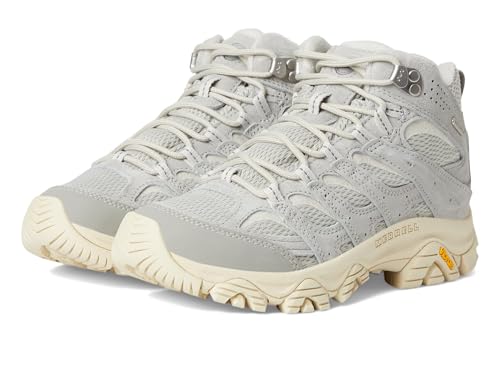
Best for: Community nurses, home health nurses, school nurses, and public health nurses who navigate outdoor terrain, driveways, sidewalks, and varied surfaces between patient locations.
The Merrell Moab 3 Mid is the world’s best-selling hiking boot — and for community nurses who spend their days moving between homes, schools, clinics, and outdoor spaces, it’s the correct choice over a hospital-optimized work boot. M Select DRY waterproofing keeps feet dry in rain and wet grass. The Vibram TC5+ outsole handles the uneven outdoor terrain that hospital-optimized boots weren’t designed for. The mid-cut collar provides ankle support on uneven ground — driveways, lawn paths, and outdoor clinic surfaces — that flat hospital floors don’t demand but outdoor nursing does.
For nurses working primarily indoors in clinical settings, the Moab 3 is not the first pick — it’s optimized for outdoor versatility rather than standing fatigue on concrete. But for community and home health roles, it is the best boot on this list.

Key Specs
| Price | $130–$155 |
| Toe Type | Soft toe (no ASTM safety rating) |
| Waterproofing | M Select DRY — full waterproof membrane |
| Outsole | Vibram TC5+ — all-terrain grip including wet outdoor surfaces |
| Midsole | EVA + air cushion heel + nylon arch shank |
| Ankle Height | Mid (5″) |
| Orthotic-Ready | Yes — removable insole |
| Best Shift Type | Community nursing, home health, school nursing, outdoor clinical work |
✅ Pros
- Best boot on this list for outdoor and community nursing environments
- Full waterproof protection — handles rain, wet grass, puddles
- Vibram TC5+ — reliable outdoor traction on varied surfaces
- Mid-cut ankle support for uneven terrain
- Nylon arch shank — good midfoot support for nurses with flat feet
- Removable insole — orthotic-compatible
❌ Cons
- No safety toe — not appropriate where ASTM protection is required
- Not optimized for polished hospital floors — outsole lug depth can feel awkward indoors
- Less anti-fatigue cushioning than Dansko or HOKA for standing-dominant indoor shifts
❌ Skip this if: You work primarily in indoor hospital settings / you need a safety toe / your primary concern is rocker-sole anti-fatigue for standing on concrete.
7. Carhartt Women’s 6-Inch Waterproof Composite Toe Boot — Best for Full Safety Compliance
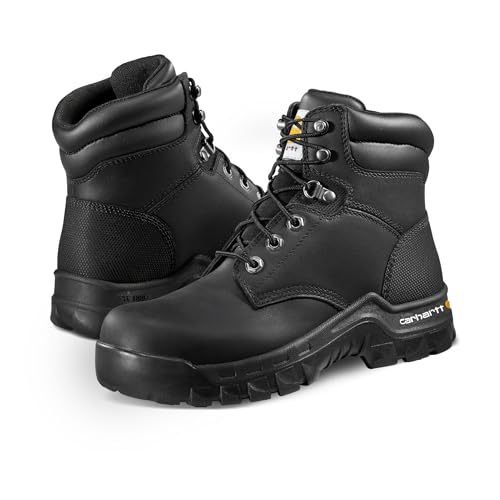
Best for: Nurses in correctional facilities, military medical, industrial health clinics, or any environment requiring full ASTM F2413 compliance alongside waterproofing — where the nursing role exists adjacent to trades or security environments.
The Carhartt 6″ WP Composite Toe is built for environments where nursing overlaps with the demands of a work site: correctional facilities, military installations, industrial health clinics, and outdoor medical response. The full ASTM F2413 composite toe provides safety certification without metal detector triggering. The 6-inch shaft offers more ankle coverage than the mid-cut boots above — relevant in environments where ankle protection from debris, equipment, or security-adjacent hazards matters. Full waterproof leather handles standing water and outdoor conditions that hospital-specific boots aren’t designed for.
The composite toe is specifically worth noting for correctional nurses: many correctional facilities explicitly require non-metallic footwear for security access, making composite toe mandatory regardless of preference.

Key Specs
| Price | $150–$175 |
| Toe Type | Composite toe — ASTM F2413 I/C (no metal detector trigger) |
| EH Rated | Yes — verify current Amazon listing |
| Waterproofing | Full waterproof leather upper |
| Shaft Height | 6 inches — more ankle coverage than mid-cut |
| Outsole | Slip-resistant rubber — dual-density |
| Midsole | PU — durable cushioning |
| Best Shift Type | Correctional nursing, military medical, industrial health, outdoor facility |
✅ Pros
- Full ASTM F2413 composite toe — meets demanding facility safety requirements
- No metal detector trigger — essential for correctional and security-adjacent environments
- 6-inch shaft — more ankle and lower leg coverage than mid-cut alternatives
- Full waterproof leather — handles outdoor and wet facility conditions
- EH rated — appropriate for electrical hazard environments
❌ Cons
- 6-inch shaft may feel restrictive for nurses accustomed to lower boots
- Heavier than athletic-style options — relevant for high-step-count shifts
- Break-in period required — do not wear on demanding shift day one
❌ Skip this if: You work in a standard hospital environment where full safety compliance isn’t required and a lighter boot serves you better / you have plantar fasciitis (HOKA rocker sole is more appropriate).
8. CAT Women’s Venward Composite Toe — Best Lightweight Value Boot for Nurses
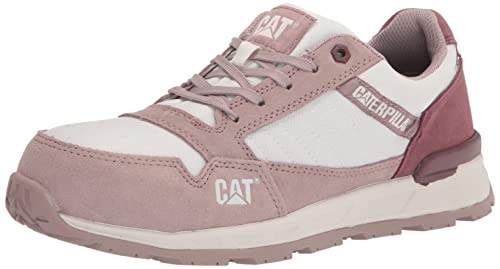
Best for: Nurses who want a safety-rated composite toe boot at a mid-range price with a professional leather appearance and lighter overall weight than traditional work boots.
The CAT Venward hits the intersection of safety compliance, professional appearance, and manageable weight that many nurses find difficult to locate in a single boot. The composite toe meets ASTM F2413 without steel’s weight penalty or cold-conduction issue. The leather upper looks professional in any clinical setting and wipes clean easily. CAT’s oil and slip-resistant outsole handles clinical floor surfaces reliably.
For nurses who’ve been wearing heavy traditional work boots and experiencing cumulative fatigue, the Venward’s lighter composite construction is a noticeable improvement over shift duration. The PU footbed provides solid all-day comfort — pair with Superfeet Blue for nurses with moderate arch support needs.

Key Specs
| Price | $100–$130 |
| Toe Type | Composite toe — ASTM F2413 |
| Slip Resistance | Oil and slip-resistant outsole |
| Upper | Leather — professional appearance, wipeable |
| Midsole | PU footbed — solid all-day comfort |
| Ankle Height | Mid |
| Best Shift Type | General nursing, all-round clinical environments |
✅ Pros
- Composite toe — lighter than steel, no cold conduction, no metal detectors
- Professional leather appearance — appropriate for all clinical settings
- Good value for full safety-rated boot
- Oil and slip-resistant — clinical floor appropriate
- Leather upper wipes clean easily
❌ Cons
- Less anti-fatigue cushioning than Dansko or HOKA — add quality insole for plantar fasciitis
- Less brand recognition than KEEN or Dansko in nursing communities
❌ Skip this if: You have significant foot pain requiring rocker-sole geometry / you need maximum ankle support (KEEN Flint II Mid is better) / you work in outdoor or community nursing (Merrell Moab 3 is better).
9. KEEN Utility Women’s Atlanta Cool Steel Toe — Best for Wide Feet, Bunions, and Long Standing Shifts

Best for: Nurses with wide feet, bunions, or forefoot pain who need KEEN’s widest toe box in a steel-toe work boot — particularly for standing-dominant shifts where forefoot compression causes significant discomfort by shift end.
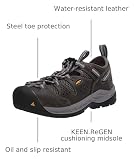
The KEEN Atlanta Cool addresses the specific problem that wide-footed nurses struggle with: most safety-toe work boots have standard or narrow toe boxes that compress bunion areas increasingly as feet swell over a 12-hour shift. KEEN’s Atlanta Cool features the widest toe box in their work boot line, accommodating natural forefoot splay without the pinching that turns hour 8 of a floor shift into agony.
Steel toe provides ASTM F2413 protection. The low-to-mid profile makes it more agile than taller mid-cut boots for nurses who need to move quickly. The wide base provides natural stability for flat-footed nurses. KEEN’s oil and slip-resistant outsole handles clinical floors. The open interior construction reduces heat buildup for nurses in warm clinical environments — the “Cool” designation refers to the ventilated lining design.
Key Specs
| Price | $100–$125 |
| Toe Type | Steel toe — ASTM F2413 I/C |
| EH Rated | Yes — verify current Amazon listing |
| Toe Box | KEEN’s widest — best for wide feet and bunions |
| Outsole | Oil and slip-resistant rubber |
| Ankle Height | Low-mid |
| Best For | Wide-footed nurses, bunions, forefoot pain, standing-dominant shifts |
✅ Pros
- KEEN’s widest toe box — best option for wide feet and bunions on this list
- Steel toe ASTM F2413 — equipment and stretcher protection
- EH rated
- Lower profile than mid-cut — more agile for fast-paced environments
- Good value for KEEN quality
❌ Cons
- Less ankle collar height than KEEN Flint II Mid — if ankle support is the priority, choose Flint
- Steel toe adds weight vs. composite alternatives
❌ Skip this if: Your feet are standard or narrow width / you need maximum ankle collar support (try KEEN Flint II Mid) / you need composite toe for metal detector environments.
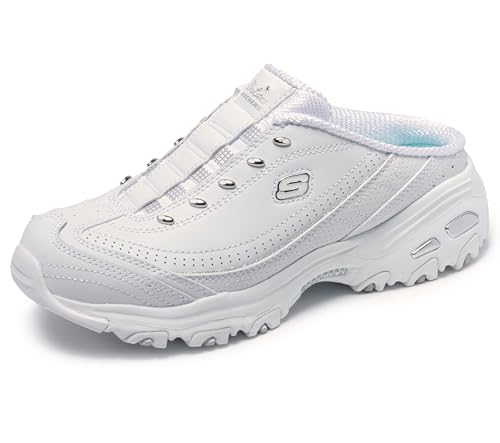
10. Skechers Women’s D’Lites 3.0 Mid Boot — Best Lightweight Option for Nurses Transitioning from Sneakers
Best for: Nurses currently wearing sneakers or clogs who want to try the ankle support and boot aesthetic without the weight and stiffness of traditional work boots — the gentlest transition available.
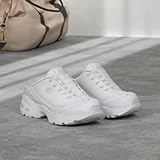
The Skechers D’Lites 3.0 Mid is the lightest boot on this list by a significant margin, and it feels far closer to a sneaker than a traditional work boot. Air-cooled memory foam insole provides immediate comfort. The chunky sole aesthetic has become fashionable alongside its functional cushioning benefit. The mid-cut provides more ankle coverage than a low-cut sneaker without the restrictive feel of a structured work boot.
Important caveat: the D’Lites is not a safety-rated boot. No ASTM toe protection, no formal slip resistance certification. It belongs on this list as a transitional option for nurses in lower-hazard environments — floor nursing in facilities without equipment impact hazards — who want the boot experience before committing to a structured work boot. If your environment involves stretcher wheels, equipment carts, or wet floor hazards, step up to one of the safety-rated picks above.
Key Specs
| Price | $65–$85 |
| Toe Type | Soft toe (no ASTM safety rating) |
| Slip Resistance | Slip-resistant outsole (not ASTM-certified) |
| Midsole | Air-cooled memory foam — immediate comfort, lightweight |
| Weight | Lightest on this list — sneaker-comparable |
| Ankle Height | Mid |
| Best Shift Type | Low-hazard floor nursing, transitional use, nurses new to boots |
✅ Pros
- Lightest, most comfortable transition from sneakers to boots
- Immediate out-of-box comfort — zero break-in
- Most affordable on this list
- Mid-cut provides more ankle coverage than sneakers
- Popular aesthetic — fashionable chunky sole
❌ Cons
- No ASTM safety toe — not appropriate near equipment impact hazards
- No formal ASTM slip resistance certification
- Memory foam compresses quickly under daily nursing use — replace at 6 months
- Limited arch support — add Superfeet Blue for nurses with arch issues
❌ Skip this if: You work in an environment with equipment impact hazards (ER, floor with stretcher carts) / your facility requires slip-resistance certification / you have significant arch or heel pain.
🏥 Best Boots by Nursing Specialty
No other nursing boot guide matches footwear to clinical specialty. Here’s the direct match:
Emergency Room / Trauma Nursing
Demands: Maximum slip resistance (blood, fluids, cleaning agents), steel or composite toe (stretcher wheels, equipment impacts), quick-clean upper, fatigue management for unpredictable high-intensity bursts.
Best pick: Skechers Work Sure Track Steel Toe — ASTM-rated slip resistance, steel toe, immediate comfort, wipe-clean leather.
ICU / Critical Care
Demands: Long sustained standing (monitoring equipment, IV management), rocker-sole anti-fatigue most important, moderate mobility, clinical appearance.
Best pick: Dansko Professional Lace-Up — rocker sole and deep heel cup are best-in-class for sustained standing.
Floor Nursing / Med-Surg
Demands: High step count (constant patient rounds, medication passes), pivoting and turning, ankle support for long mobile shifts, moderate slip resistance.
Best pick: KEEN Utility Flint II Mid — energy-return midsole for step count, mid-cut ankle support, steel toe for equipment protection.
Community / Home Health Nursing
Demands: Outdoor terrain (driveways, lawns, uneven sidewalks), all-weather waterproofing, varied surface traction, flexibility between environments.
Best pick: Merrell Women’s Moab 3 Mid WP — the only boot on this list optimized for outdoor terrain.
Correctional / Military Nursing
Demands: ASTM F2413 safety compliance, composite toe (non-metallic for security access), EH rating, durable construction for demanding environments.
Best pick: Carhartt Women’s 6″ WP Composite Toe or Reebok Nano X1 Adventure Comp Toe EH — both composite toe with EH rating.
🦶 Boots for Nurses with Specific Foot Conditions
Plantar Fasciitis
Rocker sole geometry is the most effective boot-level intervention — it reduces peak plantar fascia loading on every step. Best pick: HOKA Women’s Kaha 2 Low GTX. Insole pairing: Powerstep Pinnacle (~$45 on Amazon) adds a deep heel cup for additional fascia protection.
Flat Feet / Overpronation
Mid-cut boot provides secondary ankle barrier; medial posting in midsole resists arch collapse. Best pick: KEEN Utility Flint II Mid — metatomical footbed provides real structured arch support. Insole upgrade: Superfeet Green (~$55 on Amazon).
Wide Feet / Bunions
Forefoot splay increases over long shifts — a standard-width boot that fits at 7 AM pinches bunion areas by hour 9. Best pick: KEEN Utility Atlanta Cool — widest toe box on this list. Also check Merrell Moab 3 in wide widths on Amazon.
Knee Pain
Rocker soles reduce knee flexion at heel strike, lowering cumulative knee load over 10,000 steps. Best pick: Dansko Professional Lace-Up or HOKA Kaha 2 Low GTX — both use rocker geometry. Pair with compression socks (20–30 mmHg) for additional knee-swelling reduction.
🧦 Compression Socks + Nursing Boots — Making Them Work Together
Compression socks significantly reduce leg swelling, improve circulation, and reduce lower-limb fatigue during 12-hour nursing shifts. Pairing them correctly with boots requires attention to fit:
- Always try boots while wearing your nursing compression socks — the added material changes fit, particularly in the shaft of mid-cut boots
- 20–30 mmHg compression is the standard recommendation for nurses with varicose veins, edema, or standing-dominant shifts
- Mid-cut boots (5–6″): the sock should sit above the boot collar — no bunching inside the shaft
- If you wear 20–30 mmHg compression, size up half a size — the material adds thickness that affects fit
Recommended compression socks on Amazon: Sockwell (~$30), Physix Gear Sport (~$20), Vim & Vigr (~$35) — all widely available and nurse-reviewed.
⏱️ How to Break In New Nursing Boots Without Ruining a Shift
Starting a new pair of stiff leather boots on a 12-hour Friday night ER shift is how good boots get returned. Here’s the correct protocol:
- Week 1: Wear 1–2 hours per day outside work — around the house, running errands, short walks. The upper begins conforming to your foot.
- Week 2: Wear for a partial shift (4–6 hours) if possible. Keep backup shoes in your locker.
- Week 3: First full shift. Still keep backup in your locker. Apply moleskin patches to the heel on day one of a full shift — prevents blisters that falsely convince you the boot doesn’t fit.
- Leather conditioning: Apply Obenauf’s Heavy Duty LP (~$12 on Amazon) to full-grain leather boots before first wear — softens leather and shortens break-in meaningfully.
- Exception: Skechers Sure Track and D’Lites have minimal to zero break-in — comfortable from day one. KEEN and Carhartt boots need the full protocol.
🧹 Cleaning Nursing Boots in Clinical Environments
| Boot Material | Daily Wipe Method | Hospital Disinfectants | Clinical Suitability |
|---|---|---|---|
| Full-grain leather | Damp cloth + mild soap weekly | Quat spray, 70% IPA, bleach 1:10 — all safe (condition leather monthly) | ✅ Excellent — gold standard for clinical settings |
| Sealed synthetic | Damp cloth wipe | EPA-registered spray — test on small area first | ✅ Good — second choice for clinical settings |
| GORE-TEX upper | Damp cloth; Nikwax Tech Wash monthly | Surface wipe safe; avoid soaking | ✅ Good — sealed construction is clinical-appropriate |
| Mesh / fabric panels | Surface only — absorbs fluids | Cannot effectively disinfect | ❌ Avoid in patient care areas |
❌ 5 Boot Mistakes Nurses Make
- Prioritizing appearance over midsole technology. A boot that looks professional but has a flat rigid sole will cause significant foot pain by hour 8. Rocker geometry and EVA/PU cushioning matter more than aesthetics for 12-hour shifts.
- Sizing without compression socks on. A boot that fits perfectly with thin socks may be uncomfortably tight with 20–30 mmHg compression. Always size boots while wearing your work socks.
- Breaking in new boots on a demanding shift. Stiff leather boots need 10–15 hours of gradual wear before a full clinical shift. Starting new boots on a demanding day causes blisters that wrongly convince nurses the boots don’t fit.
- Choosing mesh-panel boots for clinical settings. Mesh uppers cannot be effectively disinfected and absorb biological fluids. In patient care settings, sealed leather or synthetic uppers are the correct choice regardless of breathability appeal.
- Not replacing boots when midsoles compress. Boots that “still look fine” at 8–10 months may have completely compressed EVA with no anti-fatigue benefit remaining. Press the heel firm between thumb and finger — if there’s no resistance, the cushioning is gone. Your foot pain increased recently for a reason.
Frequently Asked Questions
What are the best work boots for nurses?
The best work boot for most nurses is the Dansko Professional Lace-Up for standing-dominant shifts, or the KEEN Utility Flint II Mid for active, high-step-count nursing. For nurses with plantar fasciitis, the HOKA Women’s Kaha 2 Low GTX provides the best heel pain management. All are available on Amazon.
Can nurses wear steel toe boots?
Yes. Steel toe boots are appropriate and increasingly common in nursing, particularly in ER, trauma, and floor environments where stretcher wheels and heavy equipment carts pose real toe injury risks. Many nurses explicitly switch to steel or composite toe after a toe impact injury. Composite toe is preferred where metal detectors are in use.
Do nurses need slip-resistant boots?
Yes — hospital floors are among the most hazardous slip surfaces in any work environment. Look for ASTM F2913-rated slip resistance rather than informal “non-slip” claims. The Skechers Work Sure Track and KEEN Flint II Mid both carry formal slip resistance ratings appropriate for clinical environments.
What type of boots are best for 12-hour nursing shifts?
Boots with rocker sole geometry (Dansko, HOKA) are best for standing-dominant 12-hour shifts — they reduce forefoot and arch loading on every step. Boots with energy-return midsoles (KEEN.ReGEN) are best for high-step-count mobile shifts. Replace any boot whose EVA midsole has compressed after 6–8 months of daily use.
Can nurses wear boots in the OR?
Generally no. OR environments typically require facility-issued footwear or specific approved styles due to sterile field requirements. Some facilities also prohibit boots taller than ankle height in certain patient care units. Check your facility’s infection control guidelines and employee handbook before purchasing.
What boots work best for nurses with plantar fasciitis?
The HOKA Women’s Kaha 2 Low GTX is the top pick — its rocker midsole reduces plantar fascia loading with each step, and the max-cushion EVA absorbs impact at the heel. Pair with a Powerstep Pinnacle insole (~$45 on Amazon) for a deep heel cup alongside rocker geometry.
How should nurses choose between boots and clogs?
Choose boots if you need ankle support, have experienced toe injuries from equipment, work in community or outdoor nursing environments, or are in a facility requiring closed-back footwear. Choose clogs if you need quick on/off for unit protocols, work in sterile environments where hospital-issued footwear is required, or have been comfortable in clogs without ankle fatigue.
What are the best boots for nurses with wide feet?
KEEN Utility Women’s Atlanta Cool Steel Toe has KEEN’s widest toe box in a work boot and is the top pick for wide feet and bunions. The Merrell Women’s Moab 3 Mid WP is also available in wide widths on Amazon for community nurses who need outdoor performance alongside wide fit.
Are boots appropriate for hospital nursing?
Yes, in most hospital environments. Boots comply with standard hospital footwear requirements: closed toe and heel, wipeable uppers (leather or sealed synthetic), slip-resistant soles. OR and sterile environments may have stricter requirements. Verify with your facility’s infection control policy before purchasing.
How long do nursing work boots last?
EVA midsoles in daily nursing use compress to 60–70% effectiveness at 6–8 months. The boot’s upper may look fine while providing no meaningful cushioning. Dansko’s PU midsole lasts 12–18 months. Replace insoles every 6 months at minimum regardless of boot condition. A boot that’s causing more foot pain than when it was new likely needs insole or full boot replacement.
Final Verdict — Best Work Boots for Nurses by Role
Your feet carry you through 12 hours of caring for other people’s health. The right boot match by specialty:
- Floor / med-surg / ICU (standing-dominant): Dansko Professional Lace-Up — rocker sole is the best anti-fatigue investment for sustained standing
- Plantar fasciitis / heel pain: HOKA Women’s Kaha 2 Low GTX — max cushion rocker, no other boot competes for this condition
- Active / mobile floor nursing (high step count): KEEN Utility Flint II Mid Steel Toe — energy-return midsole + ankle support + safety toe
- ER / trauma: Skechers Work Sure Track Steel Toe — ASTM slip resistance + steel toe + best value
- EH-rated / composite toe: Reebok Nano X1 Adventure Comp Toe EH — athletic comfort with full safety credentials
- Community / home health: Merrell Women’s Moab 3 Mid WP — the only outdoor-optimized boot on this list
- Correctional / military / full safety compliance: Carhartt Women’s 6″ WP Composite Toe
- Lightweight value / safety-rated: CAT Women’s Venward Composite Toe
- Wide feet / bunions: KEEN Utility Atlanta Cool Steel Toe
- Transition from sneakers / lightest option: Skechers D’Lites 3.0 Mid
Invest in the right boot the same way you’d advise a patient to invest in their care. Replace midsoles when they compress. Always size boots with your compression socks on. And never — never — break in new boots on the shift you can’t escape from.
Also see our companion guide: Best Shoes for Nurses — covering clogs, sneakers, and non-boot options for nurses with different preferences.