If you are shopping for work boots, you’ve likely heard the debate: “Steel is real, everything else is weak.” But is that actually true?
Composite toe boots have taken over the job site, becoming the preferred choice for electricians, airport workers, and those in freezing climates. One of the most common questions we get is: “Are composite toe boots safe enough for heavy industrial work?”
In this guide, we break down exactly how strong composite toes are, how they compare to steel, and debunk the myths about safety ratings.
⚡ The Short Answer
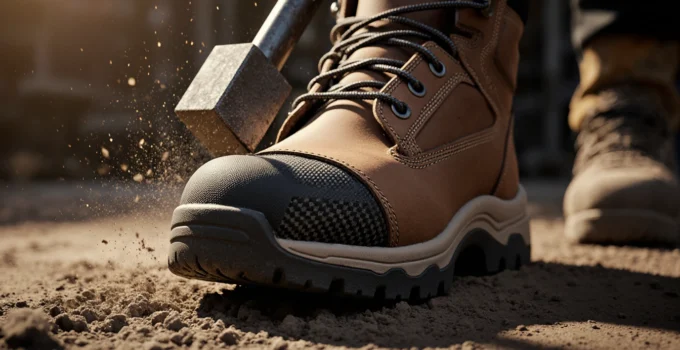
Are composite toes as safe as steel? Yes. If a boot is ASTM-rated (F2413), it passes the exact same impact and compression tests as a steel toe. A composite toe can withstand 2,500 pounds of compression and 75 foot-pounds of impact, just like steel. The difference isn’t safety—it’s weight and thickness.
The Science: How Strong Are They Really?

how strong is composite toe
Many people assume that because composite caps are made of non-metal materials (like Carbon Fiber, Kevlar®, or heavy-duty plastic), they are weaker. This is false regarding safety ratings.
1. ASTM Ratings Explained
Work boots don’t get a “pass” just for looking tough. To be sold as “Safety Toe” footwear in the US, they must meet ASTM F2413 standards. This composite safety toe rating has two main parts:
- Impact (I/75): Something heavy falling on your foot. The toe must survive a 75-pound weight dropped from 18 inches.
- Compression (C/75): Something rolling onto your foot. The toe must withstand 2,500 lbs of crushing pressure.
Whether the cap is Steel, Alloy, or Composite—if it has the rating, it takes the hit.
2. The “Thickness” Trade-Off
Here is the real difference: Steel is denser than composite materials.
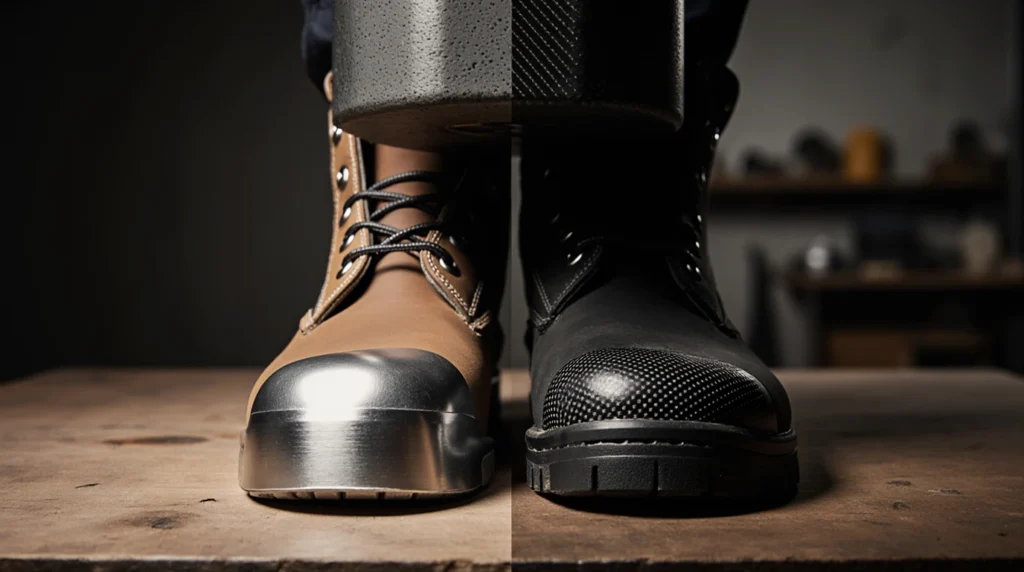
To achieve that same 2,500-lb strength rating, a composite cap must be thicker than a steel cap. This is why composite toe boots often look more “bulbous” or chunky at the toe box compared to slim steel or alloy boots.
Composite Toe vs Steel Toe Strength: Which is Better?
composite toe boots
| Feature | Steel Toe 🛠️ | Composite Toe 🛡️ |
|---|---|---|
| Weight | Heavier | 30% Lighter |
| Temperature | Conducts Cold/Heat | Neutral (Warmer in Winter) |
| Security | Sets off Metal Detectors | Airport Friendly (Non-Metal) |
| Electricity | Conductive | Non-Conductive (Great for Electricians) |
Why Choose Composite?
I’ve seen composite toes pass the same drop tests as steel in warehouse safety demos, but the biggest difference isn’t the crash test—it’s how your legs feel at 5 PM. The comfort difference after a 12-hour shift is noticeable.
- You Work in the Cold: Steel acts like an ice cube on your toes in winter. Composite material does not transfer cold, keeping your feet warmer.
- You Pass Through Security: Composite toes are non-metallic. You can walk through metal detectors (TSA, courthouses, secure sites) without taking your boots off.
- You Walk All Day: The weight savings (often 2–4 ounces per boot) adds up over 10,000 steps.
Fit Guide: Do Composite Toes Hurt?
A common complaint is that safety boots hurt. This is almost always a sizing issue, not a material issue.
1. The “Stretch” Myth
Crucial Rule: Leather stretches. Safety toes do NOT.
If your toes are rubbing against the composite cap when you first try them on, do not buy them thinking they will break in. The leather behind the cap might soften, but the cap itself will never move. If you feel pressure on your toes, you need a Wide (EE) width or a half-size larger.
2. How to Fix Uncomfortable Boots
- Wear the Right Socks: Stop wearing cotton athletic socks. Switch to thick Merino wool or synthetic work socks. They add padding between your toes and the hard cap.
- Check the Insole: Often, the pain comes from your foot sliding forward and hitting the cap. A better insole with a heel cup will lock your foot in place.
Frequently Asked Questions
- Do composite toes break easily?
- No, they are incredibly tough. However, there is a key difference in how they fail. While steel can permanently deform (dent) under extreme impact, composite toes may bounce back but crack internally. This microscopic damage compromises safety. The rule is simple: If your boot takes a crushing blow, you must replace it immediately, regardless of whether it’s steel or composite.
- Are they OSHA approved?
- Yes. OSHA requires footwear to meet ASTM standards. As long as the boot is labeled ASTM F2413, it is OSHA compliant for job sites requiring toe protection.
- How can I stretch my composite toe shoes?
- You can stretch the leather around the toe, but you cannot stretch the cap itself. Use a blow dryer and thick socks to loosen tight leather spots, or take them to a cobbler. If the hard cap is crushing your toes, the boots are simply too small.
- Do I need to size up?
- Not necessarily. Start with your normal size. However, because composite caps are thicker than steel, the internal volume of the toe box can feel smaller. If you have wide feet, we highly recommend choosing the Wide version of the boot rather than just sizing up the length.
Final Verdict
Composite toe boots are just as strong as steel toe boots regarding safety ratings. For most modern job sites, composite toe boots aren’t a compromise — they’re an upgrade. If warmth, weight, and electrical safety matter, composite is the smarter choice.
Stick to steel only if: You prefer a slimmer profile boot or you want the absolute cheapest option (steel is cheaper to manufacture).