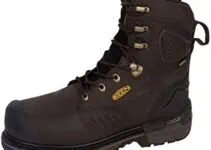
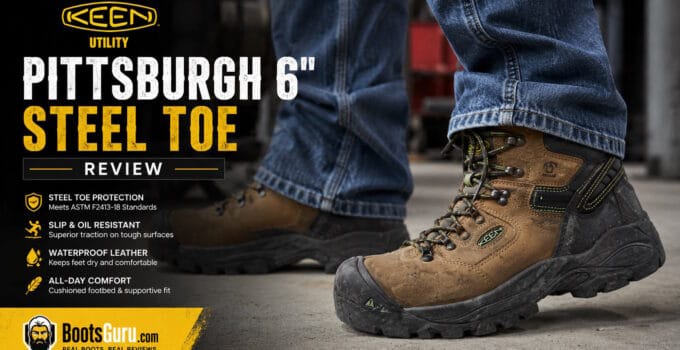
The KEEN Utility Pittsburgh 6″ has been in production long enough that tradespeople have worn through multiple pairs and come back for more. That kind of repeat purchasing tells you more about a boot than any spec sheet — it means the boot solves a real problem for a specific type of worker reliably enough that they choose it again over everything else they’ve tried.
This review covers what the Pittsburgh is actually built for, how it performs in real trade environments, the two honest problems that cause some workers to abandon it, and who should buy something else instead. The product reviewed here is the KEEN Utility Men’s Pittsburgh 6″ Leather Waterproof Steel Toe.
Quick verdict: A genuinely good outdoor and mixed-terrain work boot with ASTM-rated steel toe protection, reliable KEEN.DRY waterproofing, and KEEN’s asymmetrical toe box that consistently earns more comfort points than competitors at the same price. The two real limitations: breathability in warm conditions and outsole wear rate on abrasive concrete. Not the right boot for workers spending 90% of their shift on flat concrete — the Cincinnati handles that better. The right boot for outdoor trades, mixed-terrain site work, and anyone needing ladder grip from a defined heel.
KEEN Pittsburgh at a Glance
| Spec | Detail |
|---|---|
| ASIN | B004LE7XG0 |
| Price | $140–$170 (check Amazon for current pricing) |
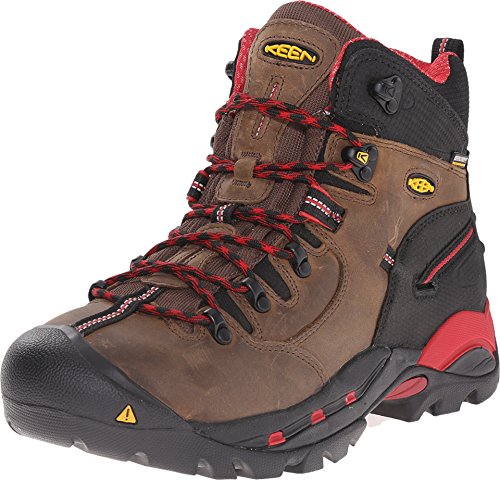
| Toe protection | Asymmetrical steel toe — ASTM F2413 I/75 C/75 |
| EH rated | Yes — ASTM F2413 EH (verify current listing) |
| Waterproofing | KEEN.DRY waterproof breathable membrane |
| Outsole | 90° heeled lug — oil and slip resistant, non-marking rubber |
| Midsole | Removable dual-density EVA metatomical footbed |
| Stability plate | KEEN.KEY-TECH full-length TPU torsional plate |
| Upper | Full-grain nubuck leather, LWG-certified tannery |
| Shaft height | 6 inches from arch |
| Boot opening | ~12 inches |
| Weight | ~30.9 oz per boot (size-dependent) |
| Lacing | 6 eyelets with locking metal hooks at toe for secure fit |
| Construction | Cement — not Goodyear-welted |
| Metal detectors | Triggers (steel toe) |
| Ladder grip | Yes — 90° defined heel catches rungs |
What KEEN Actually Built the Pittsburgh For
KEEN positions the Pittsburgh as their all-terrain work boot — the one that handles jobsite transitions that other boots can’t. That positioning is accurate and worth understanding before you buy, because it explains both the Pittsburgh’s strengths and its weaknesses.
The 90° heeled lug sole is the design decision everything else flows from. It grips ladder rungs. It bites into outdoor terrain. It provides a braking point on slopes. It was not designed to maximize comfort on polished concrete for 10-hour standing shifts — that’s the Cincinnati’s job. Workers who buy the Pittsburgh expecting Cincinnati-level flat-surface comfort are going to be disappointed. Workers who buy it for the mixed-surface, ladder-using, outdoor-terrain conditions it was designed for will likely buy a second pair when the first wears out.
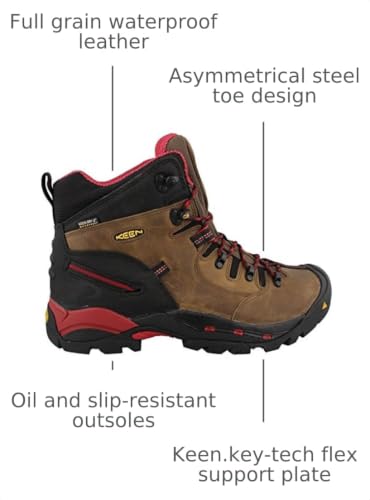
The asymmetrical steel toe is KEEN’s other signature decision. Instead of a symmetric dome-shaped steel cap, KEEN shapes each toe cap to the natural anatomy of each foot — left cap for the left foot, right for the right. This gives more room on the outer edge of the little toe where most safety toe boots create the most pressure. Workers who’ve worn traditional symmetric steel toe boots for years and found them pinching by hour 6 often describe the Pittsburgh as the first steel-toe boot that doesn’t cause that specific problem.
KEEN Technology in the Pittsburgh — What Each System Does
KEEN.DRY Waterproof Membrane
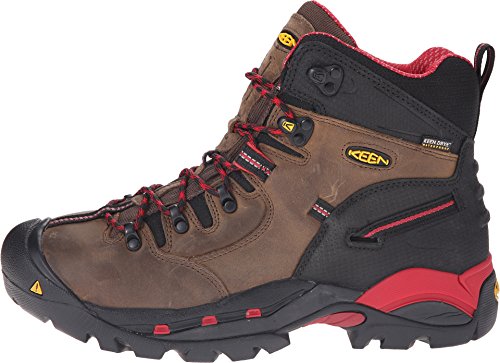
KEEN’s proprietary waterproof breathable membrane — not GORE-TEX, but KEEN’s own system. It seals the boot interior from liquid water while allowing moisture vapor to escape outward. In practice, the membrane works reliably for the conditions it’s designed for: rain, wet grass, morning dew, muddy sites, and light puddles. It does not eliminate sweating — no waterproof membrane does — but it prevents external water from entering the boot while your foot is working. The membrane holds up well over the boot’s lifespan in most use cases.
The breathability limitation is real and documented in owner reviews across multiple retailers. Workers in warm or hot environments find the Pittsburgh runs warm — the waterproof membrane reduces airflow compared to a non-waterproof boot, and the steel toe doesn’t help with heat management the way a composite or soft toe would. In summer conditions above 80°F, expect sweaty feet by hour 6–7 regardless of the membrane’s quality. This is not a defect — it’s physics. The fix is moisture-wicking socks, rotating two pairs so each dries overnight, or accepting that waterproof boots in summer heat will always be warmer than non-waterproof alternatives.
KEEN.KEY-TECH Full-Length TPU Stability Plate
A full-length interlocking TPU torsional plate that sits in the midsole. It resists the twisting and flexing that would otherwise happen when the outsole grips uneven terrain. On a site where you’re stepping over debris, working on gravel, or walking across uneven outdoor surfaces, the plate prevents the subtle midfoot flex that leads to fatigue over a long shift. It also provides some underfoot protection from rock puncture — not a full puncture-resistant plate, but meaningful protection for light rocky terrain.
Asymmetrical Steel Toe (ASTM F2413 I/75 C/75)
Meets the ASTM F2413 standard for impact resistance (75 ft-lbs) and compression resistance (2,500 lbs). The asymmetrical geometry gives more interior volume on the outer edge of the foot compared to a standard symmetric steel cap. The result is more room for the little toe and less pinching along the outer forefoot — the specific complaint most common with standard safety toe boots during long shifts.
EH (electrical hazard) rating is also included. Verify on the current Amazon listing before purchasing — certifications can change between production runs and KEEN occasionally updates safety specs.
Metatomical Dual-Density EVA Footbed
Removable footbed with a contoured arch profile that KEEN calls “metatomical” — shaped to the natural structure of the metatarsal bones and arch. The dual-density construction uses a firmer zone under the arch and a softer zone under the heel. This provides more structured support than a flat or minimally shaped insole and is specifically beneficial for workers with flat feet or mild overpronation. The footbed is removable, so workers using custom orthotics can pull it out and replace it without fighting a glued-in insole.
Locking Metal Lace Hooks
Two locking hooks near the toe area maintain tension at the forefoot without requiring the laces to be retied mid-shift. Workers with high-volume feet who’ve had laces loosen over the course of a long shift find this detail meaningful. The hooks have gone through a change from metal to plastic eyelets in some production runs — a few owners have noted eyelet breakage late in the boot’s lifespan, and the plastic version has received mixed reviews. Inspect your specific pair on arrival.
How the Pittsburgh Performs by Trade

Outdoor Construction and Site Work
This is the Pittsburgh’s strongest environment. The lug outsole handles the surface transitions common on active construction sites — from concrete slab to muddy grade to gravel and back — without the traction problems that wedge-sole boots develop on outdoor terrain. The steel toe handles the equipment and debris impacts common on outdoor sites. The KEEN.DRY membrane handles rain and morning wet conditions that would saturate a non-waterproof leather boot within two hours. Workers who cover significant outdoor site distance in the Pittsburgh consistently rate it above competitors at this price point.
Landscaping and Groundskeeping
Strong performer. The lug outsole grips wet grass significantly better than a wedge sole or flat-tread boot. Workers describe the tread pattern as effective on wet turf conditions where other boots have caused slipping. The 12-inch boot opening accommodates most calf sizes. The KEEN.DRY membrane handles the morning dew and irrigation conditions common in landscaping without requiring daily leather re-treatment. For landscaping trades that don’t require a 10-inch boot shaft, the Pittsburgh 6″ is a practical choice.
Ladder Work (Framing, Electrical, HVAC)
The 90° defined heel is the specific reason tradespeople who use ladders regularly choose the Pittsburgh over the Cincinnati. The heel catches steel ladder rungs and creates a physical stop that prevents the foot from sliding through the rung. This is a documented safety distinction — KEEN’s own product guidance states that 90° heeled boots are the correct choice for workers using ladders. Workers in framing, electrical installation, and HVAC who spend significant time on ladders repeatedly cite the heel as the reason they return to the Pittsburgh.
Concrete and Warehouse (Long Shifts)
This is where the Pittsburgh is the wrong boot for many workers. The lug heel and lug outsole don’t distribute weight as efficiently on flat concrete as a wedge sole. Workers spending 8–10 hours primarily on polished concrete or warehouse floors consistently find the Pittsburgh less comfortable than the KEEN Cincinnati by the end of a long shift. The Cincinnati’s wedge sole was specifically designed for this environment. If your shift is 80%+ on flat hard surfaces, the Cincinnati is the correct recommendation. If your shift involves meaningful time on outdoor terrain or ladders, the Pittsburgh handles the full range better.
Roofing
Some roofers use the Pittsburgh, but with caveats. The non-marking rubber outsole is correct for roofing — it won’t leave marks on shingles. The lug pattern provides some grip on a sloped surface. However, for serious roofing work, a dedicated roofing boot with more aggressive heel design is the better tool. The Pittsburgh is adequate for occasional roof access; it’s not a dedicated roofer’s boot.
The Two Real Problems

Every guide on the Pittsburgh mentions comfort and waterproofing as positives. Almost none mention the two documented issues that cause workers to abandon the boot. Here they are straight:
Problem 1: Breathability in Warm Conditions
This is the Pittsburgh’s most consistent complaint across Zappos, Amazon, and trade forums. In warm conditions — above 75°F — the KEEN.DRY membrane creates a heat trap. The steel toe doesn’t help. Workers on summer job sites or in warm environments describe feet that are wet from the inside (sweat) despite the membrane successfully keeping outside water out. Multiple owners on Contractor Talk forums describe abandoning the Pittsburgh specifically because of this, switching to the KEEN Atlanta Cool (the Pittsburgh’s ventilated counterpart) or non-waterproof boots in summer.
The honest fix: in warm conditions, the Pittsburgh is the wrong tool. Accept that, or rotate two pairs so each dries overnight, or use it specifically in cool and wet conditions where the membrane’s protection justifies the breathability trade-off. Wearing moisture-wicking wool or synthetic work socks rather than cotton also makes a measurable difference.
Problem 2: Outsole Wear Rate on Abrasive Concrete
Several long-term owners report the Pittsburgh outsole wearing faster on highly abrasive concrete surfaces than comparable boots. The lug pattern provides excellent grip — but the same lugs that grip outdoor terrain wear faster on coarse concrete than a harder compound outsole would. Workers whose entire shift is on abrasive concrete report outsole wear at 9–14 months of daily use. Workers on mixed surfaces report 18–24 months. This is not unusual for a lug sole work boot — it’s the trade-off for outdoor grip. But buyers expecting 3-year outsole life on a concrete-heavy site will be disappointed.
The cement construction means the Pittsburgh is not Goodyear-welted and cannot be resoled when the outsole wears. When the outsole goes, the boot goes. Budget for full replacement at 18–24 months of hard mixed-surface daily use, or 12–18 months on primarily abrasive concrete.
Sizing and Fit
True to length in most cases. The asymmetrical toe box is wider on the outer edge than a standard safety toe boot — workers who’ve been sizing up half a size in other steel-toe boots to escape toe-box pinching often find the Pittsburgh fits true to length without that accommodation. If you’re between sizes, go up half.
The 12-inch boot opening accommodates most average calf measurements without bunching. Workers with larger calves (16+ inches) occasionally report the opening feeling tight with thick socks. The 6-inch shaft hits at the lower ankle and provides meaningful ankle coverage without restricting ankle range of motion the way some taller boots do.
Break-in: shorter than full-grain leather heritage boots but not zero. Plan 4–6 hours of gradual wear before a full demanding shift. The nubuck leather upper is more flexible than a traditional stiff full-grain leather at first contact. Most owners report the Pittsburgh comfortable within the first day or two of gradual wear — significantly less break-in than Red Wing or Wolverine traditional leather work boots at similar prices.
Wide widths (EE) are available in select sizes on Amazon — check the current listing for width availability in your size. If you have wide feet and find standard width boots restrictive, verify EE availability before purchasing.
How the Pittsburgh Compares to the Key Alternatives

KEEN Pittsburgh vs. KEEN Cincinnati
The most common comparison question. Short answer: Pittsburgh for outdoor terrain and ladders, Cincinnati for concrete and flat surfaces. The Cincinnati’s wedge sole and Luftcell midsole make it the superior boot for sustained concrete work. The Pittsburgh’s 90° heeled lug outsole makes it the correct boot for ladder users and outdoor trades. The Cincinnati is also Goodyear-welted — a construction advantage the Pittsburgh doesn’t have. If you primarily work indoors on flat surfaces, buy the Cincinnati. If you regularly use ladders or work on mixed outdoor terrain, buy the Pittsburgh. If you can’t decide, see our full KEEN Pittsburgh vs Cincinnati comparison.
KEEN Pittsburgh vs. Wolverine Raider DuraShocks
The Wolverine Raider is the closest direct competitor in price and function — DuraShocks cushioning, lug outsole, steel toe, mixed-surface design. The Raider’s DuraShocks PU midsole provides better sustained cushioning on concrete than the Pittsburgh’s EVA. The Pittsburgh’s asymmetrical toe box provides more comfortable steel toe fit than the Raider’s standard symmetric cap. The Raider is not waterproof in most versions. For wet conditions, the Pittsburgh wins. For dry mixed-terrain work where cushioning is the priority, the Raider competes closely.
KEEN Pittsburgh vs. Timberland PRO Pitboss
The Pitboss is a softer, more comfortable out-of-box boot with a wedge sole. Better for pure concrete environments. No Goodyear welt on most versions. The Pittsburgh handles outdoor terrain and ladders better. The Pitboss costs less at most retailers. If budget is the primary constraint and your work is primarily on flat surfaces, the Pitboss is competitive. If you work outdoors and use ladders, the Pittsburgh is worth the price difference.
Who Should Buy the Pittsburgh
The Pittsburgh is the right boot for:
- Workers who use ladders regularly — framing, electrical, HVAC, scaffolding. The 90° defined heel catches rungs. No wedge-sole alternative replicates this.
- Outdoor construction workers whose shifts involve a mix of concrete, gravel, mud, and uneven grade — the lug outsole handles all of these without the traction problems a wedge develops on outdoor surfaces.
- Landscapers and groundskeepers who need grip on wet grass and outdoor terrain with a waterproof membrane that handles morning dew without daily leather treatment.
- Workers who’ve worn traditional symmetric safety toe boots and found the toe box pinching — KEEN’s asymmetrical toe cap solves this specific problem.
- Workers whose shifts are in cool or cold conditions where the breathability trade-off is less impactful.
Who Should Buy Something Else
- Concrete and warehouse workers on flat surfaces all day: Buy the KEEN Cincinnati instead. The wedge sole and Luftcell midsole were specifically designed for this environment and will feel noticeably better by hour 8.
- Workers in hot conditions above 75°F: The Pittsburgh’s waterproof membrane and steel toe create a warm interior that becomes genuinely problematic in summer heat. Consider the KEEN Atlanta Cool (ventilated version) or a non-waterproof boot in warm months.
- Oil field workers needing composite toe for metal detectors: The Pittsburgh is steel-only. The KEEN Cincinnati (composite toe) or KEEN I-90 Romeo (CarbonMAX, pull-on) are the correct alternatives.
- Workers who need a boot to last 3+ years and want to resole it: The Pittsburgh uses cement construction. It’s not resoleable. The Cincinnati’s Goodyear welt is the correct choice for workers who want to resole rather than replace.
Frequently Asked Questions
Is the KEEN Pittsburgh steel toe comfortable?
More comfortable than most steel-toe boots at this price, specifically because of the asymmetrical toe cap. KEEN shapes each cap to the natural foot anatomy rather than using a symmetric dome — this gives more room on the outer edge where most boots cause pinching. Workers who’ve worn standard steel-toe boots for years and found them pinching by hour 6 consistently describe the Pittsburgh as the first steel-toe boot that doesn’t cause that specific problem.
How long do KEEN Pittsburgh boots last?
On mixed outdoor terrain: 18–24 months of daily hard use before outsole wear becomes significant. On primarily abrasive concrete: 12–18 months. The cement construction means the boot cannot be resoled when the outsole wears — plan for full replacement. The upper leather typically outlasts the outsole with proper conditioning.
Are KEEN Pittsburgh boots good for concrete?
Adequate but not optimal. The Pittsburgh’s lug outsole provides good grip on concrete, but the heel configuration and outsole compound wear faster on abrasive concrete than a wedge-sole boot designed for flat surfaces. For workers spending the majority of their shift on concrete, the KEEN Cincinnati’s wedge sole and Luftcell midsole provide better long-term comfort and outsole wear resistance.
Can you use KEEN Pittsburgh on ladders?
Yes — this is one of the Pittsburgh’s specific advantages over wedge-sole alternatives. The 90° defined heel catches ladder rungs. Workers in framing, electrical, and HVAC trades who spend significant time on ladders choose the Pittsburgh specifically for this reason. The KEEN Cincinnati’s wedge sole does not catch ladder rungs safely.
Do KEEN Pittsburgh boots run true to size?
True to length in most cases. The asymmetrical toe box is wider on the outer edge than standard safety toe boots — workers who typically size up half a size to escape toe-box pinching often find the Pittsburgh fits true to size. If between sizes, go up half. Wide widths (EE) are available in select sizes — verify on the current Amazon listing.
Are KEEN Pittsburgh boots waterproof?
Yes — KEEN.DRY membrane seals the interior from liquid water while allowing moisture vapor to exit. Reliable for rain, wet grass, morning dew, and muddy conditions. The membrane does not eliminate foot sweating, which is a separate issue from external water entry. In warm conditions, internal moisture from sweating is the more common complaint than external water penetration.
What is the difference between KEEN Pittsburgh and KEEN Flint II?
The Pittsburgh is a 6-inch mid-cut boot with a 90° heeled lug sole, steel toe, and KEEN.DRY waterproofing. The Flint II is available as a low-cut shoe or mid-cut boot, uses KEEN.ReGEN midsole technology for energy return, and typically uses a flatter outsole profile. The Pittsburgh is better for outdoor terrain and ladder work. The Flint II is lighter and better for high-mobility flat-surface roles. See our KEEN Pittsburgh vs Flint II comparison for the full breakdown.
Is the KEEN Pittsburgh EH rated?
Yes — ASTM F2413 EH rated. Verify on the current Amazon listing before purchasing, as certifications can change between production runs. The steel toe triggers metal detectors — for applications requiring non-metallic footwear, the KEEN Cincinnati (composite toe) is the correct alternative.
Final Verdict
The KEEN Pittsburgh 6″ Steel Toe earns its reputation as a repeat purchase for outdoor tradespeople — not because it’s perfect, but because it solves the right problems for a specific type of worker consistently enough that those workers keep coming back.
The asymmetrical steel toe is the best-fitting safety toe at this price point for most feet. The KEEN.DRY membrane works reliably in wet outdoor conditions. The 90° heeled lug outsole is the correct outsole for workers who use ladders and move between outdoor terrain types in the same shift. The metatomical footbed provides real arch support that flat-footed workers specifically notice.
The limits are real: it runs warm in summer, the cement construction means you’ll replace rather than resole at 18–24 months, and workers spending their entire shift on flat concrete will find the Cincinnati more comfortable by the end of the day.
Buy the Pittsburgh if your work involves ladders, outdoor terrain, or mixed surfaces in cool or cold conditions. Consider the Cincinnati if your shift is primarily on flat concrete or you want a boot worth resoling. Both are available on Amazon — links below.
- KEEN Utility Pittsburgh 6″ Steel Toe — Check Price on Amazon
- KEEN Utility Cincinnati 6″ Composite Wedge — Check Price on Amazon
Also see: KEEN Pittsburgh vs Cincinnati vs Flint II — Full Comparison