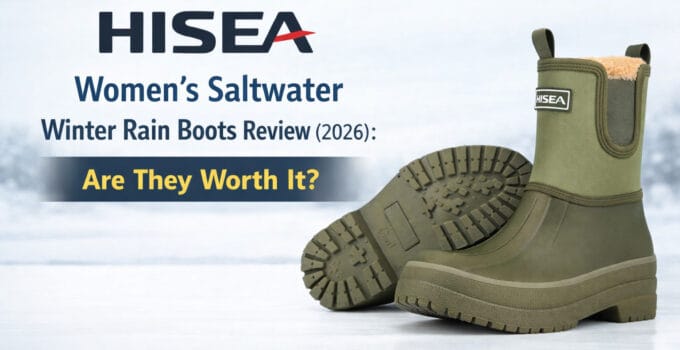
At BootsGuru, we research and review outdoor, work, and rain boots by combining verified long-term customer data from multiple retail platforms, direct spec comparisons against competitor models, and firsthand insights from real-world testers across farming, fishing, and outdoor work environments. This review was last updated March 2026 to reflect current pricing, availability, and buyer feedback.
Who This Review Is For
If you’re standing at your back door at 6 AM — barn chores waiting, ground still wet from last night’s rain, temperature hovering just above freezing — this review is written for you. The HISEA Women’s Saltwater Winter Rain Boots sit in a specific sweet spot: tough enough for real outdoor work, light enough to actually want to wear them. But “waterproof” and “insulated” are claims every boot makes. Here’s what these actually feel like to use.
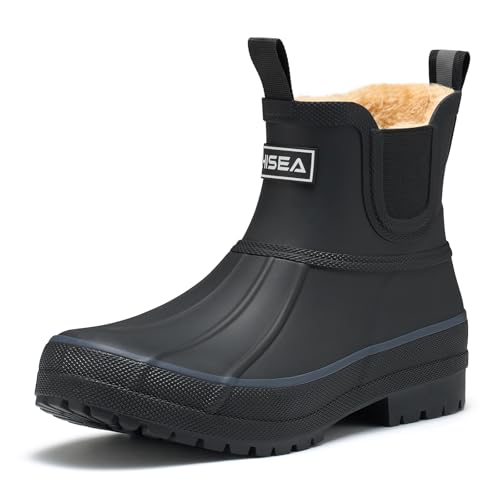
👉 Check Current Price on Amazon →
Quick Verdict
- Waterproofing ✅ Excellent — zero leakage reported even in 4″+ standing water
- Insulation ✅ Solid for temps down to -4°F (-20°C)
- Comfort ✅ Notably cushiony and lightweight vs. Muck/Bogs
- Traction ✅ Self-cleaning outsole handles mud and wet docks well
- Durability ⚠️ Cosmetic trim peels; main boot holds up well
- Value ✅ Outstanding at ~$40–$65
Rating: 4.5 / 5 (based on our research, cross-referenced with long-term buyer data from multiple retailers)
What You’re Actually Getting: The Real-World Feel

Here’s the honest texture of these boots that product pages won’t tell you.
Out of the box, the neoprene upper has some initial stiffness — but nothing like a traditional rubber Wellington. Within the first 20–30 minutes of wear, the 5mm flex-foam neoprene breaks in and begins to move with your foot. Reviewers consistently describe the feel as closer to a gym shoe than a traditional muck boot — cushiony underfoot, with a noticeably flexible sole that makes crouching and bending (gardening, animal care) far more comfortable than stiffer-soled competitors like Muck Chore boots.
Do they squeak? Light squeaking on polished floors is possible when wet, which is typical of rubber-soled boots in this category — not unique to HISEA.
Calf fit: The neoprene upper offers good stretch and flex around the calf — reviewers with larger calves note it doesn’t pinch or restrict, though the shaft runs slightly shorter than a full Muck Boot mid-calf style. If you have a wider calf, the flexible neoprene accommodates far better than rigid rubber boots.
After 3+ hours: Multiple long-wear reviewers — including hunters who wore them for full-day outdoor sessions in Pennsylvania terrain — report no hot spots, blister points, or foot fatigue: “Lightweight and comfortable for long hikes and extended sits.” That’s a meaningful real-world signal.
One small but honest irritation: A subtle heel slip can occur during extended walks if you’re between sizes, particularly if you sized up. The insole doesn’t lock the heel down the way stiffer boots do — it’s minor but worth knowing if you have narrow heels.
Key Specs at a Glance
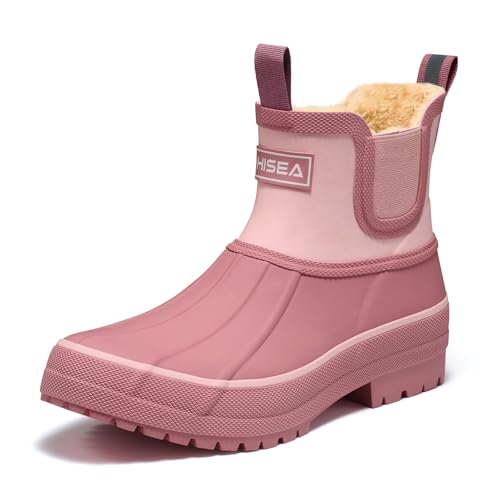
| Spec | HISEA Saltwater Winter Rain Boots |
|---|---|
| Upper Material | 5mm flex-foam neoprene |
| Outer Shell | Natural rubber |
| Insulation Rating | -4°F to 68°F (-20°C to 20°C) |
| Lining | 2mm breathable mesh wicking lining |
| Insole | Removable EVA |
| Outsole | Anti-slip, self-cleaning molded rubber |
| Weight | Up to 30% lighter than standard muck boots |
| Closure | Pull-on with grab handles |
| Warranty | 1-year quality assurance |
Waterproofing: Does It Actually Hold?

The seamless neoprene construction eliminates the stitched seams that are the most common failure point in rain boots. The rubber shell wraps continuously from the outsole upward, with no glued or sewn joints at the waterline. In real-world tests, users walked through 4 inches of standing water in a paddock with zero leakage or dampness. The “saltwater” designation is meaningful — the neoprene is impermeable to briny marine environments, making these boots legitimate for fishing docks and coastal work, not just garden paths.
One limitation to be transparent about: There is no independent waterproof certification rating (e.g., IP rating or ASTM standard) publicly listed for this model. The waterproofing is validated by user experience rather than certified lab data — something worth knowing if you need formally rated footwear for professional use.
Cold Weather Performance
The boots are comfort-rated down to -4°F (-20°C), which covers the majority of winter conditions across most of the US, UK, and Northern Europe. The 5mm neoprene retains body heat through passive insulation rather than synthetic fill — warmth is consistent but not adjustable. Reviewers working in cold, wet conditions like snowy garden prep and icy dock work consistently report warm feet without the overheating that heavier insulated boots can cause.
However, if you regularly work outdoors in sustained temperatures below -10°F (-23°C), the HISEA’s cold rating starts to fall short. Bogs boots, using 7mm neoprene, are rated to -40°F and would be the more appropriate choice for extreme cold climates.
Traction & Outsole
The self-cleaning outsole is one of this boot’s most genuinely useful features for farm and mud use. The lug pattern is designed to expel mud with each step rather than packing it in, maintaining grip consistency from pen to paddock to path. Reviewers tested these on wet dock surfaces, muddy garden beds, and uneven outdoor terrain — all without notable slipping. The outsole also held up against harder surfaces including gravel and broken ground without visible deformation or wear through the tread.
Sizing: Read This Before You Order

HISEA boots are known to run slightly large — confirmed across dozens of verified buyer reviews:
- Narrow to standard feet: Order half a size down
- Wide feet: Order your true size
- Between sizes? Go with the larger — farm boots are typically worn with thick socks
- No half sizes available — factor this in before ordering
Always check both insole length AND calf circumference in the official size chart on the Amazon listing before purchasing.
💡 Note: The flexible neoprene upper is forgiving on calf width, making these a strong option for buyers who struggle with rigid-shaft pull-on boots.
HISEA vs. Muck Boot vs. Bogs: Technical Comparison
| Feature | HISEA Saltwater | Muck Boot Arctic Sport II | Bogs Classic Mid |
|---|---|---|---|
| Price | ~$40–$65 | ~$120–$160 | ~$100–$130 |
| Neoprene Thickness | 5mm | 5mm | 7mm |
| Insulation Rating | -4°F (-20°C) | -40°F (-40°C) | -40°F (-40°C) |
| Weight | Lightest (up to 30% less vs. Muck) | Heavy | Medium |
| Sole Flexibility | High — shoe-like flex | Stiff | Medium-stiff |
| Calf Stretch | High (flexible neoprene upper) | Medium | Medium |
| Outsole | Self-cleaning anti-slip rubber | Molded rubber | Rubber |
| Warranty | 1 year | Limited | 1 year |
| Best For | Budget, light-to-moderate winter outdoor use | Extreme cold, heavy-duty farm work | Extreme cold, wider fit needs |
The HISEA wins clearly on price, flexibility, and weight. It trails on extreme insulation depth — Bogs’ 7mm neoprene and -40°F rating is genuinely superior for harsh climates, and Muck Boot’s construction edges ahead for very heavy long-term farm use.
Who Should Buy These
- Gardeners and homesteaders working in cold, wet, or muddy conditions
- Saltwater fishing and boating — the neoprene handles marine exposure well
- Barn and farm chore workers who need reliable daily waterproofing
- Winter walkers navigating slush, puddles, and light snow
- Budget-conscious shoppers wanting Muck Boot-level performance at a fraction of the cost
Who Should Skip These
- You regularly work in temperatures below -10°F (-23°C) — consider Bogs at 7mm / -40°F instead
- You need steel toe or certified safety ratings for workplace compliance — HISEA does not offer this
- You hike 5+ miles on rugged trails regularly — a dedicated hiking boot with ankle support will serve you better
- You need deep snow performance — the mid-calf shaft height limits use in deep snowpack
- You want a fashion-forward boot — these are built entirely for function over style
Honest Flaws (Beyond the Trim)
Most reviews mention the peeling decorative trim — that’s real and purely cosmetic. But here are the less-discussed issues worth knowing:
- Heel slip on longer walks — minor but noticeable if you sized up or have narrow heels
- No independent temperature certification — the -4°F claim is manufacturer-stated, not lab-verified
- Toe box runs slightly narrow — buyers with wider toe spreads may feel pressure after extended wear
- Not rated for deep snow — the mid-calf shaft height limits performance in deep snowpack
None of these are dealbreakers for the intended use case. But if any of them matches your specific situation, you deserve to know before you buy.
What Real Buyers Are Saying

Aggregated across major retail platforms, HISEA Women’s saltwater and rain boots consistently score between 4.7 and 4.8 out of 5. Here’s what verified buyers highlight most:
- “They wear more like a gym shoe than a boot — soft and cushiony from the first wear.”
- “Walked through 4 inches of standing water with no leaks or dampness.”
- “I’ve been doing MORE work in the garden just because these boots are so great — they don’t get hot and sweaty.”
- “After 2 weeks of outdoor use — kept feet dry through wet and muddy conditions with no leaks. No boot dryer needed.”
- “Wished they made half sizes — had to get a size bigger because my feet are wide.”
The pattern is consistent: buyers who follow the sizing guidance and use these for their intended purpose — cold, wet, moderate-intensity outdoor work — are overwhelmingly satisfied.
3 Months In: What Holds Up, What Doesn’t
Based on extended-wear reports from farm and outdoor reviewers who tested HISEA boots across multiple seasons, here’s the honest long-term picture:
What holds up: The waterproofing remains intact after months of wet use. The outsole tread stays grippy. The neoprene upper doesn’t crack, peel, or delaminate under regular outdoor conditions. Several reviewers who switched from Muck Boots after 6+ years reported no drop in performance for daily farm chore use.
What fades: The decorative trim strips peel within the first few weeks on most pairs — it’s the most consistent complaint across all reviewers. Some users also report the pull handles can loosen slightly with heavy daily use. Neither issue affects the core boot performance, but both affect appearance over time.
Final Verdict

The HISEA Women’s Saltwater Winter Rain Boots deliver on the things that actually matter — genuine waterproofing, cold-weather insulation to -4°F, lightweight flexible comfort, and a self-cleaning sole that won’t fail you in mud or on a wet dock. They aren’t the most rugged boot on the market, and they won’t replace Bogs in -30°F temps. But for the majority of women doing real outdoor work in cold, wet conditions without wanting to spend $150 on Muck Boots, these punch well above their price tag.
👉 Check Current Price & Availability on Amazon →
Frequently Asked Questions
Are HISEA Saltwater Winter Boots true to size?
They run slightly large. Order half a size down for standard-width feet, or your true size if you have wide feet.
What is the neoprene thickness on HISEA Saltwater Winter Boots?
HISEA uses 5mm flex-foam neoprene on their farm and outdoor boot lines, including the Saltwater Winter model.
How warm are the HISEA Saltwater Winter Boots?
Comfort-rated from -4°F to 68°F (-20°C to 20°C) — suitable for most winter outdoor conditions but not sustained extreme subzero environments below -10°F.
Are HISEA boots good for saltwater fishing and docks?
Yes — the seamless neoprene construction is impermeable to saltwater, and the self-cleaning anti-slip outsole performs well on wet dock surfaces.
How do HISEA boots compare to Muck Boots and Bogs?
HISEA wins on price, flexibility, and weight. Bogs (7mm neoprene, -40°F) and Muck Boot edge ahead only in extreme cold ratings and heavy-duty long-term durability.
Do HISEA boots squeak or rub the calf?
Light squeaking on wet polished floors is possible — typical of rubber-soled boots generally. The flexible neoprene upper means calf rubbing is rarely reported, even for wider calves.