Most “best hunting boots” roundups top out with a $300–$450 pick and treat everything under $100 as an afterthought — one bullet point squeezed in at the bottom of a list dominated by Crispi, Kenetrek, and AKU. That’s not useful if you’re a new hunter buying your first pair, a parent replacing boots a growing teenager will outgrow in a year, or someone who wants a genuine backup pair for the muddiest, worst-weather hunts without babying an expensive boot.
Here’s what nobody tells you plainly: a lot of what makes a hunting boot work — waterproofing, insulation, basic traction — is cheaper to build well than premium boot marketing implies. What actually gets cut at the sub-$100 price point is narrower and more specific than “everything is worse.” This guide tells you exactly what that tradeoff looks like, which budget boots handle it best, and which hunt each one is actually built for — fourteen picks, all selected to sit under $100, organized by exactly what you’re hunting and how cold it’s going to be.
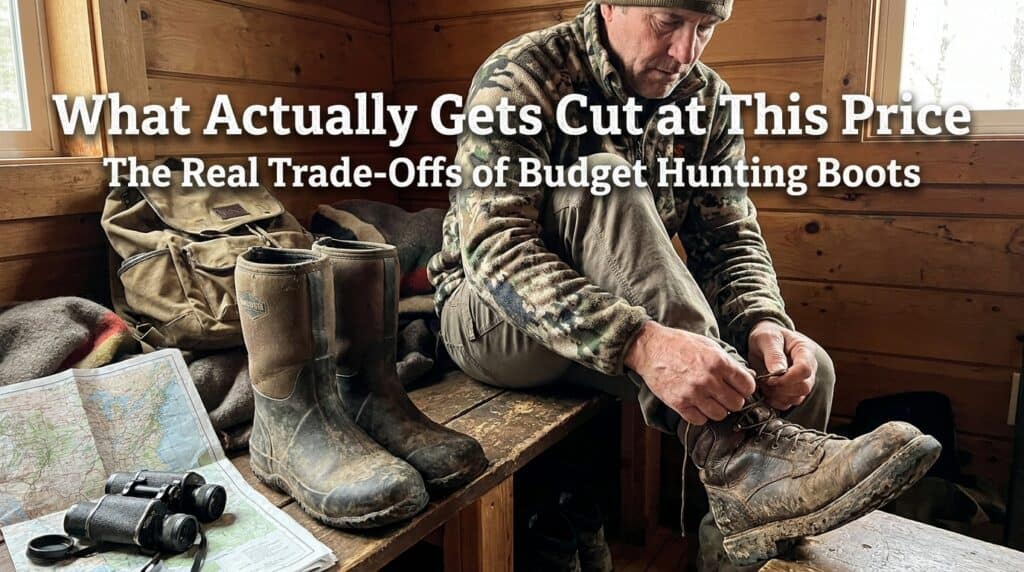
What Actually Gets Cut at This Price — Stated Honestly
hunting boots comparison scene 202607201243
Nobody tells you this part, so here it is directly. Scent-control technology — activated carbon lining, specialized odor-inhibiting treatments — is essentially absent under $100. Budget boots rely on rubber and neoprene’s naturally low scent profile rather than an engineered scent-elimination system. That matters most for deer hunters sitting close-range in a stand or blind; it matters far less for hog, varmint, or upland hunting where you’re moving and the wind matters more than your boots.
Engineered ankle support structure is simpler. Premium boots like the Crispi Nevada use dedicated internal ankle-bone support systems with contoured padding built specifically around that joint. Budget boots offer general cushioning without that engineering — which matters more on steep, uneven mountain terrain than it does for flat-ground stand hunting.
Long-term durability across multiple seasons is the real gap. Premium boots are built and warrantied for a decade of hard use. A budget rubber or neoprene boot used weekly through a full season is reasonably expected to perform well for 1–2 seasons before seams, insulation loft, or waterproof integrity start to noticeably degrade. That’s not a defect — it’s the normal lifecycle of molded rubber under repeated flexing and wet mud, and it’s a completely reasonable trade if you hunt occasionally or want a dedicated backup pair.
What Does NOT Get Cut — the Commodity Technologies
The flip side matters just as much. Basic waterproofing is not meaningfully compromised. A sealed rubber or 5–6mm neoprene shell keeps water out through the material itself — there’s no DWR coating to wear off, no seam-sealing to fail the way it can on a stitched leather boot. Insulation performance is genuinely comparable gram-for-gram. 800g of 3M Thinsulate Ultra in a $90 boot is frequently the identical sourced material used in a $250 boot — the insulation itself isn’t a premium-exclusive technology. Basic outsole traction on mud, wet grass, and uneven ground is adequate across this whole price tier — deep-lug rubber molding is inexpensive to produce well.
The mental model worth keeping: waterproofing and insulation are commodity technologies that scale down affordably. Scent control, refined ankle engineering, and multi-season durability are where premium pricing actually earns its keep.
⚡ Quick Picks — Best Budget Hunting Boots Under $100
| Best For | Boot | Insulation | Height |
|---|---|---|---|
| Best overall / steel shank stability | Trudave Rubber Waterproof Steel Shank | Uninsulated | Tall |
| Best all-around budget | TideWe Rubber Hunting Boots | 6mm neoprene | Tall |
| Best lightweight / early season | TIDEWE 5.5mm Rubber Boots | 5.5mm (thin) | Tall |
| Best insulated / cold weather | HISEA 800g Insulated | 800g Thinsulate | Tall |
| Best value / most reviewed | HISEA Rubber Hunting Boots | Uninsulated | Tall |
| Best for mud / wetland | Extremus MudRidge by KastKing | Light | Tall |
| Best for waterfowl / duck hunting | HOT SHOT Duck Commander x Countryman | Insulated | Tall |
| Best tall shaft / deep water | LaCrosse Grange 18″ ⚠️ | Uninsulated | 18″ |
| Best named-brand ankle support | Irish Setter Terrain 10″ ⚠️ | Uninsulated | 10″ |
| Best for women | TIDEWE Women’s Steel Shank | Uninsulated | Tall |
| Best lightweight insulated / upland | 7″ Insulated Hiking-Style Boot, 200g | 200g Thinsulate | 7″ |
| Best dual-purpose work/hunt | Tactical Work Boots, Steel Shank | Uninsulated | Mid |
| Best for snake country hunting | Snake Proof Boots, 1000D Oxford | Light | 16″ |
| Best budget camp/chore shoe | WOVENPAK Garden/Rain Shoes | None | Ankle |
Table of Contents
- Material Science: Neoprene vs. Rubber vs. Nylon/PVC
- Insulation Guide for Budget Boots
- The Sizing-Runs-Large Pattern
- How Long Will a Budget Boot Actually Last?
- Hunt-Type Matching
- Trudave Rubber Waterproof Steel Shank
- TideWe Rubber Hunting Boots
- TIDEWE 5.5mm Rubber Boots
- HISEA 800g Insulated
- HISEA Rubber Hunting Boots
- Extremus MudRidge by KastKing
- HOT SHOT Duck Commander x Countryman
- LaCrosse Grange 18″
- Irish Setter Terrain 10″
- TIDEWE Women’s Steel Shank
- 7″ Insulated Hiking-Style Boot, 200g
- Tactical Work Boots, Steel Shank
- Snake Proof Boots, 1000D Oxford
- WOVENPAK Garden/Rain Shoes
- Care Guide for Budget Rubber/Neoprene Boots
- FAQ — 8 Questions Answered
- Final Verdict by Hunt Type
Material Science: Neoprene vs. Rubber vs. Nylon/PVC
hunting boot materials compariso… 202607201244
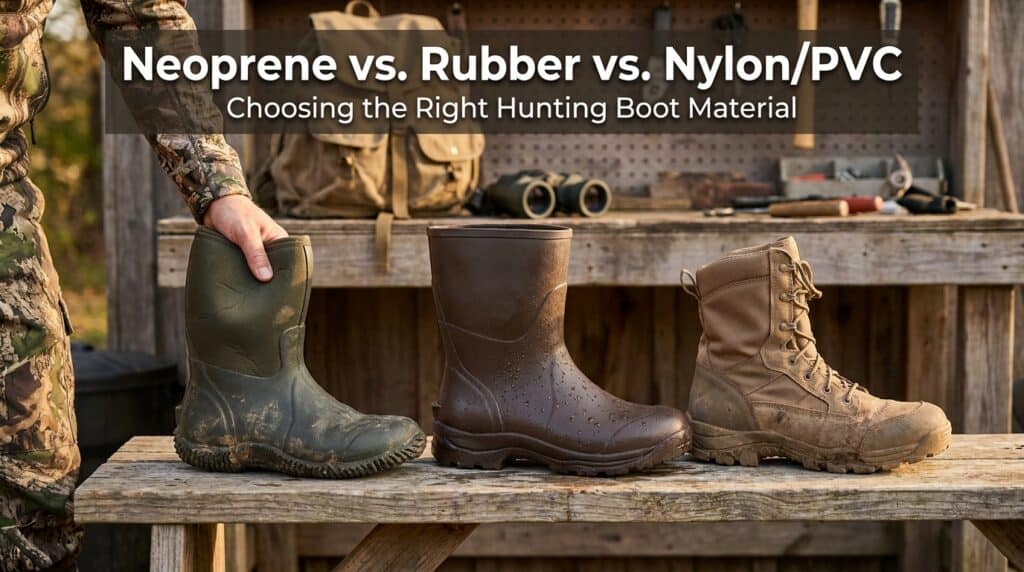
Budget hunting boots overwhelmingly use neoprene or solid rubber rather than leather, and the reason is simple: these materials achieve waterproofing through the material itself rather than an applied membrane or treatment. There’s no DWR coating to wear off, no seam-sealing to eventually fail the way it can on a stitched leather boot, and the manufacturing cost for a molded rubber or neoprene boot is dramatically lower than a leather upper with a bonded waterproof lining.
Within the budget tier itself, there’s a real sub-distinction worth knowing. Genuine 5–6mm neoprene (used in most TideWe and HISEA boots) insulates and stays flexible even in cold temperatures, resisting the stiffening that thinner rubber undergoes when it freezes. Cheaper nylon/PVC-shell boots are lighter and pack smaller but provide close to zero insulation and are more prone to punctures and seam leaks after repeated outings. The rule of thumb: for anything beyond a single warm-weather hunt, prioritize genuine neoprene construction over nylon/PVC — the price difference is often minimal, but the durability and cold-weather performance gap is real.
Insulation Guide for Budget Boots
| Insulation | Temp Range | Best Activity Level | Best Hunt Type |
|---|---|---|---|
| Uninsulated | 55°F+ | Active, sustained movement | Early season, upland, hog, varmint |
| 200g | 40–55°F | Active, light insulation for cool mornings | Upland walking, mild shoulder-season hunts |
| 400g | 35–55°F | Moderate activity | All-around default; mixed stand/walking hunts |
| 600g | 20–35°F | Some activity, some static | Cold-weather stand hunting with periodic movement |
| 800g | 0–20°F (static) | Largely stationary | Deer stand, duck blind, late-season cold sits |
A budget-specific warning: because scent control is largely absent under $100, stand and blind hunters leaning on 800g warmth should know that budget boots don’t bundle the scent-suppression some premium insulated boots market alongside their warmth rating. Insulation and scent control are separate features — they just happen to be bundled together at the premium tier.
The Sizing-Runs-Large Pattern
Multiple independent user reports on TideWe and HISEA boots specifically flag that these brands run large — the repeated advice from hunters who’ve actually worn them is to order a half size down from your normal shoe size. No competitor guide addresses this systematically despite it being a real, recurring pattern.
It matters more at the budget tier for two reasons: these boots are less likely to offer extensive half-size or width variants that let you fine-tune fit after an initial size miss, and return friction can be higher with budget-tier listings than with specialty retailers carrying premium boot brands. Order a half size down as your starting assumption for TideWe, HISEA, and similarly-constructed neoprene/rubber boots, and check the specific listing’s recent Q&A for sizing feedback before finalizing, since minor size-run changes between product revisions are common.
How Long Will a Budget Boot Actually Last?
For a hunter using the boots weekly through a 3–4 month season, 1–2 full seasons of solid performance before seams, insulation loft, or waterproof integrity noticeably degrade is a realistic expectation — not a defect, just the normal lifecycle of molded rubber under repeated flex-and-wet-mud stress. For occasional use (a handful of hunts per season, or as a dedicated mud/backup pair), 3+ seasons is realistic.
Here’s the honest math: a $90 boot replaced every 1–2 seasons totals $180–$270 across four years. A $300 premium boot with a realistic 6–8 year lifespan under similar use costs roughly the same or slightly less per year of ownership for a heavy, frequent user. That “premium is actually cheaper long-term” argument is roughly true if you hunt hard and often — but it’s genuinely false for occasional or seasonal hunters, who come out ahead financially by simply replacing a budget boot every season or two rather than tying up money in a boot they’ll under-use.
Hunt-Type Matching
Deer / stand hunting: static, often cold, scent-sensitivity matters most even though budget boots can’t fully solve it — an insulated (400–800g by season and region) tall rubber boot is the right match. Wash with scent-free soap and store away from strong odors between hunts, since that’s the main lever available at this price.
Duck / waterfowl: sustained water immersion is the defining condition. Genuine neoprene (not nylon/PVC), a tall 15″+ shaft, and aggressive tread for slick mud and boat-launch traction are essential. A steel shank helps meaningfully here for stability on uneven, submerged, or rocky wetland ground.
Upland / varmint / hog: active, ground-covering hunting where mobility and breathability matter more than maximum insulation. A lighter, ankle-to-mid-height, uninsulated or lightly-insulated boot beats a heavy tall insulated one that will overheat during sustained walking.
Early or warm-season hunting (any type): uninsulated is correct regardless of species — match the boot to temperature and activity level first, species second.
Affordable hunting boots and gear setup for budget-conscious hunters, featuring durable boots, binoculars, gloves, and a thermos, perfect for outdoor adventures.
Best Overall / Steel Shank Stability: Trudave Men’s Rubber Waterproof Boots with Steel Shank
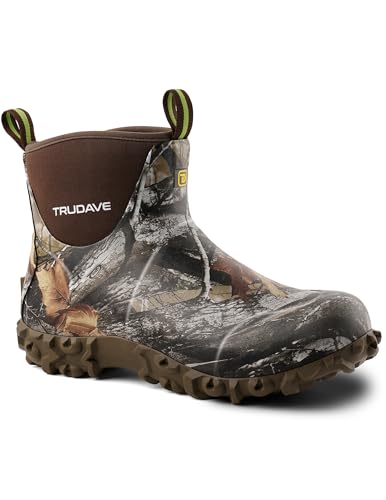
Trudave built its reputation specifically by punching above its price class in field testing — a genuine surprise in comparative reviews given how many sub-$100 boots leak or fall apart within a week of hard use. This model’s biggest advantage is the internal steel shank, a feature rare at this price point that adds real torsional rigidity underfoot, reducing foot fatigue on rocky trails and uneven, rutted ground.

Fully waterproof rubber construction with deep-lug tread for mud and wet grass traction. Because it lacks a steel shank in the outsole is rare among sub-$100 boots, this holds up noticeably better than flatter, softer competitors when carrying a loaded pack across uneven terrain — the shank prevents the boot from twisting underfoot the way a plain rubber sole does.
Best for: hunters wanting the single most structurally solid boot in this guide’s budget tier, general all-around use across mixed terrain. Not for: hunters needing serious cold-weather insulation — this is not an insulated model.
Best All-Around Budget: TideWe Rubber Hunting Boots
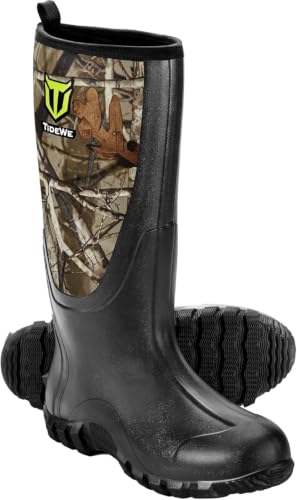
This is the boot repeatedly cited as the default budget recommendation across independent reviews — 6mm neoprene upper, a reinforced rubber toe cap that guards against the impacts that typically wear out the front of a boot first, and a natural rubber sole that resists punctures well. The neoprene stays flexible in cold rather than stiffening the way thinner rubber does.

Construction is solid — reviewers consistently report no seam splitting or insulation shifting inside the boot even after hard seasonal use. The tall shaft with an adjustable calf strap fits a wide range of leg sizes. Remember the sizing note above: order a half size down from your normal shoe size.
Best for: the default choice if you’re not sure which budget boot to buy — genuinely solid all-around construction. Not for: hunters who specifically need 800g-level cold-weather insulation — check the insulated TideWe/HISEA options below instead.
Best Lightweight / Early Season: TIDEWE Rubber Boots for Men, 5.5mm

At 5.5mm, this uses a slightly thinner neoprene shell than TideWe’s standard 6mm model — a deliberate tradeoff that shaves weight and reduces heat retention, making it the more comfortable choice for warm early-season hunts or active hunting styles where a thicker boot would leave you sweating by mid-morning.

Still fully waterproof and built with the same reinforced toe protection and deep-lug traction as TideWe’s heavier models — you’re trading warmth for breathability and lighter feel, not trading away core waterproofing performance.
Best for: early-season hunts above roughly 55°F, upland walking, or any hunt where a thick insulated boot would overheat. Not for: late-season cold-weather hunting — this offers minimal insulation.
Best Insulated / Cold Weather: HISEA 800g Insulated Hunting Boot
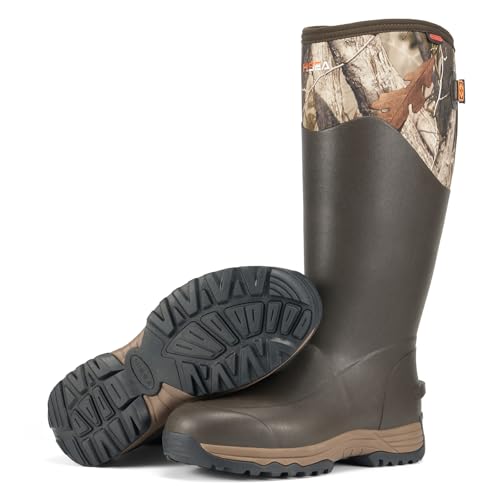
800 grams of insulation puts this at the top insulation tier commonly available under $100 — designed for genuinely cold climates without adding excessive bulk. Field reports specifically describe reliable traction on slippery surfaces and a padded collar that supports the ankle on long treks to and from a stand.

This is the correct pick per the insulation table above for late-season, largely stationary cold-weather hunts — deer stands and duck blinds in the 0–20°F range where you’re not generating much body heat through movement. Reinforced construction throughout for durability against rocks and debris.
Best for: late-season hunts, snowy fields, and moderate-to-rough terrain where sustained cold is the primary concern. Not for: active hunting styles where 800g will cause overheating — go with an uninsulated or 400g option instead.
Best Value / Most Reviewed: HISEA Rubber Hunting Boots

HISEA’s core uninsulated rubber hunting boot is one of the most widely reviewed budget hunting boots on the market — enough real-world feedback exists on this specific model to trust the pattern rather than a single testing session. Waterproof neoprene construction, comfortable for long and rough hunting sessions per repeated field feedback, with back pull-tabs that make getting the boot on and off genuinely easier than boots without them.

The calf area is wide enough to fit the average leg comfortably, with an adjuster strap for fine-tuning. The one honest tradeoff versus lighter competitors: the sole runs a bit heavier, though it doesn’t slow you down enough to fall behind hunting dogs on a walk.
Best for: hunters wanting the reassurance of an extensively reviewed, proven budget model. Not for: hunters specifically prioritizing the lightest possible boot — the sole is on the heavier side for this category.
Best for Mud / Wetland: Extremus MudRidge Hunting Boots by KastKing
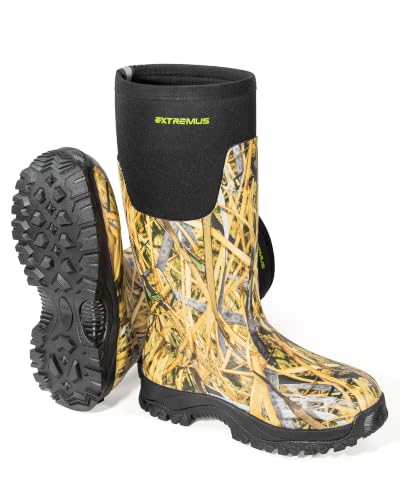
KastKing built its reputation in fishing gear, and the MudRidge brings that wet-environment engineering directly into a hunting boot — a genuinely useful crossover for anyone whose hunting overlaps with wading, boat launches, or consistently soggy ground. The name says exactly what it’s built for: sustained mud and wet-terrain performance rather than general all-purpose use.

Waterproof construction with an aggressive tread pattern specifically suited to slick, saturated ground where a standard tread can lose grip. This is the pick for hunters whose access routes to a stand or blind regularly involve genuinely wet, muddy conditions rather than dry trail walking.
Best for: wet-access hunting, marsh edges, muddy field approaches. Not for: dry, rocky mountain terrain where a mud-optimized tread offers no particular advantage.
Best for Waterfowl / Duck Hunting: HOT SHOT Duck Commander x Countryman

Purpose-built and branded specifically for waterfowl hunters, this model is designed around uncompromising warmth for cold-water duck hunting without sacrificing rugged durability. This is the boot to reach for when you’re standing in a flooded field or duck blind for hours at a stretch, not walking a dry upland field.

Insulated construction matched to the sustained-immersion, largely stationary reality of duck blind hunting — exactly the scenario the insulation table above flags as needing the highest warmth tier available at this price. Waterproof through full submersion, not just splash resistance.
Best for: dedicated waterfowl hunters standing in cold water or flooded fields for extended periods. Not for: dry-ground upland or varmint hunting — this boot’s strengths are wasted outside a wet, cold-water context.
Best Tall Shaft / Deep Water: LaCrosse Men’s Grange 18″ Waterproof Hunting Boot
⚠️ LaCrosse is positioned above TideWe/HISEA in the market — verify the current price sits under $100 for your size and colorway before ordering.

LaCrosse is a genuinely established name in rubber hunting boots, and the Grange brings that brand credibility to this guide’s tallest shaft option at 18″ — real depth protection for flooded timber, deep marsh, or any terrain where a standard 15–16″ boot would let water in over the top.

If you can catch it at the right size and price point under $100, this is a step up in brand pedigree from the pure-budget picks in this guide, without moving into true premium pricing. Waterproof rubber construction with the fit consistency LaCrosse is generally known for.
Best for: deep water, flooded timber, or any hunt where maximum shaft height genuinely matters. Not for: buyers who can’t confirm current pricing stays under $100 — check before ordering.
Best Named-Brand Ankle Support: Irish Setter Terrain Men’s 10″ Waterproof Hunting Boot
⚠️ Irish Setter is a mid-premium brand — verify the current price sits under $100 for your size before ordering.
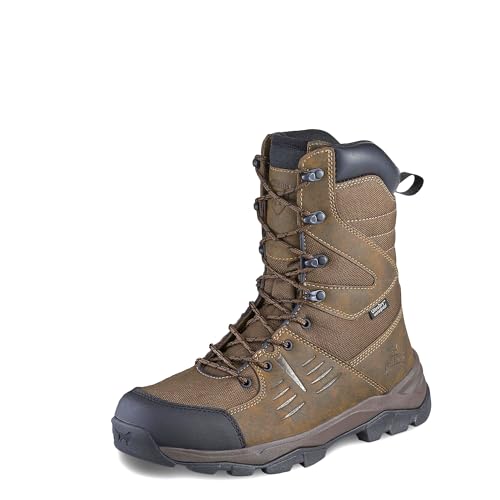
Irish Setter carries a stronger ankle-support reputation than most true budget brands, built into the boot’s construction rather than being an afterthought. The 10″ leather-and-rubber hybrid shaft gives more structured ankle coverage than the pure rubber pull-on boots that dominate this guide, which matters if you’re covering uneven ground on the walk to your stand rather than sitting stationary the whole hunt.

Waterproof construction in a more traditional hunting-boot silhouette than the tall rubber pull-ons elsewhere in this list — a genuine option for hunters who prefer a laced boot’s fit precision over a pull-on’s convenience, if you can find it at the right price.
Best for: hunters who want more structured ankle support and a traditional laced-boot fit within budget. Not for: deep water or flooded terrain — the 10″ height and hybrid construction aren’t built for submersion the way tall rubber boots are.
Best for Women: TIDEWE Rubber Boots for Women with Steel Shank

A women’s-specific last with the same steel shank stability advantage found in the men’s Trudave pick above — real torsional rigidity underfoot on uneven ground, a feature rare at this price point regardless of gender-specific fit. A necessary, honest note: earlier versions of budget women’s hunting boots in this general category have been criticized in independent reviews for running tight through the calf. Check current listing feedback specifically for calf-fit comments before ordering, since manufacturers do revise sizing between production runs, and this is worth verifying rather than assuming either way.

Waterproof rubber construction with the same deep-lug traction standard across this price tier. If calf fit is a known concern for you, look specifically for an adjustable strap or gusset in the current listing images before ordering.
Best for: women hunters wanting steel-shank stability at budget pricing. Not for: buyers with fuller calves without first checking current sizing feedback — verify before ordering.
Best Lightweight Insulated / Upland: Men’s 7″ Waterproof Lightweight Hunting Boot, 200g Thinsulate
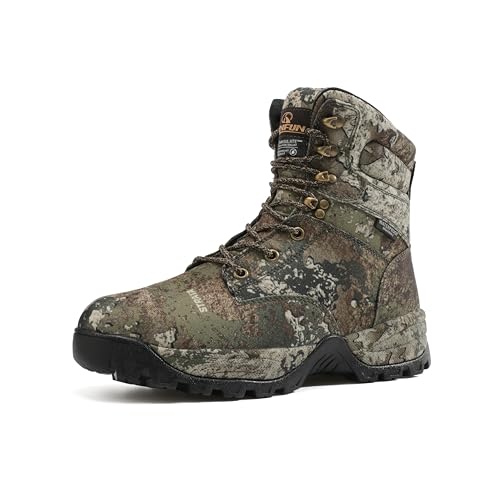
This is a genuinely different silhouette from most of this guide — a 7″ hiking-boot-style construction rather than a tall rubber pull-on, with 200g of Thinsulate for light cool-weather insulation without the bulk or overheating risk of a heavier gram rating. Non-slip outsole built more like a hiking boot’s tread than a rubber wellington’s deep lug.

Per the insulation table above, 200g sits at the light end — correct for active upland walking in cool-but-not-cold conditions where you want some warmth without your feet overheating on a multi-mile walk. This is the pick for hunters who find tall rubber boots too hot or too heavy for ground-covering hunts.
Best for: upland bird hunting, active walking hunts in cool weather, hunters who prefer a hiking-boot feel over a rubber pull-on. Not for: standing water or deep mud — this isn’t built for submersion the way the tall rubber boots are.
Best Dual-Purpose Work/Hunt Boot: Men’s Waterproof Military Tactical Work Boots with Steel Shank
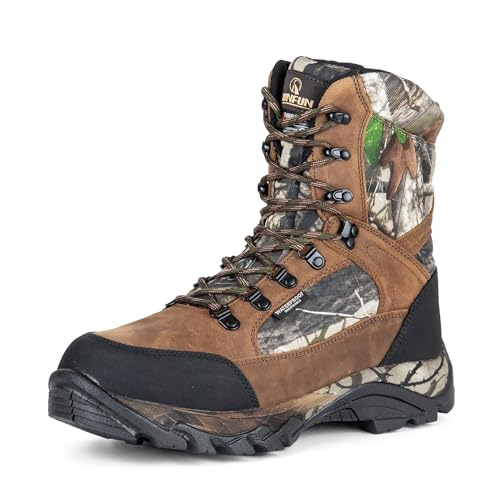
Not marketed specifically as a hunting boot, but genuinely useful for hunters who want one pair of boots that does double duty on the farm, job site, or property maintenance during the week and still performs on a hunt on the weekend. Steel shank construction for the same torsional stability advantage found in the dedicated hunting picks above, in a more tactical, general-purpose silhouette.

Waterproof construction handles wet ground and light mud adequately, though this isn’t built for the sustained deep-water immersion the dedicated tall rubber hunting boots handle. The mid-height, laced design offers more ankle lockdown than a pull-on rubber boot, useful for uneven ground and general durability.
Best for: hunters wanting one versatile boot for work, property use, and moderate-condition hunting. Not for: deep water, flooded fields, or sustained wet-immersion hunting — choose a dedicated tall rubber boot for that.
Best for Snake Country Hunting: Snake Proof Boots for Men, 1000D Oxford
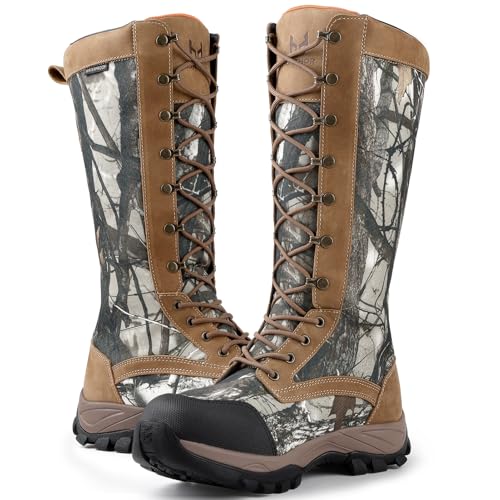
For hunters working brushy, tall-grass, or rocky terrain in snake-active regions, this is a specialty pick that solves a hazard none of the other boots in this guide address — genuine bite-resistant construction in the shaft using heavy-duty 1000D Oxford fabric over a protective barrier layer, at a price point most dedicated snake boots don’t reach.

Waterproof construction with a tall 16″ shaft covering the primary strike zone. This isn’t a substitute for the insulated or deep-water picks elsewhere in this guide — it’s a specialty tool for a specific regional hazard, and hunters in snake-active states (turkey hunters moving through brush, early-season deer hunters in tall grass) should weigh this specifically against their actual regional risk.
Best for: turkey hunters, early-season hunters, and anyone working brushy or rocky terrain in regions with venomous snake activity. Not for: deep water or heavy cold-weather insulation needs — this is a protection-specific boot, not an all-around pick.
Best Budget Camp/Chore Shoe: WOVENPAK Waterproof Garden Shoes / Rain Boots
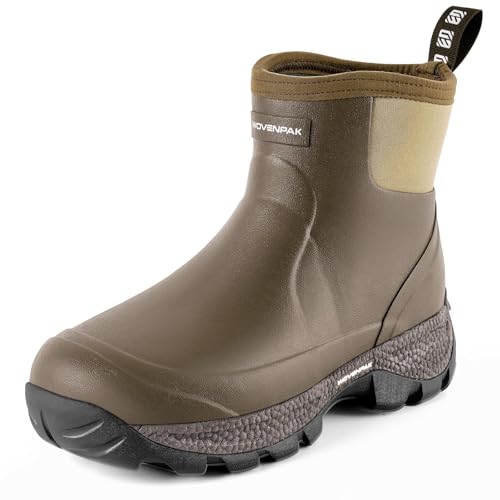
Worth an honest disclosure upfront: this isn’t a true hunting boot the way everything else in this guide is — it’s a lightweight, low-cut waterproof garden/rain shoe, included specifically because it’s genuinely useful as camp and chore footwear around a hunting cabin, blind setup, or muddy truck-to-stand walk where you don’t want to wear your actual hunting boots.

Ankle-height, waterproof, slip-on convenience — the correct tool for camp chores, quick trips to check a trail camera, or general wet-ground utility use where full hunting-boot protection is overkill. Don’t rely on this for an actual sit in a stand or blind; it lacks the insulation, shaft height, and durability the dedicated picks above offer.
Best for: camp and chore use, quick wet-ground trips, a spare pair to keep in the truck. Not for: actual hunting use — this is a utility shoe, not a hunting boot.
Care Guide for Budget Rubber/Neoprene Boots
Rinse mud and organic debris off after every hunt — dried-on mud and manure-adjacent field debris accelerate rubber degradation if left on. Store boots upright or on boot trees away from direct sunlight; UV exposure is one of the fastest ways to crack rubber and neoprene over an off-season. Avoid parking boots directly against a heat source (garage heater, truck exhaust) to dry — high heat degrades rubber and can warp the sole. A simple soap-and-water wipe-down before storage, followed by full air drying, is enough maintenance for this entire category — there’s no leather to condition or membrane to re-treat.
FAQ — 8 Questions Answered
Are budget hunting boots under $100 actually good?
Yes, for the right use case. Waterproofing and insulation performance are genuinely comparable to premium boots gram-for-gram, since both are commodity technologies that scale down affordably. What you give up is scent-control technology, engineered ankle support structures, and multi-season durability — reasonable tradeoffs for new hunters, occasional hunters, or anyone wanting a dedicated backup pair.
What’s the difference between a $90 hunting boot and a $300 hunting boot?
Less than marketing implies on waterproofing and insulation, more than expected on scent control (largely absent under $100), engineered ankle support (general cushioning vs. dedicated ankle-bone support systems), and expected lifespan (1–2 seasons of heavy use vs. a decade-plus for premium boots).
Do TideWe or HISEA hunting boots run true to size?
No — both brands are consistently reported to run large. Order a half size down from your normal shoe size as a starting point, and check the specific listing’s recent user Q&A for any sizing updates before ordering.
How long do budget hunting boots last?
For weekly use through a full season, expect 1–2 solid seasons before performance noticeably degrades. For occasional use or as a dedicated backup pair, 3+ seasons is realistic. This is normal wear for molded rubber and neoprene under repeated flex-and-wet-mud stress, not a product defect.
What insulation weight do I need for hunting boots under $100?
Uninsulated for 55°F+ and active hunting styles. 200–400g for mild-to-moderate cold with moderate activity. 600g for cold conditions with some movement. 800g for genuinely cold, largely stationary hunts like deer stands and duck blinds in the 0–20°F range.
Are cheap neoprene hunting boots waterproof?
Yes, genuinely. A sealed 5–6mm neoprene or solid rubber shell achieves waterproofing through the material itself, not an applied coating that can wear off — this is one of the areas where budget construction doesn’t meaningfully compromise performance versus premium boots.
Do budget hunting boots have scent control?
No, essentially never under $100. Activated carbon lining and specialized scent-elimination treatments are expensive add-on technologies largely reserved for premium boots. Budget boots rely on rubber and neoprene’s naturally low scent profile — wash with scent-free soap and store away from strong odors as the main available lever.
What’s the best budget hunting boot for duck hunting vs. deer hunting?
For duck hunting, prioritize genuine neoprene, a tall 15″+ shaft, and aggressive tread for wet, slick ground — the HOT SHOT Duck Commander x Countryman and TideWe/HISEA tall boots fit this best. For deer stand hunting, prioritize insulation matched to your local temperature range (400–800g) since scent control isn’t fully available at this price tier regardless of which boot you choose.
Final Verdict: Best Budget Hunting Boot by Hunt Type
Hunt Type → Best Budget Boot
Not sure where to start / general all-around use: TideWe Rubber Hunting Boots
Rocky, uneven terrain / maximum stability: Trudave Steel Shank
Early season / warm weather: TIDEWE 5.5mm
Late-season cold, deer stand or duck blind: HISEA 800g Insulated
Muddy, wet-access terrain: Extremus MudRidge by KastKing
Dedicated waterfowl / duck blind: HOT SHOT Duck Commander x Countryman
Deep water, flooded timber: LaCrosse Grange 18″ (verify price)
Uneven ground, want structured ankle support: Irish Setter Terrain 10″ (verify price)
Women hunters: TIDEWE Women’s Steel Shank
Upland walking, active hunts: 7″ Insulated 200g Hiking-Style Boot
One boot for work and hunting: Tactical Work Boots, Steel Shank
Snake-active regions: Snake Proof Boots, 1000D Oxford
Camp and chore use, not actual hunting: WOVENPAK Garden/Rain Shoes
None of these boots pretend to be a $300 pair of Crispis, and this guide hasn’t pretended otherwise. What they deliver honestly — real waterproofing, genuine insulation, and adequate traction — covers what most hunters actually need most of the time. Match the boot to your hunt type and your climate, size down a half step from what you’d normally order, and budget hunting boots will do their job for as many seasons as you actually need them to.