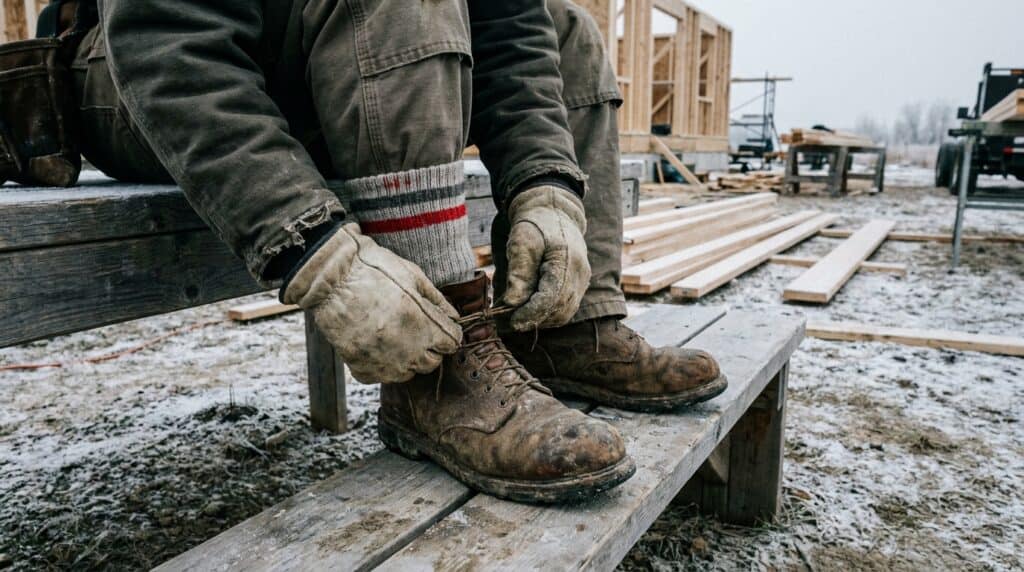

Cold feet in work boots usually come from three things: moisture, cold ground and poor circulation. Fix those and most boots get a lot warmer, even ones without much insulation.
If you only do three things this week, do these:
- Start every shift with dry boots and put on dry socks at lunch. Wet feet get cold fast.
- Swap cotton socks for wool. Wool keeps you warm even when it gets damp.
- Add an insulating insole. It puts a layer between your foot and the frozen ground.
Below are 11 fixes, ordered from free to most expensive. Most cold-feet problems are solved before you get to the ones that cost real money.
Why Your Feet Get Cold in Work Boots
Before you buy anything, it helps to know where the heat is going. On a job site it's usually one of these three.
1. Moisture: sweat and leaks
Your feet sweat all day, even in winter, and a hard-working boot traps that sweat. Add slush, puddles or a leaking seam, and your socks get damp. Damp socks pull heat away from your skin much faster than dry ones.
Wet feet are also a safety issue. NIOSH says trench foot can happen at temperatures as high as 60°F if your feet stay wet for a long time (NIOSH Fast Facts: Protecting Yourself from Cold Stress, retrieved 2026-10-24). You don't need freezing weather for wet feet to cause real damage.
2. Cold ground: concrete, steel and frozen dirt
When you stand still on frozen concrete, a steel deck or frozen ground, heat moves out of your foot through the sole of the boot. The longer you stand in one spot, the worse it gets. That's why a boot that feels fine while you're walking can feel freezing after an hour at a workbench or on a ladder.
3. Circulation: boots that are too tight
Warm blood is what keeps your toes warm. If your boots are laced too tight, or you've packed a thick sock into a boot that only fits a thin one, you squeeze that blood flow. NIOSH notes that tight clothing reduces circulation to the extremities (NIOSH, retrieved 2026-10-24). A tight boot with more socks is often colder than a roomy boot with one good sock.
Your body also protects your core first. When your chest and legs get cold, less warm blood goes to your feet. Cold feet are sometimes a sign that the rest of you needs another layer.
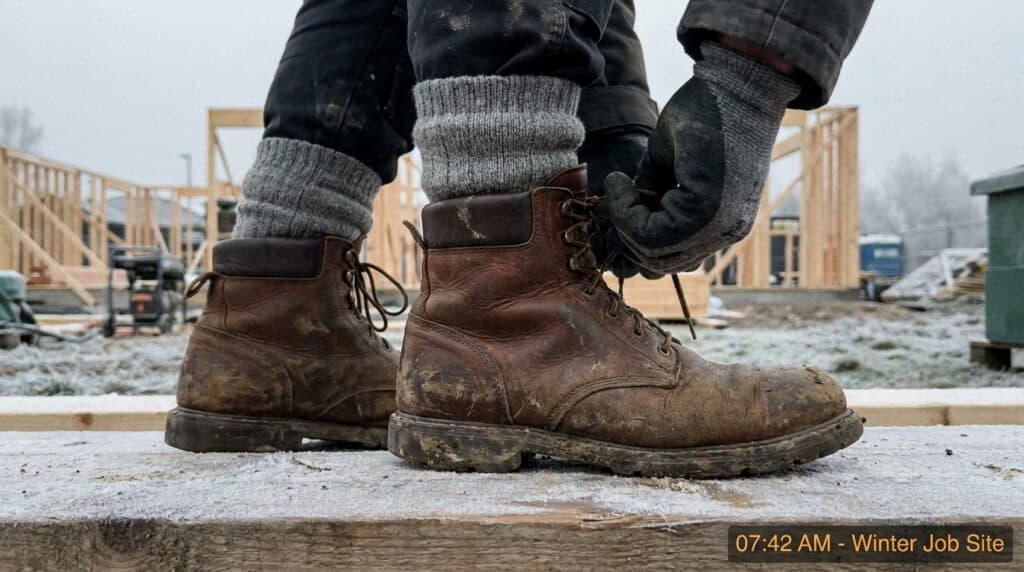
The 11 Fixes at a Glance
| # | Fix | What it solves | Cost |
|---|---|---|---|
| 1 | Start every shift with dry boots and dry feet | Moisture | Free (a boot dryer is about $50) |
| 2 | Change your socks at lunch | Moisture | Free |
| 3 | Fix the fit and lacing | Circulation | Free |
| 4 | Keep your core warm and keep moving | Circulation | Free |
| 5 | Don't stand directly on frozen concrete or steel | Cold ground | Free |
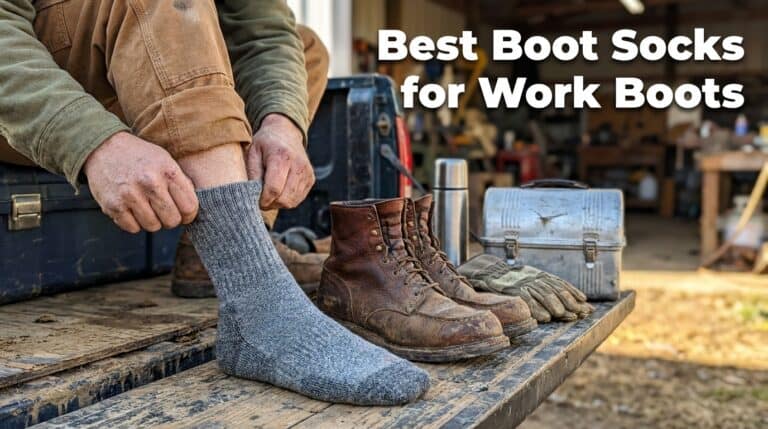
| 6 | Switch to wool or synthetic work socks | Moisture | $25 to $30 a pair |
| 7 | Add a thin liner sock | Moisture | Under $15 |
| 8 | Add an insulating insole | Cold ground | $10 to $25 |
| 9 | Use toe warmers on the coldest days | Extreme cold | Under $1 a pair in bulk |
| 10 | Waterproof the outside of your boots | Moisture | About $20 |
| 11 | Go heated, or upgrade to an insulated boot | Extreme cold and standing still | $65 and up |
Prices are approximate Amazon prices, retrieved 2026-10-24. They change often, so check the current price before you buy.
Free Fixes
Fix 1: Start every shift with dry boots and dry feet
This is the most important fix on the list. If your boots are still damp from yesterday, your feet start the day already losing heat.
At the end of every shift, pull the insoles out and open the boots up wide so air can get in. Don't put them right next to a heater or a fire. Direct high heat can dry out and crack leather and weaken glued soles. A warm room overnight is often enough for boots that are only a little damp.
If your boots are soaked most days, a boot dryer is worth the money. It blows gently warmed air up into the toe, which is the part that never dries on its own. The PEET Original boot dryer is one of the most popular options on Amazon and costs about $49.99. For more options, see our guide to the best boot dryers for work boots.

In the morning, put your socks on right before you leave, not an hour earlier while you're making coffee in a cold house. Start with dry, warm feet.
Fix 2: Change your socks at lunch
Pack a spare pair of socks in a zip bag and change into them at lunch or on a break. By mid-shift, your morning socks are holding a lot of sweat, even if they don't feel wet. Fresh socks feel warmer straight away.
NIOSH recommends carrying extra socks when you work in the cold (NIOSH, retrieved 2026-10-24). It costs nothing, and for people with sweaty feet it often makes more difference than any product. If you get wet early in the day, change sooner. Don't wait until lunch.
Fix 3: Fix the fit and lacing
Your toes need room to wiggle. If they're pressed against the end of the boot or the toe cap, they'll get cold fast. That pressure cuts blood flow and leaves no warm air around your toes.
A few simple rules:
- Don't stack socks. If your boots only fit one thin sock, a second pair makes your feet colder, not warmer.
- Loosen the lower laces. Keep the laces over your toes and the front of your foot loose. Lock the ankle snug so your heel doesn't slide.
- Buy winter boots with room for winter socks. Try boots on with the thick socks you'll actually wear. Many people need a half size up, or a wider width, in a winter boot.
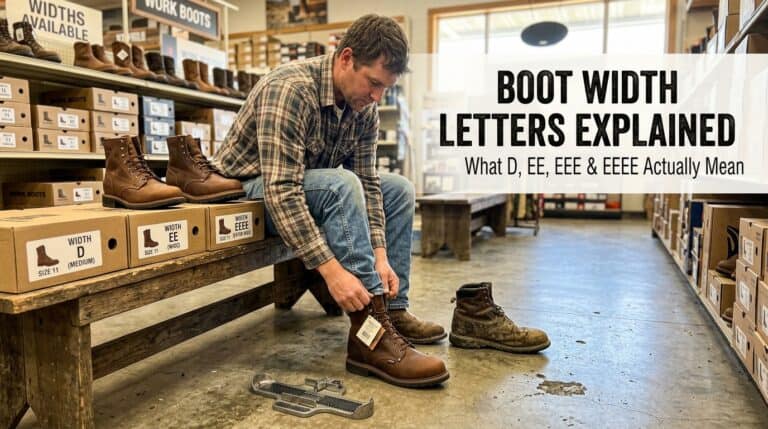
If you're not sure what width you need, our boot width letters guide explains D, E, EE and EEE in plain terms.
Fix 4: Keep your core warm and keep moving
When your body starts getting cold, it keeps warm blood around your heart and other organs and sends less to your hands and feet. So the fix for cold toes is sometimes a warmer jacket, a base layer or insulated bibs.
Keep your legs warm too. Cold air on your shins and calves cools the blood on its way down to your feet.
Moving helps as well. If you're stuck in one spot, wiggle your toes, shift your weight from foot to foot, or walk a short lap every so often. NIOSH also recommends taking breaks in warm places when you work in the cold (NIOSH, retrieved 2026-10-24). On a break, take your boots off for a few minutes if you can and let your feet warm up.
Fix 5: Don't stand directly on frozen concrete or steel
This is the fix most guides skip, and it's one of the biggest for job sites. Frozen concrete and steel pull heat out through your sole all day.
If you work in one spot, such as at a saw, a workbench, a ladder base or a pump, put something between your boots and the ground:
- A rubber anti-fatigue mat
- A piece of plywood or OSB
- A few layers of cardboard, in a pinch
Even a thin layer of wood or rubber keeps your sole from sitting directly on cold ground, and your feet stay warmer for longer. Your legs will thank you at the end of the shift too.
Cheap Fixes (Under $25 to $30)
Fix 6: Switch to wool or synthetic work socks
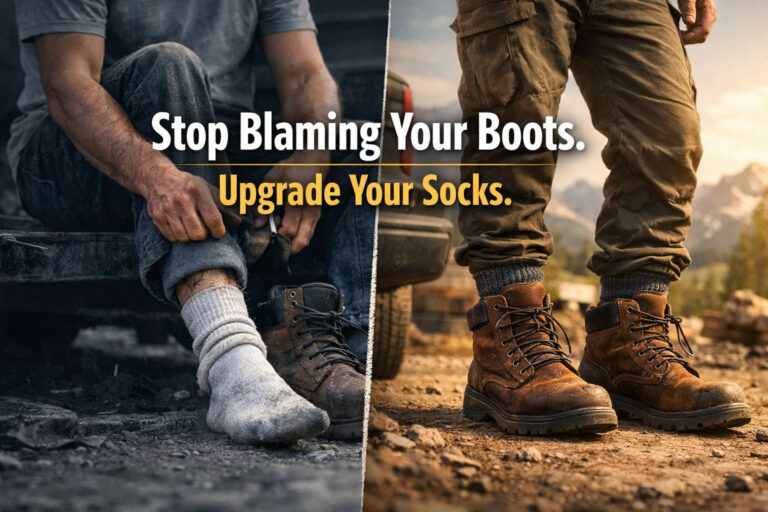
Never wear cotton socks in cold weather. Cotton soaks up sweat, holds it against your skin and loses most of its warmth once it's wet. Wool stays warm even when it's damp, and it doesn't smell as fast either.
For work boots, look for a midweight merino wool sock with extra cushioning under the foot and at the toe. Thick hunting socks can be too bulky for a work boot that already fits well, which brings us back to fix 3.
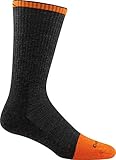
The Darn Tough Steely Boot Midweight is made for safety toe boots. It has a full cushion and extra padding at the toe box, where a steel or composite cap presses on your toes. It has a 4.7-star rating from more than 1,400 reviews on Amazon (Amazon, retrieved 2026-10-24) and costs about $26.95.
For more choices, see our guides to the best boot socks for work boots and the best wool socks.
Fix 7: Add a thin liner sock
If your feet sweat a lot, a thin liner sock under your wool sock helps. The liner pulls sweat off your skin and passes it to the outer sock, so your skin stays drier. It also cuts down on rubbing and blisters.
This is the one case where two socks make sense. A liner is very thin, so it barely changes how your boot fits. Check that your toes can still move freely.
The Fox River Wick Dry Alturas liner is an ultra-lightweight liner with a 4.4-star rating from about 4,400 reviews on Amazon (Amazon, retrieved 2026-10-24). It costs about $12.00.

Fix 8: Add an insulating insole
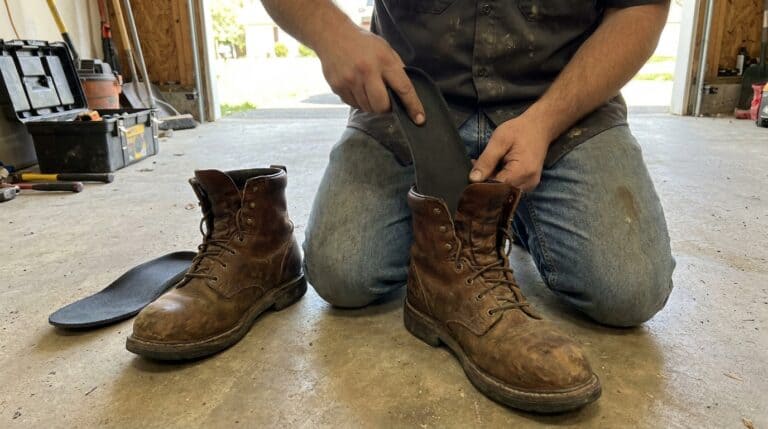
Most stock insoles in work boots are thin foam. They do very little to stop the cold coming up from the ground. An insulating insole adds a layer between your foot and the sole of the boot.
Take the stock insole out first. If you put a thermal insole on top of the old one, the boot gets tighter and you lose the circulation you just gained.
Two good options on Amazon:
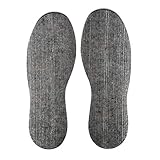
- Yaktrax Thermal insoles (about $9.99): a thin, layered insole with a reflective layer and a soft top. It's the cheapest way to try this fix, and it fits most work boots without making them tight.
- UGG Sheepskin insole (about $24.95): a thick wool pile insole that feels very warm, with a 4.7-star rating from more than 6,000 reviews (Amazon, retrieved 2026-10-24). It's thick, so only use it in roomy boots.
If you need arch support more than warmth, a thermal insole may not be enough on its own. Our guide Do You Need Insoles in Work Boots? helps you decide which kind of insole you need.
Fix 9: Use toe warmers on the coldest days
On the worst days of the year, disposable toe warmers buy you a few extra hours. They're air-activated: you open the pack, stick the warmer to the top of your sock over your toes, and it heats up.
The HotHands Toe Warmers 20-pair value pack has a 4.6-star rating from more than 18,000 reviews on Amazon (Amazon, retrieved 2026-10-24) and costs about $18.99. If you're buying for a whole crew, the bulk HotHands pack works out cheaper per pair.

A few things to know before you rely on them:
- They need air to work. Some buyers say toe warmers get weaker in tight, waterproof boots, where there's very little air. Try a pair on a normal day before you count on them for a long, cold shift.
- Stick them on the sock, not on your skin. Follow the directions on the package.
- Be careful if your feet are numb. If you can't feel your toes well, you may not notice if a warmer gets too hot. People with diabetes or poor circulation should ask a doctor before using them.
Bigger Fixes
Fix 10: Waterproof the outside of your boots
Even a waterproof boot can let you down if the leather soaks up water. Wet leather feels cold, gets heavier, and over time the water can work its way to your socks. Leather that has dried out and cracked lets in even more.
For leather work boots, a beeswax treatment is one of the best ways to keep snow and slush out. Atsko Sno-Seal is a classic beeswax boot treatment with a 4.8-star rating on Amazon (Amazon, retrieved 2026-10-24). It costs about $17.59. Warm the boots a little, rub the wax in, pay extra attention to the seams and where the upper meets the sole, and let it soak in overnight.

Wax can darken leather, and it isn't right for every material. Our guide on how to waterproof work boots explains when to use wax, oil or a spray.
Fix 11: Go heated, or upgrade to an insulated boot
If you've done the first 10 fixes and your feet are still cold, the problem is probably the boot itself, or you're standing still in very low temperatures for hours. That's when it's worth spending real money.
Heated insoles and heated socks
Heated gear is best for people who stand still in deep cold: security, traffic control, crane operators, inspectors and anyone working outdoors without much moving around.
- Thermrup rechargeable heated insoles (about $69.95): the battery sits inside the insole, so there are no wires to your ankles. You trim them to fit and control the heat with a remote. They have a 4.3-star rating from more than 1,500 reviews (Amazon, retrieved 2026-10-24).
- Savior Heat heated socks (about $67.99): rechargeable socks with the heat around your toes. They have a 4.0-star rating from about 950 reviews (Amazon, retrieved 2026-10-24).
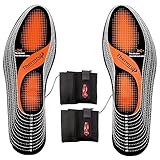
Two honest warnings. Batteries run down faster in deep cold, and the highest heat setting drains them fastest. Check the run times on the listing, then expect less on the coldest days. Charge them every night, and keep the insoles dry when you can. For more options, see our guide to the best heated socks and heated insoles.
An insulated boot
A regular uninsulated work boot plus good socks only goes so far. If you work outside all winter, an insulated boot is the real fix. A rough guide to insulation:
- 200g to 400g: active work in cool to cold weather, where you're moving most of the day.
- 600g to 800g: a mix of moving and standing in cold weather.
- 1000g and up: standing still in deep cold for long periods.
Our Thinsulate grams guide explains these levels in more detail. When you're ready to shop, start with our list of the best winter work boots, or our best steel toe boots for extreme cold if you need a safety toe.
If you don't need a safety toe, a pac boot or a snow boot is much warmer for outdoor winter work. Our reviews of the Columbia Bugaboot III and the Salomon Toundra Pro CSWP cover two options Ethan has worn in real snow.
Do Steel Toe Boots Make Your Feet Colder?
This is one of the most common beliefs on job sites: steel toes get cold and make your toes freeze. The research says it's less simple than that.
A 1999 study from Lund University in Sweden tested boots with and without steel toe caps (Kuklane, Geng and Holmér, "Thermal effects of steel toe caps in footgear", International Journal of Industrial Ergonomics, 1999, retrieved 2026-10-24). In the human tests at -10°C, the researchers found no significant difference in toe skin temperature between the boots with steel caps and the ones without. In one of the two boot models, the version with the steel cap did have slightly lower insulation.
It was a small study, with a few people sitting still for about an hour, so it doesn't settle the question for every boot and every shift. But it points to something useful: the toe cap matters much less than insulation, dry socks and fit. A steel toe boot that's tight across the toes will feel cold, mostly because the cap presses on your toes and leaves no room for warm air or blood flow.
If you still want to rule it out, composite toes don't conduct cold the way metal does, and many people find them more comfortable in winter. Our steel toe vs composite toe guide compares the two.
Ethan's Cold-Weather Notes
Ethan Walker has worn several of the boots we link to here through real winters. Here's what that taught him about warm feet.
The Baffin Impact is the boot he reaches for when it's truly cold. He's put more than 40 hours in it at about -25°C. At that point, socks and insoles can't make up for a boot that isn't built for the cold. You need the right boot.
He wore the Columbia Bugaboot III through a full winter, and his feet stayed dry. It runs small, so size up, especially if you plan to wear thick wool socks (see fix 3).
The Bugaboot III on Amazon has a 4.5-star rating from about 1,600 reviews (Amazon, retrieved 2026-10-24).
For everyday work, he wears regular work boots like the Irish Setter Ashby and the Wolverine Overpass. They're fine for cool days, but in real winter cold, good socks only go so far in an uninsulated boot. That's the honest limit of fixes 1 to 10.
[ETHAN: ADD 1-2 OF YOUR OWN COLD-DAY HABITS HERE, E.G. SPARE SOCKS IN THE TRUCK, OR DELETE THIS LINE]
When Cold Feet Are a Warning Sign
Cold feet are usually just uncomfortable. But sometimes they're a sign of a cold injury. Know these signs, from NIOSH's cold stress guidance (NIOSH Fast Facts: Protecting Yourself from Cold Stress, retrieved 2026-10-24).
Trench foot (from feet staying wet and cold, even well above freezing):
- Reddened skin
- Numbness
- Swelling
- Tingling pain
- Blisters
Frostbite:
- Numbness
- Tingling or stinging
- Aching
- Bluish or pale, waxy skin
What to do: get to a warm place, get out of wet socks and boots, and get medical help. With possible frostbite, avoid walking on the feet if you can, warm them in warm (not hot) water, and don't rub or massage them.
If you have diabetes, Raynaud's or any circulation problem, talk to your doctor about working in the cold. Cold feet can be more serious for you, and you may not feel warning signs as early.
Quick Checklist Before a Cold Shift
- Boots dried overnight, with insoles pulled out
- Wool socks on, plus a liner if your feet sweat
- A spare pair of socks in a zip bag
- An insulating insole in place of the stock one
- Laces loose over the toes, snug at the ankle
- Toe warmers packed for the coldest days
- A mat or piece of plywood if you'll stand in one spot
- Enough layers on your core and legs
Frequently Asked Questions
Why do my feet get cold in work boots even with thick socks?
Usually because the thick socks make the boots too tight, which cuts blood flow to your toes. Sweat is the other common cause, since damp socks lose warmth fast. Cold ground under the sole is the third, especially if you stand still.
Do steel toe boots make your feet colder?
Not as much as most people think. A 1999 Lund University study found no significant difference in toe skin temperature in its human tests at -10°C. Fit, insulation and dry socks matter far more than the toe cap.
Is it OK to wear two pairs of socks in work boots?
Only if the boot has room for both. A thin liner under a wool sock works well. Two thick socks in a boot that fits one usually makes your feet colder.
Are toe warmers safe in work boots?
Yes, for most people, if you follow the directions on the package and stick them on your sock, not your skin. Be careful if your feet are numb or you have diabetes or poor circulation, because you may not notice if they get too hot.
How many grams of Thinsulate do I need for winter work?
About 200g to 400g for active work, 600g to 800g if you mix moving and standing, and 1000g or more for standing still in deep cold. See our Thinsulate grams guide for more.
Do heated insoles really work?
Yes, especially for people who stand still in the cold. The main limit is the battery, which runs down faster in deep cold and on high settings. Charge them every night and keep a backup plan, like toe warmers.
How do I keep my feet warm if my boots get wet?
Change into dry socks as soon as you can, and keep a spare pair with you for this. Dry the boots properly overnight with the insoles out, ideally with a boot dryer. If your boots get wet often, wax the leather or look at a more waterproof boot.
When should I see a doctor about cold feet at work?
See a doctor if you have numbness that doesn't go away, pale, waxy, bluish or grayish skin, swelling or blisters. Those can be signs of frostbite or trench foot. If you have diabetes or a circulation problem, talk to your doctor before working in the cold.
The Bottom Line
Most cold feet in work boots come from moisture, cold ground and tight boots, so start with the free fixes: dry boots every morning, a sock change at lunch, looser laces and a mat to stand on.
If you have a small budget, start here:
- Under $15: a pair of Yaktrax Thermal insoles in place of your stock insoles.
- Under $30: a pair of Darn Tough Steely Boot wool socks.
- About $50: a PEET boot dryer, so you start every shift dry.
If your feet are still cold after all that, it's time for an insulated boot. Start with our best winter work boots.