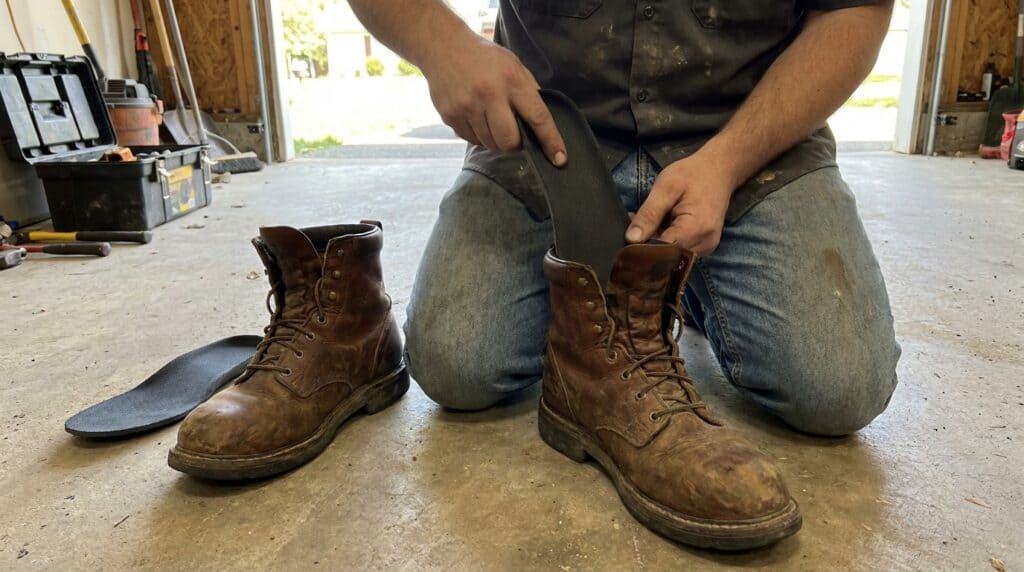

If you spend 8 to 12 hours a day in work boots, the short answer is yes, most people are better off with an aftermarket insole. The insert that ships in most work boots is a thin layer of foam. It feels fine on day one, then packs down and stops doing much.
A good insole costs $20 to $60. That's a small price next to a $200 pair of boots that hurt by lunch. The American Academy of Orthopaedic Surgeons also lists pre-made shoe inserts and heel cushions among the helpful nonsurgical treatments for heel pain (AAOS OrthoInfo, retrieved 2026-09-25).
Below are 7 real reasons to add insoles to your work boots, how to tell whether you need cushioning or support, and 5 insoles worth starting with. For the full list of 8 picks by arch type, see our best insoles for work boots guide.
What's Actually Inside Your Work Boot Right Now
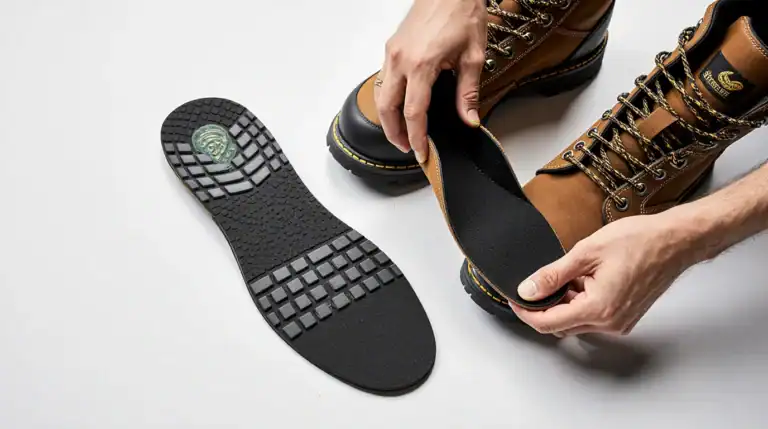
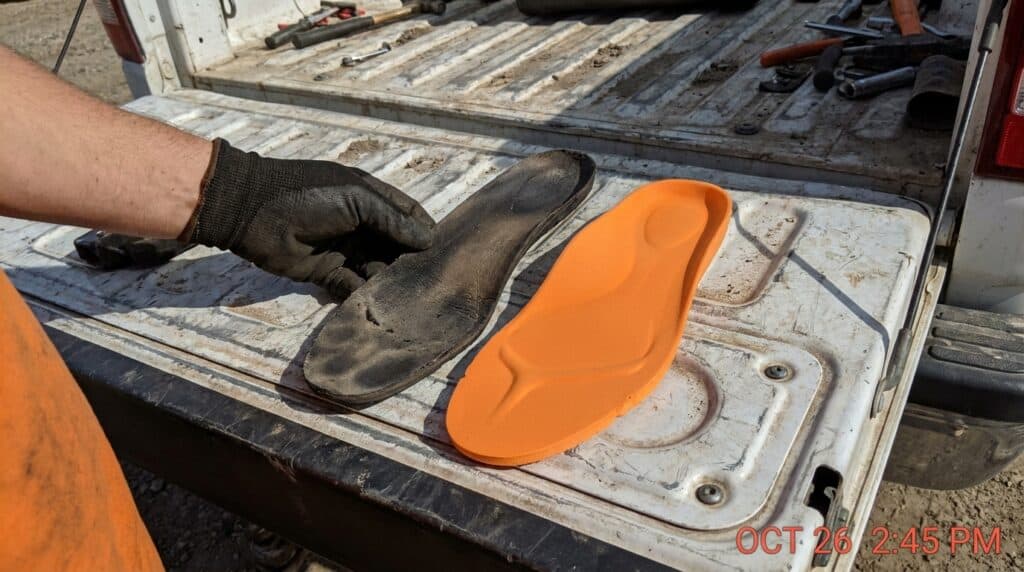
Pull the insole out of your work boot and look at it. In most boots you'll find a flat or lightly shaped piece of EVA or PU foam, a few millimeters thick, with a fabric top.
That's the factory insole, also called a footbed or sockliner. Brands spend their money on the parts you can see: leather, the safety toe, the outsole and waterproofing. The insole is usually the cheapest part of the boot.
Here's a quick test:
- Press your thumb into the heel area. If it bottoms out right away, there's little shock absorption left.
- Look at the arch. If the insole is nearly flat in the middle, it isn't holding your arch up.
- Check the heel cup. A real heel cup has raised sides that wrap the heel. Most stock insoles have almost none.
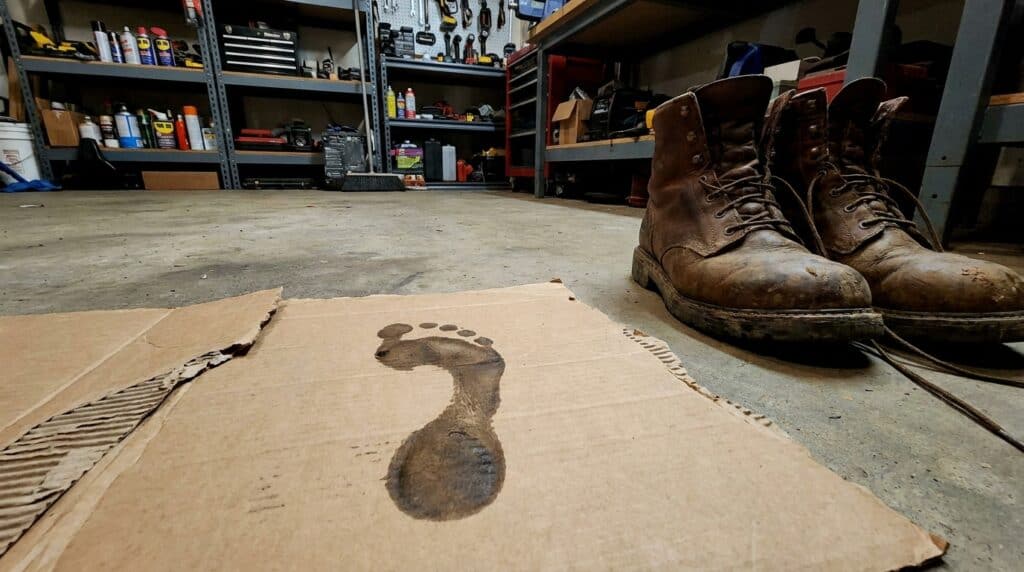
- Look for a footprint. A dark, pressed-in outline of your foot means the foam has packed down.
If your insole fails two or more of these, an upgrade will likely make a noticeable difference.
7 Reasons to Wear Insoles in Work Boots
1. Concrete Doesn't Give, So Your Feet Have To
Concrete, steel decking and tile floors have no give. Every step sends the impact back up through your heel. A boot's outsole absorbs some of it, but the insole sits right under your heel bone and does a lot of the work.
Cushioned insoles with a shock pad in the heel, like the Timberland PRO Anti-Fatigue, are built for this. If you work on concrete all day, read our guide on why your feet hurt when you stand on concrete.
2. Most Work Boots Don't Support Your Arch
Your arch works like a spring. When it gets no support for 10 hours, the muscles and the plantar fascia under your foot work harder to hold it up. By the end of a shift, that shows up as an ache along the bottom of your foot.
A supportive insole has a shaped arch that fills the gap between your foot and the boot. It comes in low, medium and high arch versions, so the right one depends on your foot.
3. A Deep Heel Cup Keeps Your Foot Stable
A heel cup is the raised, rounded edge around the back of an insole. It keeps the fatty pad under your heel centered, so your heel bone gets more padding. It also stops your foot from sliding and rolling inside the boot.
This matters more than most people think. A stable heel helps your ankle and knee line up better on uneven ground, ladders and job sites.
4. Less Fatigue at the End of the Shift
Foot fatigue doesn't stay in your feet. When your feet roll inward or take a pounding all day, your calves, knees and lower back often feel it too.
Insoles won't make a 12-hour shift feel like a day off. But many workers say they finish the day with less soreness after switching from a worn stock insole to a supportive one. Reviews of the PowerStep Pinnacle Work, for example, often mention less knee and back discomfort once their feet adjusted (Amazon customer reviews, retrieved 2026-10-23).
5. A Better Fit in a Boot That's Almost Right
Work boots don't come in half-volumes. If your heel lifts or your foot slides forward, a thicker insole can take up extra room and lock your foot in place.
This works in reverse too. If your boot is already snug, a thick insole can make it too tight. We cover that in the fit section below.
6. A New Insole Costs Less Than New Boots
Good work boots often outlast their insoles by a year or more. When a boot starts to feel flat and tired, the problem is often the insole, not the boot.
Swapping a $30 to $45 insole can bring a boot back to life. If you own quality leather boots like Thorogoods or Red Wings, a new insole is the cheapest way to keep them comfortable between resoles.
7. Drier, Fresher Feet
Many aftermarket insoles have moisture-wicking or odor-control top covers. PowerStep, for example, uses an odor-control fabric on the Pinnacle Work. Swapping insoles also lets you air them out or switch them between two pairs of boots.
If heat and sweat are your main problem, see our guide to the best insoles for hot weather work boots.
Cushioning vs. Support: Which Do You Need?
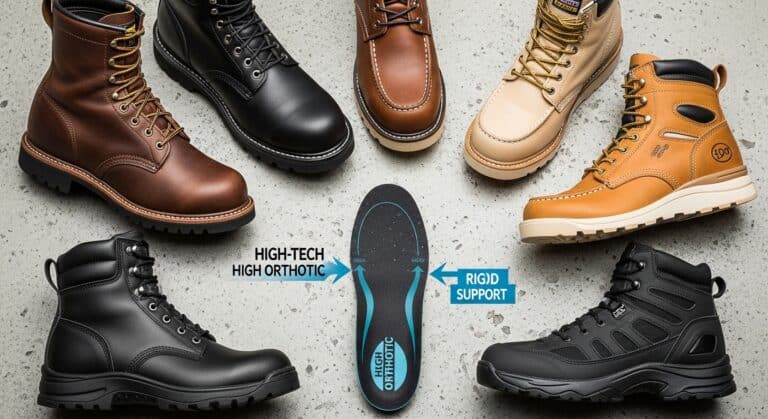
This is where most people buy the wrong insole. "Comfort" insoles and "support" insoles do different jobs.
- Cushioning insoles are soft foam or gel. They absorb impact and feel great right away. They don't do much to hold your arch.
- Support insoles have a firm or semi-rigid shell under the arch and heel. They control how your foot moves. They feel firm and often take a week or two to get used to.
| Your situation | What you need | Start with |
|---|---|---|
| Feet are sore from hard floors, no arch problems | Cushioning | Timberland PRO Anti-Fatigue |
| Arch ache, heel pain, feet roll inward | Firm support plus some cushion | PowerStep Pinnacle Work |
| Medium arch, want long-lasting support | Firm support | Superfeet Medium Arch (Blue) |
| Want support on a small budget | Semi-firm support | WalkHero Plantar Fasciitis |
| Over 220 lbs, insoles flatten fast | Reinforced, heavy duty support | FORM Heavy Duty |
A simple way to check your arch: wet your foot and step on a piece of cardboard. A full, wide print suggests a low arch or flat foot. A thin strip on the outside edge suggests a high arch. Something in between is a medium arch.
Common Foot Problems in Work Boots and How Insoles Help
Insoles aren't medical treatment, and they won't fix every problem. But they can take pressure off the spots that hurt most in work boots.
Heel Pain and Plantar Fasciitis
Sharp heel pain with your first steps in the morning is the classic sign of plantar fasciitis. A firm arch and a deep heel cup can take load off the plantar fascia. Pair a supportive insole with the right boot. See our best work boots for plantar fasciitis.
Arch Fatigue and Flat Feet
If your arch aches or your feet roll inward, look for an insole with firm, structured support. If you're shopping for new boots too, start with our best work boots for flat feet, which all have removable insoles.
High Arches
High arches put more pressure on the heel and ball of the foot. They need an insole that fills the arch so weight spreads out. Our best work boots for high arches guide covers boots that pair well with high arch insoles.
Rubbing at the Back of the Heel
A stiff heel counter that rubs all day can irritate the back of your heel. A heel cup can hold your foot in place so it slides less. If the rubbing doesn't stop, the boot may be the wrong size or shape.
When to see a professional: if pain lasts more than a few weeks, gets worse, or comes with swelling, numbness or tingling, see a doctor or podiatrist. A store-bought insole is a good first step, not a replacement for a proper diagnosis.
For a step-by-step way to find what's causing your pain, read why your work boots hurt.
5 Work Boot Insoles Worth Starting With
We picked these by checking each Amazon listing's arch type, heel cup and cushioning, plus star ratings, number of ratings and Amazon's "Customers say" summaries (Amazon, retrieved 2026-10-23). We haven't worn these insoles ourselves, so we stick to what the brands list and what buyers report. Prices vary by size.
| Insole | Best for | Type | Amazon rating | Approx. price |
|---|---|---|---|---|
| Timberland PRO Anti-Fatigue | Standing on concrete | Cushion | 4.4 (20,000+) | $30 |
| PowerStep Pinnacle Work | Arch and heel pain at work | Support + cushion | 4.4 (3,100+) | $45 |
| Superfeet Medium Arch (Blue) | Firm, lasting support | Firm support | 4.5 (10,000+) | $60 |
| WalkHero Plantar Fasciitis | Budget support | Semi-firm support | 4.3 (75,000+) | $20 |
| FORM Heavy Duty (Reinforced) | Workers over 220 lbs | Reinforced support | 4.2 (400+) | $45 |
Ratings and prices from Amazon, retrieved 2026-10-23. Verify the current price on Amazon.
1. Timberland PRO Anti-Fatigue Replacement Insole - Best for Standing on Concrete
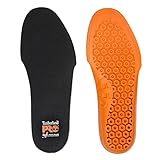
This is the same anti-fatigue footbed Timberland PRO puts in its work boots, sold as a replacement. It has 4.4 stars from more than 20,000 ratings and costs about $30.
Buyers describe it as super soft and say it feels like walking on gel. Feedback on arch support is mixed, which makes sense, since it's a cushioning insole.
Buy it if: your feet are sore from hard floors and you don't need strong arch support.
Skip it if: you have flat feet or heel pain. Go with the PowerStep or Superfeet instead.
Check the Timberland PRO Anti-Fatigue price on Amazon
2. PowerStep Pinnacle Work - Best All-Round Work Insole

PowerStep made this version for work boots and work shoes. It has a firm but flexible neutral arch, a deep heel cradle, dual-layer foam cushioning and an odor-control top fabric. It's full length and doesn't need trimming. It has 4.4 stars from more than 3,100 ratings and costs about $45.
Buyers say the arch support is strong and it helps with foot pain, including plantar fasciitis, and that it stays in place. Durability gets mixed reviews: some say it holds up well, others report the layers peeling apart. A few buyers find the arch slightly high.
Buy it if: you want a mix of support and cushion for long shifts in work boots.
Skip it if: you only want soft cushioning, or you have very low arches and find firm arches uncomfortable.
Check the PowerStep Pinnacle Work price on Amazon
3. Superfeet All-Purpose Medium Arch Support (Blue) - Best Firm Support

The former Superfeet Blue has a structured heel cup and a medium-profile arch. It's lower in volume than the High Arch (Green) version, so it fits more work boots. It has 4.5 stars from more than 10,000 ratings and costs about $60.
Buyers praise the arch support and relief from plantar fasciitis, and they call it durable.
Buy it if: you want firm, long-lasting support and you have a medium arch.
Skip it if: you want soft cushioning. Superfeet insoles feel firm, and there's a break-in period.
Check the Superfeet Medium Arch price on Amazon
4. WalkHero Plantar Fasciitis Insoles - Best Budget Support

The WalkHero has a structured arch, a deep heel cup and EVA foam for shock absorption. With more than 75,000 ratings and 4.3 stars, it's one of the most reviewed insoles on Amazon, and it costs about $20.
Buyers praise the arch support and say it's well worth the price.
Buy it if: you want to try arch support without spending $45 or more.
Skip it if: you want a brand with a longer track record in work boots, like PowerStep or Superfeet.
Check the WalkHero price on Amazon
5. FORM Orthotic Insoles 220+ lbs Heavy Duty (Reinforced) - Best for Heavier Workers
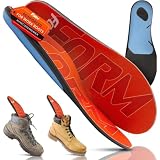
FORM's orange Reinforced insole is made for people over 220 lbs and for work boots. It has a reinforced heel and arch, a heel cup and a fabric top cover for moisture control, and it can be heat-molded so it shapes to your foot. It has 4.2 stars from about 425 ratings and costs about $45. That's far fewer ratings than the other picks here, so keep that in mind.
Buyers say the arch support is strong, the insole keeps their feet from sliding around in boots and it helps with plantar fasciitis. Comfort, value and durability get mixed feedback, and some buyers say it takes up a lot of room in the toe box.
Buy it if: you're a heavier worker and softer insoles flatten out on you within weeks.
Skip it if: your boots are already snug or you want soft cushioning. For a cheaper heavy duty option, look at the WalkHero Heavy Duty 220+ lbs (4.3 stars, 3,700+ ratings).
Check the FORM Heavy Duty price on Amazon
Want more options, including picks for high arches and gel cushioning? See all 8 picks in our best insoles for work boots guide.
Will Insoles Make My Work Boots Too Tight?
They can. Aftermarket insoles are often thicker than the stock insole, especially support insoles with a deep heel cup.
- Always remove the factory insole first. Stacking two insoles almost always makes the boot too tight and lifts your heel out of the heel counter.
- Watch the safety toe. A thicker insole lifts your foot closer to a steel or composite toe cap. If your toes touch the cap, try a lower-volume insole.
- Try them in the afternoon. Feet swell during the day. Fit a new insole when your feet are at their largest.
- Wear them before a full shift. Start with a few hours, then build up over a week or two. Firm insoles feel strange at first.
How Long Do Work Boot Insoles Last?
Most insoles last around 6 to 12 months of daily work use. PowerStep, for example, says its insoles should last 6 months or longer, and heavy daily use shortens that (PowerStep, retrieved 2026-10-23). Heavier workers and people on concrete all day often land at the shorter end.
Replace your insoles when you see any of these:
- The heel area feels flat and hard when you press it
- The arch has collapsed or bends easily by hand
- The top cover is torn, peeling or worn through
- Your old aches come back even though nothing else changed
A cheap way to think about cost: a $45 insole that lasts 9 months costs about $5 a month. A $15 insole that's flat in 2 months costs more over a year. We break this down further in our hot weather insoles guide.
Other Habits That Help Your Feet in Work Boots
Insoles work best alongside a few simple habits:
- Wear proper work socks. Cushioned, moisture-wicking socks reduce friction and blisters. Avoid cotton on long, sweaty shifts.
- Rotate two pairs of boots. Giving boots a day to dry helps the leather, the foam and your feet.
- Stretch your calves. Tight calves pull on the heel and arch. A few minutes before and after work helps. See how to prepare your body for standing all day.
- Buy boots that fit your feet late in the day. Swollen feet in tight boots will hurt no matter what insole you use.
For more tips on hard floors, read how to stand on concrete all day.
Frequently Asked Questions
Do work boots come with good insoles?
Some premium boots do, but most work boots ship with a basic foam insole that flattens within weeks or months. Even good factory insoles are built for an average foot, so they may not match your arch.
Should I remove the original insole before adding a new one?
Yes, in almost every case. Full-length insoles are made to replace the factory insole, not sit on top of it. Stacking them makes the boot too tight and changes how your heel sits.
Gel or foam insoles for work boots?
Gel is soft and good at absorbing impact, but it doesn't hold your arch. Foam insoles with a firm shell give more support. If you have arch or heel pain, choose support first.
Are expensive insoles worth it?
Often, but not always. Pricier insoles like PowerStep and Superfeet usually have firmer shells that hold their shape longer. A budget insole like the WalkHero is a good way to test whether arch support helps you before spending more.
Can insoles fix work boots that don't fit?
Only a little. An insole can take up extra volume in a slightly loose boot. It can't fix a boot that's too short, too narrow or rubs in the wrong place. In that case, the boot is the problem.
How long does it take to get used to new insoles?
Cushioning insoles feel good right away. Firm support insoles can take one to two weeks. Start with a few hours a day and build up.
The Bottom Line
If you're on your feet all day in work boots, an aftermarket insole is one of the cheapest comfort upgrades you can make. Pick it based on what hurts:
- Sore feet from hard floors: Timberland PRO Anti-Fatigue
- Arch or heel pain on long shifts: PowerStep Pinnacle Work
- Firm, lasting support for a medium arch: Superfeet Medium Arch (Blue)
- Arch support on a budget: WalkHero Plantar Fasciitis
- Heavier workers: FORM Heavy Duty Reinforced
Remove the factory insole, break the new one in over a week or two, and replace it when it goes flat. If your pain doesn't improve, the boot itself may be the issue. Start with our full insole guide or our list of the best work boots for standing on concrete all day.