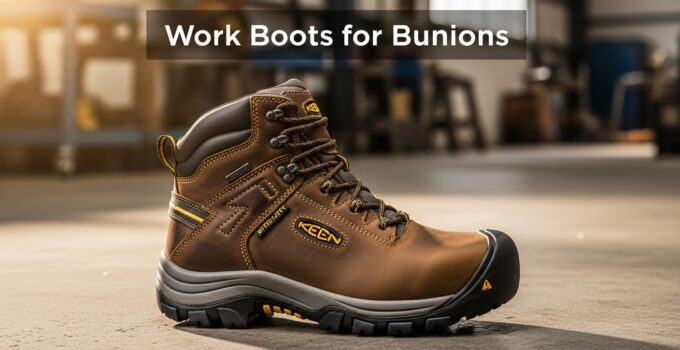
Finding the right work boot when you have bunions can feel like a nightmare. Whether you’re hauling material or working a long industrial shift, by hour eight that rigid safety toe can act like a vice grip. This guide helps you choose boots built for comfort and compliance — not compromise.
Why Your Boots Are Hurting (The Bunion Basics)
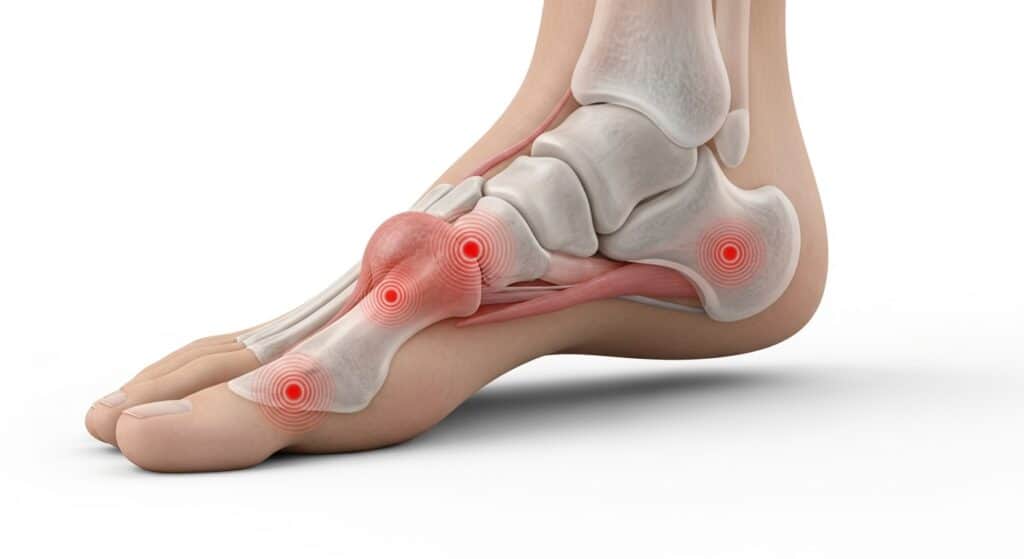
hallux valgus bunion anatomy
A bunion (Hallux Valgus) isn’t just a bump on the side of your foot; it’s a progressive condition where the big toe pushes toward the smaller toes, enlarging and misaligning the joint at the base of the big toe. That misalignment makes the area highly sensitive to pressure and friction.
The Safety Toe Trap
Workplace requirements often demand protective toe caps (steel, alloy, or composite). These caps are rigid and unyielding. If the internal shape of the safety toe tapers, it will apply concentrated pressure directly onto the bunion.
⚠️ The Reality Check: If the cap rubs the bunion, the boot is the wrong shape. You cannot stretch the safety cap itself, regardless of whether it’s steel, alloy, or composite.
The “Wide” Trap
Big note: a boot marked “Wide” or “2E” may still hurt your bunions. There is a difference between:
- Wide Width (2E, 4E) — increases overall girth, sometimes across the midfoot or heel.
- Wide Toe Box (Shape/Volume) — the front part of the boot is anatomically shaped, deep, and wide enough to let toes splay naturally and accommodate the bunion bump.
Prioritize boots built on an anatomical or oblique last that follow the natural curve of the toes rather than tapering sharply to a center point.
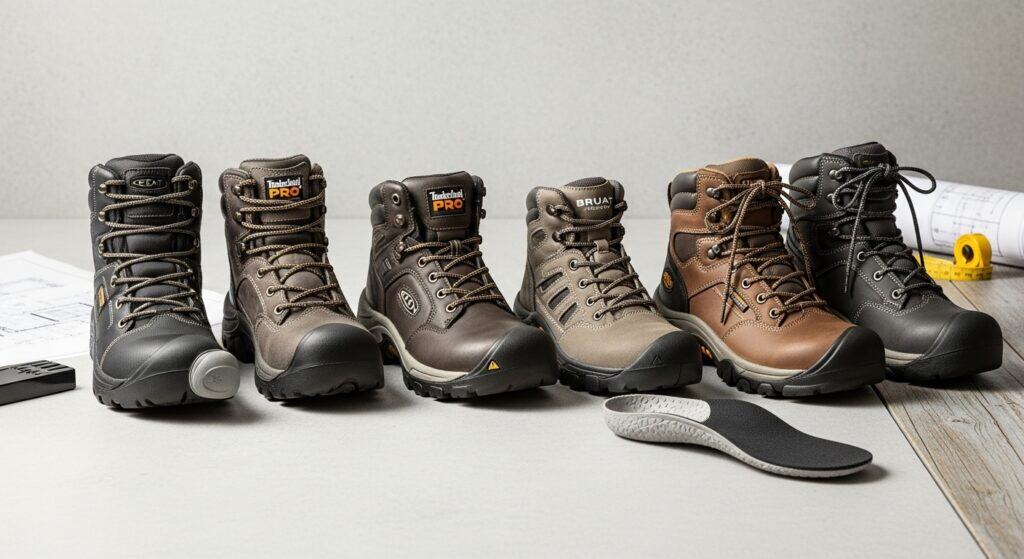
best work boots for bunions
The 3 Golden Rules for Bunion-Friendly Work Boots
Comfort for bunions depends on three architectural features. Ignore any of these and you risk pain, rubbing, or numbness.
1. Prioritize Wide, Deep, and Round Toe Geometry
The toe box design is the single most critical factor for relief.
- Width is King: Look for a round-toe design rather than pointed or tapered profiles. Brands offering 4E or even 6E are ideal for severe bunions or feet that swell during long shifts. Example: FitVille Extra Wide Work Boots.
- Depth is Essential: Extra vertical space (“extra depth”) is critical. Bunions can push toes upward; if you use a supportive insole or custom orthotic, that insert will raise your foot inside the boot. Without enough depth, the bunion will press painfully against the ceiling of the safety cap. Models like the Thorogood Emperor Toe series provide taller toe boxes for this clearance.
2. Seek Out Accommodative Upper Materials
The material over the bunion must yield slightly instead of pressing rigidly.
- Pliability Matters: Soft, top-grain nubuck leather (e.g., Danner Quarry), engineered mesh, or canvas are preferable because they can be stretched or soften with break-in.
- Non-Binding Construction: Orthopedic-focused brands (like Orthofeet) feature stretchable uppers padded with foam and minimal overlays across the bunion area to reduce friction.
3. Demand Proper Support and Sole Function
The right support and sole geometry can drastically reduce mechanical stress on the big toe joint.
- Rocker Soles: Clinically recommended, rocker soles curve from midfoot to toe and allow the foot to roll over during push-off instead of forcing painful dorsiflexion of the big toe. Example: Skechers for Work – Workshire Relaxed Fit.
- Arch Support & Stability: Adequate arch support stabilizes the foot and prevents overpronation, which increases stress on the big toe joint.
- Removable Insoles: If you use custom orthotics, ensure the boot has a removable stock insole. Brands such as Baffin, Keen, and Timberland Pro often include this feature.
Top Recommended Work Boot Brands for Bunions
Based on real-world feedback and orthopedic design, these brands stand out:
| Brand / Series | Key Bunion Feature(s) | Safety Toe Options | Ideal For |
|---|---|---|---|
| Keen Utility | Famous asymmetrical (anatomical) toe cap, integrated heel cushion | Steel / Alloy / Composite | Those needing an anatomical safety toe shape right out of the box |
| Orthofeet | Wide toe box, extra depth, soft stretchable uppers, customizable fit | Composite (medical-grade options) | Workers with severe pain, swelling, or multiple foot conditions |
| Thorogood Emperor Toe | Wider and taller toe box for extra volume | Steel / Composite | Those needing superior vertical space for inserts or large feet |
| Danner Quarry (Non-Safety) | Deep, wider-than-average toe box; leather that can be stretched | Non-steel toe (AT model) / Alloy Toe | Outdoor workers whose compliance allows soft-toe or alloy options |
| Timberland Pro (Women’s) | Designed on a women’s-specific last with wider forefoot relative to heel | Steel Toe | Women who find unisex boots too loose in the heel and too narrow in the forefoot |
The Safety Toe Showdown: Which Material is Best?
Shape matters more than material, but here’s a quick comparison:
- Steel Toe: Serious protection, heavy, cannot be stretched; sometimes has more internal room depending on the cap shape.
- Composite Toe: Lightweight, good for electricians, but often thicker to meet standards which can reduce internal volume.
- Alloy Toe: Lightweight and thin like steel, and sometimes offers more usable internal room than bulky composite caps.
Verdict: If internal space is your priority, an alloy or thin steel toe in an anatomical/oblique shape may provide slightly more usable room than a bulky composite cap.
Practical Tips and Job Site Hacks
Even with the right boots, these practical tips will help you survive long shifts.
1. The Bunion Window Lacing Trick
If your laces tighten directly over the bunion bump, try this:
- Unlace the boot completely down to the toe.
- Thread the lace through the bottom eyelets.
- Skip the eyelet directly over the bunion bump and leave that area open.
- Continue lacing normally above the skipped eyelet.
This creates a small window that allows the upper to bulge without being constricted by lace tension.
2. The Safety Cover Workaround (Honest Tip)
If steel toes are mandatory but nothing fits, consider a comfortable non-safety leather boot and add an external safety cover like Safety Treds. These slip-on covers add a compliance-ready steel toe without forcing your foot into a rigid internal cap. Note: check with your site safety officer for acceptability.
3. Stretching Leather Boots
You cannot stretch a metal safety cap, but you can stretch leather uppers on non-safety or alloy-toe boots. A professional cobbler can spot-stretch the area around the bunion for immediate relief.
4. Closures: Lace-Up vs Pull-On
Lace-up boots are generally superior for bunions because they allow adjustable tension across the instep. Pull-on boots often compress the instep to stay secure, which can cause painful pressure over a bunion.
Fit Checklist: What to Confirm Before You Buy
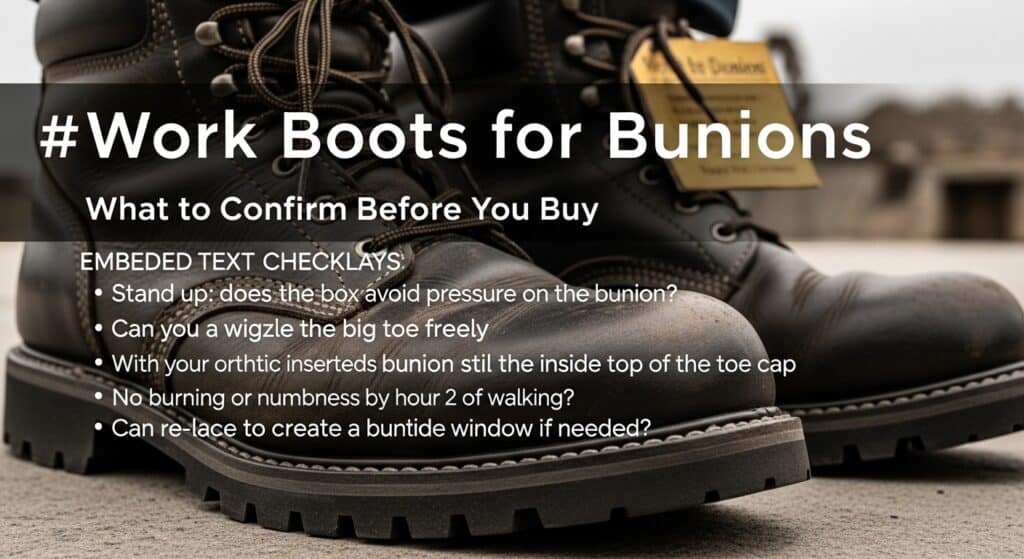
fit checklist
- Stand up: does the toe box avoid pressure on the bunion?
- Can you wiggle the big toe freely?
- With your orthotic inserted, does the bunion still touch the inside top of the toe cap?
- No burning or numbness by hour 2 of walking?
- Can you re-lace to create a bunion window if needed?
Conclusion: Stop the Suffering
You don’t need to suffer through a 12-hour shift because of bunions. Shift your focus from standard sizing to the real biomechanical factors: toe box volume and shape, accommodative uppers, and supportive sole geometry. Try Keen Utility if you need an anatomical safety toe shape out of the box. For maximum vertical space for orthotics, consider Thorogood Emperor Toe or the medical-grade solutions from Orthofeet. And if nothing else works, the Safety Treds cover can offer a compliance workaround while keeping your feet comfortable.
Get the job done without the agony. Your feet — and your body — will thank you.