Nothing will end a hunt faster—or make you more miserable—than the wrong boots. I’ve been there. I’ve had my toes freeze in a treestand, and I’ve had my ankles shredded on a mountainside, all because I chose the wrong tool for the job.
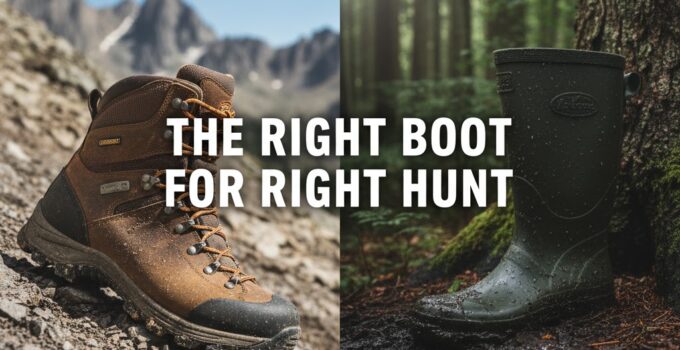
The “best hunting boot” isn’t a single boot. It’s a choice between two completely different systems: Rubber Boots and Leather/Synthetic Boots.
The internet is a mess of conflicting advice on this, so let’s cut through the noise. This is the definitive guide to picking the right boot for *your* hunt.
The Great Debate: Hiking Boots vs. Hunting Boots
First, let’s clear this up. Are hunting boots just expensive, “camo-dipped” hiking boots? No.
A hiking boot is built for *distance* on a *trail*. It’s designed to be lightweight, flexible, and let you put on the miles. It’s a running shoe with armor.
A hunting boot is built for *support* in *off-trail conditions*. It’s heavier, stiffer, and has a taller shaft (8-10+ inches) for a reason. It’s designed to give you a stable platform on rocks, side-hill across steep terrain, and protect your ankle when you step in a hole you didn’t see. Using a hiking boot for a backcountry elk hunt is a recipe for a rolled ankle.
Rubber vs. Leather: The Two Types of Hunting Boot
This is the most important choice you’ll make. They are not interchangeable. Picking the wrong one *will* ruin your hunt.
When to Use Rubber Boots (The “Whitetail” Boot)

Rubber boots are a specialized tool. Think of them as your “treestand” or “duck blind” boot.
Use Rubber Boots If:
- You are hunting in cold, wet, or muddy conditions (like a Midwest whitetail hunt).
- You are walking less than a mile to your treestand or blind.
- Scent control is your #1 priority.
Pros:
- 100% Waterproof: You can stand in a creek or swamp all day.
- Better for Scent: Rubber is non-porous. It doesn’t trap odors like leather and is incredibly easy to clean.
- Warmth: They are perfect for cold-weather sitting, as they trap heat.
Cons:
- No Ankle Support: Walking on a steep hill in rubber boots is a nightmare.
- Sweat Traps: They don’t breathe. Your feet *will* sweat. If you walk too far, your socks will get soaked, and you’ll freeze.
- Durability: A sharp rock or stick can puncture them, ending their waterproofness forever.
When to Use Leather/Synthetic Boots (The “Mountain” Boot)

This is your all-purpose, high-performance “mountain” boot. Think of it as your boot for elk, mule deer, or any hunt where you’ll be mobile and covering ground.
Use Leather/Synthetic Boots If:
- You are hunting in steep, rocky, or rugged terrain.
- You are walking more than a mile (i.e., “spot and stalk” hunting).
- Ankle support and durability are your top priorities.
Pros:
- Excellent Ankle Support: This is their superpower. They lock your foot in place for stability on side-hills and rough ground.
- Durability: Built to be abused by rocks, brush, and miles of use.
- Breathable: A high-end boot with a GORE-TEX (GTX) liner is both waterproof and breathable, so your sweat can escape.
Cons:
- Worse for Scent: Leather and fabric pores trap odor. They are very difficult to keep 100% scent-free.
- Break-in Period: A stiff new pair of mountain boots requires a real break-in period.
The Guru’s “Best of the Best” Quick Picks (2025)
Based on years of testing and community feedback, here are my top picks for both categories.
- Best Overall Leather/Synthetic Boot: Crispi Nevada GTX
Yes, the Crispi Nevada GTX ($400+) still holds the crown. It’s the long-standing favorite in the serious hunting community for a reason. It’s a perfect balance of “stiff enough” for the mountains and “comfortable enough” for the trail. Available uninsulated or with 200g insulation, it’s the one boot to rule them all. - Best Overall Rubber Boot: LaCrosse Alphaburly Pro
For the treestand hunter, the Alphaburly Pro ($200+) is the gold standard. It’s 100% waterproof, comfortable, and offers various insulation levels (from uninsulated to 1600g). The “Burly” part is the armored rubber overlay that protects it from sticks and brush.
Hunting Boot FAQ: Your Questions Answered
Here are the quick, no-BS answers to the questions I hear all the time.
Can deer smell rubber boots?
Yes. A deer can smell *everything*. They smell the rubber, the glue that holds it together, the human sweat from the factory, and the fast-food wrapper on your truck’s floorboard.
The entire point of rubber boots is not that they are scent-free, but that they are **non-porous and easy to clean.** You can wash them with scent-killing soap and water, and the odor is gone. Leather and fabric hold scent and are almost impossible to get 100% clean. You’re *managing* scent, not eliminating it.
How do you keep hunting boots scent-free?
You can’t be 100% scent-free, but you can be 99% better than the next guy.
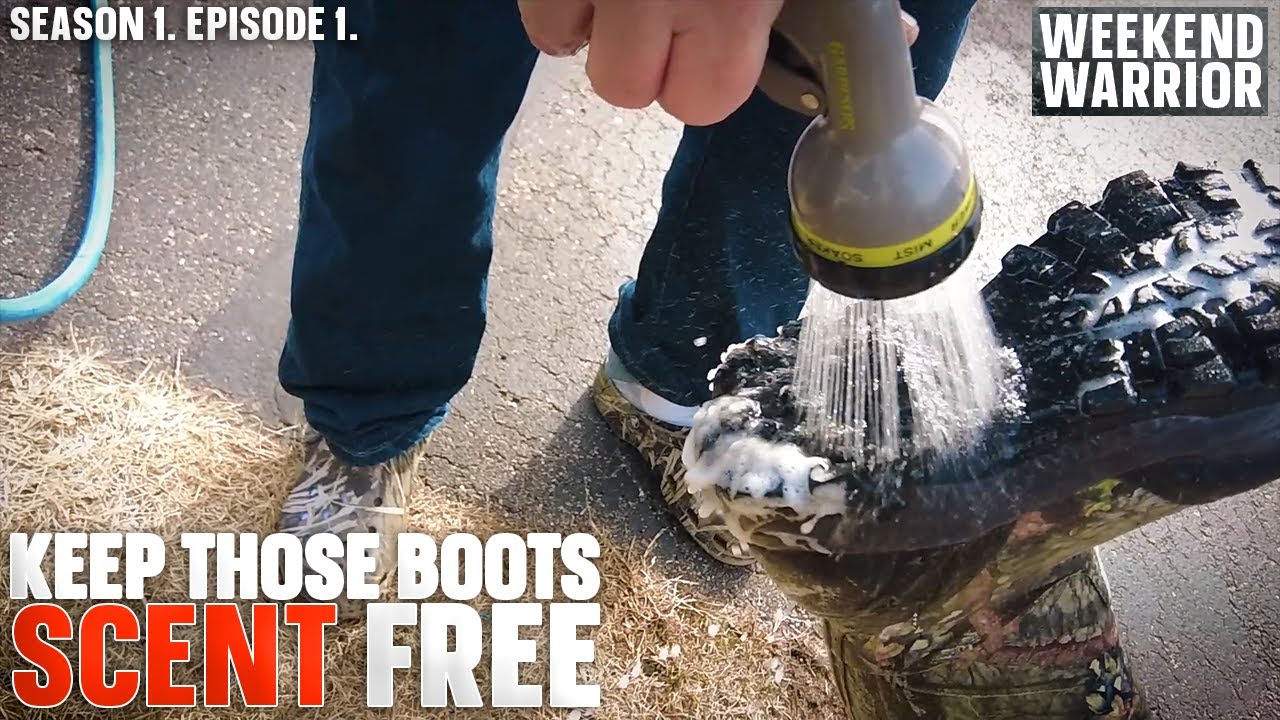
- Wash Them: Use a scent-free soap and wash your rubber boots often.
- Store Them: This is the most important step. Store your boots in a sealed plastic tote. Do *not* wear them into the gas station, into your house, or to check the mail. They are for the woods *only*.
- Use a Scent Wafer: I throw an earth-scent or cedar wafer into my boot tote. It helps cover any lingering plastic/rubber smell.
Here’s a great video on the process:
How tight should hunting boots fit?
A good fit is snug everywhere, tight nowhere, and has a specific amount of heel slip.
- Snug Sides: Your foot should feel “hugged” on the sides, but not pinched.
- Toe Room: You should be able to wiggle your toes. If your toes are hitting the end (especially when walking downhill), the boots are too small.
- Heel Slip: This is key. In a new, stiff leather boot, your heel *should* lift about 1/4-inch. This is normal. As the boot’s sole breaks in and flexes, that slip will go away. If it has zero slip when new, it’s too short and will destroy your heel.
How tall should hunting boots be?
I recommend a minimum of 8 to 10 inches for a mountain boot. A tall boot (10+ inches) gives you crucial ankle support for side-hilling and protects you from brush, creek crossings, and (in some areas) snakes. It feels weird at first, but you’ll get used to it. 6-inch boots are just hiking boots.
Brand & Manufacturing FAQ
You guys ask a lot about brands. Here’s the rundown.
Where are Danner Pronghorn boots made?
Danner is based in Portland, Oregon, and they make many of their most popular boots there. However, *not all Danners are made in the USA*. The Pronghorn, one of their most popular hunting boots, has been made both in the USA and overseas at different times. Always check the boot’s tongue or box for the “Made in USA” tag if it’s important to you.
Why are Danner boots so expensive?
You’re paying for quality materials, GORE-TEX waterproofing, and, on their US-made models, the labor costs of American-based manufacturing. A good boot is an investment, and their stitch-down construction means they can often be re-soled, extending their life for years.
Where are Irish Setter boots made?
Irish Setter is the hunting-focused brand owned by the Red Wing Shoe Company (which is based in Red Wing, MN). While their parent company is famous for “Made in USA” heritage boots, most Irish Setter hunting and work boots are manufactured overseas in Asia to hit a more competitive price point.