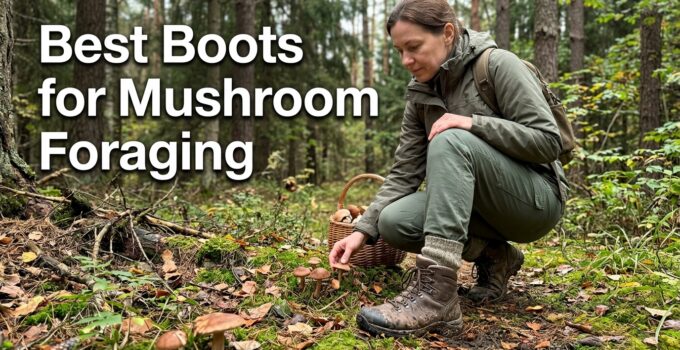
Mushroom foraging isn’t hiking with a basket. It’s hours of repeated crouching and kneeling on wet, uneven forest floor, scanning the ground instead of the trail ahead, often in brush and undergrowth rather than on a maintained path. That combination puts real, specific demands on a boot that generic hiking advice doesn’t cover.
This guide covers what actually matters for foraging specifically, the flex stress from constant squatting, the wet-ground-versus-long-trek trade-off, and the snake risk that comes with pushing through brush, then breaks down which boots handle each of those demands well.
The Squat Problem Nobody Talks About
Foraging means crouching and kneeling constantly, sometimes dozens of times over a single outing, to check under leaf litter, around tree bases, and low to the ground. That repeated motion flexes a boot’s sole at the same stress points over and over, and it’s a real durability factor that most hiking boot reviews never mention because most hikers aren’t crouching every few minutes.
Boots with weak sole bonding or thin construction at the toe and instep are exactly where this kind of repeated flex causes cracking and separation over a season of regular foraging. It’s worth looking past waterproofing and tread as the only specs that matter, and paying attention to how a boot is actually built to hold up under that specific motion.
Rubber vs. Hiking Boot: Two Valid Paths
There’s no single universal answer here, it depends on where you’re actually foraging.
Ankle-height rubber boots work well for wet, muddy ground close to home, forest edges, low-lying areas, and anywhere you’re moving through mud and standing water more than covering long distances. They’re easy to hose off after a muddy outing and keep water out reliably on flat, wet terrain.
Lightweight waterproof hiking boots win when you’re covering real distance across mixed terrain, uphill, downhill, roots, logs, and need genuine ankle support and all-day comfort rather than just wet-ground protection.
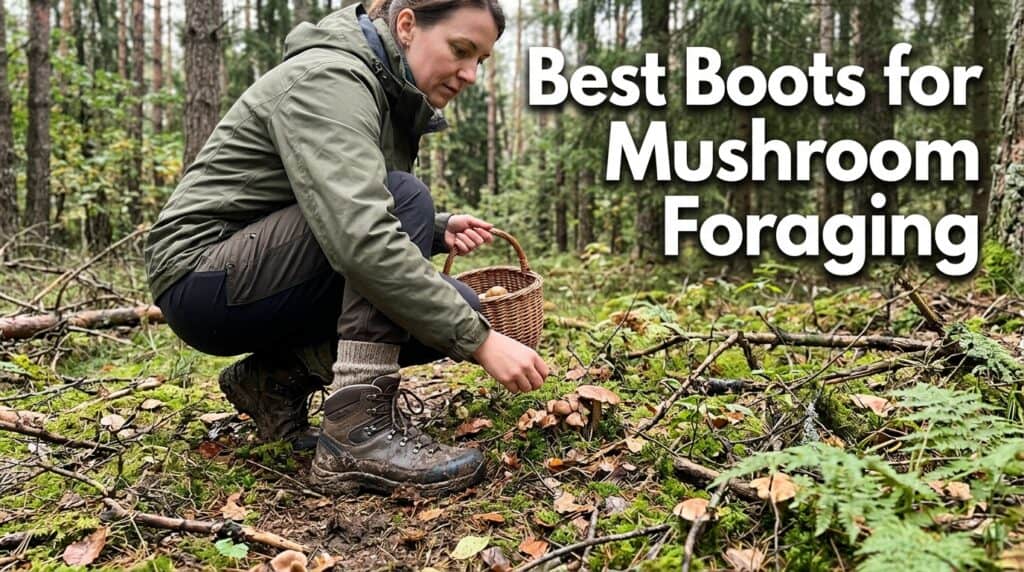
A woman in the forest wearing sturdy boots for mushroom foraging, collecting mushrooms in a basket, demonstrating ideal footwear for field conditions.
Best Lightweight Hiking Boots for Long Foraging Treks
Best Overall: Merrell Moab 3 Waterproof
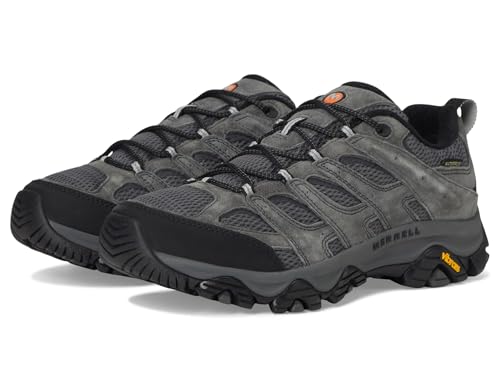
The Moab is the name that comes up most often across forager communities, and for good reason: a genuinely wide toe box that stays comfortable through hours of walking and crouching, reliable waterproofing, and a tread pattern built for mixed forest terrain rather than groomed trails.

For a deeper look at how this compares against other hiking boot options, our full Merrell hiking boots guide covers the broader lineup beyond just this model.
Pros: Wide, comfortable toe box for hours of wear, reliable waterproofing, versatile tread for mixed terrain.
Cons: Not built for the same standing-water conditions a tall rubber boot handles without issue.
Buy the Merrell Moab 3 Waterproof on Amazon today with FREE returns
Best for Cold-Season Foraging: Danner Men’s Pronghorn 8″ 400G Gore-Tex Hunting Boot

Morel season often starts while it’s still genuinely cold out, early spring mornings, lingering frost, ground that hasn’t fully warmed up. The Pronghorn’s 400 grams of Gore-Tex-backed insulation is built for exactly that window, warm enough for cold-morning outings without the bulk of a true winter boot.

The taller 8-inch height also gives more coverage through brush and undergrowth than a standard low hiking boot, a real bonus once foraging takes you off any kind of cleared path.
Not the right fit if: you’re foraging in warm weather. The insulation that helps in early spring will be uncomfortable once temperatures climb.
Pros: Genuine insulation for cold early-season outings, taller shaft for brush coverage, Gore-Tex waterproofing.
Cons: Too warm for summer or late-season foraging, heavier than the Moab above.
Buy the Danner Pronghorn 8″ on Amazon today with FREE returns
Best Wide Toe Box Comfort Pick: KEEN Men’s Targhee II Mid Height Waterproof Hiking Boots

Keen’s wide toe box comes up unprompted in forager discussions as often as Merrell’s, and for the same reason, hours of crouching and walking are noticeably more comfortable with real room for your toes to splay rather than a narrow, performance-oriented fit.

Mid-height construction splits the difference between a low trail shoe and a taller boot, decent ankle support without the bulk of the taller Pronghorn above.
Not the right fit if: you’re pushing through heavy brush regularly. The mid-height cut offers less coverage than the Pronghorn’s 8-inch shaft.
Pros: Genuinely wide, comfortable toe box, solid waterproofing, good balance of support and weight.
Cons: Less brush and ankle coverage than a taller boot.
Buy the KEEN Targhee II Mid on Amazon today with FREE returns
Snake Protection for Brush and Undergrowth
Pushing through brush and tall grass to check under trees and along forest edges is exactly the kind of terrain where snake encounters happen. It’s a real, recurring concern in forager communities, not a theoretical risk. For the full buying case on snake protection generally, our Best Snake Proof Boots guide covers the broader category in depth.
ROCKY Original Ride FLX Comp Toe Waterproof Snake Boot
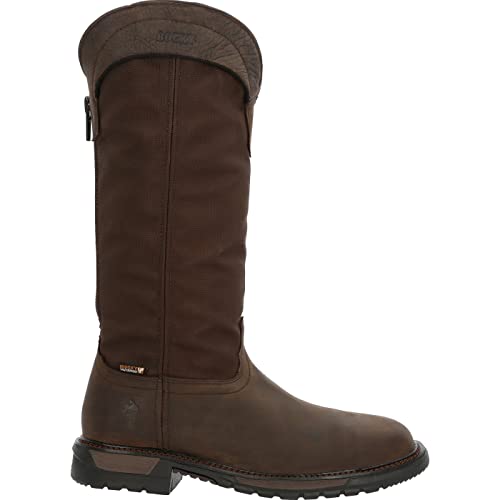
A purpose-built snake boot with a reinforced shaft designed to resist fang penetration, worth the switch from a standard hiking boot if you’re regularly foraging in brushy, high-risk terrain rather than maintained forest with clear sightlines. It also carries a composite toe, unusual for this style of boot and a genuine bonus if you’re stepping on unseen roots and rocks while scanning the ground.

Not the right fit if: your foraging spots are open, maintained, low-risk terrain. This is bulkier and pricier than a standard hiking boot, justified specifically by genuine snake risk.
Pros: Purpose-built snake protection, composite toe, waterproof construction.
Cons: Heavier and less flexible than a standard hiking boot, overkill for low-risk terrain.
Buy the Rocky FLX Snake Boot on Amazon today with FREE returns
Best Rubber Boots for Wet, Muddy Foraging Ground
Ankle-height rubber works well for casual foraging close to home or in low-lying, wet terrain where you’re not covering long distances or pushing through brush. Worth being honest about the trade-off, this height doesn’t give the same brush or snake coverage as a taller boot, so match it to genuinely low-risk, wet-ground conditions.
HISEA Men’s Rubber Rain Boots Waterproof Ankle Neoprene Garden Shoes
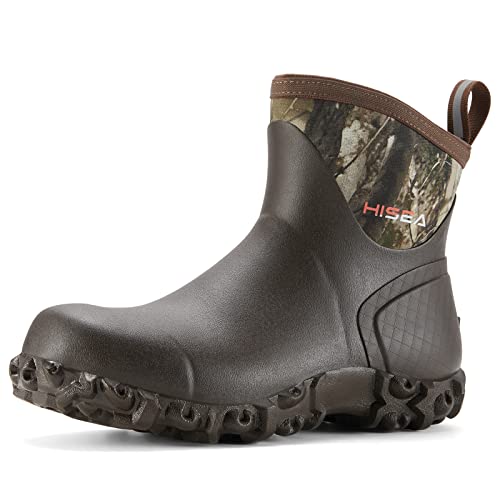
A neoprene-lined ankle rubber boot built for exactly this kind of low-lying, muddy foraging, easy to slip on for a quick trip out, easy to hose off when you’re back. The neoprene lining adds comfort that a plain rubber shell doesn’t have.

Not the right fit if: you’re covering real distance or pushing through brush. Step up to the hiking boots or snake boot above for that kind of terrain.
Pros: Comfortable neoprene lining, easy on-off, genuinely waterproof for wet, muddy ground.
Cons: Ankle height only, minimal brush or snake protection.
Buy the HISEA Men’s Rubber Rain Boots on Amazon today with FREE returns
Best Cushioned Alternative: Men’s Ankle Rain Boots with Shock Absorption Sports Sole
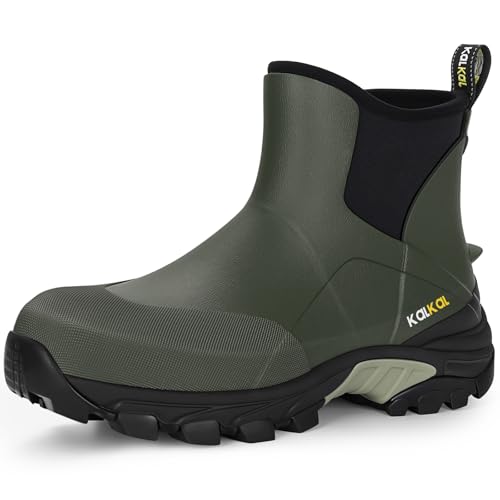
A shock-absorbing sole is a genuine plus for foraging specifically, all that repeated crouching and standing on uneven ground benefits from real cushioning underfoot, more than a standard flat rubber sole typically offers.

Not the right fit if: maximum durability is the priority over cushioning. This trades some ruggedness for comfort underfoot.
Pros: Genuine shock-absorbing cushioning, waterproof rubber construction.
Cons: Same ankle-height limitations as any short rubber boot.
Buy the Ankle Rain Boots with Shock Absorption on Amazon today with FREE returns
Best Women’s Option: HISEA Women’s Rain Boots Waterproof Insulated Neoprene Rubber Mud Boots
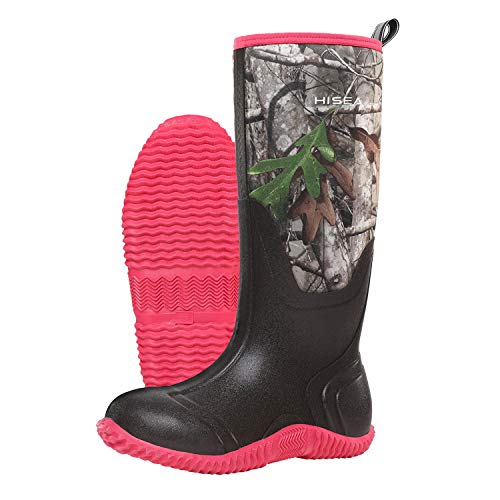
Insulated construction makes this a genuinely useful pick for the same early-season cold-morning foraging window the Danner Pronghorn covers above, just in a rubber, ankle-height silhouette for wet, low-lying ground rather than long treks.

Not the right fit if: you’re covering long distances or need brush protection. This is built for the same low-lying, wet-ground use case as the other rubber options here.
Pros: Insulated for cold-morning comfort, women’s-specific fit, easy to clean.
Cons: Ankle height only, not built for brush or long-distance terrain.
Buy the HISEA Women’s Insulated Rain Boots on Amazon today with FREE returns
Buying Guide
Prioritize a Wide Toe Box
This matters more for foraging than general hiking. Hours of crouching and walking are noticeably more comfortable with real room for your toes, cramped footwear becomes a genuine distraction over a long outing.
Waterproof vs. Breathable Trade-Off
Fully waterproof construction is worth prioritizing given how much time foragers spend on wet ground, dew-soaked grass, streams, and mud. The trade-off is breathability on warmer outings, worth factoring in if you’re foraging through a full season with a wide temperature range.
Match Boot Height to Your Actual Terrain
Ankle-height rubber is genuinely fine for low-lying, wet, close-to-home foraging. Taller boots, whether a standard 8-inch hiking boot or a dedicated snake boot, earn their place once you’re pushing into brush, undergrowth, or terrain with real snake risk. Match the boot to where you’re actually going, not the other way around.
Frequently Asked Questions
Do you need waterproof boots for mushroom hunting?
Yes, in almost all cases. Foraging involves significant time on wet ground, dew, streams, and mud, and non-waterproof footwear will leave you with wet feet for most of an outing.
Are hiking boots good enough for foraging, or do you need something more rugged?
A quality waterproof hiking boot with a wide toe box handles most foraging conditions well. The main reasons to go more specialized are genuine snake risk in your foraging area, which calls for a dedicated snake boot, or consistently wet, low-lying terrain, where a rubber boot is more practical.
Should foragers worry about snake boots?
If you’re regularly pushing through brush, tall grass, or undergrowth in snake habitat, yes, this is a real and recurring concern in forager communities, not an overblown one. If your foraging spots are open and maintained, the risk is lower and a standard hiking boot is reasonable.
What boots hold up best to constant crouching?
Look for boots with reinforced sole construction and solid bonding at the toe and instep specifically, these are the stress points that take the most repeated flex from constant crouching and kneeling. Cheaper, thinner construction tends to crack or separate at exactly these points over a season of regular use.
Bottom Line
Match the boot to your actual terrain rather than assuming one option covers everything. For long treks across mixed forest terrain, the Merrell Moab 3 is the safest all-around pick. For cold early-season mornings, the Danner Pronghorn 400G earns its insulation. If snake risk is real where you forage, don’t skip the Rocky FLX Snake Boot. And for quick, wet-ground trips close to home, a simple ankle rubber boot like the HISEA gets the job done without overbuying for terrain you’re not actually covering.