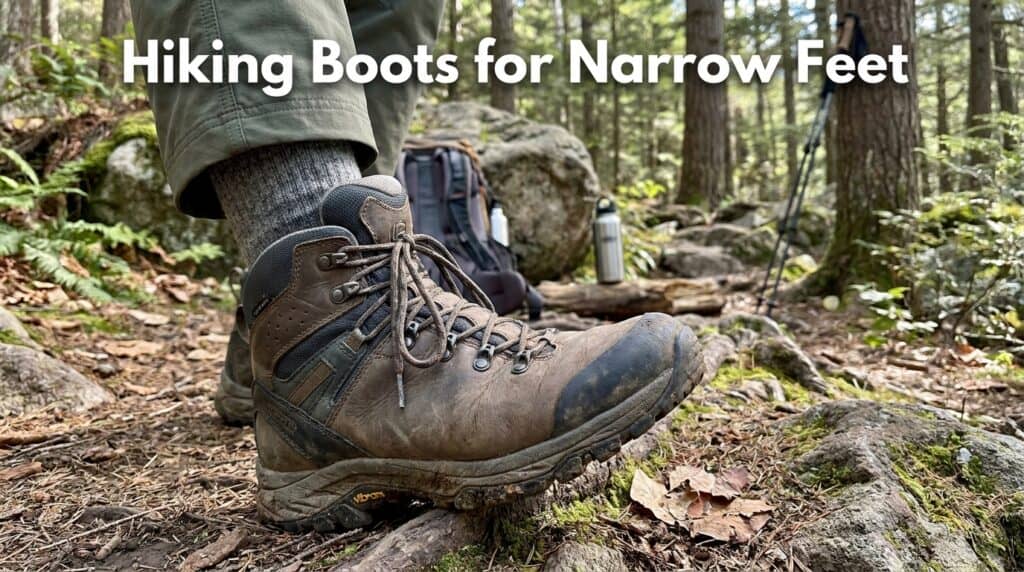

Search "hiking boots for narrow feet" and most of what comes back tells you to buy a boot in a narrow width. That advice has a problem: almost no hiking boot brand actually sells a dedicated narrow-width option. Wide feet get an explicit "Wide" or "W" size on the shelf. Narrow feet don't get the equivalent. The real fix isn't a size chart, it's picking a brand whose standard last already runs narrow, and understanding a fit problem that's actually two separate issues wearing one name.
This guide covers 8 verified, currently in-stock hiking boots from the brands that consistently show up when experienced hikers with narrow feet compare notes, plus the lacing technique that fixes heel slip in a boot that's otherwise almost right, something most buying guides mention in passing and never actually explain.
Quick Picks: Best Hiking Boots for Narrow Feet 2026
| Best For | Model |
|---|---|
| Best overall (independently recommended) | La Sportiva Nucleo High II GTX |
| Best traditional boot, snug heel | Salomon Quest 5 GTX |
| Best moderate-narrow all-rounder | Lowa Renegade GTX Mid |
| Best agile / lightweight | La Sportiva Ultra Raptor 3 Mid GTX |
| Best maximum support | La Sportiva Aequilibrium Trek GTX |
Narrow Isn't One Problem: Width vs. Volume
Most buying guides treat "narrow feet" as a single fit issue. It's actually two separate dimensions, and mixing them up is why a boot that should fit ends up sliding around anyway.
Width is the side-to-side measurement across the ball of the foot, the dimension a shoe store's Brannock device measures directly. A narrow-width foot needs a boot whose forefoot tapers in less room than a standard last provides.
Volume is the overall internal space of the boot, especially the height between your foot and the top of the tongue, and the depth around the instep. A low-volume foot, thin all around rather than just narrow across the ball, can rattle around inside a boot that's technically the correct width but still has too much empty space above and around it. This is the dimension most narrow-fit guides skip entirely, and it's often the real reason someone with a "narrow foot" still gets heel slip and instep movement even in a boot marketed as narrow-friendly.
Knowing which of these two problems you actually have changes what fixes it. A width problem is solved by brand and last selection, the picks below. A volume problem is often solved by a thinner insole, a different sock thickness, or an added tongue pad, adjustments you can make to almost any boot rather than needing an entirely different model.
The Heel-Lock Lacing Fix
Before buying a new boot, it's worth trying this on a boot you already own, because it solves the single most common narrow-foot complaint: heel slip on descents. The technique is sometimes called heel-lock lacing, a runner's loop, or a surgeon's knot, and it works by creating an independent lacing zone around the ankle that pulls the heel back into the heel cup without over-tightening the forefoot.
To do it: lace normally up to the second-to-last eyelet. At the last two eyelets on each side, thread the lace through the eyelet from the outside in, forming a small loop instead of crossing over immediately. Take the lace end from one side and pass it through the loop on the opposite side, then repeat on the other side, so the two laces cross through each other's loops rather than directly through the top eyelets. Pull both ends firmly before tying off normally. Done correctly, this locks the ankle and heel in place independently from forefoot tension, letting you keep the front of the boot comfortably loose while eliminating heel lift on the way down a slope.
This single adjustment resolves a meaningful share of narrow-foot complaints without buying anything, and it's worth trying on any boot from the wide-width camp of our bunion-friendly hiking boots guide as well, since heel slip and bunion pressure often show up together in a boot that's too voluminous overall.
How to Actually Check Whether You Have Narrow Feet
Most people who assume they have narrow feet are going on heel slip alone, which is a reasonable signal but not a complete diagnosis. A more reliable at-home check: stand on a piece of paper in your bare foot, weight fully on that foot, and trace around it. Measure the widest point across the ball of the foot. Compare that to the stated width of a boot you're considering, most European brands list this in millimeters on their size charts, something worth doing before ordering online rather than guessing from a US letter width label that may not exist at all for the brand you're looking at.
While you're at it, check the shape of the tracing itself, not just the width number. A foot that tapers sharply from a wide forefoot to a narrow heel is a different fit challenge than a foot that's uniformly narrow front to back. The first shape is common and most narrow-oriented brands handle it reasonably well. The second, uniformly narrow, is closer to what the low-volume boots on this list are specifically built around, and it's the shape most likely to still have problems even in a boot labeled narrow if the volume isn't addressed too.
If you have access to a specialty outdoor retailer with a Brannock device and a knowledgeable fitter, that in-person measurement is worth more than any online sizing chart. Ask specifically about volume, not just width, since a good fitter will know which brands in their inventory run narrow-and-low-volume versus narrow-but-still-roomy, a distinction this article's picks are built around but that a size chart alone won't tell you.
Quick Comparison: All 8 Options
| Model | Last Character | Best For |
|---|---|---|
| La Sportiva Nucleo High II GTX | Narrow, low volume | Backpacking, independently recommended for narrow feet |
| Salomon Quest 5 GTX | Snug heel, narrow-medium forefoot | Everyday serious hiking with heel security |
| Lowa Renegade GTX Mid | Moderate narrow | Long-term durability with a slimmer fit |
| La Sportiva Ultra Raptor 3 Mid GTX | Narrow, performance-oriented | Technical terrain without heavy weight |
| La Sportiva TX Hike Mid Leather GTX | Narrow, approach-shoe heritage | Precise, low-volume fit on rocky trails |
| La Sportiva Aequilibrium Trek GTX | Narrow, structured | Maximum support without excess internal volume |
| La Sportiva TX4 EVO Mid GTX (Women's) | Narrow, low volume | Technical approach and hiking, women's narrow last |
| La Sportiva Ultra Raptor II Mid Leather GTX | Narrow, available in Regular(C) | Full-leather durability, narrow-specific width option |
1. Best Overall: La Sportiva Nucleo High II GTX

The Nucleo High II is one of the few boots on the market that gets named specifically for narrow feet by independent testers rather than just by brand reputation. One gear-review site that put it through wet rocks, river crossings, and steep terrain named it their award winner for Best Hiking Boots for Narrow Feet, noting it fit "like a glove" for narrow-footed testers while explicitly not working for wide feet, exactly the kind of specific, opinionated fit feedback that's more useful than a generic "runs narrow" tag.

The high-cut design and Gore-Tex Surround construction give this genuine backpacking-grade coverage, and its narrow last comes from the same Italian mountaineering heritage that runs through the rest of La Sportiva's lineup. For the complete picture of what else La Sportiva makes, including options this specific list doesn't cover, see our Best La Sportiva Hiking Boots guide.
Specs
Last: Narrow, low volume | Waterproof: Yes, Gore-Tex Surround | Height: High-cut
Best for: Backpacking and rugged hikes, independently verified narrow fit
Skip this boot if: you have wide or high-volume feet. Reviewers are explicit that this doesn't work well outside a narrow foot shape.
2. Best Traditional Boot: Salomon Quest 5 GTX
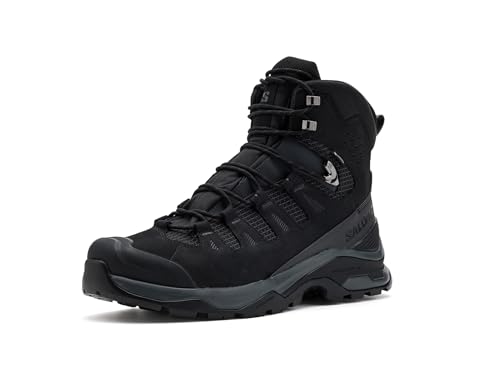
Salomon's reputation among narrow-footed hikers centers on the heel and midfoot specifically, the sensiFIT lacing system wraps snugly from the midsole up, and the brand's overall last runs narrower in the toe box than most competing traditional boots. The Quest 5 pairs that fit character with genuine backpacking-grade support through the 4D Advanced Chassis.

For hikers whose narrow-foot complaint is specifically heel and midfoot slop rather than a tight toe box, this is a strong starting point, and it's a boot where the heel-lock lacing technique above tends to work especially well given the sensiFIT system it's already built around.
Specs
Last: Snug heel and midfoot, narrow-medium forefoot | Waterproof: Yes, Gore-Tex | Chassis: Salomon 4D Advanced
Best for: Everyday serious hiking with real heel security
Skip this boot if: your narrow-foot problem is specifically in the forefoot rather than the heel. Consider a La Sportiva option instead for a narrower toe box specifically.
3. Best Moderate-Narrow All-Rounder: Lowa Renegade GTX Mid
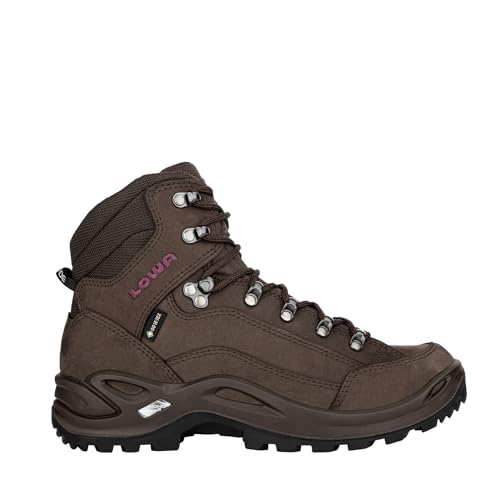
The Renegade sits at the moderate end of the narrow spectrum compared to the more aggressively narrow La Sportiva options on this list, making it a reasonable middle ground for hikers whose feet are narrower than average but not at the extreme end. German engineering and a support-to-comfort ratio that's earned the Renegade a near-cult following are the real draw here.
The Gore-Tex membrane and Lowa's build quality mean this boot tends to hold its shape and fit over years of real mileage rather than stretching out and losing the snugness that made it work for a narrow foot in the first place.
Specs
Last: Moderate narrow | Waterproof: Yes, Gore-Tex | Best for: Long-term durability, moderately narrow feet
Skip this boot if: your feet are extremely narrow. The La Sportiva options on this list run narrower still.
4. Best Agile Option: La Sportiva Ultra Raptor 3 Mid GTX
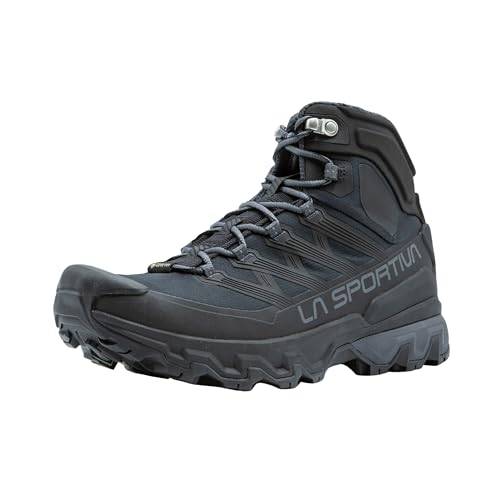
La Sportiva's climbing heritage produces a genuinely performance-oriented, low-volume last across its whole hiking lineup, and the Ultra Raptor 3 channels that into a lighter, more agile package than the brand's mountaineering-derived boots. For narrow-footed hikers who don't want the weight or stiffness of a maximum-support boot, this is a real middle ground.

The technical outsole and mid-height cuff deliver real capability on rocky, technical terrain without the bulk that often comes with a more structured boot, a genuine advantage for narrow feet that tend to feel overwhelmed inside heavier footwear.
Specs
Last: Narrow, performance-oriented | Waterproof: Yes, Gore-Tex | Height: Mid
Best for: Technical terrain, narrow feet that feel swamped in heavier boots
Skip this boot if: you need maximum ankle support for heavy pack loads. Choose the Aequilibrium Trek below for that.
5. Best Precise Fit: La Sportiva TX Hike Mid Leather GTX
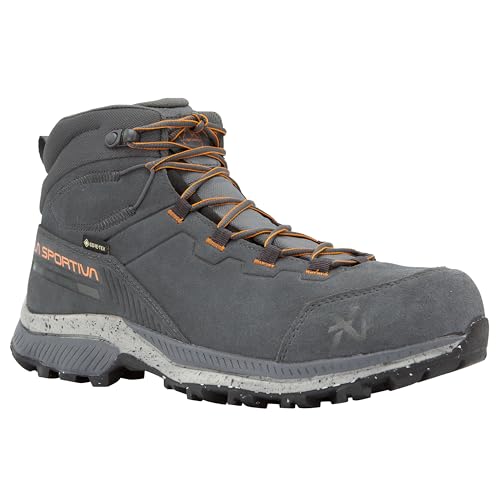
The TX Hike descends from La Sportiva's approach-shoe line, footwear originally built for climbers who need precise, low-volume fit for technical scrambling before and after a climb. That heritage carries directly into a hiking boot with an unusually snug, low-volume feel compared to typical hiking-boot lasts.

Full leather construction adds durability and structure that the brand's lighter trail-oriented options don't have, making this a strong pick for narrow-footed hikers who specifically want that low-volume approach-shoe precision in a more traditional hiking-boot package.
Specs
Last: Narrow, approach-shoe derived | Upper: Full leather | Waterproof: Yes, Gore-Tex
Best for: Precise, low-volume fit on rocky, technical trails
Skip this boot if: you want a lighter, more flexible feel. The Ultra Raptor 3 above is the more agile option.
6. Best Maximum Support: La Sportiva Aequilibrium Trek GTX
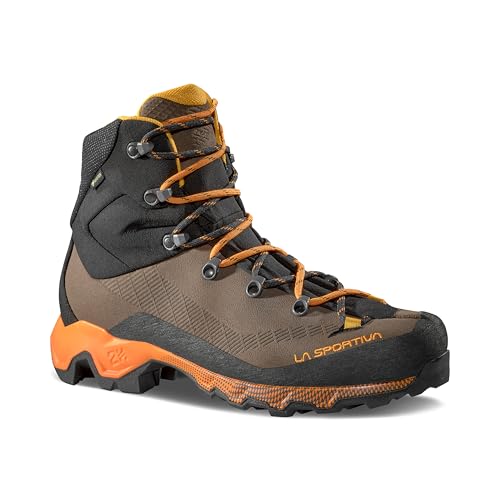
Built on La Sportiva's mountaineering-derived Aequilibrium platform, this is the most structured boot on this list, real support for heavy packs and unstable terrain without the excess internal volume that a lot of maximum-support boots from other brands carry. For narrow feet specifically, that combination matters: plenty of supportive boots achieve their rigidity with a roomier internal fit that swallows a narrow foot.

The Double Heel sole lug pattern is designed for uphill traction and downhill braking specifically, exactly the terrain where a loose-fitting boot on a narrow foot causes the most heel slip and instability.
Specs
Last: Narrow, structured | Waterproof: Yes, Gore-Tex | Outsole: Double Heel lug pattern
Best for: Maximum support without the excess volume other supportive boots carry
Skip this boot if: you want the lightest possible option. This prioritizes structure over minimal weight.
7. Best Women's: La Sportiva TX4 EVO Mid GTX
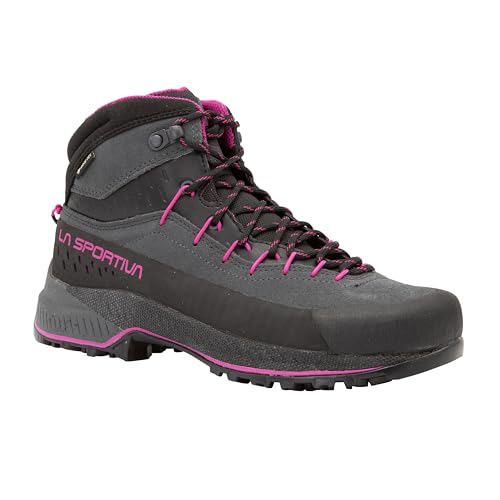
Built on a genuine women's-specific last rather than a scaled-down men's pattern, the TX4 EVO carries the same low-volume, approach-shoe-derived fit philosophy as the men's TX Hike, with the narrower heel and lower overall volume that a proper women's last provides.

This is a technical approach shoe as much as a hiking boot, strong for scrambling and rocky terrain where precise foot placement matters, and a narrow, low-volume fit genuinely helps with that precision rather than just being a comfort preference.
Specs
Last: Women's-specific, narrow, low volume | Waterproof: Yes, Gore-Tex | Best for: Women needing a genuinely narrow, low-volume technical fit
Skip this boot if: you want a traditional hiking-boot shape rather than an approach-shoe-derived one. The Lowa Renegade above is more conventional.
8. Best Full-Leather Durability: La Sportiva Ultra Raptor II Mid Leather GTX

This leather version of the Ultra Raptor II is one of the few boots on this list explicitly sold in a distinct Regular(C) width alongside a separate Wide(D) option, meaning the narrow fit here isn't just a side effect of the brand's general last, it's an intentional, labeled choice you can select directly.

The reinforced heel cup is specifically engineered for stability on high-mileage days on rugged terrain, addressing heel lock directly through construction rather than relying entirely on lacing technique to hold a narrow heel in place.
Specs
Last: Narrow, explicit Regular(C) width option | Upper: Full leather | Waterproof: Yes, Gore-Tex
Best for: Hikers who want a labeled narrow-width option rather than just a narrow-running brand
Skip this boot if: you want the lightest synthetic build. The full-leather upper adds weight and break-in time versus the brand's lighter models.
Other Narrow-Fit Brands Worth Trying
This list draws primarily from La Sportiva, Salomon, and Lowa because those are the brands consistently in stock and verified across our own product research. They're not the only names experienced narrow-footed hikers recommend. Asolo, Scarpa, and Vasque come up constantly in hiker forums and fit guides alongside the brands above, all Italian or European heritage brands with a similarly narrow, performance-oriented last. If none of the eight options above fit quite right, these three are worth trying on in person or checking directly with the retailer, since availability and specific models shift more often than the big-name options covered here.
Asolo in particular gets named repeatedly for backpacking-weight boots, the Fugitive GTX line comes up often in hiker forum threads specifically for narrow, low-volume feet, similar territory to the Aequilibrium Trek on this list but from a different Italian manufacturer. Scarpa's mountaineering-derived boots carry a similar reputation to La Sportiva's, unsurprising given both brands share roots in the same region of Italy's bootmaking industry. Vasque tends to come up most often for lighter hiking shoes and lower-cut options rather than backpacking-weight boots, worth checking if the picks on this list all felt too heavy or structured for your actual hiking style.
Buying Narrow: What to Check Before You Order
Whenever possible, try boots on with the actual hiking socks you'll wear on trail, thicker than an everyday sock, since sock thickness changes effective volume more than most buyers expect. If ordering online, check whether the specific model offers a labeled Regular or Narrow width, like the Ultra Raptor II Mid Leather above, rather than just relying on general brand reputation. And test the heel-lock lacing technique on arrival before deciding a boot doesn't fit, a boot that feels loose in the heel out of the box can often be solved entirely by lacing rather than needing a return.
If you've tried a properly narrow-last boot and still get heel slip or instep movement, that's a signal your issue may be volume rather than width, worth addressing with a thinner insole or an added tongue pad before assuming you need to keep shopping for an even narrower brand.
Break-In Expectations for Narrow-Last Boots
A narrower, lower-volume last generally means a snugger out-of-box fit than a roomier boot, which changes what normal break-in feels like. Expect more initial pressure across the top of the foot and around the ankle bones in the first few wears, especially in the full-leather options on this list like the TX Hike Mid Leather and Ultra Raptor II Mid Leather. That's typically the leather relaxing into your specific foot shape rather than a sign the boot is genuinely too small, but it's worth distinguishing the two before writing off a boot after one short hike.
A useful test: if the pressure you're feeling is a general snugness that eases somewhat within the first hour of wear and returns to the same level the next time you put the boots on, that's normal break-in. If you're getting sharp, localized pain at a specific point, especially near a bunion, the ball of the foot, or a bone spur, that's a fit problem the leather won't solve no matter how many miles you put on it, and it's worth returning the boot rather than pushing through. Break the boots in around the house and on short walks before committing to a long hike, standard advice for any leather hiking boot, but especially relevant here since a narrower last leaves less room for error if the fit turns out to be wrong.
Looking for the best boot in every category? See our best hiking boots guide.
Frequently Asked Questions
How do I know if I have narrow feet?
The clearest signal is heel slip, especially on descents, in boots that otherwise seem to fit through the midfoot and forefoot. A shoe store's Brannock device can measure width directly, but the practical test is trying on a boot from a brand known to run narrow, like La Sportiva or Salomon, and comparing the fit to a standard-width boot you already own.
Does "narrow" sizing exist in hiking boots?
Rarely, and far less commonly than wide sizing. Most brands don't offer a dedicated narrow-width SKU the way they offer wide. A small number of specific models, like the La Sportiva Ultra Raptor II Mid Leather on this list, do offer an explicit Regular versus Wide choice, but for most boots, the fix is choosing a brand whose standard last already runs narrow rather than finding a narrow-labeled size.
Will heel-lock lacing fix a boot that's too wide?
It helps significantly with heel slip specifically, but it can't fully compensate for a boot that's genuinely too wide or high-volume throughout. If the entire boot feels sloppy, not just the heel, lacing technique alone won't solve it, and you're better off trying a different last or adding volume-reducing inserts.
What's the difference between a narrow foot and a low-volume foot?
Width is the side-to-side measurement across the ball of the foot. Volume is the overall internal space needed, particularly the height over the instep. A foot can be narrow but average-volume, or narrow and low-volume together, which is the more common combination and the harder one to fit, since it requires both a tapered last and reduced overall internal space.
Why do Italian brands run narrower than American brands?
It largely comes down to different regional last shapes built up over decades of shoemaking tradition rather than any single technical reason. Italian mountaineering and bootmaking heritage, the same lineage behind La Sportiva, Scarpa, and Asolo, tends to produce a narrower, lower-volume last than American work-boot-derived hiking brands, which historically prioritized a roomier fit for a broader range of foot shapes. Neither approach is objectively correct, but the pattern is consistent enough that "look at Italian brands first" is genuinely useful advice for narrow feet rather than a coincidence.
Final Verdict: The Right Narrow-Fit Boot for You
Situation → Best Pick
Want the independently-verified narrow fit: La Sportiva Nucleo High II GTX
Heel and midfoot slop is your main issue: Salomon Quest 5 GTX
Moderately narrow, want long-term durability: Lowa Renegade GTX Mid
Technical terrain without heavy weight: La Sportiva Ultra Raptor 3 Mid GTX
Want a labeled Regular-width option: La Sportiva Ultra Raptor II Mid Leather GTX
Maximum support, minimal excess volume: La Sportiva Aequilibrium Trek GTX
Women's technical, low-volume fit: La Sportiva TX4 EVO Mid GTX
Before you buy based on brand reputation alone, figure out which of the two real problems you actually have: a narrow forefoot, a low-volume overall fit, or both together. That distinction, more than any single boot on this list, determines whether your next pair actually solves the heel slip and instability that sent you looking for "narrow" boots in the first place. And if a boot from this list feels almost right but not quite, try the heel-lock lacing technique before assuming it's the wrong boot entirely.