
Most "best work boots" content leans on vague phrases like "customers love these" without saying who those customers actually are or what they do all day. This piece takes a different approach: we read through trade-specific communities, Lawnsite for landscapers, PlumbingZone for plumbers, Mike Holt's electrician forums, and general contractor and tradesperson discussion boards, to see what actually gets recommended when the person asking has real skin in the game.
A few patterns showed up clearly, including one genuinely surprising one: a boot that electricians and factory workers swear by shows up in landscaping forums as a specific warning of what not to buy.
General Trades: Red Wing and White's Dominate, for Durability Reasons
Across general contractor and tradesperson forums, Red Wing comes up more than any other name, consistently framed around longevity and rebuildability rather than flashy features. The Iron Ranger specifically gets named again and again as the boot people point to when they talk about a pair lasting a decade with resoling.
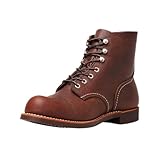
Check the Red Wing Iron Ranger on Amazon
White's Boots shows up as the premium alternative among posters willing to pay more upfront for a boot built to be resoled and rebuilt for a decade rather than replaced. Wolverine and Danner both appear regularly as reliable middle-ground picks, and the DuraShocks SR gets named specifically in more than one thread as a budget-friendly comfort pick that holds up to direct-attach construction without falling apart.

Check the Wolverine DuraShocks SR on Amazon
One recurring, less obvious theme: several posters specifically warn against unfamiliar imported brands, citing boots that fell apart within months compared to established names that lasted years.
Electricians: EH Rating Comes First, and Red Wing Still Wins
Electrician-specific forums show a more technical conversation than general trade boards, with real attention paid to the difference between EH (electrical hazard) rating and ESD (electrostatic discharge) rating, two ratings that sound similar but do opposite jobs, one insulates against shock, the other is designed to safely discharge static. Posters specifically caution newer electricians against confusing the two.
Red Wing remains the most consistently recommended brand here too, but for a different reason than general trades: multiple posters specifically credit it with all-day comfort during long panel and service work, not just durability. For a certified steel toe pick built with electricians in mind, the KEEN Utility Milwaukee comes up favorably in similar threads for the same all-day comfort reason, worth checking against your specific EH requirement since certification details vary by exact model and colorway.

Check the KEEN Utility Milwaukee on Amazon
Aftermarket insole upgrades also come up repeatedly as a common addition to an already-certified boot, worth knowing that swapping an insole doesn't affect a boot's ASTM or EH certification, since that rating comes from the safety toe and outsole construction, not the insole. For a deeper breakdown of EH-specific requirements, our steel toe requirements guide covers the certification side in full.
Landscapers: The Counterintuitive Find
This is where the research turned up something genuinely surprising. On Lawnsite, one detailed response specifically warns that Red Wing's Supersole, a boot praised everywhere else for factory and concrete comfort, is a poor choice for hillside mowing and trimming work because it lacks the traction pattern needed on wet grass and turf. The same boot that wins in one trade gets flagged as the wrong pick in another, not because it's a bad boot, but because the hazard profile is completely different.
Landscapers on Lawnsite favor Keen and Merrell far more than any safety-toe brand, and a real, recurring theme worth taking seriously: a meaningful number of landscapers, particularly those focused purely on mowing rather than hardscaping, don't wear a safety-toe boot at all. Trail running shoes, hiking boots, and even sneakers come up as legitimate, deliberate choices for mowing-only work, with several posters explicitly noting that a rigid safety toe isn't worth the weight and heat when the actual job doesn't carry a real crush hazard. The Keen Utility Cincinnati and Merrell Moab 3 both get named directly in these threads as go-to choices.


Check the Keen Utility Cincinnati on Amazon or the Merrell Moab 3 Mid WP
Muck-style rubber boots show up specifically for irrigation and wet spraying work, the Chore Classic is one of the names that comes up repeatedly for exactly that use case.

Check the Muck Boot Chore Classic on Amazon
Justin pull-on boots get repeated praise purely for the convenience of no laces during quick on-and-off during a mowing route, the Joist is a genuine match for that description, waterproof and pull-on in one.

Check the Justin Joist Pull-On on Amazon
One tension comes up constantly and honestly: several posters note that waterproofing and breathability are difficult to have simultaneously, wet grass and morning dew soak a boot fast, but a fully sealed waterproof membrane traps heat and sweat during a full day of summer mowing.
Plumbers: A Genuine Two-Boot System, and a Surprising Appearance Factor
PlumbingZone discussions reveal a practical pattern that doesn't show up in any other trade's forums: many residential plumbers deliberately run two completely different pairs. One heavier boot, sometimes steel toe, often waterproof, stays in the truck for crawl spaces, trenching, and genuinely rough conditions, the Wolverine Floorhand is a genuine match for that role, waterproof and built for real crawl-space and trench work.

Check the Wolverine Floorhand Waterproof on Amazon
A second, lighter pair, sometimes literally dress loafers, gets worn for routine indoor residential service calls specifically because customers notice professional appearance, and a growing number of homeowners ask contractors to remove shoes before entering.
Kneel comfort comes up repeatedly as a real, underappreciated factor for plumbers specifically, long stretches spent kneeling under a sink or in a crawl space put pressure on the boot's construction in a way that standing or walking work doesn't. Our plumber-specific work boots guide covers the fuller picture of waterproofing, slip resistance, and toe protection by plumbing specialty.
Why the Same Brand Gets Recommended and Warned Against
The Red Wing pattern across these communities is worth naming directly. General tradespeople recommend it for durability and rebuildability. Electricians recommend it for all-day comfort during stationary panel work. Landscapers specifically warn against one of its most popular soles for hillside turf traction. None of these posters are wrong, they're each evaluating the boot against their own actual hazard profile, which is exactly the point: the "best" boot only means something once you know what job it's actually being evaluated against.
A Note on How Seriously to Take Forum Advice
Forum and Reddit sentiment is real-world signal from people actually doing the work, not a scientific survey. It reflects individual experience, foot shape, climate, and personal preference as much as objective boot quality, and it skews toward people motivated enough to post, which isn't necessarily representative of every worker in a trade. Treat this as a useful starting point for narrowing options and understanding real trade-offs, not a substitute for checking your own job's specific certification requirements first.
Frequently Asked Questions
Do tradespeople actually agree on which boots are best?
Not universally, and that's genuinely instructive. What emerges instead is agreement within a trade on what actually matters, traction for landscapers, EH rating clarity for electricians, kneel comfort for plumbers, more than agreement across trades on a single "best" boot.
Why do electricians and landscapers disagree about the same Red Wing boot?
Because they're solving different problems. The Supersole that electricians and factory workers value for concrete comfort lacks the traction pattern landscapers need on wet grass and hillsides. Both groups are right about their own use case, the boot simply wasn't built for both jobs equally well.
Do plumbers really wear dress shoes on the job?
For indoor residential service calls specifically, yes, based on multiple accounts from professional plumbing forums. It's a deliberate choice tied to customer-facing appearance and the practicality of removing shoes when entering a home, paired with a separate, more rugged pair kept in the truck for crawl spaces and rough conditions.
Is Reddit and forum advice reliable for choosing work boots?
It's useful as real-world signal from people doing the actual work, but it's not a scientific survey. Individual foot shape, climate, and personal preference shape these opinions as much as objective boot performance. Use it to understand trade-offs and narrow your options, then verify against your specific job's certification requirements.
Bottom Line
The clearest finding across every community: match the boot to the actual hazard of your specific trade, not to whichever brand has the most name recognition. Electricians should start with EH certification and comfort for stationary work, our steel toe requirements guide covers that certification in depth. Plumbers should think in terms of a two-boot system split by role, our plumber-specific guide breaks that down further. And if you're in landscaping, don't assume a safety toe is mandatory, a meaningful number of working landscapers have deliberately gone without one, and for good reason.