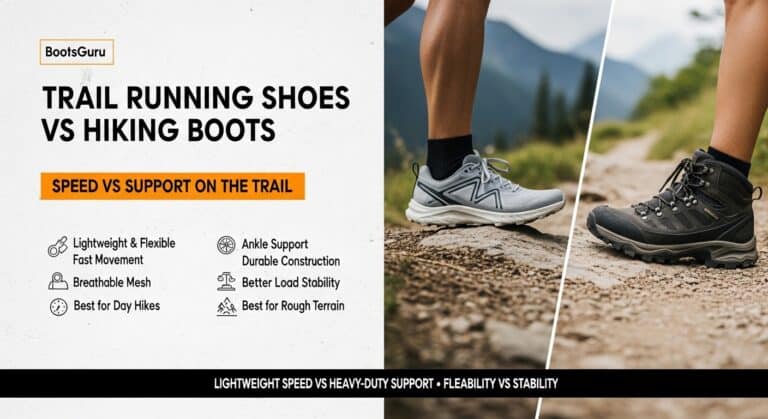
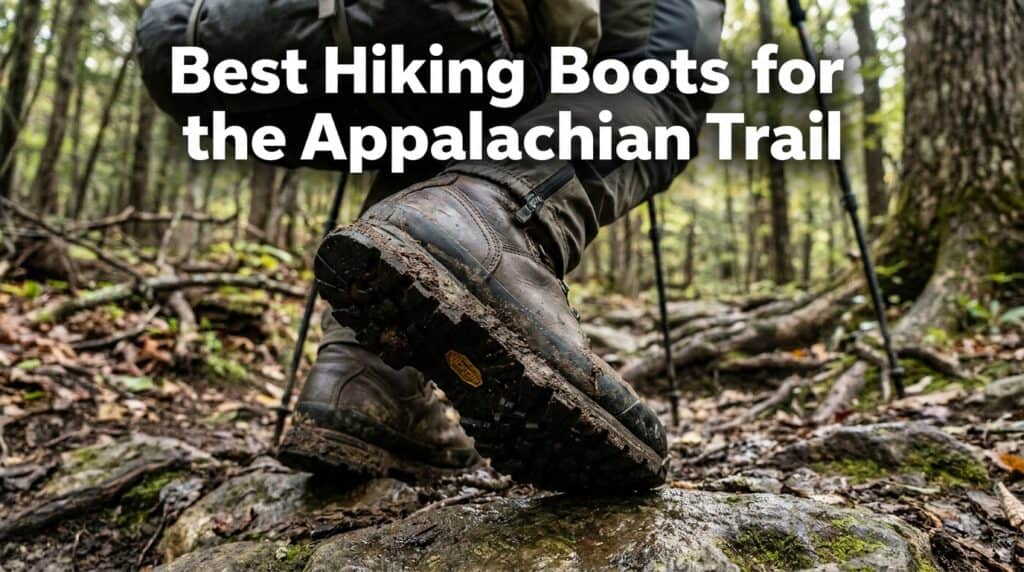

Here's the uncomfortable fact most "best hiking boots for the Appalachian Trail" articles skip: according to The Trek's 2025 AT Thru-Hiker Survey, 87 to 91 percent of thru-hikers wear trail runners for most of their hike, not boots. That number has been climbing for a decade. If you're planning a thru-hike and searching for "hiking boots," there's a real chance the honest answer is that you don't want a boot at all.
This guide isn't going to pretend that data doesn't exist. If you're still deciding between trail runners and boots, read our full research-backed comparison first, it covers the survey data, the ankle-support myth, and the blister science in depth. This article is for the genuine minority who has good reasons to choose a boot anyway, and it covers the ones that actually hold up over hundreds of miles, not just a weekend.
Quick Picks: Best Long-Distance Hiking Boots 2026
| Best For | Model |
|---|---|
| Heavier packs / max support | Salomon Quest 4 GTX |
| Durable all-rounder | Oboz Bridger Mid B-DRY |
| Budget / wet terrain | KEEN Targhee 4 Mid |
| High-top trail-runner hybrid | Altra Lone Peak 9 WP Mid |
| Technical, rocky terrain | La Sportiva Ultra Raptor 3 Mid GTX |
| What most thru-hikers actually wear | Altra Lone Peak 9 (low-top) |
Who Should Actually Choose a Boot for a Long Trail
The survey data is clear, but it's not a universal rule. A boot still makes sense for specific, real situations:
Ankle instability or a history of rolled ankles. The evidence that ankle-height boots meaningfully prevent rolls is weaker than most hikers assume, our full comparison guide covers this, but if you personally have a known instability issue, the extra structure is a reasonable individual choice even if it's not a population-level recommendation.
Heavier packs from specific gear needs. Photographers carrying camera gear, hikers using a bear canister for extended stretches, or anyone genuinely unable to get below a 30+ lb base weight will load their feet differently than an ultralight hiker, and more structure underfoot can help.
Early-season NOBO starts in February or March. Cold, wet, occasionally snowy conditions in the Georgia and North Carolina mountains are a real argument for more insulation and structure than a mesh trail runner provides, at least for the first few hundred miles.
Newer backpackers who want structure while building trail legs. There's no shame in this. Plenty of successful thru-hikers start in boots and switch to trail runners once their feet and legs adapt, several models below are specifically suited to that transition.
Section hikers doing shorter, less mileage-intensive stretches. The math changes when you're not putting in 20+ mile days for months straight, boot durability concerns matter less over a long weekend than over 2,200 miles.
The High-Top Trail Runner: The Fastest-Growing Middle Ground
The 2025 survey data revealed something the trail-runner-vs-boot binary misses: the percentage of hikers in standard low-top trail runners actually dropped slightly year over year, but they didn't move back to traditional boots. They moved to high-top trail runners, a hybrid category that keeps trail-runner weight and breathability while adding mid-boot ankle coverage.
This is arguably the smartest category for anyone genuinely torn between the two camps. The Altra Lone Peak 9 WP Mid in this guide is a direct example: same zero-drop platform and wide toe box that made the standard Lone Peak the most popular shoe on the AT, with a taller cuff and waterproof membrane added. It's not a traditional boot, and it shouldn't be evaluated as one, but it's a legitimate answer for hikers who want more than a low-top shoe without committing to full boot weight and break-in.
Quick Comparison: All 10 Options
| Model | Type | Best For |
|---|---|---|
| Salomon Quest 4 GTX | Traditional boot | Heavier packs, max ankle support |
| Oboz Bridger Mid B-DRY (Men's) | Traditional boot | Durable all-rounder, section hikers |
| Oboz Bridger Mid B-DRY (Women's) | Traditional boot | Women's all-rounder |
| KEEN Targhee 4 Mid | Traditional boot | Budget, wet Southern Appalachian terrain |
| Lowa Renegade GTX Mid (Women's) | Traditional boot | Premium, technical support |
| Altra Lone Peak 9 WP Mid | High-top hybrid | Best of both camps, growing 2025 trend |
| Altra Lone Peak 9 (low-top) | Trail runner | What most thru-hikers actually wear |
| La Sportiva Ultra Raptor 3 Mid GTX | High-top hybrid | Technical, rocky terrain |
| La Sportiva Ultra Raptor II Mid Leather GTX | Traditional boot | Full-leather durability, colder/wetter sections |
| Oboz Sawtooth X Pro Mid GTX | High-top hybrid | Lightweight technical alternative |
1. Best for Heavier Packs: Salomon Quest 4 GTX
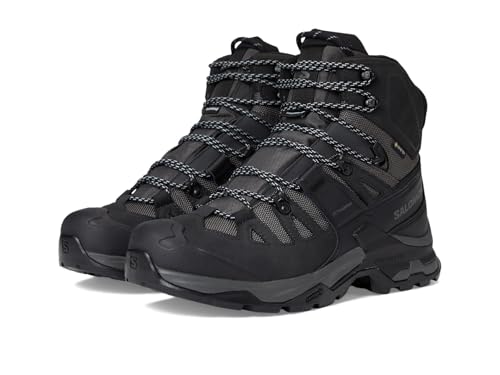
The Quest 4 is the traditional-boot benchmark for hikers carrying real weight, a supportive ankle collar, a substantial midsole platform, and genuine Gore-Tex waterproofing built for hikers who need structure more than they need speed. If your gear list has you starting above a 30 lb base weight, this is the category to shop in.

The tradeoff is honest: this is a heavier, stiffer boot than anything else on this list, and it needs real break-in time before a long trail, not something to buy the week before you leave.
Specs
Type: Traditional boot | Waterproof: Yes, Gore-Tex | Height: Mid/high
Best for: Heavier base weights, hikers who want maximum structure
Skip this boot if: your base weight is under 25 lbs. The extra structure and weight isn't earning its keep at that load.
2. Best Durable All-Rounder: Oboz Bridger Mid B-DRY
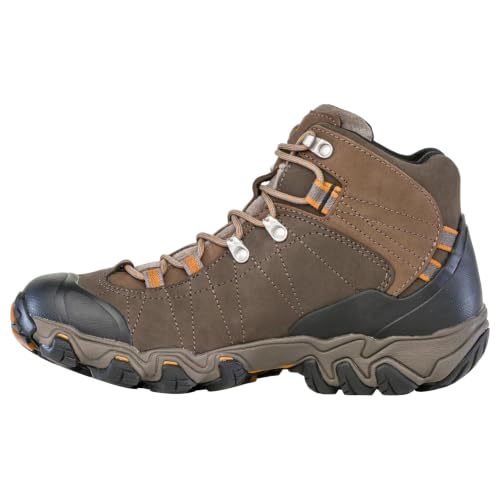
The Bridger is Oboz's flagship for a reason, real durability without the excessive stiffness of a mountaineering-style boot, and Oboz's proprietary B-DRY waterproofing performs well without the added cost of licensed Gore-Tex. For our full breakdown of the Bridger against the rest of the Oboz lineup, see our complete Oboz Hiking Boots guide.

Oboz's O FIT insole is genuinely well regarded for long-mileage comfort, and the brand donates a tree for every pair sold, a detail that resonates with plenty of long-distance hikers who care about that kind of thing.
Specs
Type: Traditional boot | Waterproof: Yes, B-DRY | Insole: O FIT
Best for: Section hikers, durability-focused long-distance hikers
Skip this boot if: you want the lightest possible traditional boot. It's durable rather than minimal.
3. Women's: Oboz Bridger Mid B-DRY

Built on Oboz's women's-specific last rather than a scaled-down men's pattern, the women's Bridger carries the same B-DRY waterproofing and O FIT insole as the men's version, with the heel and instep fit that a proper last provides.

For heel-slip issues that plague women wearing men's boots in smaller sizes, a genuine women's last matters more over 2,000 miles than it does over a weekend trip.
Specs
Type: Traditional boot | Last: Women's-specific | Waterproof: Yes, B-DRY
Best for: Women section hikers and durability-focused thru-hikers
Skip this boot if: you need a lighter, faster-drying option. Consider the Lone Peak hybrid instead.
4. Best Budget / Wet Terrain: KEEN Targhee 4 Mid

The Targhee line has been a trail staple for years, and the 4th generation keeps KEEN's signature roomy, asymmetric toe box, genuinely useful on the root-heavy, frequently wet terrain of the Southern Appalachians where toe splay and traction matter as much as waterproofing.

At the most accessible price point in this guide, the Targhee 4 is a reasonable entry point for section hikers or first-time long-distance hikers who aren't ready to commit to a premium boot.
Specs
Type: Traditional boot | Waterproof: Yes | Toe box: KEEN asymmetric, roomy
Best for: Budget buyers, wet Southern Appalachian sections
Skip this boot if: you have narrow feet. The roomy toe box that helps wide-footed hikers can feel loose otherwise.
5. Best Premium Technical: Lowa Renegade GTX Mid
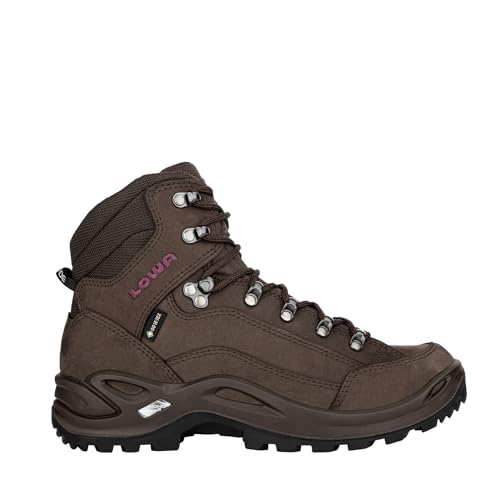
The Renegade has a reputation among serious long-distance hikers that borders on cult status, genuine German engineering, a supportive but not overbuilt platform, and Gore-Tex waterproofing that holds up over genuinely long mileage without the packed-out feel some boots develop.
It commands a premium price, but hikers who've put serious miles on the Renegade consistently report it ages better than cheaper alternatives, relevant math for anyone planning a multi-month hike where boot longevity has real cost implications.
Specs
Type: Traditional boot | Waterproof: Yes, Gore-Tex | Best for: Hikers prioritizing long-term durability over upfront cost
Skip this boot if: budget is your primary constraint. The KEEN Targhee above covers similar ground for less.
6. Best High-Top Hybrid: Altra Lone Peak 9 WP Mid

The standard Lone Peak has been the most popular shoe on the Appalachian Trail for years running, per The Trek's annual survey, thanks to its zero-drop platform and genuinely wide toe box that lets toes splay naturally over high-mileage days. The WP Mid version adds a waterproof membrane and a taller cuff without abandoning that core platform.

This is the clearest example of the high-top hybrid trend the 2025 survey data flagged as fastest-growing, more coverage and structure than a standard trail runner, without the weight and break-in penalty of a traditional boot.
Specs
Type: High-top trail-runner hybrid | Platform: Zero-drop, wide toe box | Waterproof: Yes
Best for: Hikers wanting hybrid coverage without full boot weight
Skip this boot if: you've never worn zero-drop footwear before. The platform requires an adjustment period; don't start a thru-hike in it untested.
7. What Most Thru-Hikers Actually Wear: Altra Lone Peak 9 (Low-Top)
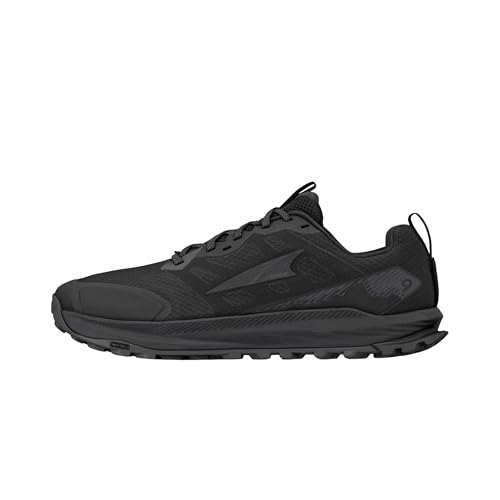
Included here deliberately, not because it's a boot, but because any honest guide to Appalachian Trail footwear that omits the single most popular shoe on the trail isn't giving you the full picture. The standard low-top Lone Peak 9 is what a plurality of successful thru-hikers actually finish the trail in.

If you've read the boot-vs-trail-runner data and you're still leaning toward a boot out of habit rather than a specific reason from the checklist above, this is worth trying first.
Specs
Type: Trail runner | Platform: Zero-drop, wide toe box | Waterproof: No, quick-drying mesh
Best for: Most thru-hikers, per current survey data
Skip this pick if: you're one of the specific cases in the "who should choose a boot" checklist above.
8. Best for Technical, Rocky Terrain: La Sportiva Ultra Raptor 3 Mid GTX
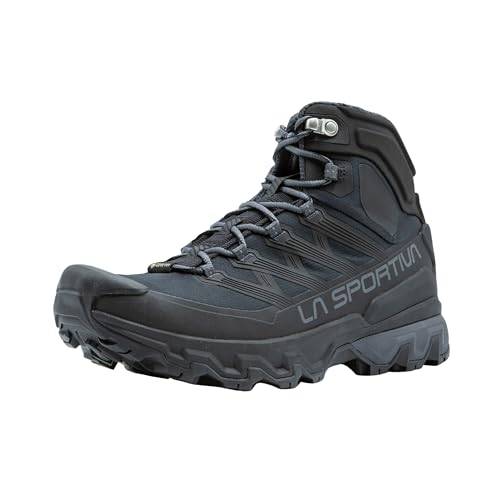
La Sportiva built its reputation on climbing footwear, and that heritage shows in the Ultra Raptor's outsole, genuinely superior edging and grip on the rocky, technical sections of the trail like the White Mountains or the Mahoosucs, where standard trail-runner lugs can feel underwhelming.

This is a hybrid, lighter and more flexible than a traditional boot, but with more structure and technical capability than a standard trail runner, worth considering specifically for hikers concerned about the trail's more technical Northern sections.
Specs
Type: High-top trail-runner hybrid | Waterproof: Yes, Gore-Tex | Outsole: La Sportiva technical climbing heritage
Best for: Technical, rocky terrain, Northern New England sections
Skip this boot if: your hike is mostly on well-groomed, non-technical trail. The technical outsole is wasted there.
9. Best Full-Leather Durability: La Sportiva Ultra Raptor II Mid Leather GTX

This leather version of the Ultra Raptor trades some of the synthetic version's breathability for genuine full-grain leather durability, a reasonable tradeoff for hikers tackling colder, wetter sections where leather's structure and warmth retention matter more than ventilation.

It carries the same technical La Sportiva outsole as the synthetic version, just wrapped in a more traditional, longer-wearing upper material.
Specs
Type: Traditional boot | Upper: Full-grain leather | Waterproof: Yes, Gore-Tex
Best for: Colder, wetter sections, hikers who prioritize upper durability
Skip this boot if: breathability and fast drying matter more to you than upper durability.
10. Best Lightweight Technical: Oboz Sawtooth X Pro Mid GTX
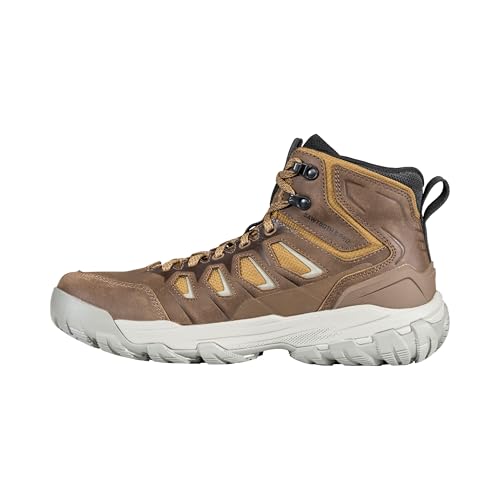
The Sawtooth X Pro sits at the lighter, faster end of Oboz's lineup, trail-runner-adjacent weight and flexibility with a mid-height cuff and genuine Gore-Tex waterproofing, a strong option for hikers who liked the idea of the Bridger's durability but want something closer to trail-runner weight.
It shares Oboz's O FIT insole comfort platform, and for hikers already sold on Oboz from the Bridger, it's worth comparing directly against it for the weight-versus-durability tradeoff that matters most to your specific plan.
Specs
Type: High-top trail-runner hybrid | Waterproof: Yes, Gore-Tex | Insole: O FIT
Best for: Hikers wanting Oboz durability at lower weight than the Bridger
Skip this boot if: you want the maximum durability the Bridger offers. This trades some of that for weight savings.
Durability and Replacement Math for Long-Distance Use
Per The Trek's 2025 survey data, the average AT thru-hiker replaces footwear roughly every 520 miles, about four pairs of trail runners over a full thru-hike, or two to three pairs of boots given their greater per-pair durability. Our full comparison guide covers the complete cost-per-mile math between the two categories.
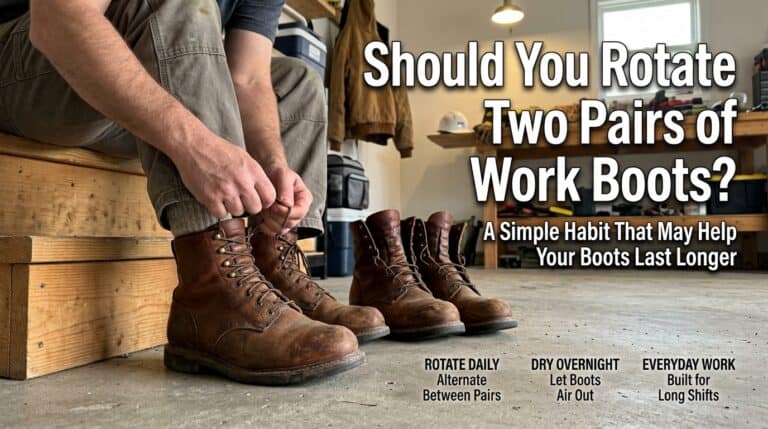
For traditional boots specifically, expect the upper and waterproof membrane to outlast the outsole in most cases, once lugs pack out or the tread visibly smooths on rock, traction degrades before the boot looks "worn out." Rotating two pairs during a long hike, wearing one while the other dries out fully, is a widely recommended practice regardless of which category you choose, covered in more depth in our guide to rotating footwear.
Looking for the best boot in every category? See our best hiking boots guide.
Frequently Asked Questions
Do I need waterproof boots for the Appalachian Trail?
Not necessarily, and this is one of the more counterintuitive findings in the trail-runner-vs-boot data. Waterproof membranes keep water out, but they also trap it in once it gets past the membrane through the top of the boot, and they dry far slower than non-waterproof mesh. Many experienced long-distance hikers deliberately choose non-waterproof footwear specifically because it dries faster after the inevitable stream crossing or rainstorm.
How many miles do hiking boots last on a thru-hike?
Traditional boots generally last longer per pair than trail runners, commonly 500 to 800 miles depending on the boot and terrain, meaning two to three pairs across a full Appalachian Trail thru-hike. Trail runners typically need replacement closer to every 400 to 500 miles, requiring four or more pairs.
Are heavy boots ever the right choice for a long trail?
Yes, for specific situations: genuinely heavy base weights, known ankle instability, early-season cold starts, or hikers who simply prefer the structure while adjusting to trail life. The survey data showing trail-runner dominance describes what works for most hikers on the AT specifically, not a rule that applies to every hiker or every long trail.
What's the difference between a hiking boot and a high-top trail runner?
A traditional hiking boot uses a stiffer, more structured platform built around ankle support and durability, typically with a higher break-in cost. A high-top trail runner keeps a trail runner's flexible, lightweight platform and simply adds a taller cuff and often a waterproof membrane, trading some of the boot's structure for significantly less weight and little to no break-in.
Final Verdict: The Right Choice for Your Hike
Scenario → Best Pick
Heavier pack, want maximum support: Salomon Quest 4 GTX
Durable all-rounder, section hiking: Oboz Bridger Mid B-DRY
Budget, wet Southern Appalachian terrain: KEEN Targhee 4 Mid
Premium, long-term durability: Lowa Renegade GTX Mid
Best of both camps, hybrid coverage: Altra Lone Peak 9 WP Mid
Technical, rocky Northern sections: La Sportiva Ultra Raptor 3 Mid GTX
What the data says most hikers should try first: Altra Lone Peak 9 (low-top)
The most useful thing you can take from this guide isn't a specific product, it's the honest starting question: do you actually have a reason to want a boot, or are you defaulting to one out of habit? If it's the former, any of the ten options above will serve you well. If it's the latter, the trail runner or hybrid picks in this list, and the data in our full comparison guide, are worth a serious look before you commit.