
Last Updated: October 28, 2025 | By: The BootsGuru Team
There’s nothing worse than the dreaded 4 PM “squelch.” That feeling of damp socks and clammy skin inside your boots can ruin your day, lead to painful blisters, cause fungal infections (like athlete’s foot), and even become dangerous in cold weather (hello, trench foot).
As boot experts, we know there are two enemies fighting to soak your feet: External Moisture (rain, puddles, snow, wet grass) and Internal Moisture (sweat). A good boot setup has to fight both at the same time.
If you’re tired of ending the day with pruny, damp feet, stop blaming your boots (for now). Keeping your feet dry is a *system*. Here is our 5-step, no-nonsense guide to winning the battle against moisture.
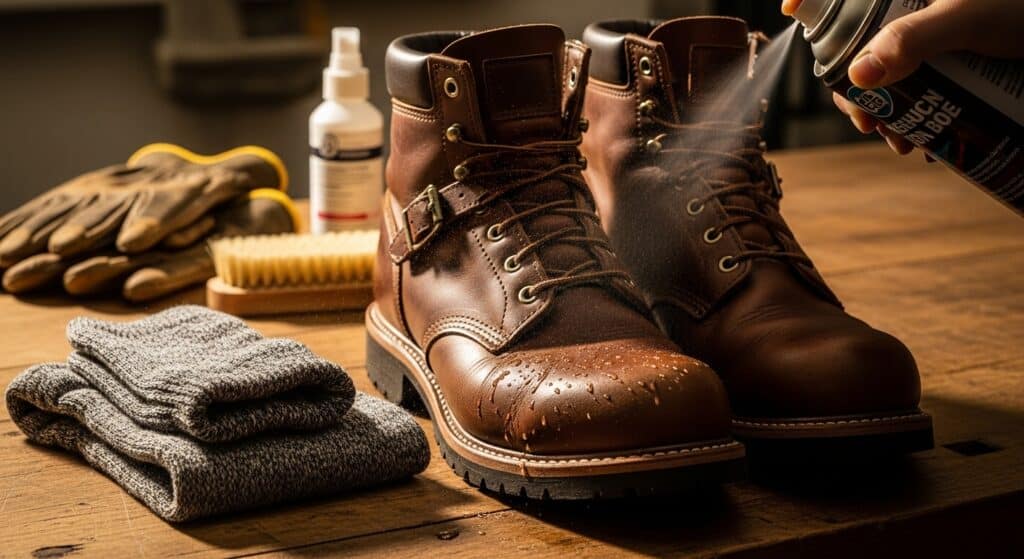
Keeping feet dry is a 2-part battle: blocking external water and managing internal sweat.
Step 1: Choose the Right Boot for Your Environment
The first step is ensuring your boot matches your job. You can’t expect a breathable mesh boot to keep you dry in a swamp, and you can’t expect a non-insulated rubber boot to keep your feet dry from sweat in the summer.
For EXTERNAL Water (Rain, Puddles, Mud, Snow):
You need boots with a dedicated waterproof system. Look for:
- A Waterproof Membrane: This is the key. Look for “Gore-Tex,” “KEEN.DRY,” “TimberDry,” or other proprietary waterproof booties. This internal layer stops water from getting in while allowing *some* sweat vapor to escape.
- Waterproof Materials: Full-grain leather treated with waterproofing, rubber, or neoprene uppers.
- Seam-Sealed Construction: Prevents water from leaking through the stitching.
→ Find our top picks in our Guide to the Best Waterproof Work Boots.
For INTERNAL Moisture (Sweat & Hot Weather):
If you work in a hot, dry environment, a fully waterproof boot can be your worst enemy. A waterproof membrane is like wearing a plastic bag; it traps heat and sweat. Instead, you need breathability.
- Non-Waterproof Boots: Unlined leather boots or boots with breathable mesh panels (like summer work boots) will allow sweat to evaporate much faster, keeping your feet drier overall.
Step 2: Upgrade Your Socks (The #1 Most Important Fix)
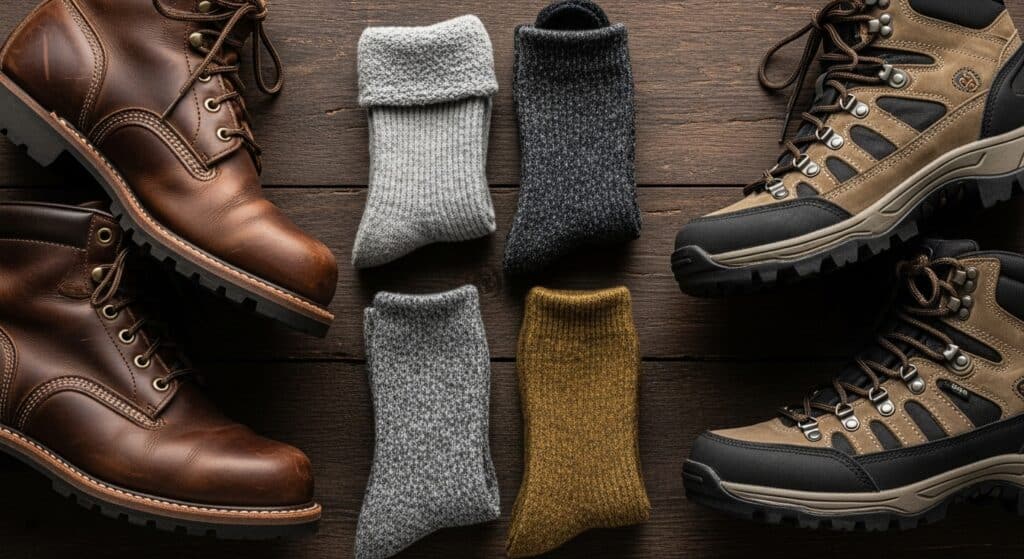
High-quality Merino wool socks are the single best upgrade for dry feet.
This is the single biggest and easiest change you can make. If you are wearing cotton socks, you have already lost the battle.
The Golden Rule: Cotton is Rotten.
Cotton is a sponge. It *absorbs* sweat and holds it directly against your skin. Once it’s wet, it stays wet, loses all insulating value, and causes blisters. Throw your cotton work socks in the bin. Now.
- The Solution: Merino Wool Socks. This is the magic material. Merino wool is *not* itchy; it’s a high-performance fiber. It wicks moisture away from your skin, so your foot *feels* dry. It also thermoregulates (keeps you warm in winter and cool in summer) and is naturally anti-bacterial, so it won’t stink after one day.
- Good Alternative: Synthetic Socks. Socks made from Polyester, Nylon, or other synthetic blends are also excellent at wicking moisture. They are often more durable and cheaper than merino wool, but may hold odors more.
→ Find our top picks in our Guide to the Best Wool Socks for Work Boots.
Step 3: Master Your Boot-Drying Routine (CRITICAL)
You can’t start the day dry if your boots are still damp from yesterday. Putting your foot into a still-damp boot is a recipe for instant clamminess and bacteria growth.
WARNING: DO NOT use direct heat. Never put your leather boots near a radiator, fireplace, or space heater. This will crack the leather, destroy the glues, and ruin your boots.
- The Good Way: As soon as you get home, pull the insoles out and open the boots up wide. Stuff them loosely with newspaper (which absorbs moisture) and let them air-dry overnight in a well-ventilated room.
- The Best Way: Invest in a Boot Dryer. A gentle boot dryer (which uses low, warm air or just convection) is the most effective and safest way to guarantee your boots and insoles are 100% dry and fresh by morning. It’s a game-changer.
- Rotate Your Boots: If possible, have two pairs of work boots and alternate them. This gives each pair a full 24 hours to dry out completely.
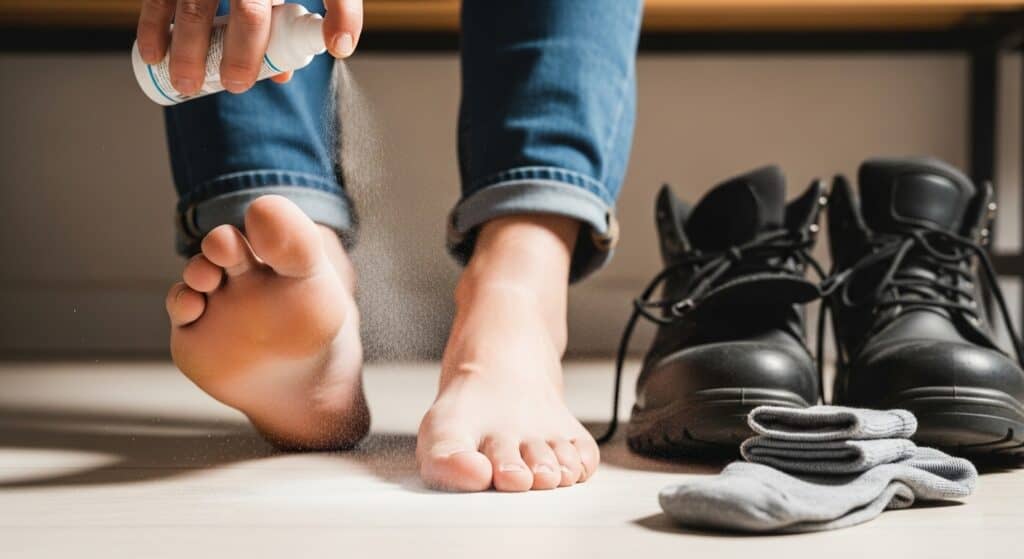
Using foot powders or antiperspirants directly manages sweat production.
Step 4: Use Foot Powders or Antiperspirants
This is your direct line of defense against sweat. You have two options: absorbing moisture or stopping it.
- Foot Powders: Products like Gold Bond Medicated Powder, or even simple baking soda or cornstarch, work by absorbing excess moisture as it’s produced, helping your feet feel drier for longer. They also reduce friction and prevent odor.
- Antiperspirants: Yes, the same stuff you use for your underarms. You can apply an antiperspirant (any standard spray/stick) to the *soles of your clean, dry feet* at night before bed. This blocks the sweat glands from producing excessive moisture in the first place.
Step 5: Upgrade Your Insoles
The cheap, flimsy foam insoles that come with most boots are sweat magnets. They act like that cotton sock, soaking up moisture and holding it against your foot all day.
- The Solution: Rip out those stock insoles and replace them with a quality aftermarket insole designed for moisture management.
- What to Look For: Insoles with a wool top cover (like from Superfeet or Oboz) are fantastic for wicking moisture, or those made with open-cell foam (like OrthoLite) which are designed to be breathable, allowing air to circulate.
→ Find our top picks in our Guide to the Best Insoles for Work Boots.
Frequently Asked Questions (FAQ)
My “waterproof” boots make my feet sweat! Why?
This is the “waterproof trade-off.” That waterproof membrane that stops rain from getting in also makes it harder for sweat vapor to get *out*. It’s like wearing a high-tech plastic bag. If you work in hot conditions and don’t face *external* water, a non-waterproof, breathable boot is a much better choice for keeping feet dry from sweat.
Can I make my non-waterproof boots waterproof?
You can make them highly water-resistant. Applying heavy-duty waxes (like Sno-Seal) or oil-based treatments (like Obenauf’s LP) to full-grain leather boots can make them repel water extremely well. However, this will *not* make them truly waterproof (able to be submerged) and will significantly reduce their breathability. Check out our full guide on how to waterproof boots for more.
How often should I dry my boots?
If you wear them all day, you should dry them every night. Even if they don’t feel “wet,” they are holding moisture from your sweat. Proper drying is the #1 way to extend their life and prevent odor and bacteria.
Conclusion: Dry Feet are a System, Not a Single Product
As you can see, keeping your feet dry isn’t about one “magic” boot. It’s a 5-part system:
- Start with the Right Boot for your weather (Waterproof or Breathable).
- Wear the Right Socks (Merino Wool or Synthetic, NO Cotton).
- Follow a strict Drying Routine (Boot Dryer is best).
- Use Powders or Antiperspirants to manage sweat.
- Upgrade to Moisture-Wicking Insoles.
By combining these steps, you create an environment inside your boot that actively fights moisture from both the inside and the outside. Your feet will be drier, safer, and much more comfortable, no matter how tough the job.