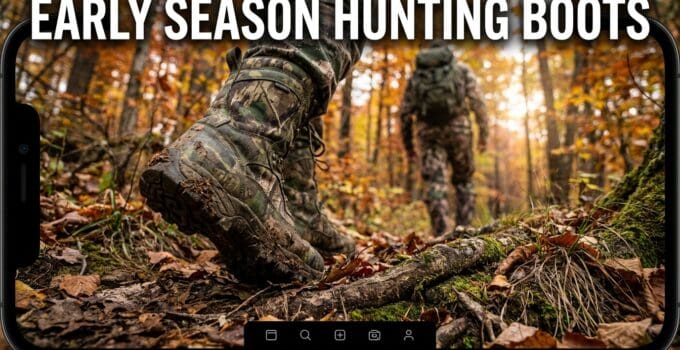
If you’ve already read our general hunting boots guide, you know the core logic: active early-season hunters generally want 0 to 200 grams of insulation, not the 400g-plus that makes sense once you’re sitting still in November cold. That framework, and the full rubber-vs-leather breakdown, already lives there, so we won’t repeat it here.
What that guide doesn’t cover is two things that come up specifically in early season and nowhere else: the gear problem of pre-season scouting, which is a genuinely different job than hunting-day footwear, and the real overlap between early bow season and snake activity across the South. Both get skipped by almost every “early season boots” roundup, so that’s what this page actually covers.
Quick Picks: Best Early Season Hunting Boots 2026
| Best For | Model | Type |
|---|---|---|
| Best for scouting | Irish Setter Wingshooter ST | Lightweight leather, uninsulated |
| Best pull-on for stand checks | Irish Setter Ashby 6″ | Pull-on, uninsulated |
| Best for hunt-day, uninsulated | Danner Pronghorn 8″ Uninsulated | Leather hiker, uninsulated |
| Best snake protection | Irish Setter Terrain 17″ | Tall leather, snake guard |
Scouting Boots Are a Different Problem Than Hunt-Day Boots
Nobody writes about this, but pre-season scouting has its own footwear logic that’s genuinely different from opening-day hunting. You’re checking trail cameras, refreshing food plots, and walking access routes days or weeks before you’ll actually be in a stand, often multiple short trips a week rather than one long sit. Scent control matters far less here since you’re not hunting yet, which opens up options a serious hunt-day boot roundup would skip.
What actually matters for scouting: quick on-and-off for frequent short trips, enough durability to handle repeated use without babying a $300 pair of leather boots, and comfort for covering ground rather than sitting still. A pull-on boot earns its place here specifically because you’re not lacing up for a five-hour sit, you’re in and out of the truck checking a camera and moving to the next spot.
The Snake Overlap Nobody Applies to Deer Season
We covered this exact mechanism in our Best Turkey Hunting Boots guide, and it applies just as directly here: early bow season across the South runs straight through the tail end of peak snake activity. A Texas or Georgia bowhunter working creek bottoms and field edges in September has the same practical reason to think about snake protection that a spring turkey hunter does, it’s just a different season and a different audience asking the same question.
This goes for upland hunters too. Early dove and quail seasons put hunters walking through exactly the brush lines and field edges where snakes are still active before the first real cold snap. If you hunt anywhere in snake country during early season, this isn’t a fringe concern, it’s a real, practical addition to your kit. Our full snake boot guide covers the category in more depth if snake protection matters to you beyond early season specifically.
1. Best for Scouting: Irish Setter Wingshooter ST

The Wingshooter was built as an upland boot, light and flexible enough for a full day of walking fields, and that exact profile makes it a strong scouting boot too. It’s uninsulated, which is correct for September temperatures whether you’re checking a camera at 7am or walking a food plot boundary at 4pm.

The lightweight leather upper breaks in fast compared to a heavier mountain boot, which matters when you’re putting real miles on a boot during scouting season before the actual hunt even starts.
Specs
Type: Lightweight leather upland boot | Insulation: None
Waterproof: Yes | Best for: Scouting, food plot checks, early upland seasons
Skip this boot if: you need a pull-on for frequent quick trips. See the Ashby below for that.
2. Best Pull-On for Stand Checks: Irish Setter Ashby 6″
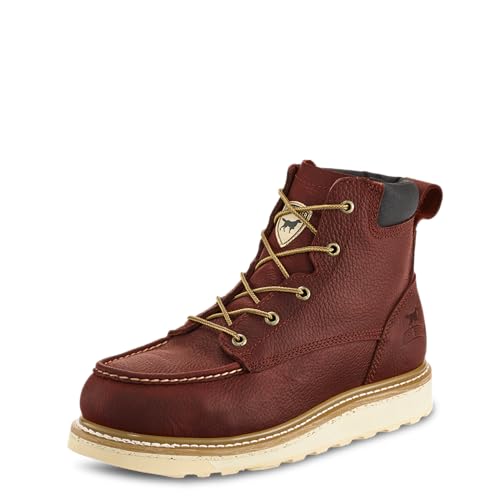
For the reality of scouting season, in and out of the truck multiple times a week to check a camera or top off a feeder, a pull-on genuinely beats a lace-up. The Ashby is built for exactly that kind of quick, repeated access rather than an all-day hunt.

It’s not the boot you want for a real hunt-day sit, but for the specific job of frequent short scouting trips where speed on and off matters more than anything else, it’s the right tool.
Specs
Type: 6″ pull-on | Insulation: None
Waterproof: Yes | Best for: Frequent short scouting trips, camera and feeder checks
Skip this boot if: you’re heading out for an actual hunt day rather than a quick scouting trip. A lace-up gives more security for a longer sit.
3. Best for Hunt-Day, Uninsulated: Danner Pronghorn 8″ Uninsulated

Danner sells the Pronghorn in both insulated and uninsulated versions, and the uninsulated one is the correct call for actual early-season hunt days rather than the 400g version. Danner markets this version specifically for early season for exactly the reason covered in our general guide: active hunters in warm weather need breathability more than warmth.

The Gore-Tex lining keeps real waterproofing against morning dew and wet grass without trapping heat the way the insulated version would in a 70-degree September afternoon.
Specs
Type: Leather hiker | Insulation: None
Waterproof: Yes, Gore-Tex | Best for: Active hunt days, warm early-season temperatures
Skip this boot if: mornings run genuinely cold where you hunt. Consider the 400g version instead, covered in our general hunting boots guide.
4. Best Snake Protection: Irish Setter Terrain 17″
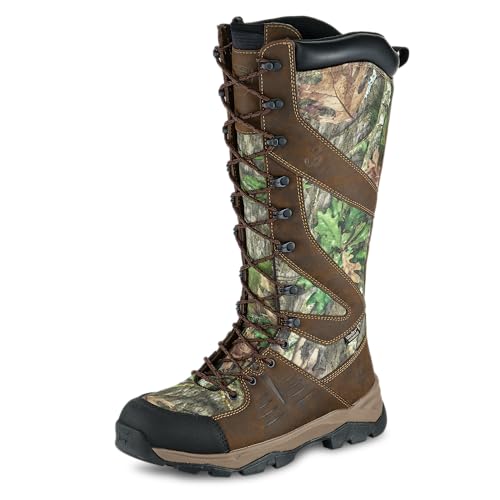
For bowhunters and upland hunters working brush lines and creek bottoms in the South during early season, the Terrain’s 17-inch height gives real coverage against the snake activity that’s still very much alive before the first cold snap. It’s a lace-up leather build rather than rubber, which matters if your early season is hot and dry rather than wet.

The taller shaft is a genuine tradeoff, more coverage than an 8-inch boot, but more weight and less breathability too. For hunters in genuine snake country during early season, that tradeoff is worth making.
Specs
Type: 17″ leather, snake guard | Insulation: None
Waterproof: Yes | Best for: Early bow season and upland hunting in Southern snake country
Skip this boot if: you don’t hunt in snake-active regions. The extra height and weight aren’t worth it without that specific need.
Frequently Asked Questions
Do I need different boots for scouting than for hunting?
Not strictly, but it’s worth considering. Scouting means frequent short trips with less need for scent control, which opens up pull-on options that trade some hunt-day security for speed and convenience. If you’re already investing in a scent-controlled hunt-day boot, save it for hunt days and use something simpler for scouting.
Are snake boots overkill for early season deer hunting?
Not if you hunt in genuine snake-active terrain. Early bow season overlaps with the tail end of peak snake activity across the South, the same overlap that affects spring turkey hunters. It’s a real, practical consideration in the right regions, not blanket advice for every hunter everywhere.
What insulation level should I use for early season hunting?
Our general hunting boots guide covers this in full, but the short version is 0 to 200 grams for most active early-season hunting, moving to 400g only for genuinely cool mornings with less movement.
Final Verdict: Match the Boot to the Job, Not Just the Season
Quick Reference by Use Case
Pre-season scouting, longer walks: Irish Setter Wingshooter ST
Frequent short trips, camera checks: Irish Setter Ashby 6″
Actual hunt day, warm mornings: Danner Pronghorn 8″ Uninsulated
Snake-active terrain, bow or upland: Irish Setter Terrain 17″
Early season isn’t one job, it’s several: the scouting you do before the season opens, the actual hunt days once it does, and, in the right parts of the country, real snake-season overlap most guides never mention. Match the boot to the specific job in front of you rather than defaulting to whatever you already own from last November.