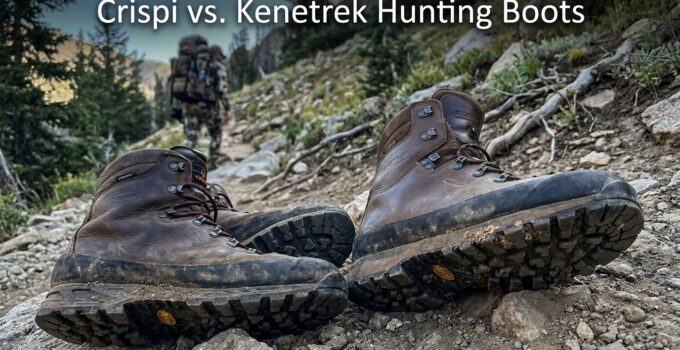

Search "Crispi vs Kenetrek" and you'll find the same verdict repeated on nearly every site: Crispi for comfort, Kenetrek for durability, try both before you buy. That's not wrong, but it's not useful either. Nobody can act on "try both" when the nearest store carrying either brand is three hours away, which describes most hunters looking this up.
What actually decides this isn't which brand is better, it's which last shape fits your foot, and what the real numbers behind break-in time, resoling cost, and warranty terms look like when you pull them from each brand's own site instead of a reviewer's adjectives. That's what's below.
At a Glance: Crispi Nevada Legend GTX vs. Kenetrek Mountain Extreme 400
| Crispi Nevada Legend GTX | Kenetrek Mountain Extreme 400 | |
|---|---|---|
| Weight | ~2 lbs per boot (size 10) | 4.2 lbs per pair |
| Shaft height | 7" | 10" |
| Leather | Water-repellent nubuck | 2.8mm full-grain |
| Insulation | 400g | 400g Thinsulate |
| Waterproofing | Gore-Tex | Windtex |
| Sole | Vibram, PU midsole, CCF insert | K-Talon outsole, 7mm nylon midsole |
| Break-in | Minimal, per brand and most owners | ~50 miles, per Kenetrek |
| Resole | $195, 1-2 weeks | $175, 6-8 weeks |
| Warranty | 1 year, excludes sole under 25% tread | 12 months, excludes sole over 75% worn |
The Last-Shape Difference: This Is What Actually Decides It
Every forum thread on this comparison eventually lands on the same point, and it's not brand loyalty. It's that Crispi and Kenetrek are built on noticeably different lasts, and which one fits you matters more than which one has the better reputation.
Kenetrek runs wider through the forefoot and stiffer overall, with a bulkier feel that several owners describe as needing real break-in before it stops feeling like "walking on stilts." That stiffness is also what gives it more ankle containment on technical, sidehilling terrain, it's a tradeoff, not a flaw. Kenetrek does offer wide-width options for hunters who need the room without sizing up.
Crispi runs narrower through the toe box and noticeably more flexible out of the box, closer to a stiff hiking boot than a mountaineering boot in how it feels underfoot. Some hunters find this the more comfortable option immediately; others with wider or higher-volume feet find the standard last too narrow even in a size up, and look to Crispi's Guide model instead of the Nevada for more room.
The practical takeaway from actual owners: if you have narrow to average feet and want comfort from day one, start with Crispi. If you have wider feet or want maximum ankle support for steep, technical terrain and are willing to put in break-in miles, start with Kenetrek. Neither answer holds for every foot, which is why "try both" keeps showing up in every thread, it's the right advice, just not a complete one on its own.
Head-to-Head: Crispi Nevada Legend GTX

The Nevada Legend is Crispi's best-known hunting boot for a reason, it's the rare stiff-soled mountain boot that owners consistently describe as comfortable straight out of the box, no multi-week break-in required the way most boots in this category demand. The Gore-Tex lining and Vibram sole with a polyurethane midsole and CCF insert give it real technical performance without the weight of a full mountaineering boot.

At roughly 2 pounds per boot and a 7-inch shaft, it's noticeably lighter and lower-cut than the Kenetrek, which matters over a full day of mountain miles but means less ankle containment on the steepest, most technical ground.
Specs
Weight: ~2 lbs per boot | Shaft: 7" | Insulation: 400g
Waterproofing: Gore-Tex | Best for: Narrower to average feet, active western hunting
Not the right fit if: you have wide or high-volume feet and haven't tried Crispi's Guide model, which runs roomier than the Nevada. Also not the pick if you need maximum ankle containment for sustained, technical sidehilling, see the Kenetrek below for that. Our mountain hunting boots guide covers where this fits against other stiffness options.
Head-to-Head: Kenetrek Mountain Extreme 400
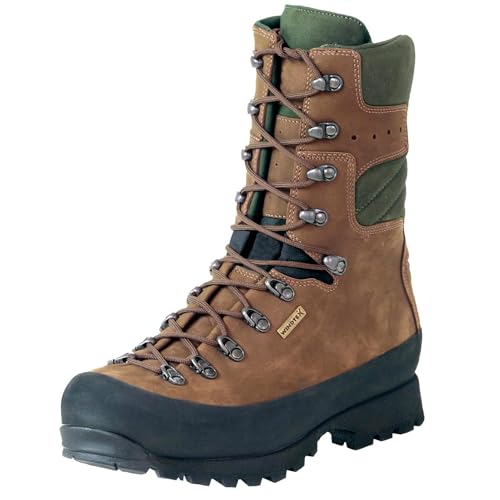
The Mountain Extreme is the boot western hunters buy once and keep for a decade, built on 2.8mm full-grain leather with a taller 10-inch shaft and a stiffer platform than the Crispi. The Windtex waterproof membrane has a strong multi-season reputation in the hunting community, and the K-Talon outsole on a 7mm nylon midsole is built for edging on rock and scree rather than comfort on flat ground.

Kenetrek recommends roughly 50 miles of break-in before a demanding hunt, real mileage, not a vague "give it time." Budget for that if you're buying close to season rather than months ahead.
Specs
Weight: 4.2 lbs per pair | Shaft: 10" | Insulation: 400g Thinsulate
Waterproofing: Windtex | Best for: Wider feet, sustained technical terrain, multi-day pack-outs
Not the right fit if: you want a boot ready to hunt in with minimal break-in, or you have narrow feet, the wider last that helps some hunters is the wrong fit for others. Our general hunting boots guide covers the K-strap ankle system in more detail.
Break-In: Real Numbers, Not "It Takes a While"
Kenetrek publishes an actual figure: roughly 50 miles of progressive wear before the Mountain Extreme is ready for a demanding hunt. Owners report the first ten minutes on a new pair can be rough, with most of that easing within the first full day of wear and the rest resolving over the following weeks of use.
Crispi doesn't publish a mileage figure, and most owners don't report needing one. The Nevada Legend's more flexible construction is close enough to a hiking boot that it's usable straight out of the box for a lot of hunters, though a few forum reports mention initially hard, stiff-feeling soles that softened with wear or were addressed with an aftermarket insole.
The practical difference: if you're buying boots the week before a hunt, Crispi is the lower-risk choice. If you're buying months ahead and can put in the miles, the break-in gap narrows to something that matters less.
Resoling and Warranty Compared
Both brands build boots meant to be resoled rather than replaced, and both offer an official in-house program rather than leaving it to a third-party cobbler, worth knowing since not every resole shop is equipped for technical mountain boot construction.
Crispi's resole program runs $195 with a 1-2 week turnaround, and includes a full midsole and outsole replacement, cleaning and leather conditioning, and new laces and factory insoles. Kenetrek's Mountain Boot resole package runs $175 with a stated 6-8 week turnaround, new outsoles, insoles, and laces included. The price difference is modest, the turnaround gap is not, worth planning around if you're resoling ahead of a specific season rather than during the off-season.
Warranty terms are close to identical in duration, one year from Crispi, 12 months from Kenetrek, both covering manufacturing defects and excluding normal wear and tear. The detail that catches people later: Crispi's warranty explicitly excludes fit and sizing issues and wear from pavement or concrete use, since the boots are built for mountain terrain specifically. Kenetrek's excludes soles worn past 75%. Neither warranty covers the thing most hunters actually worry about, a boot that simply doesn't fit right, which is why trying before buying, or buying from a retailer with a real return policy, matters more than the warranty terms themselves.
Frequently Asked Questions
Is Crispi or Kenetrek better for wide feet?
Kenetrek generally, and it offers dedicated wide-width options. Within Crispi's own lineup, the Guide model runs roomier than the Nevada Legend if you want to stay with the brand.
Which boot needs less break-in, Crispi or Kenetrek?
Crispi, by a wide margin according to most owners. Kenetrek recommends around 50 miles of break-in before relying on the Mountain Extreme for a demanding hunt.
Which resoles cheaper and faster, Crispi or Kenetrek?
Kenetrek's resole package is slightly cheaper at $175 versus Crispi's $195, but Crispi's turnaround is significantly faster at 1-2 weeks versus Kenetrek's 6-8 weeks.
Are Crispi and Kenetrek boots comparably priced?
Yes, both brands sit in the same premium price tier for their flagship mountain boots, with exact pricing varying by current listing and retailer.
Which is stiffer for technical terrain, Crispi or Kenetrek?
Kenetrek, generally. Its taller shaft and stiffer platform give more ankle containment on sustained, technical sidehilling, at the cost of more weight and a longer break-in.
Can I put a different insole in a Crispi or Kenetrek boot?
Yes, both accept aftermarket insoles, and some owners of both brands do this to fine-tune fit rather than sizing up or down. It won't fix a fundamentally wrong last shape for your foot, but it can meaningfully improve comfort within the right size.
Bottom Line: Fit First, Then Terrain
Quick Reference
Narrower to average feet, want minimal break-in: Crispi Nevada Legend GTX
Wider feet, technical terrain, willing to break in: Kenetrek Mountain Extreme 400
Need faster resoling turnaround: Crispi's 1-2 week program beats Kenetrek's 6-8 weeks
There's no brand-level winner here, and every hunter who tells you there is hasn't accounted for their own foot shape in the answer. Crispi's Nevada Legend GTX is the lower-risk pick for most hunters buying close to season, comfortable fast, lighter, and quicker to resole. Kenetrek's Mountain Extreme 400 is the pick for hunters with wider feet or a genuine need for maximum ankle support on technical ground who can put in the break-in miles ahead of time. If you're still unsure after reading this, that's the actual signal to try both in person before you commit, and the Crispi Nevada Legend GTX is the one worth starting with.