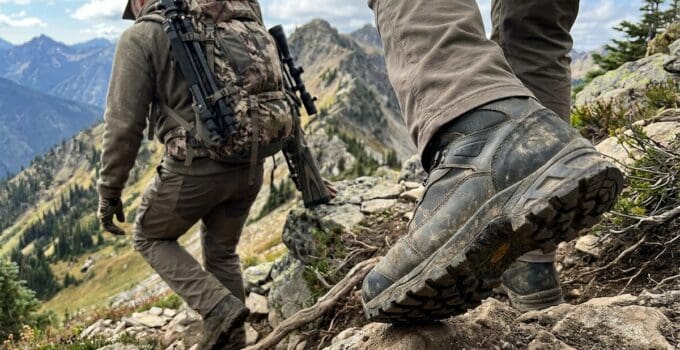
A boot that feels great walking into camp can turn on you three miles later, sidehilling a scree slope with a rifle on your back and a storm coming in. That is the real test for a mountain hunting boot, not the comfort you feel on flat ground at the trailhead.
Our general hunting boots guide already covers season, insulation level, and rubber-vs-leather across every hunt type, and our insulated hunting boots guide covers 400g through 1200g in detail. This page is narrower than both. It answers one specific question: when the terrain gets steep and the pack gets heavy, what actually needs to change about the boot itself, not just the insulation number on the box.
Quick Picks: Best Mountain Hunting Boots 2026
| Best For | Model | Stiffness |
|---|---|---|
| Best overall | Crispi Nevada Legend GTX | Medium-stiff |
| Best for heavy pack-outs | Schnee’s Beartooth, Uninsulated | Stiff |
| Best for late-season cold | Schnee’s Beartooth, 400g | Stiff |
| Best lighter option | Lowa Renegade GTX Mid | Moderate |
| Best value | Irish Setter Elk Tracker 12″ | Moderate-stiff |
| Best for wide feet | Lowa Tibet GTX WXL-Wide | Medium-stiff |
Why Mountain Hunting Needs a Different Boot
Flat-ground hunting boots are built to be comfortable for hours of standing or slow walking. Mountain terrain asks something different of a boot, and it shows up in three places.
Sidehilling loads the edge of your foot for miles at a time, not just the sole underneath it. On a steep traverse, a soft boot bends around the slope and your foot works to stay level inside it. A stiffer platform holds its shape, so the work happens in the sole instead of your arch and ankle.
Loose rock and scree punish precise foot placement. A flexible sole wraps around a small foothold instead of standing on it, which means less control exactly when you need more of it. A stiffer outsole edges on a rock the size of a fist the way a soft trail shoe cannot.
A loaded pack changes the math on both of those problems. Descending with 40 to 80 pounds of gear or meat multiplies lateral stress on the ankle and forces the boot to do more of the stabilizing your leg muscles would otherwise handle fresh. This is exactly why a boot that felt fine on the hike in can leave your feet wrecked on the way out.
None of this means stiffer is automatically better. A boot that’s stiffer than the terrain and load actually require is just heavier and slower to break in for no benefit. Stiffness is a tool you match to the hunt, not a badge of seriousness.
How Stiff Should Your Mountain Hunting Boots Be?
Brands don’t measure stiffness on a shared scale, so a number on a spec sheet from one company doesn’t mean the same thing as the same number from another. Use the practical categories below instead.
| Category | Feels like | Best terrain | Avoid if |
|---|---|---|---|
| Flexible | Trail-runner or soft hiker | Flat trails, easy terrain | You expect sustained sidehills or a heavy pack-out |
| Moderate | Standard hiking boot | Rolling hills, maintained trail | You need stability on sustained scree or steep rock |
| Medium-stiff | Mountain-hunting boot | Uneven trail, off-camber terrain | You want a casual all-day walking boot for flat ground |
| Stiff | Full mountain boot | Sustained sidehills, scree, steep alpine | You mostly hunt flat ground or need minimal break-in |
Here’s a rule that actually simplifies the decision: if you regularly edge the side of your boot into a slope, move to at least medium-stiff. If you might carry meat or camp weight out over that same slope, go one level stiffer than you’d pick for the hike in alone. You’re outfitting for the hardest mile of the trip, not the easiest one.
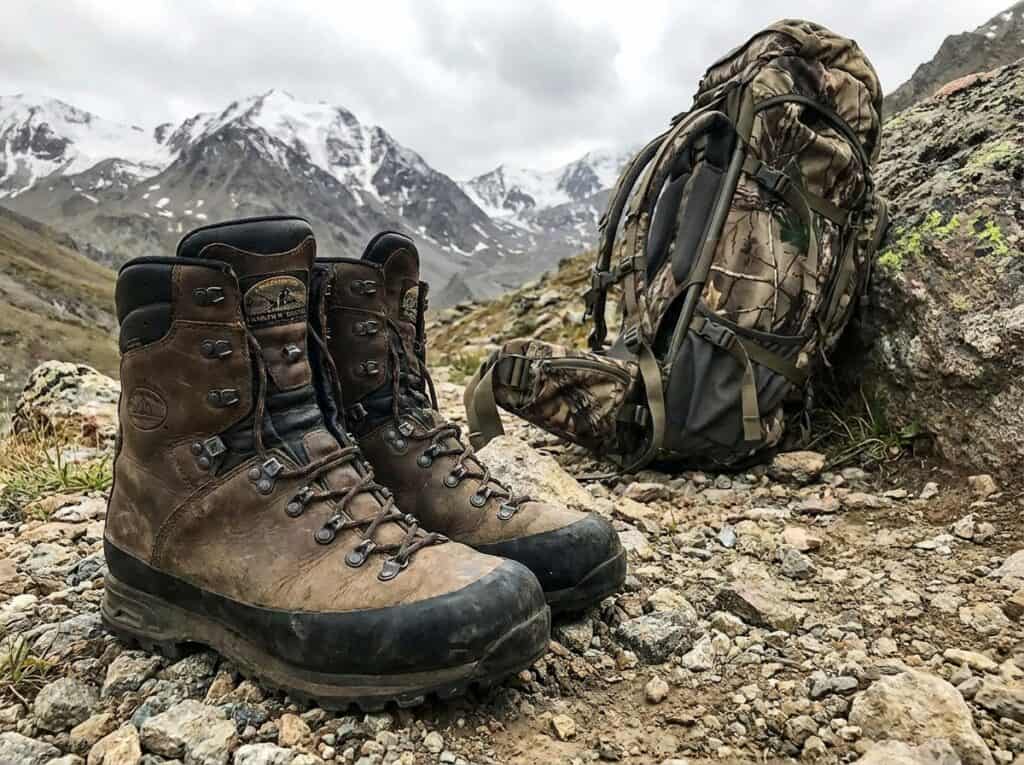
mountain hunting boots for terrain 20260918125244
How to Choose by Terrain and Pack Weight
| Your situation | Prioritize | Avoid |
|---|---|---|
| 3-6 mile approach, daypack | Moderate support, comfort, reasonable weight | An overly stiff boot for easy ground |
| Repeated sidehills, loose dirt | Medium-stiff platform, secure heel | Soft, foam-heavy hiking shoes |
| 30-50 lb pack-out possible | Medium-stiff to stiff boot, supportive upper | Low-cut shoes and soft hikers |
| 50-80+ lb meat or gear loads | Stiff platform, durable leather, secure lacing | Any boot chosen mainly for low weight |
| Cold, active mountain hunts | 200g-400g insulation, waterproofing | Choosing insulation by forecast alone |
1. Best Overall: Crispi Nevada Legend GTX

The Nevada Legend is the boot most serious mountain hunters land on because it doesn’t force a tradeoff most hunters actually need to make. It’s stiff enough to hold a line on a sidehill and support a genuine pack-out, without the maximum weight and break-in commitment of the stiffest boots on this list.

The full-grain leather upper and Gore-Tex membrane are the same combination you’ll find across most serious mountain boots, and for good reason. It handles wet rock and morning dew without soaking through, and the leather molds to your foot over a season of use in a way synthetic uppers don’t. Expect a real break-in period, not an out-of-the-box fit.
Specs
Type: Leather mountain boot | Insulation: 400g Thinsulate
Waterproof: Yes, Gore-Tex | Best for: Elk, mule deer, and general western big-game hunting
Not the right boot if: you hunt mostly flat whitetail woods or need a boot for warm early-season temperatures. The insulation and stiffness here are wasted on easy terrain and mild weather, see our Early Season Hunting Boots guide instead.
2. Best for Heavy Pack-Outs: Schnee’s Beartooth, Uninsulated

When the terrain is technical and the pack might be heavy, the Beartooth is built for exactly that combination. It’s the stiffest boot on this list, with a supportive upper and a Vibram Tsavo outsole designed to hold an edge on rock rather than roll off it.

Schnee’s boots are also resoleable, which matters more than it sounds like it should on a boot in this price range. A hunter who puts real mountain miles on this pair every season can send it back for a new sole rather than replacing the whole boot, which changes the cost-per-year math even if the upfront price is steep. Expect a genuine mountaineering-style break-in commitment before your first hunt.
Specs
Type: Stiff leather mountain boot | Insulation: None
Waterproof: Yes | Best for: Technical terrain, sustained sidehills, and heavy meat or gear pack-outs
Not the right boot if: your hunting is mostly moderate terrain with a daypack. The extra stiffness and weight aren’t worth carrying if you don’t need the support it’s built to provide.
3. Best for Late-Season Cold: Schnee’s Beartooth, 400g
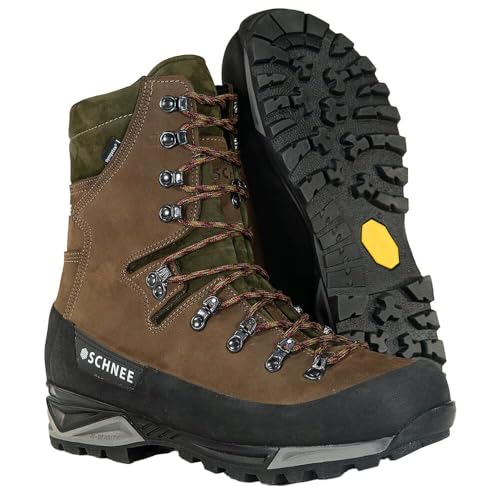
Same platform as the pick above, with 400 grams of insulation added for hunters who are still moving through steep, technical terrain once the temperature drops. This is the boot for a late-season mountain hunt where you’re covering real ground in the cold rather than sitting stationary in a blind.

Keep the insulation choice honest to your actual activity level. A hunter glassing from one spot for hours needs more insulation than one who’s climbing and descending most of the day, even at the same temperature, because movement generates its own heat. Our insulated hunting boots guide covers that tradeoff across the full 400g to 1200g range.
Specs
Type: Stiff leather mountain boot | Insulation: 400g
Waterproof: Yes | Best for: Late-season mountain hunts with sustained movement in cold conditions
Not the right boot if: you’re hunting early season or warm weather. 400g will leave your feet overheating and sweating on an active September hunt.
4. Best Lighter Option: Lowa Renegade GTX Mid
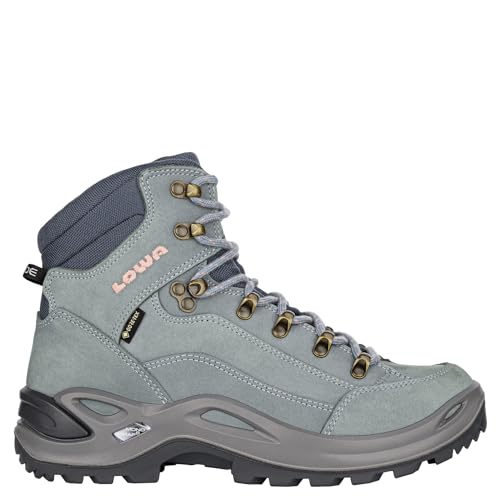
Not every mountain hunt calls for a full stiff mountain boot, and the Renegade is the honest answer for hunters who want more mobility and comfort than the stiffest options on this list, and who aren’t planning a heavy meat pack-out. It’s genuinely comfortable for long approach miles in a way a stiffer boot isn’t.

That comfort comes with a real tradeoff. On sustained scree or a heavy load, the Renegade doesn’t hold a line the way the stiffer picks above do. Think of this as the boot for early-season scouting, active hunting on moderate terrain, and hunters who prioritize speed and mobility over maximum support.
Specs
Type: Moderate hiking boot | Insulation: None
Waterproof: Yes, Gore-Tex | Best for: Active hunters covering moderate terrain with light to medium loads
Not the right boot if: you’re planning sustained sidehilling or a heavy pack-out. Step up to the Nevada Legend or Beartooth above for that terrain.
5. Best Value: Irish Setter Elk Tracker 12″

The Elk Tracker gets you genuine mountain-oriented support and a tall 12-inch shaft without the premium pricing of the Crispi or Schnee’s picks above. It’s a heavier, less refined boot than either of those, but it delivers real stability for hunters who don’t want to spend $450 and up to get into the category.

The extra height is worth mentioning on its own. It gives more calf and lower-leg coverage on brushy sidehills and creek crossings than an 8-inch boot, at the cost of some extra weight and a longer break-in.
Specs
Type: Tall leather mountain boot | Insulation: None
Waterproof: Yes | Best for: Hunters wanting mountain-level support without premium pricing
Not the right boot if: you want the lightest or most refined fit available. The Renegade above is lighter, and the Crispi and Schnee’s picks fit more precisely out of the box.
6. Best for Wide Feet: Lowa Tibet GTX WXL-Wide
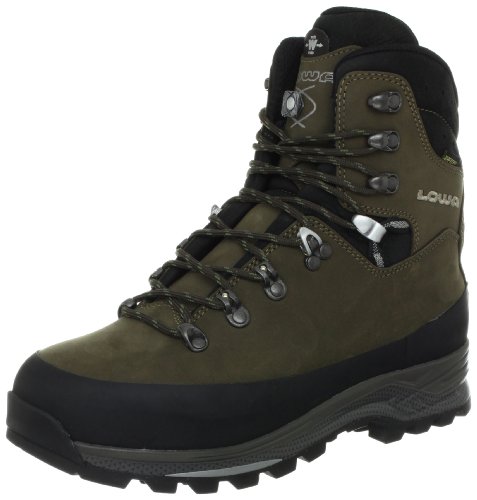
Most mountain boots are built on a narrower European last, which is a real problem for hunters with wide or high-volume feet. Lowa builds the Tibet in a genuine WXL-wide last rather than just a half-size up, which solves a fit problem the rest of this list doesn’t address.

If you’ve struggled with numbness or hot spots on the outside of your foot in a standard mountain boot, this is the pick worth trying before assuming the whole category doesn’t work for your feet.
Specs
Type: Medium-stiff mountain boot, wide last | Insulation: None
Waterproof: Yes, Gore-Tex | Best for: Wide or high-volume feet needing genuine mountain support
Not the right boot if: you have an average or narrow foot. A standard-width boot from this list will fit more securely.
Fit Matters More Than Brand
A well-fitted moderate boot beats a poorly-fitted premium one every time. A few things matter more on a mountain boot than a flat-ground hunting boot.
You need a genuinely secure heel hold. Any heel lift on a steep descent turns into blisters and toe bang fast, since your foot is sliding forward inside the boot with every downhill step.
Toe room matters more going downhill than it does standing in a store. Test this directly: lace the boot the way you’d hunt in it, then walk down a steep ramp or a flight of stairs. If your longest toe touches the front, that’s a length, lacing, or volume problem to solve before your hunt, not after.
Foot volume matters as much as length. A narrow boot on a wide or high-volume foot causes numbness on sidehills specifically, because the lateral pressure has nowhere to go. Try boots on late in the day when your feet have naturally swollen, and wear the actual socks you plan to hunt in.
Break In Mountain Boots Before the Hunt
Stiffer boots need more preparation than flexible hikers, and skipping this step is the single most common way hunters end up limping through opening week.
| Time before hunt | Goal |
|---|---|
| 4-6 weeks | Confirm sizing, begin short indoor wear |
| 3-4 weeks | Add neighborhood walks and short uneven-trail hikes |
| 2-3 weeks | Hike in hunting socks with a light pack |
| 1-2 weeks | Add real uphill and downhill terrain with moderate pack weight |
| Final week | Check hot spots, lacing, and waterproofing |
Don’t try to speed this up by soaking or baking leather boots. Progressive wear and real miles are what actually break in a stiff leather upper, not a shortcut. Our boot break-in guide covers the general process if you want the full walkthrough.
Do You Need a Boot That Accepts Crampons?
Most mountain hunting boots, including every pick on this list, are not technical mountaineering boots and aren’t built for step-in or semi-automatic crampons. A flexible strap-on traction device can work for icy patches and light snow walking where appropriate, but don’t assume any hunting boot here is compatible with true crampon systems. If your hunt genuinely involves glacier travel or technical snow and ice, that’s a mountaineering equipment question, not a hunting boot one, and it’s worth a conversation with the boot manufacturer directly before you rely on it.
Common Mistakes
- Judging a boot by comfort on a flat store floor instead of on an incline.
- Choosing a soft boot for a heavy pack-out because it feels lighter in the store.
- Buying the stiffest boot available for terrain that doesn’t need it.
- Picking insulation by forecast temperature instead of your actual movement level.
- Ignoring toe room for long descents.
- Taking a new pair on the hunt with no break-in miles.
- Wearing cotton socks with no dry backup pair. See our hiking socks guide for what actually works.
- Buying a “waterproof” boot without checking the shaft height against the water and brush you’ll actually walk through.
Frequently Asked Questions
What are the best mountain hunting boots for elk?
For most elk hunters, a medium-stiff to stiff leather boot like the Crispi Nevada Legend or Schnee’s Beartooth handles the steep terrain and pack-out demands of a typical elk hunt. Lighter hunters covering easier ground can get away with a moderate boot like the Lowa Renegade.
How stiff should mountain hunting boots be?
Match stiffness to the steepest terrain and heaviest realistic load of the hunt, not the easiest part of it. If you’ll regularly sidehill or might carry meat out over technical ground, go medium-stiff or stiff.
Do I need stiff boots for a heavy pack-out?
Yes, for loads in the 50 to 80+ pound range on steep or technical ground. A stiff sole and supportive upper reduce the fatigue and instability a heavy pack creates far more than a soft boot can.
Are Crispi or Schnee’s boots better for steep terrain?
Both perform well. The Crispi Nevada Legend is slightly more moderate and versatile, while the Schnee’s Beartooth Uninsulated is the stiffer, more technical-terrain-focused option of the two.
Should mountain hunting boots be insulated?
Only if your hunt is genuinely cold and involves real stationary time. Active early and mid-season mountain hunting is usually better served by 0g to 200g, moving to 400g for late-season cold with sustained movement.
Are heavier hunting boots always better for steep terrain?
No. Weight and stiffness are tools matched to terrain and load, not universal upgrades. A boot stiffer or heavier than the hunt requires just tires you out for no benefit.
How much toe room should mountain hunting boots have?
Enough that your longest toe doesn’t touch the front when you walk downhill in the boot laced the way you’d hunt in it. Test this on a ramp or stairs before you buy, not just standing still.
How long do mountain hunting boots take to break in?
Stiff leather mountain boots typically need several weeks of progressive wear, from short indoor sessions up to real hiking miles with a pack, before they’re ready for a hunt.
Can I wear hiking boots for mountain hunting?
A supportive hiking boot like the Lowa Renegade works fine for moderate terrain and lighter loads. For sustained sidehills, scree, or a heavy pack-out, a true mountain-hunting boot performs better.
Do I need waterproof boots for mountain hunting?
Yes, in almost every case. Morning dew, wet rock, and unpredictable mountain weather make a waterproof membrane like Gore-Tex worth having even on hunts that don’t involve deep water crossings.
Final Verdict: Match the Boot to the Terrain and the Load
Quick Reference by Use Case
Most western big-game hunting: Crispi Nevada Legend GTX
Technical terrain, heavy pack-out: Schnee’s Beartooth, Uninsulated
Late-season cold, active hunting: Schnee’s Beartooth, 400g
Moderate terrain, lighter loads: Lowa Renegade GTX Mid
Genuine mountain support on a budget: Irish Setter Elk Tracker 12″
Wide or high-volume feet: Lowa Tibet GTX WXL-Wide
There’s no single best mountain hunting boot, only the right one for your terrain, your pack weight, and your feet. Buy for the hardest mile of your hunt, break the boot in properly before you need it, and the rest of this decision gets a lot simpler.