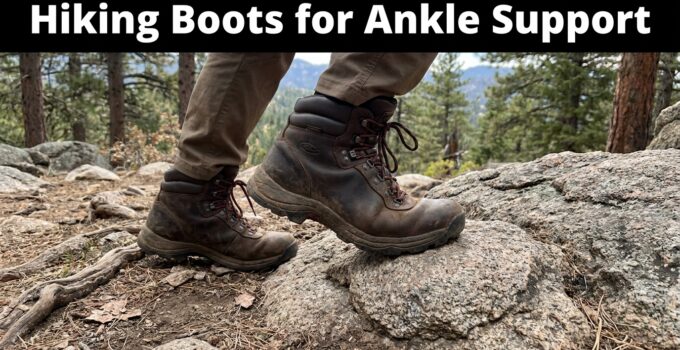
Go looking for “hiking boots with ankle support” and you’ll land on a Reddit thread full of hikers naming Asolo, Scarpa, Zamberlan, Meindl, Lowa, and Kenetrek, brands that barely show up in most mainstream “best hiking boots” roundups. That’s not a coincidence. Most buying guides treat ankle support as a checkbox: does the boot come up past the ankle, yes or no. The hikers actually dealing with weak or previously injured ankles know better, height alone tells you almost nothing about how much real support a boot provides.
This guide covers 10 boots chosen specifically for genuine ankle support, from a mountaineering-grade option built for multi-day loads to lighter picks that still deliver real structure, plus the mechanics of what actually makes a boot supportive so you can evaluate any boot, not just the ones on this list.
Quick Picks: Best Hiking Boots for Ankle Support 2026
| Best For | Model |
|---|---|
| Maximum support | Kenetrek Mountain Extreme 400 |
| Best overall ankle support | Salomon Quest 5 GTX |
| Premium all-rounder | Lowa Renegade GTX Mid |
| Budget-friendly real support | Oboz Bridger Mid B-DRY |
| Technical / agile support | La Sportiva Ultra Raptor 3 Mid GTX |
| Tallest cuff / max coverage | La Sportiva Nucleo High II GTX |
Height Isn’t Support: What Actually Matters
A tall boot with a soft, floppy upper and a flexible midsole can genuinely offer less real ankle support than a shorter boot built with a rigid chassis. Two things actually determine how much a boot resists your ankle rolling: torsional rigidity, how much the boot resists twisting along its length when you grip the toe and heel and try to flex it, and cuff structure, whether the material around your ankle is stiff enough to resist lateral movement or just tall enough to look supportive in a product photo.
A quick way to judge any boot, including ones not on this list: hold it by the toe and heel and try to twist it like wringing out a towel. A boot with genuine torsional rigidity resists that twist noticeably. A boot that twists easily is providing height, not support, no matter how far up your ankle the cuff sits. This is exactly the mechanism behind our Bad Knees and Heavy Packs guide, since a rigid platform reduces the twisting forces that travel up into the knee as well as the ankle.
Quick Comparison: All 10 Options
| Model | Support Level | Best For |
|---|---|---|
| Kenetrek Mountain Extreme 400 | Maximum | Multi-day, heavy pack, unstable terrain |
| Salomon Quest 5 GTX | High | Everyday serious hiking, backpacking |
| Lowa Renegade GTX Mid | High | Long-term durability and support |
| Oboz Bridger Mid B-DRY (Men’s) | Moderate-High | Budget-conscious real support |
| Oboz Bridger Mid B-DRY (Women’s) | Moderate-High | Women’s budget pick |
| La Sportiva Ultra Raptor 3 Mid GTX | Moderate | Technical terrain without max weight |
| La Sportiva Nucleo High II GTX | High | Maximum cuff coverage |
| La Sportiva Aequilibrium Trek GTX | Maximum | Long treks, mountaineering-adjacent terrain |
| Merrell Moab Speed 2 Mid GTX | Moderate | Structure without heavy break-in |
| Salomon Quest 4 GTX (Women’s) | Moderate-High | Women’s lightweight alternative |
Maximum Support
1. Best Maximum Support: Kenetrek Mountain Extreme 400
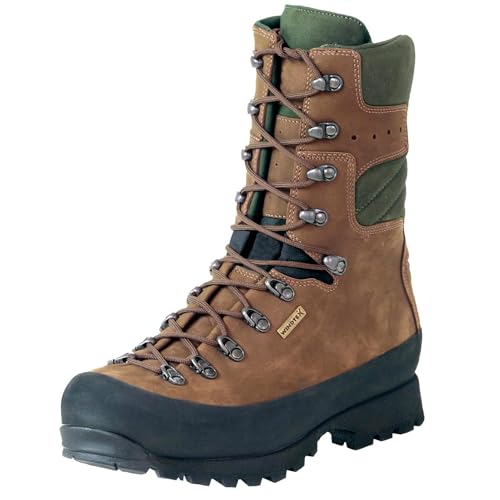
The Mountain Extreme 400 is what “ankle support” actually looks like at the top end: a rigid 7mm nylon midsole, a 10-inch full-grain leather upper, and a supportive footbed with a pronounced heel pocket, all built for carrying heavy pack loads across genuinely unstable terrain. This is the boot the Reddit thread that inspired this guide kept coming back to.

That rigidity is a real tradeoff, not a free upgrade. This boot needs a genuine break-in period, and its stiffness will feel like overkill on groomed trails. It’s built for backcountry hunts and steep, technical terrain, not casual day hikes.
Specs
Height: 10″ | Midsole: Rigid 7mm nylon | Upper: Full-grain leather
Waterproof: Yes | Best for: Heavy packs, unstable and technical backcountry terrain
Skip this boot if: your hiking is mostly groomed trails or day hikes. This level of rigidity is wasted, and uncomfortable, on easy terrain.
2. Best for Long Treks: La Sportiva Aequilibrium Trek GTX
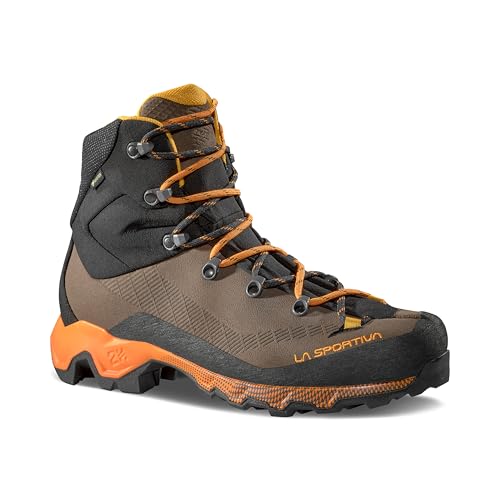
La Sportiva built the Aequilibrium line on its mountaineering heritage, and the Trek version brings that same structural philosophy to multi-day backpacking. The Double Heel sole lug pattern is designed specifically for uphill traction and downhill braking, exactly the moments when an unstable ankle is most likely to roll.

The sole and midsole construction aim for a genuine balance, real support without the full weight penalty of a boot like the Kenetrek, making this a strong pick for hikers who want mountaineering-grade structure on a boot they’ll actually wear for long trekking days.
Specs
Waterproof: Yes, Gore-Tex | Outsole: Double Heel lug pattern
Heritage: Mountaineering-derived construction | Best for: Long treks and backpacking expeditions
Skip this boot if: you want the lightest possible option. This prioritizes structure over minimal weight.
Everyday Serious Support
3. Best Overall: Salomon Quest 5 GTX
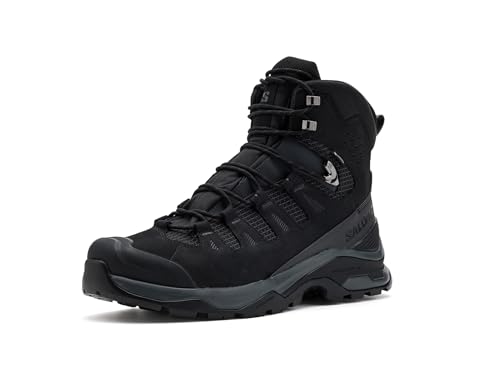
The Quest 5 is Salomon’s answer to genuine multi-day support without sacrificing agility, built around the 4D Advanced Chassis that targets stability at the joints most prone to rolling. It’s a high-top silhouette with real structure behind it, not just height for the sake of a taller profile.

The sensiFIT lacing system wraps the midfoot securely, which matters as much for ankle stability as the boot’s height does, a loose midfoot fit undermines even a well-built ankle cuff.
Specs
Chassis: Salomon 4D Advanced Chassis | Waterproof: Yes, Gore-Tex | Height: High top
Best for: Everyday serious hiking, backpacking with a real pack
Skip this boot if: you need maximum rigidity for genuinely extreme terrain. Step up to the Kenetrek or Aequilibrium Trek for that.
4. Best Premium All-Rounder: Lowa Renegade GTX Mid
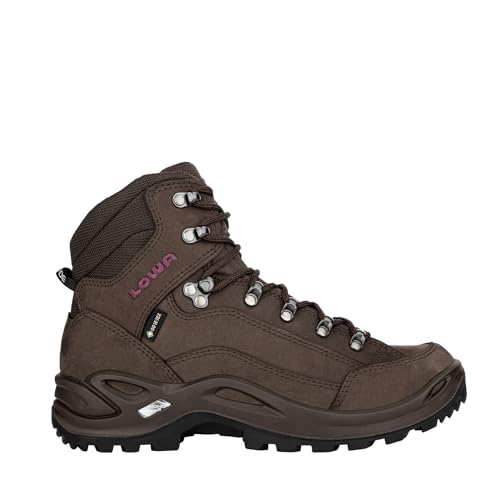
The Renegade has a near-cult following among serious hikers specifically for its support-to-comfort ratio, German engineering that delivers genuine structure without the stiff, plank-like feel some supportive boots have. It’s built to hold that support over years of real mileage rather than packing out quickly.
The Gore-Tex membrane and Lowa’s own build quality mean this boot tends to age better than cheaper alternatives, worth factoring into the price if you’re comparing cost per year of real support rather than upfront cost alone.
Specs
Waterproof: Yes, Gore-Tex | Height: Mid | Best for: Long-term durability paired with genuine support
Skip this boot if: budget is your primary constraint. The Oboz Bridger below covers similar ground for less.
Budget-Friendly Real Support
5. Best Budget (Men’s): Oboz Bridger Mid B-DRY
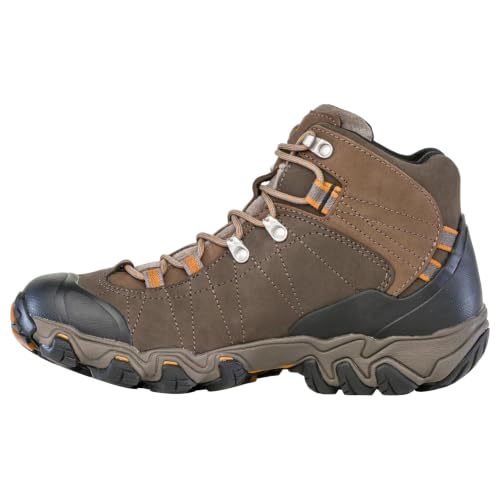
The Bridger proves genuine ankle support doesn’t require a premium price tag. It carries real structure through its midsole and cuff, not just a tall silhouette, and Oboz’s O FIT insole adds a supportive footbed that complements the boot’s structure rather than just cushioning underfoot.

It’s a step down in outright rigidity from the Kenetrek or Aequilibrium Trek, but for hikers who want real support without mountaineering-boot stiffness or price, it’s a genuine value pick, not a compromise.
Specs
Waterproof: Yes, B-DRY | Insole: O FIT supportive footbed | Best for: Budget-conscious hikers who still want genuine structure
Skip this boot if: you’re carrying genuinely heavy loads on unstable terrain. Step up to the Quest 5 or Kenetrek for that use case.
6. Best Budget (Women’s): Oboz Bridger Mid B-DRY

Built on a genuine women’s last rather than a scaled-down men’s pattern, the women’s Bridger carries the same structural support and O FIT insole as the men’s version, with the heel and instep fit that a proper last provides, which matters for ankle stability as much as the boot’s own construction does.

A boot that shifts on the heel undermines even genuinely rigid ankle support, so the fit quality here is doing real work alongside the structural design.
Specs
Last: Women’s-specific | Waterproof: Yes, B-DRY | Best for: Women wanting genuine support on a budget
Skip this boot if: you need maximum rigidity for heavy pack loads. This is moderate-high support, not maximum.
Technical and Agile Support
7. Best Technical: La Sportiva Ultra Raptor 3 Mid GTX
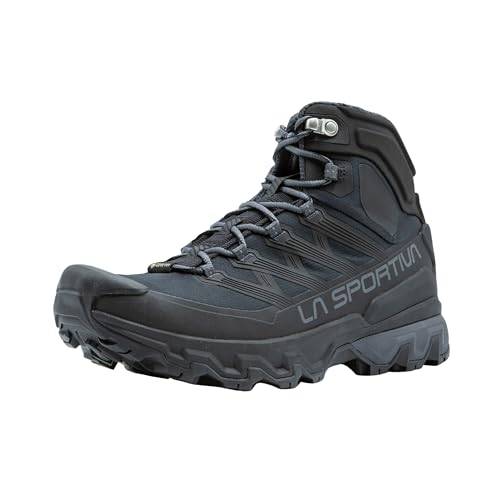
The Ultra Raptor 3 brings genuine La Sportiva climbing heritage into a mid-height hiking boot, real edging and grip on technical terrain paired with a supportive but not overbuilt cuff. It sits between a pure trail runner and a maximum-support boot like the Aequilibrium Trek.

For hikers who want more structure than a low-top shoe but don’t need mountaineering-grade rigidity, this is a genuine middle ground rather than a compromise pick.
Specs
Waterproof: Yes, Gore-Tex | Height: Mid | Best for: Technical terrain without maximum weight or stiffness
Skip this boot if: you need maximum ankle rigidity. This is moderate support by design, not the stiffest option here.
8. Best Maximum Coverage: La Sportiva Nucleo High II GTX

The Nucleo High II has the tallest, most enclosing cuff in this lineup outside the Kenetrek, genuine high-cut coverage built for backpacking and rugged hikes rather than a fashion-driven silhouette. Gore-Tex Surround technology adds breathability that’s rare at this level of coverage.

It’s also available in wide sizing, a genuine plus for hikers who’ve had fit issues finding tall, structured boots that don’t pinch across a wider foot.
Specs
Waterproof: Yes, Gore-Tex Surround | Height: High-cut | Width: Wide sizing available
Best for: Maximum cuff coverage, backpacking and rugged hikes
Skip this boot if: you find tall cuffs restrictive at the ankle joint itself. Try the Ultra Raptor 3 Mid for a shorter, more agile alternative.
Lightweight Alternatives with Real Structure
9. Best Lightweight: Merrell Moab Speed 2 Mid GTX
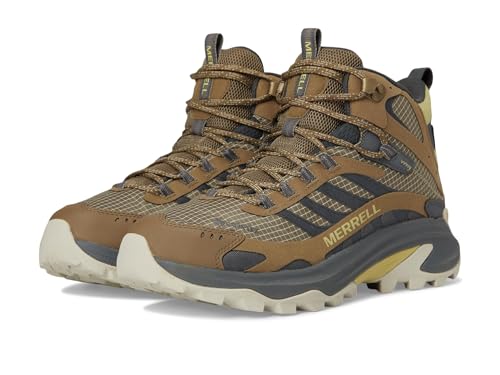
The Moab Speed 2 Mid brings genuine mid-height ankle coverage and a full-length rock plate to Merrell’s trail-runner-influenced platform, real structure for hikers who don’t want the break-in period or weight of the more rigid boots on this list.

The secure-fit heel counter does real work here, locking the heel in place so the ankle coverage above it actually has something stable to work from, rather than shifting independently of the foot.
Specs
Waterproof: Yes, Gore-Tex | Midsole: Full-length rock plate | Best for: Real structure without heavy break-in or weight
Skip this boot if: you need genuine maximum support. This is moderate support in a lightweight package, not a Kenetrek replacement.
10. Best Women’s Lightweight: Salomon Quest 4 GTX

The women’s Quest 4 brings Salomon’s updated chassis technology, designed to target sensitive articulations specifically, to a lighter package than the men’s Quest 5 above. It’s built to stay stable and supportive even as fatigue sets in on longer days, which is exactly when ankle rolls become more likely.

Running shoe-adapted technology underfoot keeps this from feeling like a heavy backpacking boot while still delivering genuine structure through the chassis and cuff.
Specs
Chassis: Salomon updated ADV-C chassis | Waterproof: Yes, Gore-Tex | Best for: Women wanting genuine support in a lighter boot
Skip this boot if: you’re carrying a genuinely heavy pack. The Lowa Renegade or men’s Quest 5 offer more built-in structure.
Ankle Support vs. Ankle Strength: What the Research Actually Says
The honest answer is that the research on whether boots prevent ankle sprains is genuinely mixed, and it’s an active debate in the hiking community, not a settled question. Some studies suggest ankle braces and rigid footwear reduce injury rates in certain populations; other research finds minimal difference between low-top and high-top footwear for injury prevention in experienced hikers with strong, conditioned ankles.
What’s not in dispute: for hikers with a history of ankle instability, a previous sprain, or genuine weakness, more structure gives a real mechanical advantage regardless of what the population-level statistics say. And separately, ankle strength itself matters more than most gear guides acknowledge, calf raises, single-leg balance work, and ankle mobility exercises build the muscular stability that no boot can fully substitute for. The best approach for anyone genuinely concerned about ankle injuries combines both: a boot with real structural support, and off-trail conditioning that builds ankle strength directly.
Sizing and Break-In by Support Level
The most rigid boots on this list, the Kenetrek and Aequilibrium Trek, need genuine break-in time, plan for several shorter wears before a big trip, not a fresh pair out of the box. The moderate-support options, the Merrell Moab Speed 2 and La Sportiva Ultra Raptor 3, need minimal break-in by comparison. Across the board, a snug, well-wrapped midfoot fit matters as much as the boot’s structural support, a loose fit lets your foot move inside the boot regardless of how rigid the exterior is.
Frequently Asked Questions
Do high-top boots actually prevent ankle sprains?
The research is genuinely mixed. Some studies show a real benefit, particularly for hikers with prior ankle instability; others find minimal difference for experienced hikers with strong, conditioned ankles. Height alone isn’t the deciding factor, torsional rigidity and cuff structure matter more than how far up the ankle a boot reaches.
What’s the difference between ankle support and ankle height?
Ankle height is simply how tall the boot’s cuff is. Ankle support depends on torsional rigidity, how much the boot resists twisting, and how structured the material around the cuff actually is. A tall boot with a soft, flexible upper can offer less real support than a shorter boot built with a rigid chassis.
Are stiffer boots always better for support?
Not for every hiker or every trail. Maximum rigidity, like the Kenetrek Mountain Extreme 400, is built for heavy packs and genuinely unstable terrain, and it comes with real break-in time and less agility. For groomed trails or day hikes, that stiffness is often unnecessary and uncomfortable rather than beneficial.
Can I improve ankle stability without a supportive boot?
Yes, and it’s worth doing regardless of which boot you choose. Calf raises, single-leg balance exercises, and ankle mobility work build genuine muscular stability that complements, rather than replaces, a supportive boot.
Final Verdict: The Right Support Level for You
Use Case → Boot Quick Reference
Heavy packs, unstable technical terrain: Kenetrek Mountain Extreme 400
Long treks, mountaineering-adjacent terrain: La Sportiva Aequilibrium Trek GTX
Everyday serious hiking: Salomon Quest 5 GTX
Long-term durability and support: Lowa Renegade GTX Mid
Budget-conscious real support: Oboz Bridger Mid B-DRY
Technical terrain without max weight: La Sportiva Ultra Raptor 3 Mid GTX
Structure without heavy break-in: Merrell Moab Speed 2 Mid GTX
Before you buy based on height alone, do the twist test on any boot you’re considering, hold it by the toe and heel and see how much it resists turning. That five-second check tells you more about real ankle support than any spec sheet, and it’s the difference between a boot that looks supportive and one that actually is.